What Is Freight Contract Management? Best Practices for Managing Freight Contracts

Freight contracts may look like agreements about rates and shipping terms, but every clause can affect what a business pays, what logistics contracts must deliver, and what happens when plans change.
Freight contract management covers the full agreement lifecycle, including drafting, negotiation, approvals, rates, obligations, renewals, amendments, and expiration.
Rates alone do not show the true value of a freight agreement. Capacity commitments, fuel charges, accessorial fees, service levels, liability, and termination terms can change the final cost.
Technology gives teams better visibility into freight agreements. Central contract storage, alerts, AI analysis, obligation tracking, and approval workflows reduce dependence on spreadsheets and email.
Good contract management connects legal terms with daily freight operations. Teams can compare commitments with actual performance and use that information.
Managing those details becomes harder as companies add more carriers, shipping lanes, freight modes, rate structures, surcharges, and renewal dates. The 2024 Third-Party Logistics Study found that 87% of shippers and 94% of 3PLs believe emerging technology adoption is critical to their future growth and success.
This is why freight contract management needs more than a folder of signed agreements. Businesses need a clear way to manage contracts from negotiation and approval through performance, renewal, and expiration.
In this blog, we explain what a freight contract is, the main types of agreements, important contract elements, hidden risks, common mistakes, best practices, and how technology such as CLM 365 can help teams manage. agreements.
What Is Freight Contract Management?
Freight contract management is the process of creating, reviewing, storing, tracking, and renewing agreements between shippers, carriers, brokers, and logistics providers.
Think of it as the rulebook for your supply chain contracts. Every time a carrier picks up a load, a contract sets the price, the pickup window, the delivery terms, and who pays if something goes wrong. Cargo contract management makes sure your team can find those rules, follow them, and improve them over time.
The process covers the whole contract lifecycle:
- Request and drafting: You define the lanes, volumes, and service needs, then write the terms.
- Negotiation: You and the carrier agree on rates, fees, and liability.
- Approval and signature: The right people review and sign the agreement.
- Storage: You keep the signed contract in a place everyone can reach.
- Performance tracking: You compare what the carrier does against what the contract says.
- Renewal or exit: You renew, rebid, or end the agreement before it runs out.
Good transportation contract management goes beyond filing documents. It turns your contracts into a source of data. When you know your rates, your contract deliverables, and your carrier scores, you can plan with facts instead of guesses.
Types of Freight Contracts
Not every shipment needs the transportation agreement. The right contract depends on your volume, your lanes, and how much flexibility you need. Here are the most common types of freight contracts.
A fixed-rate contract sets an agreed freight rate for a defined period.
For example, a shipper and carrier may agree on a specific rate for moving goods between two locations for 12 months.
Fixed rates can make transportation costs easier to forecast. However, both parties need clear rules for fuel changes, additional services, and unexpected market conditions.
These agreements connect pricing or capacity to shipment volume.
A shipper may commit a certain number of loads to a carrier each month or year. In return, the carrier may offer preferred pricing or reserve capacity.
Volume commitments require close tracking because actual shipping activity may differ from forecasts.
Under a dedicated agreement, a carrier assigns specific vehicles, drivers, equipment, or capacity to a shipper.
These contracts are common when a company has predictable shipping requirements or needs greater control over capacity.
The agreement may cover equipment requirements, operating schedules, mileage, staffing, contractual obligations, and performance targets.
Spot arrangements cover shipments priced according to current market conditions rather than a longer-term contracted rate.
Businesses often use spot freight when regular carriers cannot provide capacity or when an unexpected shipment appears.
Spot pricing offers flexibility but can change quickly when capacity tightens.
Index-based agreements connect freight rates to a defined market index or benchmark.
Instead of keeping one fixed rate for the entire term, pricing changes according to agreed market conditions.
These agreements require clear language explaining the chosen index, adjustment frequency, calculation method, and any upper or lower limits.
Ocean agreements may address container rates, free time, demurrage, detention, port charges, and minimum quantity commitments.
Air freight agreements may focus on weight, space, security requirements, and time-sensitive delivery. Rail and road contracts have their own rate, capacity, equipment, and liability structures.
This is why companies should avoid treating every transportation agreement as the same type of contracts.
Difference Between Freight Contracts vs. Carrier Agreements
People sometimes use “freight contract” and “carrier agreement” as if they mean exactly the same thing. They overlap, but their focus can differ.
Area | Freight Contract | Carrier Agreement |
Main purpose | Defines terms for transporting freight | Defines the broader relationship between shipper and carrier |
Pricing | Often contains rates by lane, load, weight, distance, or mode | May reference separate rate sheets or schedules |
Scope | Can cover specific shipments, lanes, volumes, or periods | Often governs an ongoing carrier relationship |
Service terms | Includes transit time, capacity, delivery, and shipment requirements | May establish broader service responsibilities |
Liability | Defines liability for loss, damage, delay, or claims | Often contains wider indemnity, insurance, and liability terms |
Performance | May contain lane-specific or shipment-specific targets | Can define overall carrier performance standards |
Duration | May be short-term, annual, or shipment-specific | Often applies until renewal or termination |
Supporting documents | Rate cards, lane schedules, fuel tables, shipment terms | Freight schedules, operating procedures, insurance documents, amendments |
Best use | Managing defined freight movements and commercial terms | Managing the long-term legal and operational carrier relationship |
A business may use both documents together, with the carrier agreement defining general responsibilities and the freight schedule covering rates, lanes, fuel calculations, and volume expectations.
What Your Freight Contracts Don't Tell You at First Look?
A signed contract tells you what both parties agreed to. It does not automatically tell you whether those terms still work for the business. That difference matters.
A carrier may offer a low line-haul rate, but the total cost can increase because of fuel surcharges, detention, additional stops, storage, redelivery, and other accessorial charges.
Instead of comparing base rates alone, teams need to look at the full cost of moving freight.
A cargo contract may include a capacity commitment, but that does not mean the carrier will always have the required capacity when shipments need to move.
Demand spikes, driver shortages, equipment issues, weather, port disruptions, and changing market conditions can affect carrier availability.
Research cited by Freightos found that, on average, 70% of full-truckload contracts studied went unused, showing that having contracted capacity does not necessarily mean that the capacity will be used or available when needed.
Fuel prices change. Shipment volumes shift. New lanes are added. Service requirements evolve. Market rates move.
As a result, a contract that made sense when it was signed may no longer be competitive months later.
Teams should review transportation contracts regularly instead of waiting until the renewal date to discover that the terms no longer fit the business.
A freight contract can contain many different responsibilities covering insurance, delivery windows, documentation, claims, equipment, reporting, shipment volumes, and notice periods.
When these obligations are spread across different contract clauses and documents, it becomes difficult for teams to see the complete picture.
The original contract may establish one set of rates, lanes, dates, or responsibilities, while later contract amendment change some of those terms.
Without proper version control, employees may continue using an older version and make decisions based on terms that are no longer valid.
Good freight contract management therefore goes beyond storing signed agreements. It helps answer a more important question:
Are we operating according to the latest agreement, and are those terms still working for the business?
Keep freight contracts organized
CLM 365 helps teams manage freight agreements, track important terms, handle changes, and stay ahead of contract deadlines.
Key Elements of Freight Contract Management
Effective freight contract management requires visibility into the commercial, operational, and legal details that affect each shipment.
Freight Rates and Rate Schedules: Track agreed rates by lane, transportation mode, equipment type, weight, distance, and shipment category, along with their effective and expiration dates.
Fuel Surcharges: Track how fuel charges are calculated, including the fuel price benchmark, base price, adjustment schedule, calculation method, and review frequency.
Accessorial Charges: Define additional charges such as detention, demurrage, storage, redelivery, and additional stops, including when they apply and how they are calculated.
Volume and Capacity Commitments: Record the shipment volumes the shipper commits to and the capacity the carrier agrees to provide.
Service-Level Requirements: Define expectations for pickup times, transit times, delivery performance, tender acceptance, reporting, and response times.
Liability and Claims: Document liability limits, claim procedures, filing deadlines, required documents, and exceptions for damaged, lost, or delayed freight.
Insurance Requirements: Track required insurance coverage, policy limits, certificates, and expiration dates to avoid gaps in coverage.
Payment Terms: Record invoice requirements, payment periods, billing methods, dispute procedures, currencies, and supporting documents.
Renewal and Termination Terms: Track contract end dates, renewal conditions, termination rights, and notice periods to avoid unwanted extensions.
- Contract Ownership: Assign an internal owner responsible for monitoring contract obligations, upcoming deadlines, reviews, and required actions.
How Technology Is Helping Manage Freight Contracts?
Technology can help freight teams move beyond storing signed agreements and give them better visibility into the terms, obligations, changes, and deadlines that affect day-to-day transportation operations.
Store freight contracts, carrier agreements, rate schedules, amendments, and related documents in one organized location.
Contract repositoy gives procurement, logistics, finance, and legal teams access to the same contract information instead of relying on separate folders, emails, or spreadsheets.
It also makes it easier to identify the latest version of an agreement when teams need to check rates, obligations, or carrier terms.
Route freight contracts to the appropriate stakeholders based on predefined approval rules.
Procurement can review commercial terms, legal can check contractual risks, and finance can verify pricing and payment conditions before the agreement is approved.
This creates a structured contract approval process, reduces manual follow-ups, and gives teams visibility into where each contract stands.
Market.us study says that the global AI in the freight transportation market is expected to increase from $1.2 billion in 2023 to about $6.8 billion by 2033, representing a 19% compound annual growth rate from 2024 through 2033.
AI analyzes long contracts and identify important clauses, dates, risks, obligations, and commercial terms.
Its role in freight is likely to grow.
Control access to freight contracts based on each user’s role and responsibilities.
Procurement teams can manage commercial terms, logistics teams can access operational requirements, and legal teams can review contractual provisions without giving every employee access to sensitive information.
This helps protect carrier pricing, commercial conditions, and other confidential contract data.
Use AI to identify and extract carrier commitments, shipment volumes, service levels, insurance requirements and reporting obligations.
Then assign them to the right owners and track important dates to help teams act before obligations are missed.
This gives teams a clearer view of what needs to be done, by whom, and when.
Extract important information such as carrier names, effective dates, expiration dates, freight rates, lanes, payment terms, and obligations from contracts.
Turning this information into searchable contract metadata can make it easier for teams to monitor and act on important freight terms.
Maintain a clear history of contract versions, amendments, and changes so teams can distinguish the current agreement from previous versions.
This is particularly useful when freight rates, lanes, or service conditions change during the contract term.
Common Mistakes When Managing Freight Contracts
Freight contract management can become difficult when teams overlook key terms, miss deadlines, or rely on outdated contract information.
- Keeping contracts in different locations: When agreements live across inboxes, desktops, shared folders, and systems, teams may struggle to find the latest document.
- Tracking renewal dates manually: A spreadsheet only works when someone keeps it current. Missed updates can lead to missed notice periods or unwanted renewals.
- Focusing only on negotiated rates: A low freight rate does not automatically mean a low total cost. Teams must account for fuel, accessorial charges, service quality, and other conditions.
- Ignoring amendments: A later amendment may replace an important term in the original agreement. Treating each document separately creates confusion.
- Not assigning contract owners: When nobody owns an agreement after signature, renewals and obligations can go unnoticed.
- Using outdated versions: Employees may act on an old rate schedule or contract copy if version history is unclear.
- Waiting until renewal to review performance: Teams lose negotiation time when they first examine carrier performance a few weeks before expiration.
- Separating legal and operational information: Legal may understand the clauses while logistics understands carrier performance. Both views need to come together when the company reviews the agreement.
Best Practices to Implement While Managing Freight Contracts
Effective transportation contract management requires teams to monitor costs, carrier performance, changes, and obligations throughout the contract lifecycle.
Track contracts by trade lane: Monitor rates, carriers, shipment volumes, and service terms for each origin-destination route.
Compare contracted rates with actual costs: Look beyond the agreed freight rate and monitor fuel charges, handling fees, delays, and other additional costs.
Watch changing shipment volumes: Check whether actual import and export volumes still match the volumes agreed with carriers.
Monitor carrier capacity: Track whether carriers are providing the capacity needed during peak shipping periods and high-demand routes.
Review carrier performance regularly: Compare agreed service expectations with actual pickup, transit, delivery, and shipment performance.
Track changes in freight terms: Record changes to rates, routes, carriers, service conditions, and other terms so teams always work with current information.
Identify cost differences across routes: Compare freight spend across lanes to find routes where rates, surcharges, or carrier performance are affecting costs.
- Use shipment data before renewal: Review freight spend, volumes, carrier performance, and route changes before deciding what needs to change in the next contract.
Role of CLM 365 in Managing Freight Contracts
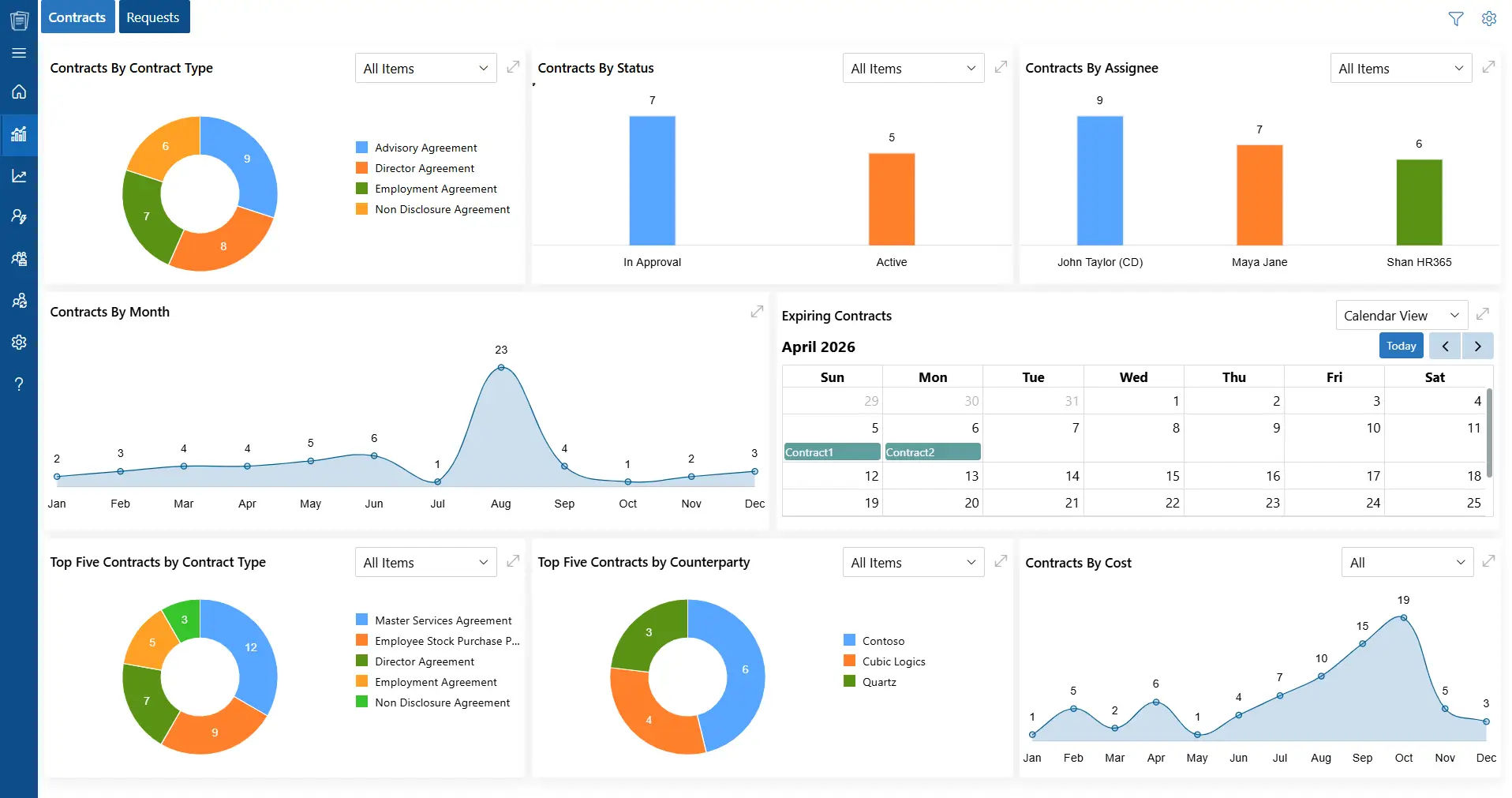
CLM 365 helps import, export, logistics, and procurement teams manage freight contracts in one place. Built within the Microsoft ecosystem, it works with SharePoint, Microsoft Teams, Outlook, Microsoft Copilot, Power BI, and Power Automate, allowing teams to manage entire contract lifecycle.
Manage freight contracts with AI: Extract carrier terms, freight rates, shipment volumes, service requirements, and key obligations from contracts to make important information easier to track and use.
Track freight contract changes: Manage rate updates, lane changes, amendments, renewals, and other contract changes while helping teams identify the latest applicable terms.
Monitor carrier obligations and performance: Track agreed service levels, capacity commitments, renewal dates, and other responsibilities so teams can identify issues before they affect freight operations.
Connect freight contract data across teams: Give procurement, logistics, finance, and legal teams access to the contract information they need while maintaining appropriate access control.
- Built for secure enterprise use: CLM 365 is backed by SOC 2 compliance, Microsoft certification, and Microsoft Solutions Partner status, with support for GCC and GCC High environments for organizations with advanced security requirements.
Conclusion
Signing a freight contract is only the beginning. Rates change, surcharges appear, carrier commitments shift, and old terms get replaced. Without proper management, it is easy to miss what you agreed to and what you are actually paying.
CLM 365 helps teams manage freight contracts, rates, obligations, amendments, approvals, and renewals in one place.
Frequently Asked Questions
What information should be captured from a freight contract?
Important information includes carrier details, lanes, rates, effective dates, renewal terms, fuel rules, volume commitments, service levels, payment terms, and obligations.
What makes freight contract management difficult for large shipping operations?
Multiple carriers, trade lanes, transportation modes, rate structures, amendments, and renewal dates make it difficult to maintain a consistent view of contract terms.
Which freight contract dates deserve the most attention?
Effective dates, rate-change dates, renewal dates, termination notice periods, insurance expirations, and other obligation deadlines should be monitored.
Can different teams access the same contract in CLM 365?
Yes. Procurement, logistics, finance, legal, and other teams can access the contract information relevant to their responsibilities while access controls protect sensitive information.
Does the system help teams across different locations manage freight contracts together?
Yes. With Microsoft Teams integration, CLM 365 helps teams across different offices collaborate on freight contracts, access the information they need, manage approvals, and stay updated on contract changes.