

Employee Mileage Reimbursement: A Complete Guide for Modern Businesses

Managing business travel expense is no longer an occasional line item it is a core operational expense for companies of every size.
As travel budgets grow, so does the complexity of managing what employees spend on the road. Among the many categories of business travel costs, employee mileage reimbursement stands out as one of the most frequently managed.
Still managing reimbursements with spreadsheets? There’s a smarter way. This blog covers what expense reimbursement is, what companies typically cover, and how processes like mileage and travel work. It also highlights common challenges and how to simplify everything with smarter solutions.
A projected $1.57 trillion in global business travel spend in 2025 marks a new record high, according to the GBTA’s annual Business Travel Index Outlook report.
From sales teams driving to client sites to finance managers attending trade shows, employees are consistently using their personal vehicles for work-related purposes. This guide walks through everything companies need to know about managing employee mileage reimbursement the right way.
What Is Employee Expense Reimbursement?
Employee mileage reimbursement is the process by which a company compensates employees for out-of-pocket costs incurred while performing work-related duties. When an employee spends their own money on a legitimate business expense whether it is a flight, a hotel stay, a client dinner, or fuel for a work-related drive the company pays them back for that amount according to its internal mileage reimbursement policy.
The process involves employees submitting claims with receipts or mileage logs, followed by approval and reimbursement via payroll or bank transfer.
For example, if an employee drives 300 miles at $0.67/mile, they claim $201. Adding $130 for meals and parking brings the total to $331 for that month.
At scale, this adds up fast 50 employees claiming around $400/month results in nearly $240,000 annually, making accuracy and efficiency critical.
What Expenses Can Be Reimbursed by a Company?
Companies typically define reimbursable expense within their travel and expense policy. While the specific scope varies by organization and jurisdiction, the following employee mileage reimbursements are commonly eligible for claims.
- Airfare and train tickets for approved business travel
- Hotel accommodation during work-related trips
- Meals and per diem allowances while traveling for business
- Ground transportation, including taxis, rideshares, and rental cars
- Mileage when using a personal vehicle for work-related driving
- Visa and passport fees for international business trips
- Travel insurance purchased for approved business trips
Each of these categories should be clearly defined in the company’s expense policy, along with spending limits, documentation requirements, and the approval process for each type of claim.
Claims Covered During Employee Expense Reimbursement
In addition to the overall travel expenses, there are certain travel-related situations that are directly in the domain of employee mileage reimbursement. Understanding such situations will enable employees and finance departments to know what kinds of trips should be claimed.
- Driving to the Airport for Business Travel: When an employee drives to the airport in his or her personal car to make an approved business trip, the mileage is tracked. Employee mileage reimbursement involves the back trip on arrival. Companies must determine whether they are reimbursing on a distance basis form home or office or shortest distance and this should be clearly spelt out in policy.
- Travelling to Meet Clients Off-Site: Client visits are among the most frequent and valid reasons for making mileage claims. The fact that an account manager drives in town to the headquarters of a prospect, or a field technician drives to a customer site to deliver services, these are direct business functions
- Attending Meetings and Trade Shows: Employees who drive in their personal vehicles to industry conferences, trade shows or external business meetings are usually entitled to employee expense mileage reimbursement. Although the event is in the same city, it is not the normal place of work of the employee. Such trips usually require high-level permission from companies to maintain claims within the budget.
- Trips for Business Purchases: In the case of employees who drive to buy supplies, equipment, or materials on behalf of the company, such miles are reimbursable. This is typical in smaller companies where employees can take up office supplies to the bank or collect products with suppliers. Employee mileage reimbursement
claims must have a clear log of the purpose of the trip, the destination and the distance to ensure that they stand during the audit.
How Do Companies Finalize Business Travel Expenses?
Business travel expenses do not end with approving a claim and paying. Businesses assess travel expenses in various perspectives to safeguard the financial well-being, business integrity, and legal status.
1. Travel Policy and Approval Process
Employee mileage reimbursement must be based on a written travel policy specifying allowable expenses, expenditure limits and approval chain. Most organizations demand pre-authorization before a trip is made before traveling by air, staying overnight, or even traveling overseas. The travel approval system reduces chances of unwarranted or unnecessary expenditure and provides the finance teams the visibility.
2. Cost Evaluation and Operational Efficiency
Finance departments determine whether the expense of a trip is related to the purpose of its operation. Is the flight chosen the most economical one within the travel expense policy limits? Was the meeting possible online? These are normal checkpoints which ensure that travel does not run out of control.
3. Purpose and Return on Investment
Business travel must create tangible value. Businesses are increasingly requesting employees to write down the reason why they are traveling and, where feasible, to tie it to a business result. It is not so much about administration but rather about instilling accountability in the expense culture. In cases where employees know that business impact is used to assess travel decisions.
4. Client Requirements and Business Justification
In client-facing businesses, there is no bargaining in the case of travel, it is a requirement of the relationship or a contract. The business justification is easy to see in such instances and the cost is simpler to sanction. Finance departments ought to establish a lean travel road that is client-oriented but upholds documentation requirements.
5. Data Management and Regulatory Compliance
All travel and expense information should be kept in a manner that is amenable to internal audit and external regulatory needs. Mileage logs, receipts, and approval records are expected to be kept in most jurisdictions over a specified period, usually three to seven years. Employee mileage reimbursement
is now digital, and this is much easier to manage than paper-based filing, and the records are and available when required.
How Does Employee Mileage Reimbursement Work?
Employees travel for business purposes (client visits, meetings, site work).
- The distance travelled is recorded using mileage logs or tracking tools.
- Total miles are calculated and multiplied by the company’s approved reimbursement rate.
- Employees submit a mileage claim with details like date, purpose, and distance.
- The claim is reviewed and approved by the concerned authority.
- Once approved, the reimbursement is processed via payroll or direct transfer.
A sales executive travels 300 miles in a month for client meetings. At a rate of $0.67 per mile, the reimbursement amount would be $201.
Why Manual Processes Fail During Mileage Reimbursement?
Despite the straightforward nature of the calculation, Employee mileage reimbursement
consistently breaks down when companies rely on manual tracking methods. Here are five core challenges that manual processes create.
1. Inaccurate Mileage Logs
When the employee manually enters the trip distances, be it on paper or on a spreadsheet, there is a high probability of inaccuracy. Employees can approximate distances instead of measuring them accurately, round off numbers or even fail to record trips at all. These discrepancies over time add up to either underpayment (damaging to the satisfaction of the employees) or overpayment (damaging to the costs).
2. Delayed Submissions and Approvals
Paper processes are based on the employees remembering to file claims and the managers having time to go over them. Employees submit months of mileage into one submission, which makes them have a huge amount of data to be processed. This slows down the employee mileage reimbursement
cycles and causes inconvenience to the cash flow of the employees who have been covering business travel personally.
3. Lost or Incomplete Documentation
Tax compliance requires that the mileage claims must be backed up by sufficient records. Manual logs, which do not contain the necessary fields, such as purpose of trip, route details, date, etc., might not survive an audit. Paper-based logs may be misplaced completely exposing companies to compliance risk.
4. Lack of Policy Visibility
When mileage policies are stored in a PDF on a shared drive or embedded in an employee handbook, employees often do not know what qualifies for reimbursement. This leads to a high rate of non-compliant claims, which creates additional work for finance teams while managing employee mileage reimbursement.
5. No Central Oversight or Reporting
Manual mileage reimbursement provides finance leaders with much insight into spending patterns. In the absence of centralized data, outliers are hard to determine, travel budgets are hard to predict, and informed decisions. All claims are isolated and not a subset of a larger, analyzable set of data.
How Expense 365 Helps in Reimbursing Expenses?
Managing employee mileage reimbursement and broader travel expenses involves multiple moving parts from initial logging and policy validation. Here are some important features to consider.
1. AI-Powered Receipt Scanning
Expense 365 uses AI to extract data of receipts when they are scanned. The employees can take a picture of a receipt on their phone and the system will automatically fill the expense fields – amount, date, vendor, and category. The AI powered expense management will do away with the manual entry and the employees will have more time to work on their real work.
2. Automated Approval Workflow
Claims do not remain in the inbox of a person waiting to be attended to. Expense 365 processes each employee mileage reimbursement submitted in a predefined chain of approval depending on the grade of the employee, department or the type of expense. Approvers are notified, can see claims in context and act on the platform. Automated expense software continues to keep the reimbursements flowing without necessarily following up.
3. Employee Reimbursement
The expense management platform manages the entire reimbursement process of submission to payment. The approved expenses are handled effectively, and both the employee and the finance team can fully understand the status of every claim. Employees are aware of the time when they will receive payment, and this instills confidence in the process.
4. Mileage Tracker
The employee mileage reimbursement has an inbuilt mileage tracking option that logs trips precisely according to the distance traveled and the rate that is given to the employee based on his/her grade. The employees do not have to keep separate records or count the sums manually anymore, the system does it automatically, and the right rate is used at the time of entry.
5. Manage Expenses in Multiple Currencies
Manage multi-currency expenses in real time Expense 365 supports multi-currency expenses with real-time conversion and reporting. A good employee mileage reimbursement process helps organizations with employees working in other countries or with operations in multiple markets. Finance teams have a uniform perspective of aggregate expenditure irrespective of the currency in which an expense was initially incurred.
6. Corporate Card Management
Employee mileage reimbursement manages corporate card transaction to the expense management process. The automatic card spend is matched to expense reports and saves the manual reconciliation effort that usually falls on both the employees and finance teams. This provides the companies with better control over card usage and clear employee mileage reimbursement cycles.
7. Expense Reporting
Expense 365 produces transparent, usable reports with all expense data in a central system, allowing finance leaders to use them to plan their budgets. Expense reports can be sorted by employee, department, project or expense category providing decision-makers with the granularity control. This helps the CFO determine the expense spend and accurate employee mileage reimbursement process.
Best Practices to Implement in the Expense Reimbursement Process
A well-designed employee mileage reimbursement process protects both the company and the employee. The following five best practices provide a strong operational foundation.
1. Establish a Clear, Written Expense Policy
Uncertainty in expense policy is among the main causes of failure of reimbursement processes. The employees make claims on expenses they consider to be legitimate, and the claims are then reworked to all the parties concerned. An effective policy eliminates such unclarity.
- Explain what is considered an eligible and ineligible expense and provide examples
- Establish per-diem rates, per-trip expenditure caps, and pre-approval caps by expense type
- Revise and revisit the policy at least once in a year to capture any changes
2. Require Standardized Documentation for Every Claim
Consistent documentation is the backbone of a accurate expense record. In case a company is going to be audited by tax authorities or even just balance monthly accounts, it becomes much more credible to have all the records of all claims.
- Make employees record date, purpose, route and distance of each mileage claim
- Establish minimum requirements of documentation
- Digital submission tools should be used to ensure that records are automatically stored
3. Separate Business Miles from Personal Miles Clearly
This is one of the most frequent causes of inaccuracy in employee mileage reimbursement blending personnel and business driving. Those employees who use their car as both a work and personal vehicle should have a good way of dividing the two.
- Train employees to record trips in real time instead of trying to remember them later
- Clarify the types of trips that are eligible like and those that are not, including commutes
- Leverage mileage tracker that enables the employees to classify every trip
4. Set a Consistent Reimbursement Schedule
Delayed reimbursements are a significant source of employee dissatisfaction. When employees regularly wait six to eight weeks to be paid back for out-of-pocket expenses, it creates financial strain and reduces confidence in the company’s administrative processes.
- Define a fixed employee expense reimbursement cycle monthly or bi-weekly and communicate it clearly to all employees
- Set internal submission deadlines so that claims are reviewed and processed
- Monitor average processing times as an operational metric, with a target to reimburse approved claims
5. Audit Expense Claims Regularly
Even well-designed processes benefit from periodic review. Regular audits help identify patterns of non-compliance, policy gaps, and opportunities to tighten controls without creating unnecessary friction for employees.
- Review a small set of mileage claims every quarter to check accuracy
- Highlight unusual mileage patterns for a quick review
- Use these insights to improve policies and guide employees
How Expense 365 Helps Manage Employee Mileage Reimbursement?
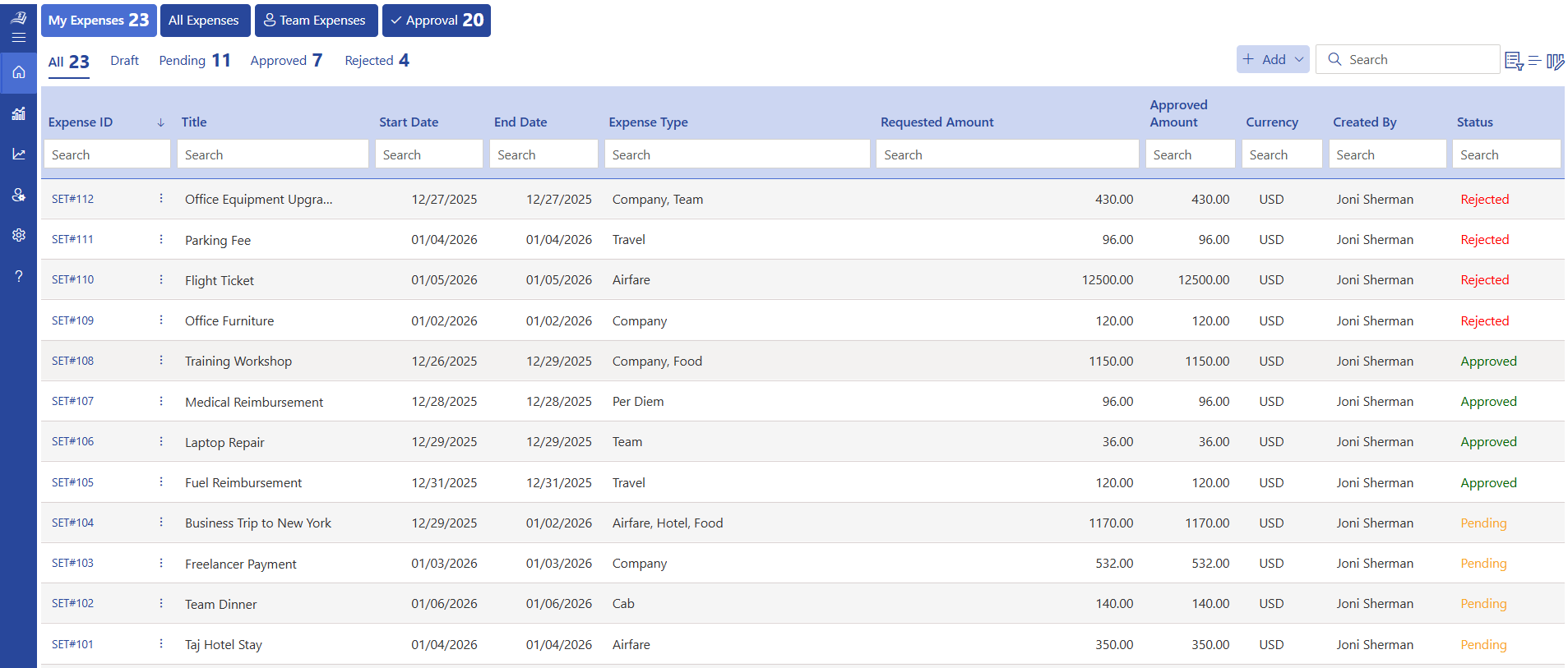
Expense 365, also known as Expense Tracker 365, helps organizations manage employee expenses in a simple and organized way. With its mobile app, employees can capture receipts and submit expense reports anytime, making the process faster and easier.
The platform is built on Microsoft 365 ecosystem, and it integrates smoothly with Microsoft tools like Teams, Outlook, and SharePoint, making it a great fit for companies already using Microsoft.
It also allows you to rate and calculate mileage accurately, track travel expenses, and automatically compute reimbursements based on set rates. You can organize expenses with custom categories, record trips even without internet access, and generate detailed reports with easy export options for better tracking and insights.
Setting Up Effective Employee Mileage Reimbursement with Expense 365
Getting mileage reimbursement up and running in Expense 365 is a straightforward configuration process that takes minutes to complete and delivers lasting operational benefit.
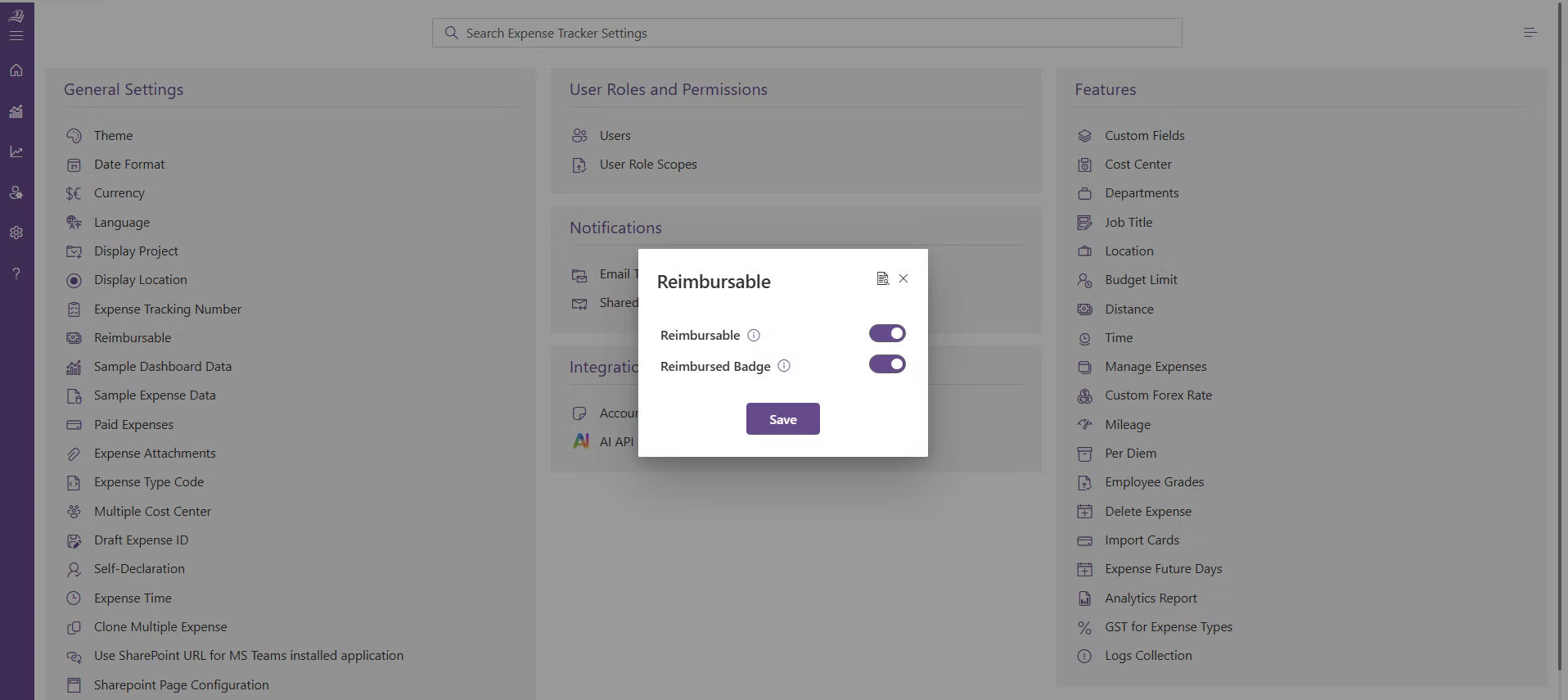
- Enable mileage tracking from the General Settings.
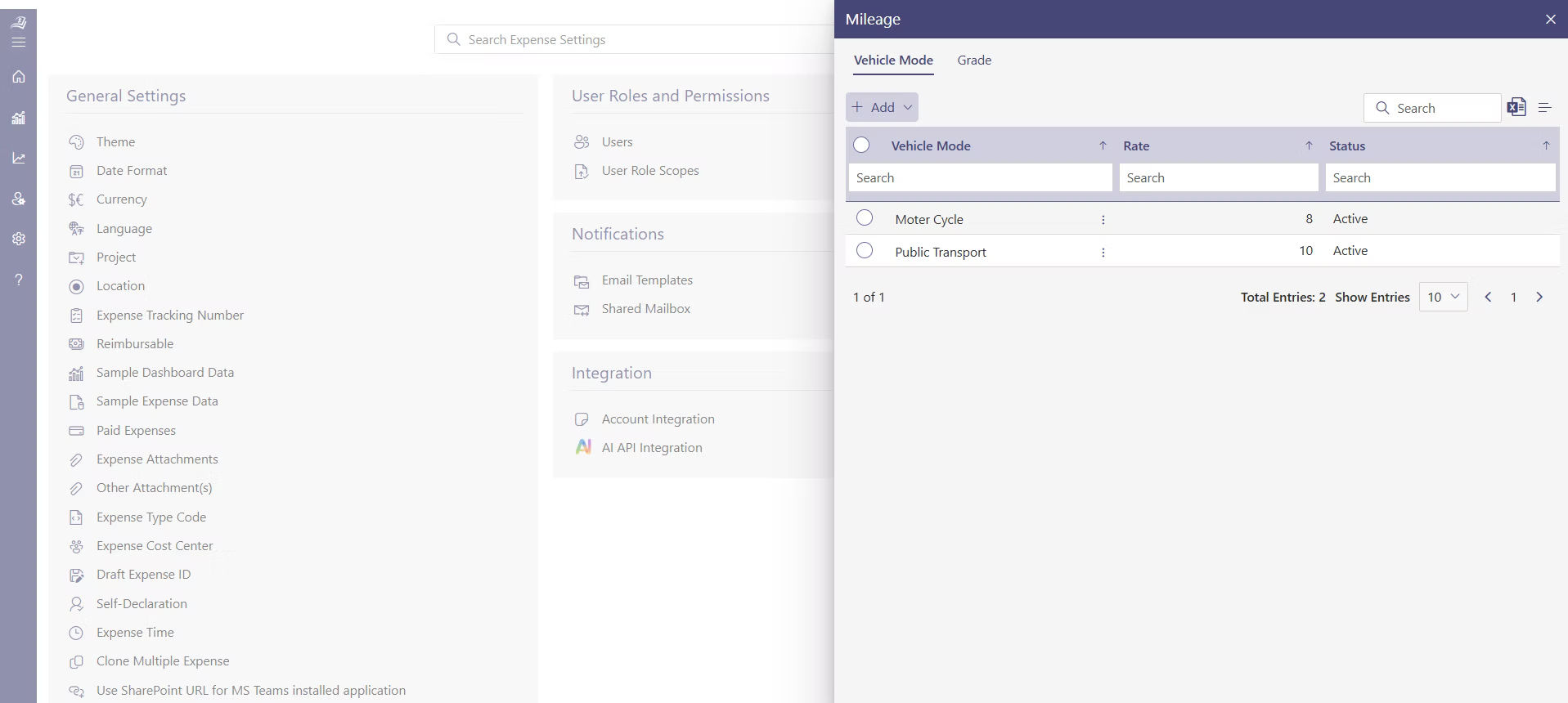
- Add grades and assign a rate for each grade in the mileage section.
- Assign the appropriate grade to each user in the User module.
- When an expense is created, the system automatically applies the rate based on the user’s grade.
- The total cost is calculated automatically using the distance traveled and the assigned mileage rate.
Conclusion
Employee mileage reimbursement may seem like a routine administrative function, but its impact reaches further than most organizations realize. Inaccurate records, delayed payments, and unclear policies create friction for employees and compliance risk for finance teams.
As business travel continues to grow toward record levels globally, the organizations that invest in a structured process will be better positioned to control costs.
Simplify your expense and mileage management with Expense 365. Start your 14-day free trial today and experience a faster, more accurate way to handle reimbursements.
Join Our Creative Community
Frequently Asked Questions
How can a mileage tracking app minimize errors in distance-based claims?
A mileage tracking app improves accuracy by automatically recording distance and calculating reimbursement using predefined rates. This removes manual calculations, ensures correct rate usage, and keeps all employee mileage reimbursement consistent and easy to verify.
How does a mileage tracking app manage different reimbursement rates for various employee levels?
The app assigns specific mileage rates based on employee grades or roles. When a claim is submitted, the correct rate is automatically applied according to the user’s assigned grade, removing the need for manual selection.
What is the best way to ensure accurate mileage reimbursement without manual mistakes?
Using a mileage tracking app helps automate the entire process by capturing distance, applying set rates, and calculating totals instantly. This ensures accuracy, consistency, and simplifies verification.
Which expenses are considered eligible for reimbursement?
Any cost that is directly connected to business activities such as client meetings, travel, accommodation, meals, or work-related purchases is typically eligible for reimbursement.
How are business travel expenses usually grouped?
Travel-related expenses are generally categorized into transport, accommodation, meals, and other miscellaneous costs for better tracking and reporting.


_JiluXJRGNl.svg)























