
AI Based Contract Management: Manage Contract with Agentic AI

- AI contract management reduces manual effort and speeds up contract workflows.
- McKinsey reports that 78% of organizations now use AI in at least one business function.
- AI can quicklyidentifyclauses, obligations, and risks from contracts.
- Faster insights and smart automation improve accuracy and decision-making.
Contracts are the foundation of every business relationship vendor agreements, employment terms, SaaS subscriptions, NDAs, partnership deals. And yet, for most companies, reviewing contracts still means digging through folders or monitoring it manually.
That is changing fast.
AI based contract management is moving from a “nice to have” into a genuine operational need, especially as legal and procurement teams face growing workloads with limited headcount.
This blog breaks down how it works, where it helps the most, and what you should know before adopting it.
What Is AI Based Contract Management?
AI-based contract management uses AI to summarize, review, analyse and suggest contract clauses for faster and smarter legal workflows.
Unlike traditional contract management software that simply stores and organizes documents, AI contract management software actively reads, understands, and acts on contract content. It can flag risky clauses, extract key dates, compare language against your playbook, and even suggest edits all without a human reading every line.
Why Contract Management Breaks Down Without AI?
Reddit’s communities ask variations of the same questions regularly.
- “How do you keep track of 200+ vendor contracts with renewal clauses?”
- “Is anyone else manually reviewing NDAs line by line? There has to be a better way.”
- “Our legal team is spending most of their time on contracts. Is that normal?”
A survey from ALM and Bloomberg Law found that contracts-related tasks represent at least half of the daily work of more than 4 in 10 corporate counsel (43%). That is a significant chunk of time for highly trained professionals to spend on tasks that are repetitive, volume-heavy, and increasingly automatable.
The core problems without AI:
Understanding the procurement contract process helps teams move faster, catch issues early, and build stronger vendor relationships. Here is how it typically works.
Volume:
A mid-size company can have thousands of active contracts at any time. Keeping track of obligations, deadlines, and terms manually is not just difficult it is a liability.
Inconsistency:
When different people review contracts, they apply different standards. One reviewer catches a liability cap issue; another misses it entirely.
Slow cycles:
Contract approval cycles that take two to three weeks can delay revenue, frustrate partners, and create operational drag.
Hidden risk:
Problematic clauses auto-renewals, uncapped indemnities, unilateral amendment rights often go unnoticed until they matter.
Agentic AI isn’t the future; It’s already here with CLM 365
From summarizing legal jargon and analysing clauses to highlighting risks and obligations, AI does it all in one secure platform.
How AI Powered Contract Management Actually Works?
A lot of people hear “AI based contract management” and wonder what the AI is actually doing behind the scenes. It is not magic and it is not just keyword search.
Step 1: Upload the Contract
The process starts by uploading the contract into the system whether it is an NDA, vendor agreement, procurement contract, or employment agreement.
Step 2: AI Scans and Understands the Contract
The AI analyse the entire contract. Instead of only searching for keywords, it understands the meaning and context of clauses. For example, it can recognize that “limitation of liability” and “liability cap” may refer to the same concept even when written differently.
Step 3: AI Compares It Against Standards
The AI based contract management compares the contract with your company’s approved clause language, legal playbooks, and industry standards. If something appears unusual or non-standard, the AI highlights it automatically.
Step 4: AI Detects Risks
The AI based contract management identifies risky clauses, missing terms, unusual payment conditions, weak confidentiality language, or auto-renewal terms. It also assign risk scores, making it easier for legal teams to review and address potential contract risks faster.
Step 5: AI Extracts Important Information
The AI based contract management automatically pulls key details like contract dates, parties involved, payment terms, governing law, renewal deadlines, and termination rights. This turns contracts into structured and searchable data.
Step 6: Teams Review Faster
Instead of manually reviewing every page, legal and procurement teams focus only on the sections that need attention. This speeds up contract reviews, improves compliance, reduces risks, and helps businesses make faster decisions.
If your legal team still reviews clauses manually, explore CLM 365
What AI Can (and Cannot) Do in Contract Review?
There is a lot of hype around AI in legal work. It is worth being clear about what it is genuinely good at and where humans still need to be in the loop.
What AI does well:
- Reading and extracting information from large volumes of contracts quickly
- Identifying clause types and comparing them to standards or playbooks
- Flagging inconsistencies, missing provisions, and unusual language
- Summarizing long contracts into key points for faster human review
- Tracking data points across an entire contract portfolio
What AI does not replace:
- Legal judgment on novel situations
- Relationship-based negotiation strategy
- Understanding broader business context behind a deal
How Different Teams Use AI Based Contract Management?
AI based contract management is not just for legal teams it helps multiple departments collaborate faster, reduce manual work, and manage contracts more efficiently across the organization.
Legal Teams
Primary use: speeding up review cycles, maintaining playbook compliance, reducing manual work on routine contracts (NDAs, MSAs, SOWs).
Secondary use: portfolio-level analysis identifying which contracts have unfavourable auto-renewal terms, which vendors have uncapped liability exposure, which agreements are coming up for renewal.
Procurement and Supply Chain
Supplier contracts are a high-volume, high-stakes area. Gartner predicts that by 2027, 50% of organizations will support supplier contract negotiations through AI-enabled contract analysis and editing tools. Procurement teams use AI-based contract management to spot risky clauses before they sign and ensure pricing terms are followed.
Sales Teams
Sales-side contracts (order forms, SaaS agreements, channel agreements) move fast. AI based contract management helps sales operations teams get contracts reviewed and redlined quickly without waiting in the legal queue for days.
HR and People Operations
Employment agreements, offer letters, contractor agreements, and separation packages are all contracts. HR teams use AI based contract management to maintain consistency, flag state-specific compliance gaps, and automate routine document generation.
Non-legal teams struggling with legal jargon? CLM 365 makes it easier
Features of AI Powered Contract Management
AI based contract management is changing the way businesses handle contracts by making reviews, tracking, and contract analysis faster and easier. Below are some of the major features offered by AI powered contract management systems.
1. Instant Contract Summaries
Contracts are often long and difficult to review quickly. AI helps by reading the entire agreement and generating a concise summary of the most important information.
The AI based contract management can identify details such as:
- Contract scope
- Payment terms
- Renewal dates
- Key deadlines
- Important legal considerations
For example, a manager reviewing a vendor contract can immediately understand the payment structure and contract duration without reading every page manually.
2. Real-Time Clause Suggestions
Contract clauses frequently change during negotiations and reviews. Tracking these edits manually can become difficult, especially in large agreements. AI based contract management can analyse contract language in real time. For instance, while editing a liability clause, the platform may recommend alternative language commonly used in similar contracts.
3.Obligation Management
Contracts include many ongoing responsibilities beyond signing the agreement. These may include deadlines, renewals, reporting requirements, or payment commitments. AI identifies these obligations directly from the contract and monitors them throughout the contract period. The AI based contract management can also send reminders before important due dates.
4. Risk Identification
Not every contract follows the same structure or wording. Some terms may introduce legal or business risks that require closer attention. AI based contract management compares contract language against company policies, approved templates, and predefined rules. It can highlight unusual clauses, missing terms, or language that differs from standard practices
5. Version Comparison
Contracts usually go through multiple revisions before final approval. Comparing different contract versions manually can be time-consuming and prone to oversight. AI based contract management automatically compare contract drafts and highlight changes in wording, clauses, pricing terms, or responsibilities.
For example: Teams can quickly identify whether new payment conditions or additional obligations were added between two versions of a contract.
6. AI Agents for Contract Understanding
AI agents help users understand legal language in a much simpler way. Instead of relying entirely on legal teams, users can select a clause and receive a plain-language explanation of its meaning. AI based contract management enables non-legal departments such as sales, procurement, or operations to better understand
- Contract terms
- Responsibilities
- Conditions
- Potential implications
AI agents may also explain why a clause exists and how it is commonly used in business agreements, making contracts easier to interpret across teams.
7. Workflow Automation
Many contract-related activities are repetitive, including drafting agreements, selecting clauses, routing documents for approval, and managing review processes.
AI based contract management automates these routine tasks by:
- Generating contract drafts
- Inserting approved clauses
- Sending agreements to the right reviewers
- Streamlining approval workflows
Benefits of Using Contract Lifecycle Management with AI
AI based contract lifecycle management helps organizations handle contracts more efficiently from creation to renewal. Below are some of the major benefits of using AI powered contract management solutions.
1. Improved Operational Efficiency
Drafting, reviewing, and managing contracts often takes a significant amount of time for legal teams. A large portion of daily work is spent reading documents, checking clauses, and tracking contract details manually. AI powered contract management simplifies these activities by automatically organizing contract data, identifying key information, and reducing repetitive tasks.
2. Greater Consistency and Accuracy
Manual contract reviews can sometimes lead to inconsistencies, especially when teams handle large numbers of agreements. AI powered software review contracts using predefined standards and structured rules. The platform consistently identifies important clauses, missing terms, and language deviations across agreements.
3. Better Contract Visibility
Organizations often manage hundreds or even thousands of active agreements at the same time. Without centralized visibility, tracking contract status and obligations becomes difficult. Contract lifecycle management with AI stores all information in one centralized system, making agreements easier to monitor.
Teams can quickly view:
- Active contracts
- Renewal timelines
- Important milestones
- Key responsibilities
- Pending actions
This improved visibility supports better planning, faster decision-making, and stronger contract oversight across departments.
4. Context-Aware Contract Analysis
Every contract differs based on business needs, industry requirements, location, and legal policies. A generic review approach may not always provide relevant insights. The AI based contract management analyzes agreements based on their specific context, including contract type, business purpose, and internal company standards.
5. Stronger Collaboration Across Teams
Contracts involve multiple departments, including legal, finance, procurement, sales, and operations. Managing communication between teams can become challenging when information is scattered across different systems. AI based contract management creates a centralized environment where teams can securely access the same contract information.
Important Things to Consider Before Implementing AI in Contract Management
Implementing AI based contract management can improve efficiency, reduce manual work, and increase visibility into contracts. Here are the key factors businesses should evaluate before implementation.
1. Identify the Core Business Problem
Before adopting AI based contract management, clearly define what issue you are trying to solve. Some companies struggle with slow contract reviews, while others face challenges with tracking renewals, approvals, or compliance obligations. Understanding the exact challenges and it helps avoid investing in unnecessary features.
2. Review Data Quality and Contract Structure
AI based contract management is best when contracts are organized and accessible. Businesses should assess whether their existing agreements are stored properly, searchable, and standardized enough for AI analysis.
3. Ensure Integration with Existing Systems
Before implementing AI based contract management, make sure the platform integrates smoothly with the tools your teams already use daily. This includes systems like Microsoft Copilot and collaboration tools.
4. Assess Team Readiness and Adoption
Even advanced AI tools fail if teams are not prepared to use them effectively. Businesses should evaluate whether legal, procurement, and operations teams are ready for process changes, onboarding, and ongoing adoption efforts.
5. Consider Scalability for Future Growth
The chosen AI powered contract management should support future business expansion. As contract volume increases, the platform should be capable of handling more users, workflows, and contract types without creating operational bottlenecks.
Common Mistakes When Adopting AI for Contracts
As more businesses adopt AI for contract management, many teams discover that success depends not just on the technology itself, but on how thoughtfully it is implemented across people, processes, and workflows.
1. Give the AI Time to Learn Your Process
AI contract tools work best when they are tailored to your organization’s standards and workflows. Uploading your playbook, setting clause preferences, and defining approval rules helps the system deliver more accurate and meaningful results.
2. Involve Legal Teams Early in the Journey
Successful AI adoption works best as a collaborative effort. When legal teams are included in selecting the platform and shaping the review guidelines, adoption becomes smoother and teams feel more confident using the technology in their daily work.
3. Strengthen Existing Processes Before Automation
AI can improve efficiency, but it works best when built on clear and organized workflows. Taking time to simplify contract intake and approval processes before automation helps create a smoother and more reliable experience across teams.
4. Think Beyond Contract Creation and Review
While drafting and reviewing contracts are important, post-signature activities also deserve attention. Tracking obligations, managing renewals, and monitoring compliance are all essential parts of the contract lifecycle.
5. Build Clear Data Governance Practices
Contracts often contain highly sensitive business and personal information. Before implementing an AI-powered contract management solution, it is important to establish clear policies around data access.
How Does CLM365 Agentic AI Simplify Contract and Clause Management?
CLM365 is built within the Microsoft ecosystem and integrates seamlessly with Microsoft SharePoint, Microsoft Teams, Outlook, Microsoft Copilot, Power BI, and Power Automate.
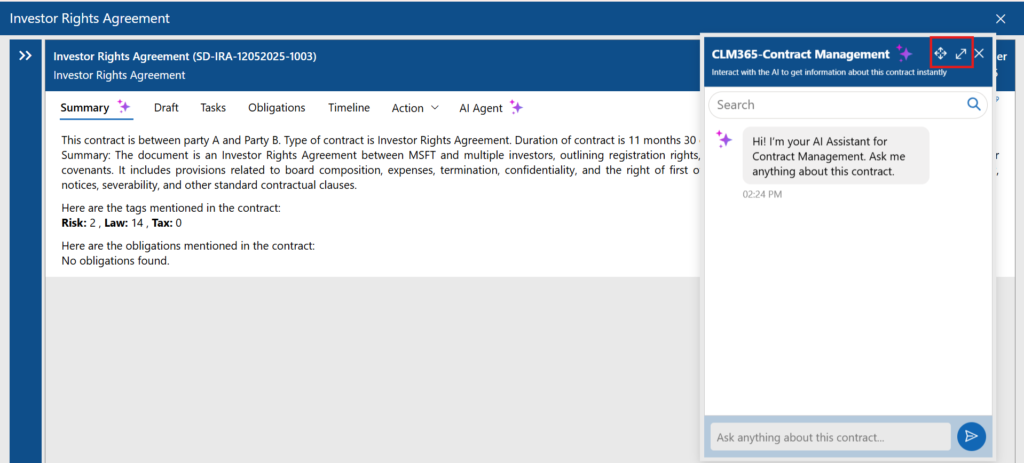
With CLM365 Agentic AI, teams can simply upload contracts into the system and use simple prompts to instantly summarize agreements, analyze clauses, identify potential risks, and highlight key obligations.
Backed by SOC 2 compliance, Microsoft certification, and Microsoft Solutions Partner status, CLM365 provides a trusted and secure environment for modern contract management.
Conclusion
Procurement contracts are more than just documents they are the foundation of your vendor relationships and business operations. A well-written contract reduces risks, sets clear expectations, and protects both parties from misunderstandings.
AI based contract management is no longer just an emerging trend. Teams across legal, procurement, sales, and HR are already using AI to manage contracts faster, improve consistency, and reduce risk.
The organizations seeing the best results are the ones that combine AI with clear processes, strong collaboration, and the right human oversight.
Ready to see how AI can improve your contract workflow? Explore CLM 365 with a 14-day free trial.
Frequently Asked Questions
Can AI summarize long contracts in simple language
Yes. Most AI-powered platforms can generate easy-to-understand summaries using simple prompts.
What types of contracts can AI handle?
Most systems support NDAs, vendor agreements, employment contracts, procurement contracts, sales agreements, and more.
Can AI extract important dates automatically?
Yes. AI can identify renewal dates, termination dates, notice periods, and payment milestones automatically.
Can AI support multilingual contracts?
Some advanced platforms support multiple languages and multilingual clause analysis.
How long does it usually take to implement an AI contract management system?
Modern AI contract management platforms can be implemented much faster than traditional systems. Many organizations can start uploading contracts, analysing clauses, tracking obligations, and automating workflows.
Table of Contents
- How Does CLM365 Agentic AI Simplify Contract and Clause Management?

Trusted by the Best

_JiluXJRGNl.svg)























