

SaaS Contract Management: How It Works, Benefits & Features

SaaS contract management is the process of creating, reviewing, storing, tracking, and renewing contracts.
- SaaS contract management covers contracts from creation through renewal or termination.
- Renewal dates, pricing, usage rights, SLAs, security obligations, and auto-renewal clauses require special attention.
- Centralized contract data helps legal, procurement, IT, finance, and sales work from the same information.
- Automation reduces manual approvals, missed renewals, and contract search time.
- AI can extract clauses, summarize agreements, identify obligations, and surface contract risks.
Missed renewal deadlines, auto-renewals, unused licenses, scattered contracts, and unclear terms can lead to unnecessary costs, compliance issues, and poor visibility
A structured SaaS contract management process helps legal, procurement, finance, IT, and business teams stay in control of contracts and make better renewal and vendor decisions.
In this guide, you’ll learn how SaaS contract management works, its key benefits, important terms to track, best practices, and how SaaS contract management software can simplify the process.
What Is SaaS Contract Management?
At its core, SaaS contract management helps organizations maintain clarity across software agreements while aligning legal terms with operational and financial goals.
In contrast to the conventional software purchases, it establish rights of use, contract renewal, pricing schemes, service provisions, data management obligations, and termination conditions during a continuous duration.
In its essence, SaaS contract management assists companies to have transparency in software agreements and to coordinate legal terms with business and financial objectives.
How Are SaaS Contracts Different from Other Contracts?
The nature of SaaS contracts is different than the traditional contracts. Unlike most contracts where the parties are involved in a one-time transaction or set deliverables, SaaS contracts establish a continuous service relationship.
1. Subscription-Based Nature
SaaS agreements tend to be monthly or yearly subscriptions. The payments are recurring, and it means that the teams should be aware of the renewal dates, and any restrictions of its use. Monitoring such information prevents any unforeseen expenses and enables more efficient budgeting.
2. SaaS Contracts Require Ongoing Renewals
Contract renewals are crucial to the subscription based businesses since most of the contracts are subscriptions. This renders it a very important task of legal, sales, and customer success teams to track renewal dates. Although it is easy to handle renewals when the customer base is small, it becomes a challenge when the business is large and the number of contracts.
3. Complex Language in SaaS Contracts
B2B SaaS contracts can be filled with dense and technical language. The reason is that they specify such critical areas as software use, service expectations, and data responsibilities. Most agreements also describe the way customer data is processed, stored and secured. Although this information is necessary, it may slow down the process of creating contracts particularly among sales teams.
4. Data and Security Clauses
Because SaaS vendors tend to deal with sensitive and business-related information, contracts have data protection terms. This includes the storage location, the hosting location, the duration of storage, and the eventuality of a security incident. These provisions contribute to the development of trust and the facilitation of contract compliance.
5. Frequent Amendments
SaaS contract management are revised more frequently compared to conventional agreements. Businesses can add users, increase features or modify pricing plans as they grow or evolve. The frequent alterations of these changes render it significant to follow up on the contract changes and keep up with the prevailing business requirements
Key SaaS Contract Terms You Should Track
SaaS contracts contain terms that directly affect cost, renewals, service performance, data security, and legal risk. Tracking these terms helps businesses avoid unexpected expenses, missed deadlines, and compliance issues.
- Subscription term: Defines the contract start date, end date, and overall subscription period.
- Auto-renewal clause: Explains whether the agreement renews automatically when the current term ends.
- Renewal notice period: Specifies how much notice is required to cancel, renegotiate, or change the agreement before renewal.
- Pricing and price escalation: Covers subscription fees, payment terms, renewal pricing, and any permitted price increases.
- User and usage limits: Defines restrictions on users, licenses, storage, transactions, API calls, or other usage levels.
- SLA and uptime commitments: Sets expectations for service availability, response times, performance, and support.
- Data security and processing: Explains how business and customer data must be stored, protected, processed, and handled.
- Data ownership and portability: Clarifies who owns the data and how it can be exported or transferred when the contract ends.
- Termination rights: Defines when either party can terminate the SaaS contract and any conditions, fees, or notice requirements involved.
- Liability and indemnification: Explains how financial and legal responsibility is divided if losses, claims, security incidents, or contract breaches occur.
Why Managing SaaS Contracts Effectively Is Important?
Organizations today rely on many SaaS tools. Each tool comes with its own contract terms, billing cycles, and obligations. Without a clear system in place, businesses may face issues related to cost control, compliance, and operational alignment.
1. Financial Oversight
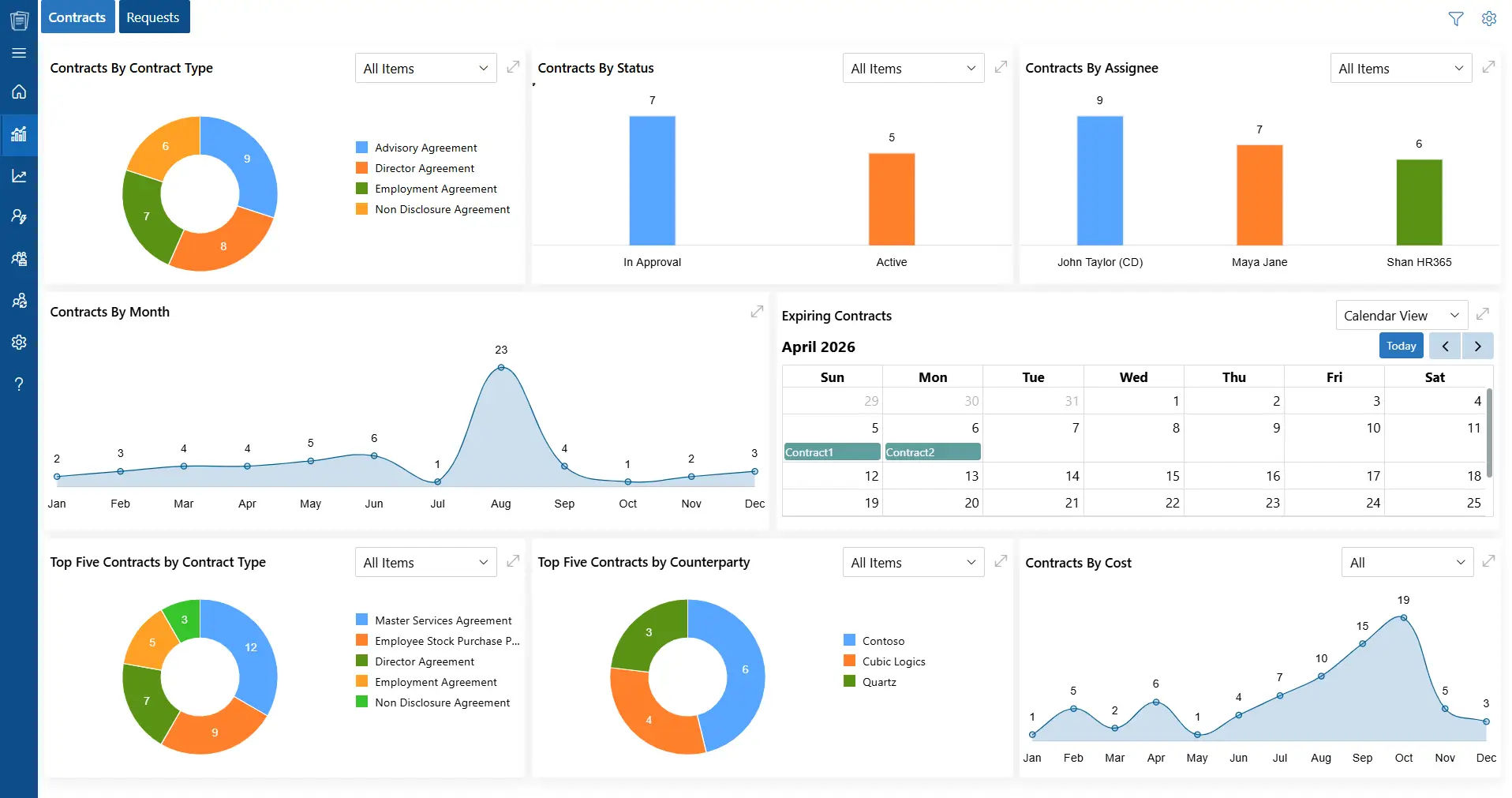
It may slow down up in costs via auto-renewals, unused licenses, or plan upgrades that are not noticed. A good SaaS contract management allows the teams to monitor the payment schedule, price terms, and the check date of renewal in one dashboard. This simplifies the process of budgeting, preventing unwarranted expenditure, and put licenses into more sensible use.
2. Legal and Compliance Alignment
Several SaaS agreements have legal and regulatory obligations, audit rights, and geographical obligations. Legal teams can be able to review such terms more regularly when contracts are handled in a central location. This assists organisations to remain in line with compliance requirements and minimizes chances.
3. Vendor Accountability
Easy access to the terms of the contracts enables business to check the performance of the vendor contracts. This includes system availability, support response times, and service commitments. Expectations that are in writing and readily accessible are more productive and understandable when talking to vendors.
4. Cross-Team Coordination
SaaS contract management have implications on various teams including finance, IT, procurement, security and legal. An integrated and coordinated system of contract enables every team to obtain the correct information at the appropriate time. This enables collaborative contract management the time loss, enhances teamwork, and facilitates quicker decision-making.
5. Data Security and Access Control
SaaS contract management often contain sensitive business, customer, and vendor information. Effective contract management helps organizations control who can access agreements, maintain clear records of changes, and ensure security requirements are reviewed and followed throughout the contract lifecycle.
How Does SaaS Contract Management Lifecycle Works?
The SaaS contract management lifecycle outlines the entire process of a contract, including the initial request up to the last renewal or termination. All the stages have a significant role and enjoy the advantages of communication and cross-departmental collaboration.
1. Contract Request
It starts with a request of a new SaaS tool or service by a business or department. This request typically contains the business requirement, anticipated benefits, budgetary estimate and simple vendor details. Specific requests will assist the teams to proceed quicker and prevent misunderstandings in the future.
2. Drafting and Review
This is the time when the legal and procurement departments will scrutinize the contractual terms. They reduce the price information, usage capacity, data management duties, service performance, and termination. Such a contract review is beneficial to safeguard the interests of the organization and establish clear expectations with the vendor.
For example, In this stage, groups will examine prices, roles, schedules, and terms of exit to ensure that all understand what to expect before the deal proceeds.
3. Negotiation
After the initial review, the teams negotiate the terms of the contract with the vendor. This phase is aimed at harmonizing the price, level of service, duties and sharing of risks in a manner that is mutually beneficial. Considerate negotiation assists in developing equal agreements and establishing a good working relationship at the beginning.
4. Approval
The contract passes through internal approvals after negotiation. Finance, IT, security and compliance teams may be included depending on the contract value and the risk level. An organized approval process assists in decisions being made at the right time and everyone being on track.
5. Signing and Execution
The contract is signed when all approvals are made. This may be done electronically or physically, depending on the company policy. The signed agreement is then kept in a central and secure place where it is easily accessed and referred to in future.
6. Active Management
During active contract, the teams monitor the important information like renewal dates, terms modification, performance of vendor, and payment terms. Frequent observation assists teams to remain updated and act promptly in response to future activities.
7. Renewal or Termination
Stakeholders assess the usage of the SaaS tool as the contract approaches its expiry date. They put into consideration cost, value, and business impact before deciding on whether to renew, renegotiate terms or terminate the agreement.
For example, Near the end, stakeholders assess value and performance to decide whether to continue, revise, or close the contract in an organized way.
Key Features of SaaS Contract Management
A dedicated SaaS agreement management software designed to address the subscription-based contracts that evolve with time. With the increased number of SaaS tools used in organizations, these features keep teams informed and minimize manual work.
1. Centralized Contract Repository
All contracts of SaaS are stored in a centralized repository of contracts. This enables the teams to search, open and read agreements faster without relying on emails or shared folders. It is also beneficial to have the contracts in a single location to enable users to operate with the latest version of the contracts, which would facilitate the coordination of all departments.
2. Data Security
The SaaS contract management includes data security. Contracts often contain sensitive details such as pricing, service terms, and legal obligations. An effective system safeguards contract information by means of controlled access, tracking activities, and secure storage. This assists companies in securing business data and fulfilling internal and external data needs.
3. AI-Powered Contract Review
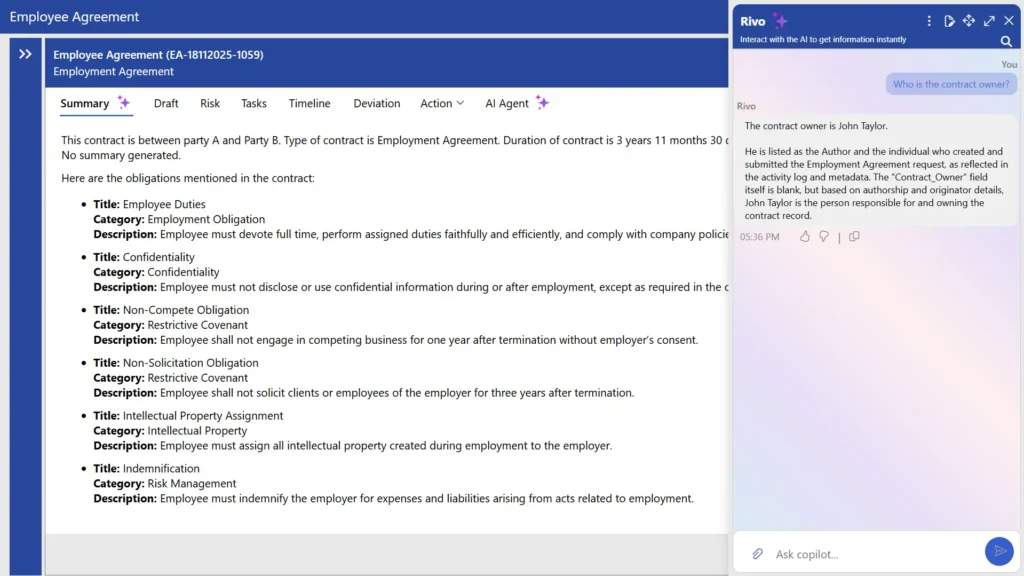
AI native contract features enable a user to comprehend contracts more quickly and easily. The system can make brief summaries of long contracts, and this simplifies the process of reading important points. It helps to manage contracts risks, provides alternative wording of the clause, point out risks, and indicate significant obligations. This assists teams in prioritizing on what is important in the review of contracts.
4. Contract Compliance
In SaaS contract management, compliance is a significant factor. Powerful systems assist teams to follow obligations, audit rights, and terms related to compliance. According to PwC’s 2025 survey, organizations that invest in technology gain better risk visibility, faster issue handling, improved reporting quality, and higher productivity with cost savings. Practically, this implies that teams can react faster, minimize internal work, and aid in making improved business choices.
5. Renewal and Expiry Tracking
Expiry and renewal tracking assists the teams in planning. Stakeholders are notified in advance of renewal or termination dates through automated warnings. This provides teams with sufficient time to analyse use, assess expenditure, and deliberate on the future. Early visibility helps in making wise decisions instead of making hasty decisions.
6. Clause Library
In a clause library, frequently used contract clauses like pricing terms, service commitments, and data handling obligations are stored. These clauses are tagged and searchable and hence are easy to reuse. This assists in uniformity of contracts and aids teams to depend on accepted language in developing or revising contracts.
7. Contract Modification
SaaS contracts are frequently modified because of upgrades, add-ons, or new terms. Contract change feature provides a history of all changes with distinct version histories. The teams can know what was changed, when it was changed and by whom it was changed. This transparency helps in keeping better records and less uncertainty in reviews.
8. Electronic Signature
The electronic signature features allow contracts to be signed digitally from any location, making the signing process faster and easier for everyone involved. Digital signing also saves time wastage due to manual paperwork and when signed, contracts are saved in the system.
9. Role-Based Access
The role-based access in SaaS contract management determines who can access, edit or approve contracts depending on the roles and responsibilities. This enables teams to operate within their boundaries and maintain confidential information. The access control is clear, which facilitates accountability, and allows systematic interdepartmental cooperation.
10. Reporting and Insights
Contract data is transformed into valuable and easily understandable information through reporting and insight tools. The dashboards display the values of contracts, renewal dates, distribution of vendors, and usage trends. The insights will assist leaders to comprehend contract impact, support planning, and future SaaS decision-making.
Benefits of SaaS Contract Management Solution
Adopting a dedicated solution for SaaS contract management delivers meaningful operational and business value. As organizations increase their reliance on subscription-based software, a structured approach helps teams stay informed, aligned, and prepared for growth.
1. Better Cost Awareness
Clear visibility into contract terms, pricing structures, and renewal schedules helps finance teams understand where money is being spent. This allows organizations to review subscription costs regularly, identify unused or underused licenses, and plan budgets with better clarity over time.
2. Improved Contract Visibility
With all contracts stored in one system, stakeholders can access accurate and current contract data whenever needed. This reduces reliance on emails, spreadsheets, or individual team members and supports quicker responses to internal or vendor-related questions.
3. Stronger Vendor Governance
Maintaining clear records of service terms, obligations, and deliverables helps organizations manage vendor relationships more effectively. Teams can refer to agreed terms during discussions, track contract performance against expectations, and support fair and well-informed vendor conversations.
4. Faster Internal Processes
Structured workflows guide contracts through review, negotiation, and approval stages in an organized manner. This reduces waiting time, supports timely decision-making, and helps teams complete contract-related activities more efficiently.
5. Audit Readiness
Centralized contract documentation makes it easier to prepare for internal reviews and external audits. Auditors can access complete records, approvals, and version histories, reducing the effort required to gather information and respond to requests.
6. Better Cross-Team Collaboration
SaaS contracts involve multiple teams, including finance, IT, legal, procurement, and security. A shared contract management system allows each team to access the information they need, improving coordination and reducing misalignment across departments.
7. Support for Scalable Growth
The number of contracts is bound to grow as more organizations use systems. This growth is supported by a special SaaS contract management solution that ensures that the contracts are well organized, searchable and manageable without burdening the operation.
In general, SaaS contract management assists organizations to stay in control, enhance visibility and aid smarter decision-making as the use of software spreads throughout the business.Top of Form
Best Practices to Implement While Managing SaaS Contracts
Effective SaaS contract management requires more than simply storing agreements. These best practices help teams stay organized, reduce risk, and make better decisions.
- Automate SaaS contract creation using approved templates, auto-populated details, and rule-based workflows to improve speed and consistency.
- Set up proactive alerts for renewals, expirations, reviews, and other important dates to prevent missed deadlines.
- Monitor renewals closely by maintaining a consolidated view of renewal dates and prioritizing high-value or high-risk agreements.
- Maintain secure and compliant execution through role-based access, standardized approvals, and complete audit trails.
- Centralize contract records in one searchable repository with relevant metadata for quick access and better visibility.
- Track contract performance by comparing agreed terms with actual usage, delivery, renewals, and termination patterns.
- Standardize SaaS templates with approved legal clauses and regular reviews to maintain consistency and reduce drafting time.
Simplify Your SaaS Contracting With CLM 365
CLM 365 offers a structured way to manage SaaS agreements within a familiar Microsoft environment. It integrates with SharePoint, MS Teams, MS Word, Outlook, Power BI, MS Copilot and Power Automate.
CLM 365 supports SaaS contract management by helping teams:
- Store and organize SaaS contracts in a centralized system
- Track renewals, expiry dates, and obligations
- Review key clauses related to pricing, data, and service terms
- Manage approvals across legal, finance, and procurement teams
- Access contracts directly within Microsoft 365 tools
Take control of your SaaS agreements by aligning contract data with your daily workflows using CLM 365. Start your 14-day free trial now.
Frequently Asked Questions
Can I find the renewal dates of previous year and get a quick summary of the contract with AI?
Yes, Users can simply ask CLM 365’s Agentic AI questions such as “When does this contract renew?” or “Summarize this agreement.” The AI instantly retrieves key contract details and provides a clear summary in plain English.
Does CLM 365 help find SaaS agreements using the name of the contract?
Yes, CLM 365 allows users to quickly locate SaaS agreements by searching the contract name, customer name, vendor name, contract number, or keywords within the contract.
Who is responsible for managing SaaS contracts?
SaaS contracts are usually managed by legal, procurement, finance, IT, and business teams. Legal reviews contract terms, procurement manages vendors, finance tracks costs, and IT monitors usage, security, and access.
How do you track SaaS contract renewals?
SaaS contract renewals can be tracked by recording renewal dates, notice periods, auto-renewal clauses, and contract owners in a centralized system. Automated reminders and alerts help teams review contracts early and avoid unwanted renewals.
How does AI help manage SaaS contracts?
AI can review SaaS contracts, extract key clauses, summarize terms, identify risks, and track obligations and renewal dates. It also helps teams search contracts using natural-language questions and reduces time spent on manual contract review.
Table of Contents

Trusted by the Best

_JiluXJRGNl.svg)























