
















Manufacturing Contract Management for Businesses
Manufacturing teams deal with dozens of active contracts at any point supplier agreements, OEM deals, service terms, NDAs, and more. When these contracts are tracked across emails, shared drives, or spreadsheets, things fall through the cracks.
What Are Manufacturing Contracts?
Manufacturing contracts are legally binding agreements between a company and a production partner. They define what gets made, by when, at what cost, and to what quality standard.
A good contract management software keeps these agreements organized, visible, and actionable so nothing important gets overlooked
These contracts appear across industries like pharmaceuticals, electronics, automotive, defense, and consumer goods. In each case, the terms directly affect production output, supplier performance, and regulatory compliance.
Challenges in Managing Contracts in Manufacturing
Contract management software enables manufacturing businesses to oversee the entire contract lifecycle within a unified system from initial request to renewal or closure. Here is how it works.
Before looking at how software helps, it’s worth understanding what typically goes wrong without it.
- Most manufacturing businesses operate with multiple suppliers across different regions. Each supplier has their own contract with their own timelines, pricing tiers, quality clauses, and renewal dates. Tracking all of that manually creates gaps.
- According to the World Commerce and Contracting (WCC), poor contract management costs companies up to 9% of annual revenue a number that becomes significant fast in high-volume manufacturing.
- Teams end up chasing approvals over email, missing renewal windows, or discovering a supplier breached a quality clause only after a production batch fails inspection.
- Contracts are often stored across emails, shared drives, and spreadsheets, making it difficult to find the latest version when needed.
- Important clauses related to pricing, penalties, warranties, or compliance requirements can be overlooked until a problem occurs.
- Generating reports for audits, compliance reviews, or management decisions often requires significant manual effort and document searching.
- The fix isn’t working harder. It’s having a system that gives everyone visibility into what’s agreed, what’s due, and what needs attention.
Already managing contracts on spreadsheets?
See how CLM 365 gives your team a better way to manage contracts, automate workflows, and stay on top of every obligation.
How Manufacturing Contract Management Software Works
Manufacturing contract management software simplifies the entire contract lifecycle, helping teams manage supplier agreements, approvals, obligations, and renewals from a single platform.
Contract Request
The process starts when a team procurement, sales, or operations raises a contract request. They fill in key details: supplier name, contract type, scope, timelines, and pricing terms. Everything is captured in the system from the start, so nothing is lost in a thread
Contract Drafting
Instead of writing agreements from scratch, teams use pre-approved clause library with standardized clauses. The system pulls from a library of pre-vetted language, which keeps contracts consistent and cuts drafting time significantly.
Review and Collaboration
The draft is automatically routed to the relevant stakeholder’s legal, finance, compliance, and operations for review and feedback. Team members can comment and collaborate in real time, this helps in improving the overall contract review process.
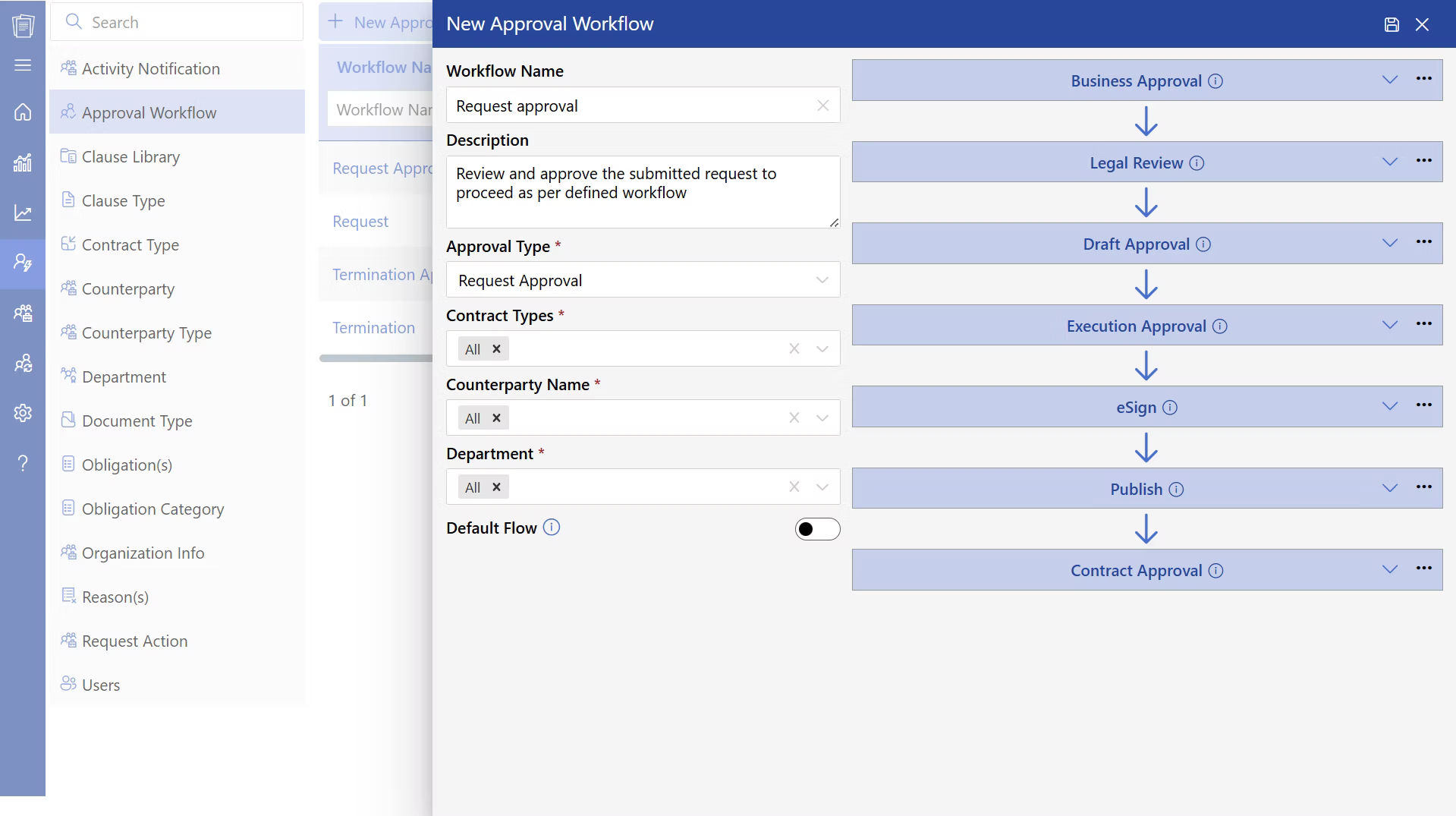
Approval Routing
Once the contract is ready, it moves through a structured approval workflow. The system routes it to the right people in the right order, based on rules you set. Approvals that used to take days can happen in hours
Digital Signing
After final approval, contracts are sent for e-signature, allowing all parties to sign securely from any location. This accelerates execution, reduces administrative effort, and helps agreements move forward without unnecessary delays. Studies show that 44% of business owners consider e-signatures one of the most practical improvements to their contract process.
Renewal and Closure
As contracts near expiration, automated alerts go out. Teams have enough lead time to review terms, renegotiate pricing, or decide whether to renew. This prevents two common problems like, missed renewals that leave operations exposed and unwanted autorenewals that lock companies into outdated terms.
Types of Contracts in Manufacturing That Need Proper Management
These are the agreements where gaps in tracking create the most operational risk.
Contract Manufacturing Agreement — The core agreement between a company and its production partner. Defines scope, schedules, pricing, quality expectations, and responsibilities. This is the agreement where ambiguity costs the most.
Supply Agreement — Governs raw material or component supply. Covers quantity, pricing, delivery schedules, quality standards, and penalties for delays. These supply chain contracts need constant monitoring because supply conditions change.
OEM Agreement — Used when a manufacturer produces goods sold under another brand. Covers brand standards, design specifications, and product quality. Common in electronics and automotive.
Licensing Agreement — Grants rights to use a patent, process, or design. Tracks usage rights, duration, and royalty terms. Critical for protecting IP while enabling production scale.
Outsourcing Agreement — Covers third-party vendors handling parts of the production process. Defines scope, service quality, timelines, and performance benchmarks.
Service Level Agreement (SLA) — Sets measurable expectations on product quality, delivery timelines, and response times. Provides the KPIs needed to monitor contract performance objectively.
Non-Disclosure Agreement (NDA) — Protects product designs, formulations, and business plans shared during manufacturing partnerships. A basic but often poorly tracked agreement.
Key Features of Manufacturing Contract Management Software
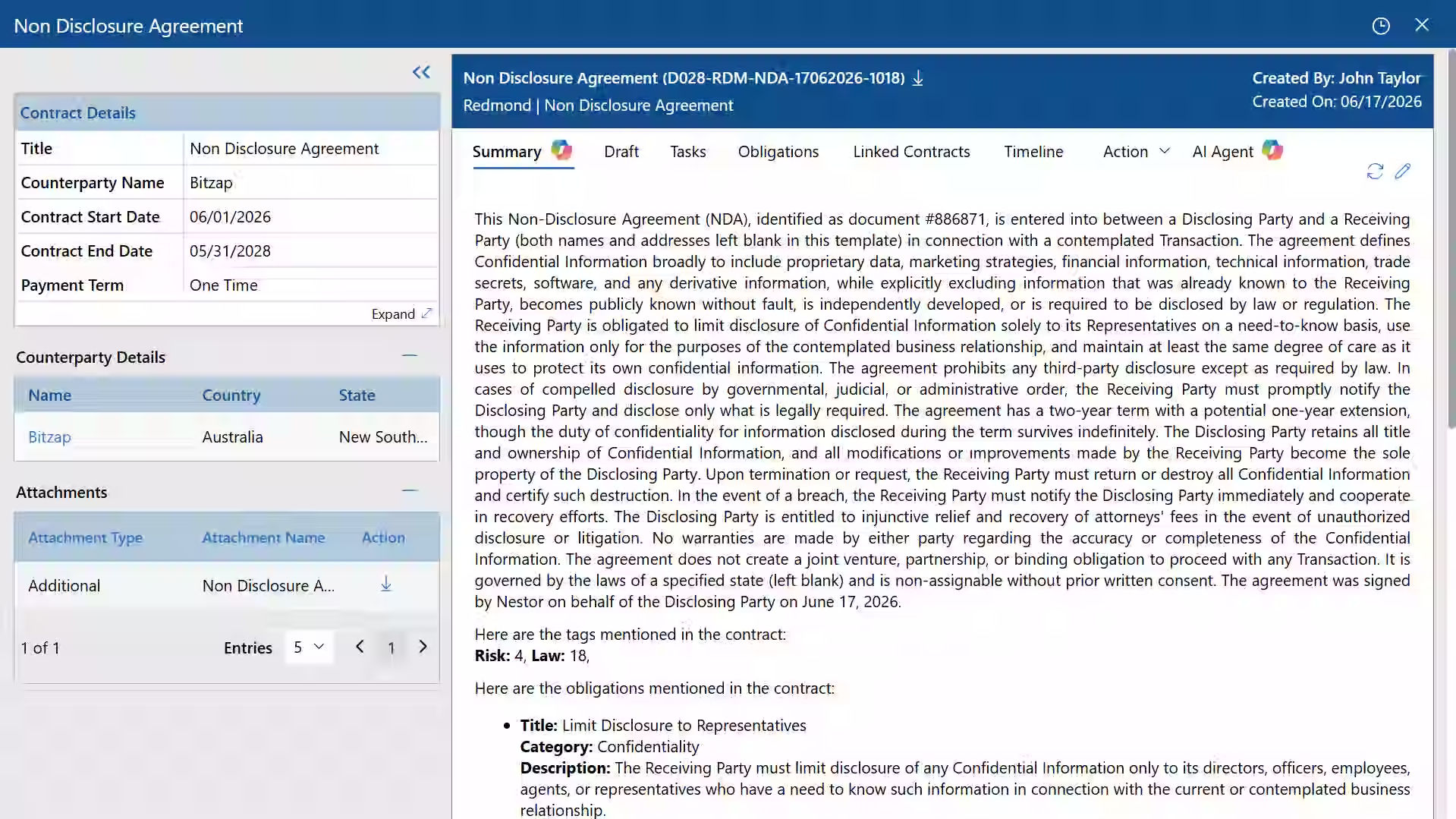
AI-Powered Contract Review
AI reads and analyzes contracts — flagging risky clauses, extracting key terms, and surfacing obligations. According to Thomson Reuters, professionals expect AI to save around 5 hours per week — roughly 240 hours per year per person. In contract-heavy manufacturing environments, that time adds up fast. Learn more about contract lifecycle management with AI.
Compliance Monitoring
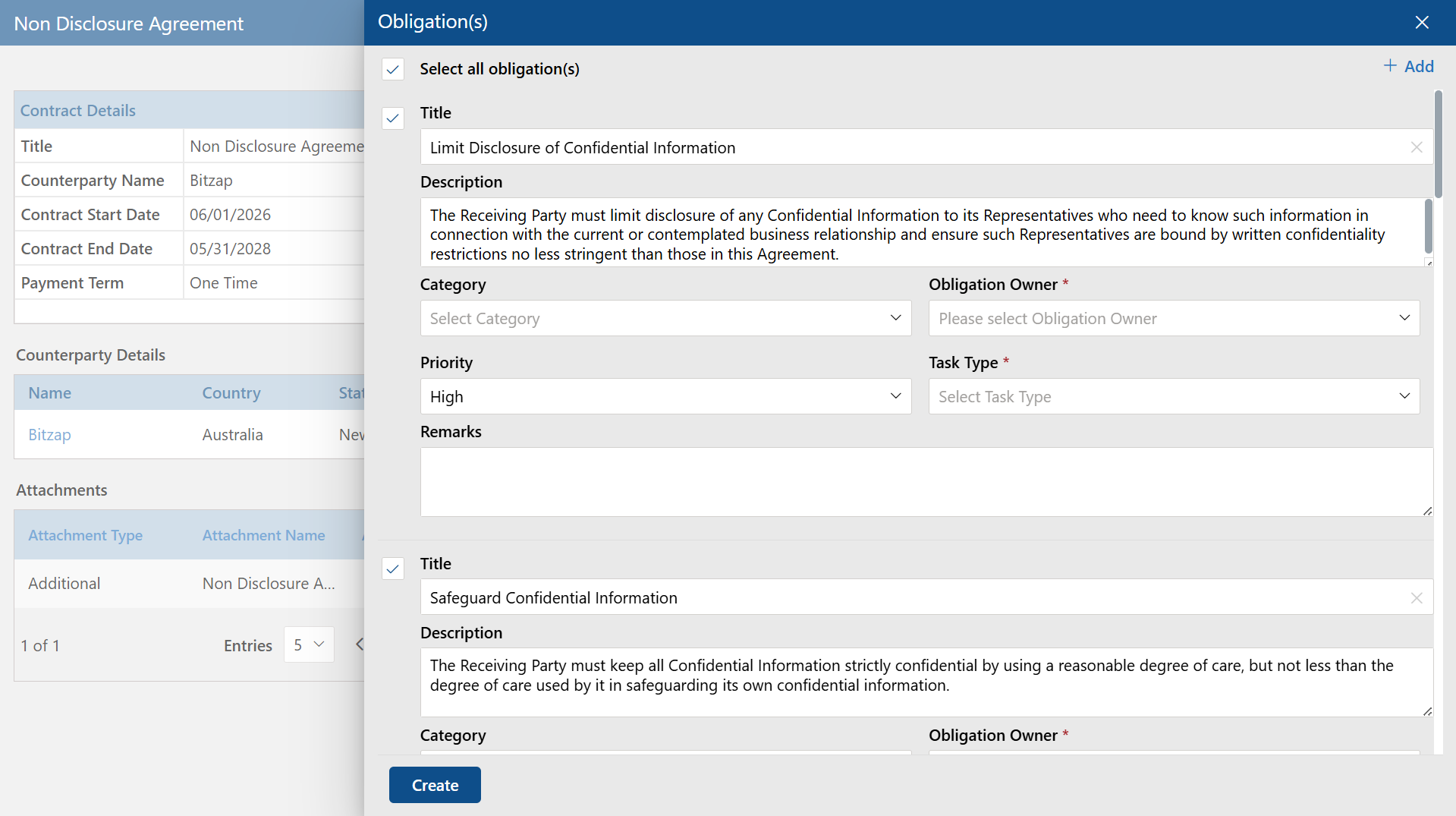
PwC reports that 85% of organizations say compliance requirements are becoming more complex. For manufacturers, compliance isn’t optional — it touches product safety, export regulations, environmental standards, and supplier certifications. CLM 365 tracks compliance requirements against each contract and alerts teams when action is needed.
Automated Approval Workflows
Contracts are routed to the right approvers — legal, finance, procurement — based on rules defined upfront. No chasing, no bottlenecks. The contract automation handles sequencing and keeps everything moving.
Clause Library
A clause library gives drafters access to pre-approved, legally vetted language. Teams select the right clauses for each agreement instead of writing from scratch. This cuts drafting time and keeps language consistent across contracts.
Contract Redlining
During negotiation, all edits are tracked and visible. Contract change management is built in — every addition, deletion, and modification is recorded with a clear audit trail. No confusion about which version is current.
Centralized Repository
All contracts — active, expired, pending — sit in one secure location. Search by supplier, contract value, type, status, or expiry date. Contract visibility becomes the default, not the exception.
Renewal Alerts
Automated reminders go out before key dates — renewals, milestones, delivery checkpoints. Teams act early instead of reacting late. Learn more about the contract renewal process.
Version Control
Every contract iteration is saved. Contract version control means teams always know which version is final, and can reference earlier drafts if a dispute arises.
Custom Reports and Analytics
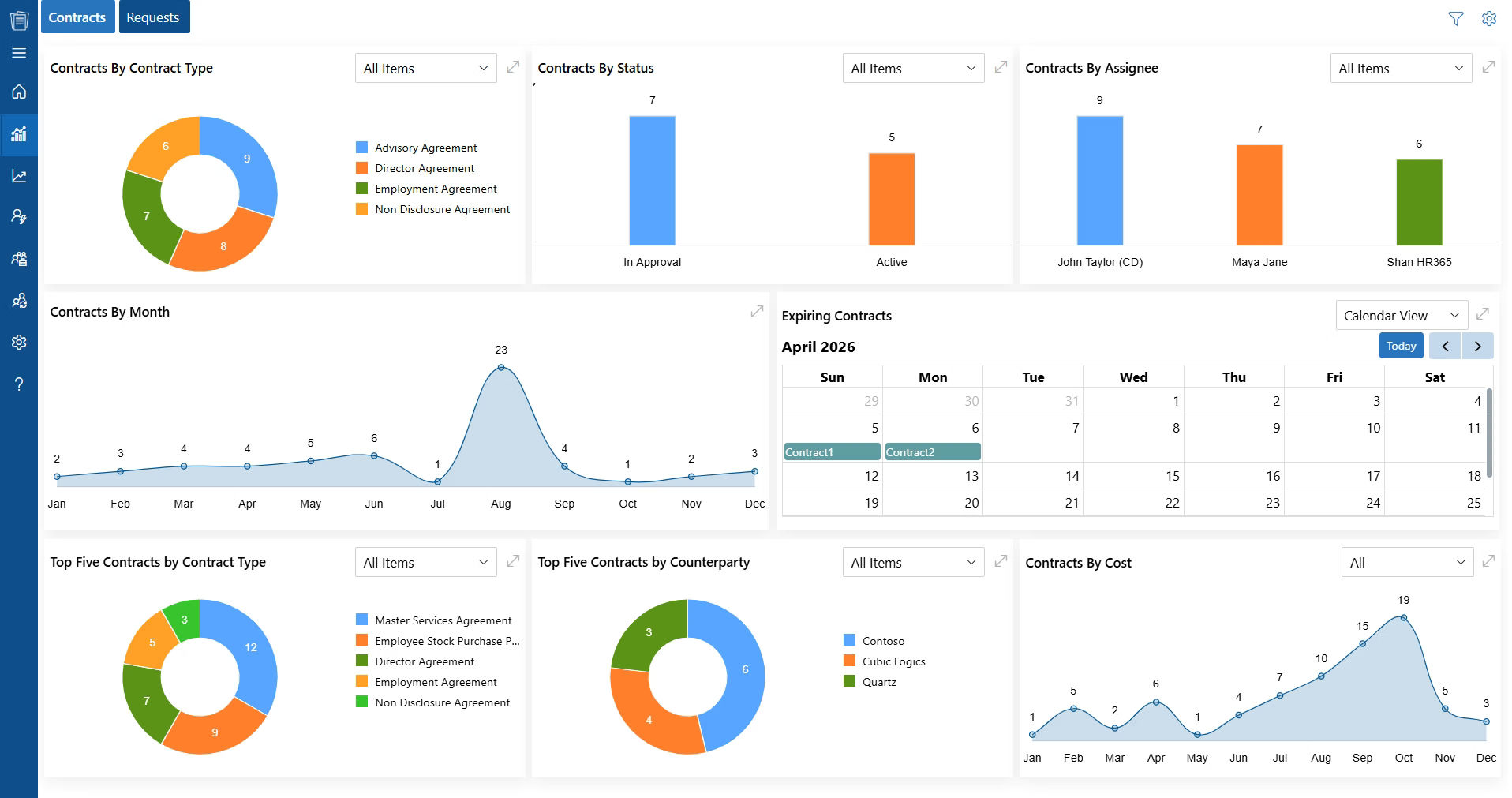
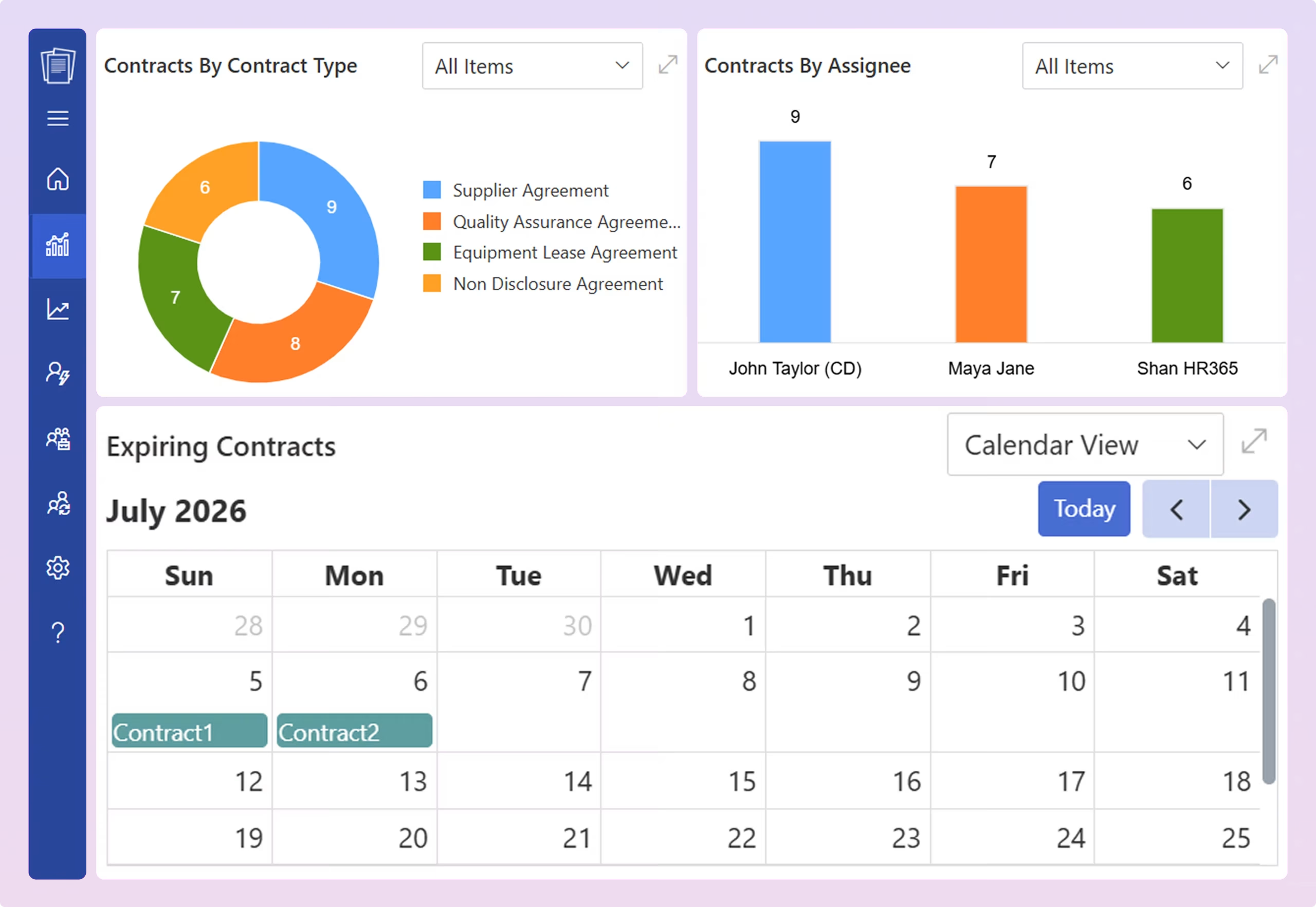
Dashboards show contract value, supplier performance, risk exposure, and upcoming deadlines. Contract analytics give leadership the data to make informed decisions — not guesses.
Want to see these features in action for your manufacturing operation? Book a 1:1 demo and we’ll show you how CLM 365 fits your workflow.
Common Challenges in Manufacturing Contract Managemen
Understanding what typically goes wrong helps teams prioritize where to focus first.
Managing Contracts Across Multiple Suppliers
A mid-sized manufacturer often works with 50–200 active suppliers. Each has separate agreements with different terms, timelines, and renewal dates. Keeping track of all of them in a single system — with alerts and performance data — is where most manual processes break down.
A study by Gartner found that companies with more than 100 active supplier contracts spend an average of 12+ hours per week on manual contract administration. That’s time that could go toward supplier development or cost negotiation.
Lack of Visibility Into Contract Status
Without a central system, procurement managers often don’t know whether a contract is under review, pending signature, or already expired. This creates gaps in supplier coordination and increases the risk of operating without a valid agreement in place
Missing Renewal Windows
Only 48% of organizations have a formal process for managing contract renewals, according to the World Commerce and Contracting (WCC). In manufacturing, a missed renewal can mean operating under lapsed terms — or losing a preferred supplier rate.
Slow Approvals Holding Up Production
When legal, finance, and procurement all need to approve a supplier contract, and the process runs through email, delays are inevitable. A structured approval workflow removes the friction and gives every stakeholder a clear view of where things stand.
Keeping Up With Regulatory Changes
Manufacturing contracts often reference industry standards that change — ISO certifications, safety regulations, export controls. Compliance management must be ongoing, not a one-time review at signing.
Benefits of Structured Manufacturing Contract Management
Clear Accountability Across Suppliers
When every contract clearly defines roles, timelines, and deliverables — and those terms are tracked — suppliers are more likely to meet their commitments. And when they don’t, teams have documented evidence to act on.
Faster Contract Cycles
Automated drafting, structured approvals, and digital signatures cut the time from contract initiation to execution. Faster contracts mean faster supplier onboarding, faster production starts, and fewer delays waiting on paperwork
Better Cost Control
Contract collaboration and visibility help finance teams catch pricing discrepancies, prevent overcharges, and monitor agreed discounts. Full visibility into financial terms across all active contracts gives budget owners better control.
Stronger Supplier Relationships
When suppliers know exactly what’s expected — and have a clear point of contact for contract questions — relationships improve. Well-managed contracts reduce disputes and build the trust needed for long-term partnerships.
Reduced Legal Risk
With version control, audit trails, and compliance monitoring built in, the risk of operating under outdated or non-compliant agreements drops significantly. The contract execution process becomes documented and defensible.
Manufacturing Sectors That Benefit From CLM 365
Automotive
Automotive manufacturers manage hundreds of supplier contracts simultaneously — from raw materials to precision components. CLM 365 tracks multi-tier supplier agreements, monitors delivery SLAs, and keeps compliance documentation audit-ready.
Pharmaceutical
Pharma manufacturing operates under strict regulatory frameworks. Contract management software helps track GMP compliance terms, batch release agreements, and quality specifications across CDMOs and CMOs. Every clause and obligation is visible and traceable.
Electronics
Electronics manufacturers deal with rapid product cycles, component shortages, and IP-sensitive agreements. CLM 365 manages OEM contracts, technology licensing, and supply agreements — with version control and clause libraries built for complex negotiations.
Consumer Goods
High SKU counts and short production cycles demand agile contract management. CLM 365 keeps inventory and supply agreements aligned with demand planning, so production teams aren’t caught off guard by expired terms or delivery shortfalls.
Why Manufacturing Teams Choose CLM 365
CLM 365 is built within Microsoft 365 — meaning contracts are created, reviewed, approved, and tracked inside the tools manufacturing teams already use: SharePoint, Teams, Outlook, Power BI, and Power Automate.
There’s no separate platform to learn. No data migration. No adoption curve.
The platform is SOC 2 compliant, Microsoft certified, and backed by Microsoft Solutions Partner status. It supports GCC and GCC High environments for organizations with high-security requirements — common in defense and pharmaceutical manufacturing.
CLM 365 is rated by customers on G2 for ease of use, implementation speed, and customer support.
It works for businesses of all sizes — from growing mid-market manufacturers to large enterprises managing thousands of contracts across multiple facilities.
Conclusion
Manufacturing businesses rely on contracts to define every supplier relationship, production agreement, and compliance obligation. When those contracts are managed well, operations run predictably. When they’re not, the gaps show up in missed deliveries, compliance failures, and avoidable costs.
CLM 365 gives manufacturing teams the structure they need — contract creation, approval, tracking, compliance monitoring, and renewal — all inside Microsoft 365.
See how CLM 365 fits your manufacturing operation. Start your 14-day free trial — no obligation, no credit card.
Frequently Asked Questions
What is manufacturing contract management?
Manufacturing contract management is the process of creating, organizing, tracking, and renewing contracts with suppliers, vendors, and production partners. It covers the full contract lifecycle — from initial request to closure — and helps manufacturing businesses stay on top of compliance, deadlines, and supplier performance.
How does CLM 365 AI Agent help with contract review?
Upload a contract to CLM 365 AI Agent and it immediately summarizes the document and flags key items — clauses, payment terms, renewal dates, risk areas, and obligations. You can also use natural language prompts like “Show me the termination clauses” or “What are the delivery penalties?” to get targeted answers from any contract.
How do renewal alerts help manufacturers avoid risk?
Automated alerts go out well before a contract expires — giving teams time to review terms, renegotiate pricing, and make an informed decision. This prevents two common problems: lapsed agreements that leave operations exposed and auto-renewals that lock you into terms that no longer reflect current conditions
Can CLM 365 handle contracts with multiple approval layers?
Yes. Approval workflows in CLM 365 are fully configurable — you define who approves, in what order, and under what conditions. This is particularly useful in manufacturing where legal, compliance, finance, and procurement all have a stake in supplier agreements.
How does contract tracking improve supplier management?
When contracts clearly define delivery timelines, quality standards, and pricing terms — and the system monitors performance against those terms — it’s easier to hold suppliers accountable. Procurement managers get real-time visibility into which suppliers are meeting expectations and which need attention.
Is CLM 365 suitable for smaller manufacturing businesses?
Yes. CLM 365 scales from small businesses managing a handful of key supplier agreements to large enterprises with thousands of active contracts. Pricing and user configuration can be adjusted to fit your operation size.