

Top Lattice Alternatives to Boost Employee Performance in 2026

Many organizations are rethinking how they support employee growth and engagement. Platforms like Lattice have played a big role in shaping modern performance management. However, as teams evolve, so do their needs. According to Forbes , over 63% of HR leaders now prefer performance tools that are easier to set up, integrate seamlessly with their tech stack, and offer transparent pricing.
Many organizations are moving away from Lattice in favor of performance management tools that are easier to use, more flexible, and offer transparent pricing. Alternatives like Performance Management 365, Leapsome, and 15Five better align with workflows, integrate seamlessly with Microsoft 365, and offer customizable features.
HR teams prioritize ease of use, system compatibility, and continuous feedback when evaluating alternatives. Tools like Performance Management 365 stand out for their integration with Microsoft 365, enabling teams to manage performance within their existing environment without added complexity.
That is why many companies are exploring Lattice alternatives solutions that balance powerful review features with flexibility, simplicity, and value. If you are searching for tools that align better with your workflow and budget, this list will guide you to the right options for 2026.
Why Teams Look for Lattice Alternatives
Lattice has earned a solid reputation in the HR tech space, but it is not a perfect fit for everyone. As businesses grow, their expectations from performance tools change. Many teams start looking for Lattice alternatives when they realize they need something more flexible, easier to manage, or better aligned with their daily workflow.
Here are a few key reasons why teams explore other options:
- Complex setup and maintenance
Many HR teams share that setting up Lattice takes time and training. For smaller organizations without a dedicated HR tech team, the setup process can feel heavy. Regular maintenance, workflow adjustments, and user onboarding also add to the time investment making teams look for tools that are quicker to implement and manage. - Pricing that does not fit every budget
Lattice is designed for mid-sized and enterprise-level companies, which makes it costly for smaller businesses or startups. Many users find that the pricing grows fast when more modules or users are added. Teams today prefer platforms that offer transparent, flexible, and predictable pricing without paying extra for basic performance review features. - Limited flexibility for customization
While Lattice offers a wide range of features, its customization options are limited. HR professionals often want the ability to tailor review cycles, question formats, and feedback templates to match their internal culture. Lattice alternatives often attract teams that want full control over how performance reviews are structured. - Integration challenges
Not every organization uses the same set of tools. Teams that rely heavily on Microsoft 365, Teams, or SharePoint sometimes find it difficult to connect Lattice smoothly with their existing systems. Alternatives that are built within or integrate deeply into Microsoft’s ecosystem provide a much simpler and more connected experience. - Too many features for simple needs
Lattice offers an extensive set of features from engagement surveys to career growth modules. While this sounds appealing, many small to mid-sized teams just want straightforward tools for setting goals, tracking progress, and sharing feedback. For them, the extra layers of complexity feel unnecessary, leading them to look for lighter, focused alternatives.
What Users Look for in a Lattice Alternative
When HR teams explore Lattice alternatives, they are not just looking for a different platform they are searching for a solution that fits their people, process, and pace of work. Modern organizations want tools that simplify performance management, encourage engagement, and bring clarity to every review cycle.
Here is what users usually expect from the best alternatives to Lattice in 2026:
1. Ease of Use and Quick Setup
Teams prefer tools that are simple to start with. They do not want a long onboarding process or complex training sessions. The best Lattice alternatives are designed for immediate use, with intuitive layouts and guided setups that make adoption effortless.
A short learning curve helps employees focus on performance rather than figuring out how to use the platform.
2. Compatibility with Existing Systems
Seamless integration is one of the most important factors for HR leaders today. Many companies rely heavily on tools like Microsoft 365, Teams, and SharePoint. When the performance platform connects directly to these systems, it saves time, reduces manual work, and keeps everything in one place.
The right alternative should blend naturally with your digital workspace instead of standing apart from it.
3. Transparent and Flexible Pricing
Budget clarity matters more than ever. Companies want to know what they are paying for and avoid extra charges for basic features. Transparent pricing models and annual plans make it easier to plan long-term use without surprises.
An ideal alternative offers predictable, flexible options that grow with your team.
4. Continuous Feedback and Goal Tracking
Performance management is no longer a once-a-year process. Modern teams expect regular feedback, check-ins, and clear visibility into their goals. The best Lattice alternatives include: –
- Frequent feedback loops between employees and managers
- Simple tools for tracking goals, OKRs, and progress
- Structured 1:1 meeting notes and action items
This continuous approach helps build trust and keeps everyone aligned throughout the year.
5. Customization and Control
No two organizations run performance reviews the same way. HR teams value tools that can be shaped around their unique workflows, review formats, and rating methods. Customizable sections, flexible question types, and configurable review cycles make a big difference.
The ability to adapt the platform ensures that performance management feels like a natural part of the company’s culture.
6. Simple, Insightful Analytics
Data is valuable only when it is easy to understand. HR leaders look for alternatives that provide clear dashboards and reports without complexity. They want to track trends, identify high performers, and address challenges quickly.
Clean analytics empower decision-makers to take meaningful action instead of spending hours analyzing raw data.
Top Lattice Alternatives You Can Explore
Here are some strong contenders that companies are switching to in 2026:
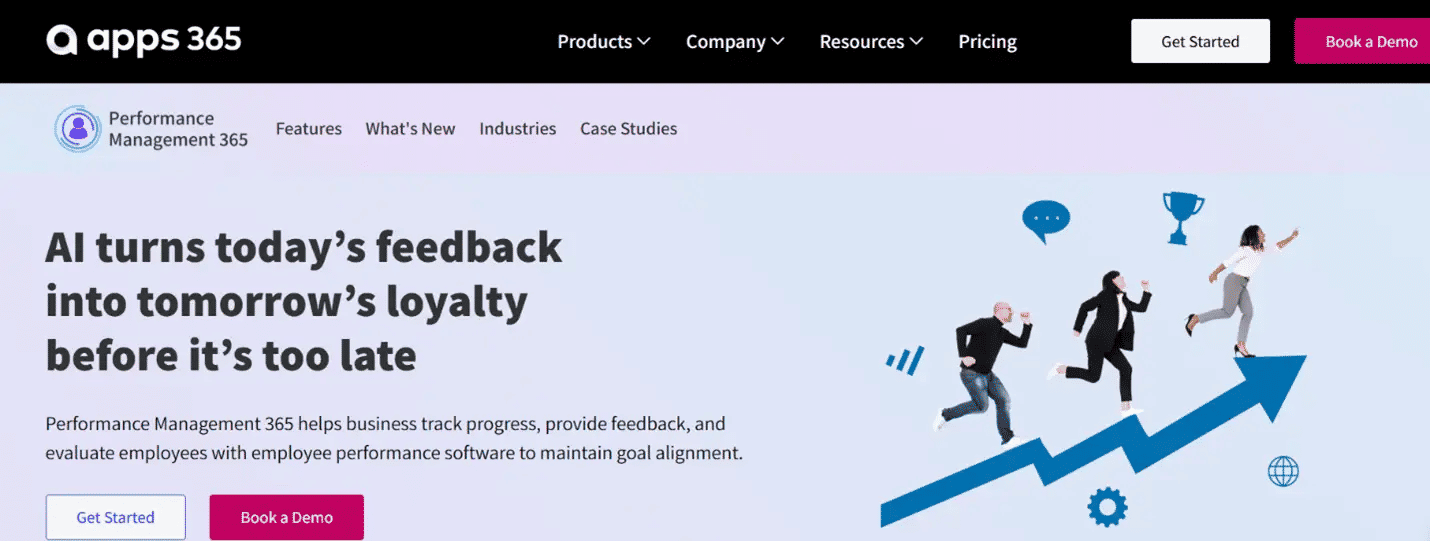
Description:
A performance management tool built specifically for the Microsoft 365 ecosystem (Teams, SharePoint). Helps teams set goals, run reviews, track progress all inside the tools they already use.
Key Features:
- Goal & KPI tracking, real-time progress updates.
- Performance reviews, 1:1 meetings, feedback loops.
- Customizable templates and workflows.
- Native Microsoft 365 integration (Teams, SharePoint)
Review Highlights:
Users comment on how it keeps data inside their own Microsoft tenant and how the setup is faster than traditional tools.
Pricing:
Starts at $79/month billed yearly for 10 users (Standard plan) for core features.
2. Leapsome
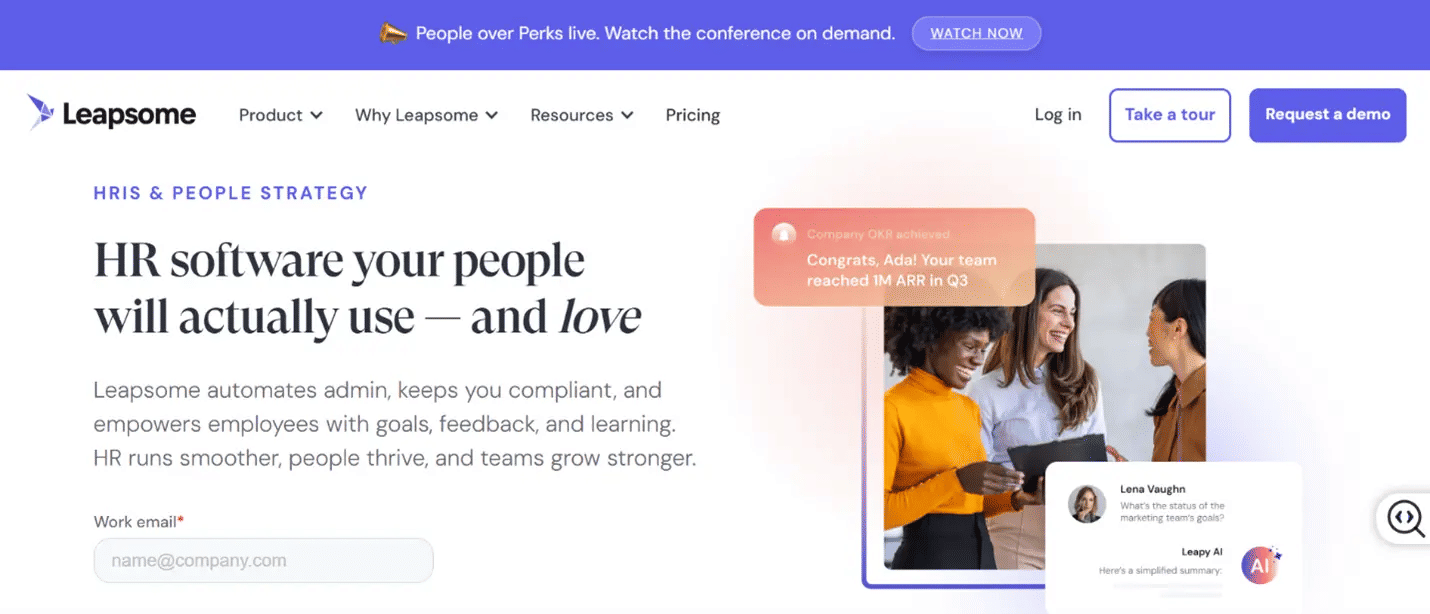
Description:
A flexible platform offering performance reviews, engagement surveys, learning & development suitable for fast-growing teams.
Key Features:
- OKRs and goal alignment.
- Customizable performance review types & survey templates.
- Learning & development path support.
Integration:
Supports many integrations; designed to scale and fit into varied workflows.
Review Highlights:
Highly rated for linking goals, learning and performance. Some users mention a learning curve due to feature richness.
Pricing:
From about US$8/user/month (according to one list) for base features.
3. 15Five
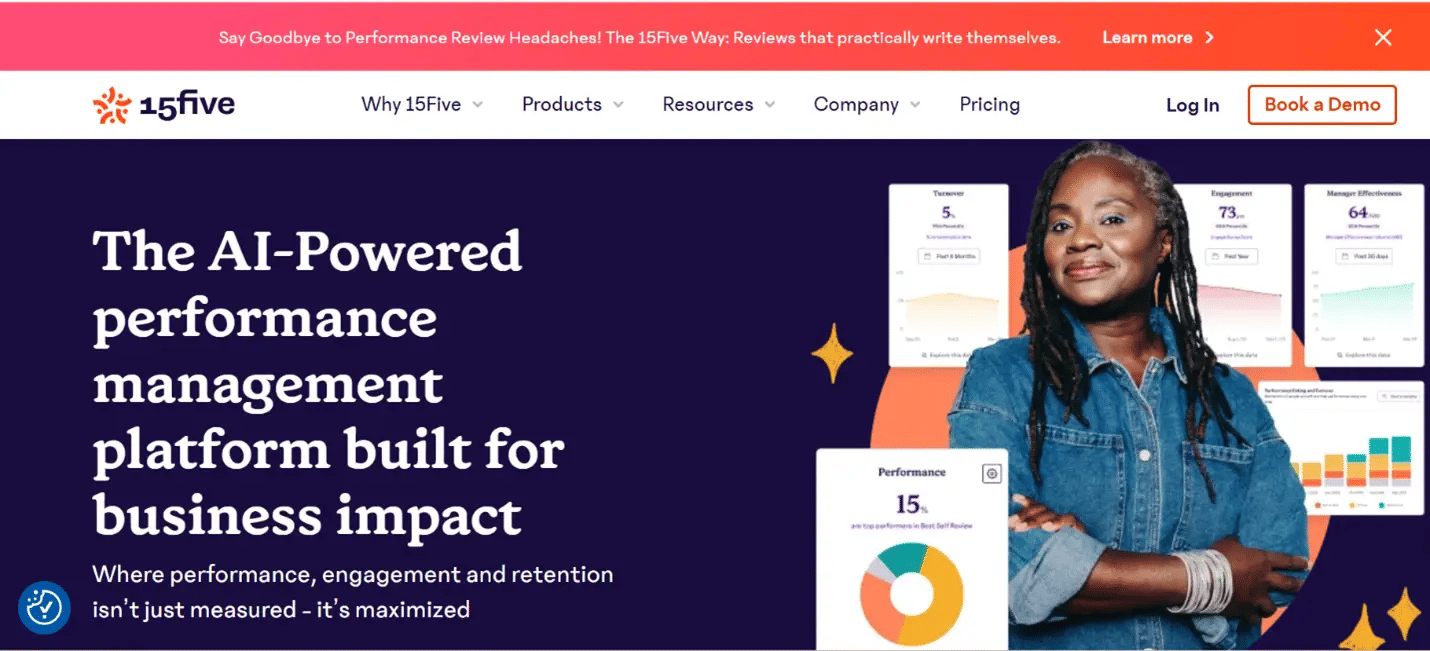
Description:
Focuses on frequent check-ins, feedback culture, and continuous development rather than just annual reviews.
Key Features:
- Weekly check-ins and feedback.
- Goal tracking with a human-centric design.
- Engagement surveys to measure employee sentiment and morale.
- Manager tools for 1:1 meetings, recognition, and coaching insights.
Integration:
Works well with existing tools; designed to be lightweight and user friendly.
Review Highlights:
Great for building feedback habits; perhaps fewer advanced goal alignment features compared to others.
Pricing:
From around US$4/user/month for the base plan.
4. Culture Amp
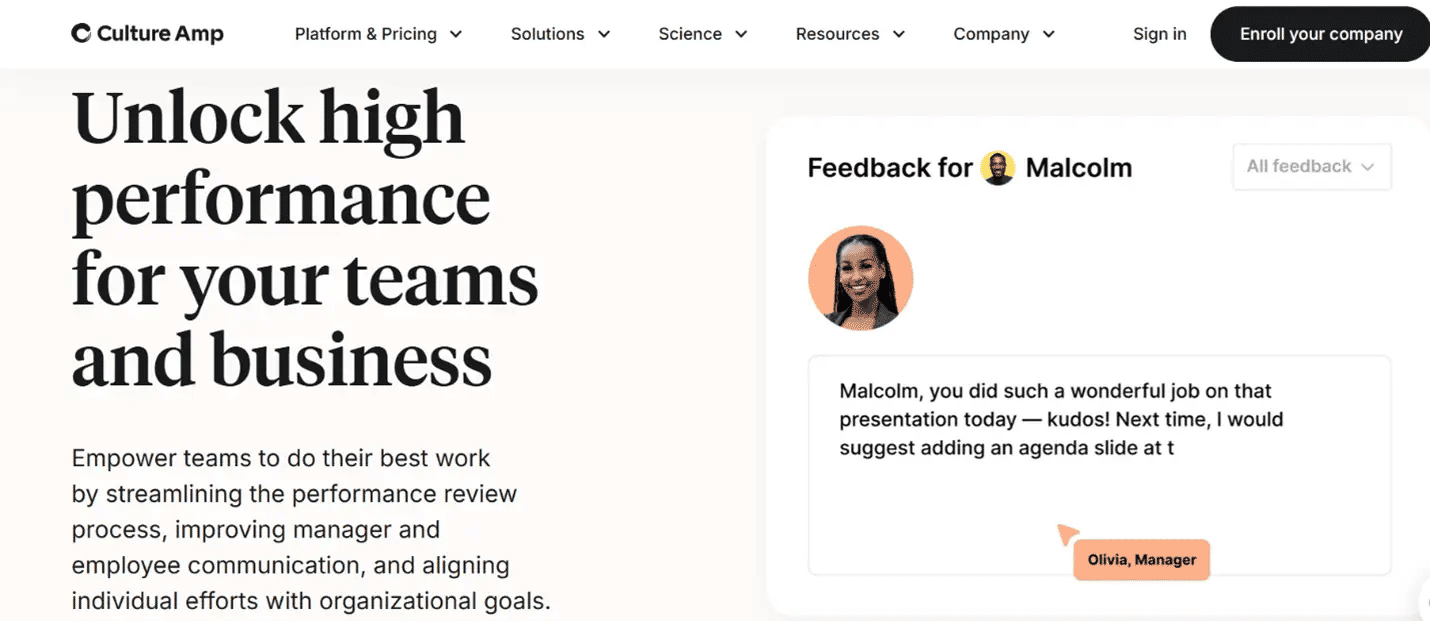
Description:
Combines performance management with deep engagement and culture analytics ideal for organizations investing in data, feedback, and people-driven growth.
Key Features:
- Engagement surveys with detailed analytics.
- Performance reviews and feedback modules.
- 360-degree feedback tools that provide insights from peers, managers, and direct reports.
- Predictive analytics and benchmarking features to identify key drivers of employee engagement and retention.
Integration:
Strong integrations and analytics roots; built for larger/enterprise-level companies.
Review Highlights:
Users value the insights and culture focus; cost and complexity may be higher.
Pricing:
Custom quoted; higher pricing tier due to full feature set.
5. PerformYard
Description:
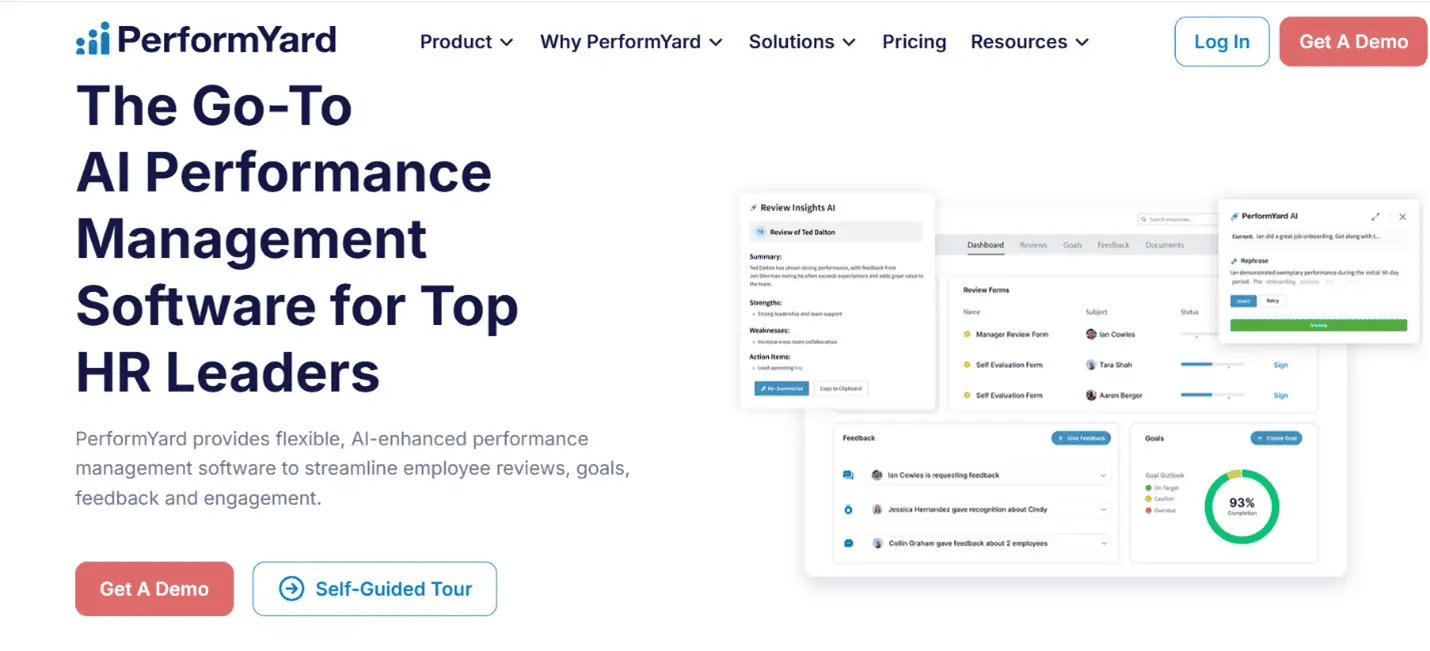
A simpler, review-focused system aimed at small to mid-sized teams wanting straightforward performance management without overload.
Key Features:
- Flexible review templates.
- Goal and feedback modules.
- Customizable performance cycles to match different review periods or departments.
- Detailed reporting and visual dashboards to track performance trends and completion rates.
Integration:
Integration options exist though fewer than large suites.
Review Highlights:
Users appreciate ease of setup and simplicity; perfect for lean teams.
Pricing:
From approx US$5-10/user/month depending on tier.
6. Betterworks
Description:
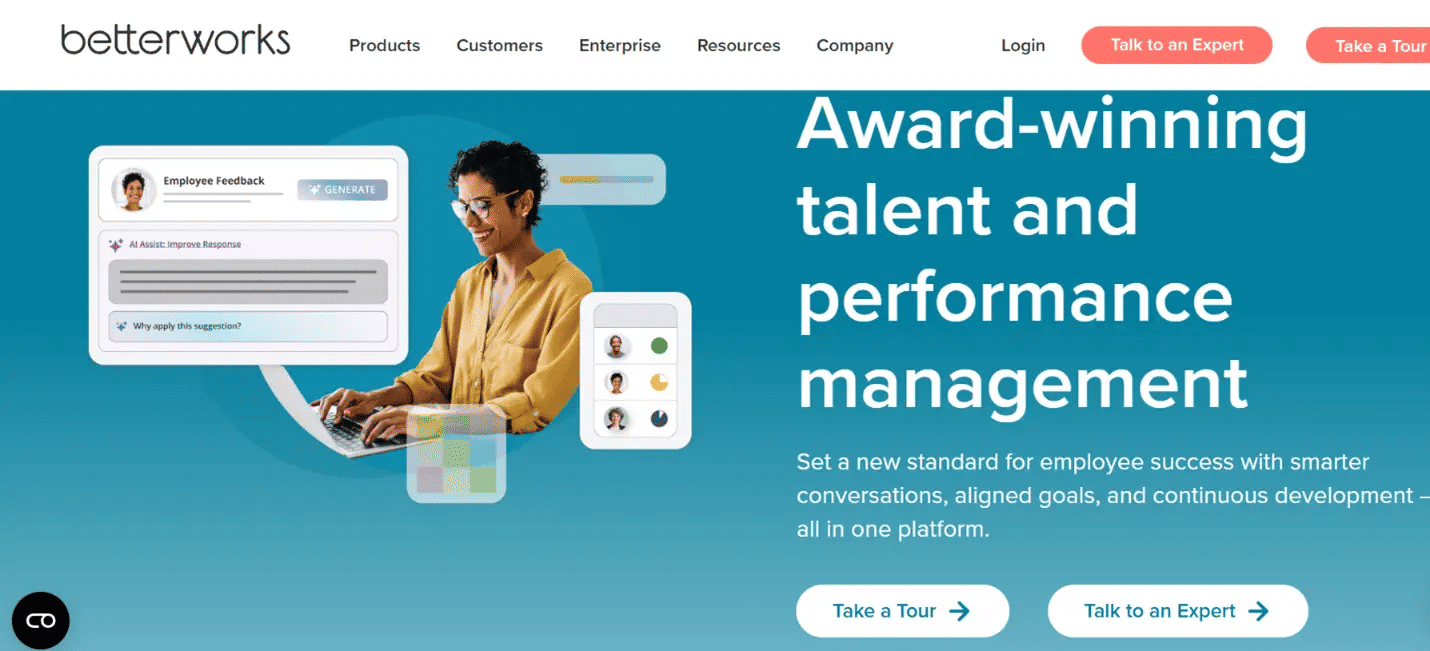
Designed for goal-driven performance management — strong on OKRs, continuous check-ins, and alignment across organizations.
Key Features:
- OKR tracking and alignment across teams and departments.
- Real-time conversations and continuous feedback loops.
- Performance calibration and analytics to ensure fair and consistent reviews.
- Built-in recognition and progress tracking tools that encourage transparency and accountability.
Integration:
Integrates with major tools (Slack, Teams) and HR ecosystems.
Review Highlights:
Good for structured goal management; setup for smaller companies may be heavier.
Pricing:
From about US$8/user/month base level.
7. BambooHR
Description:
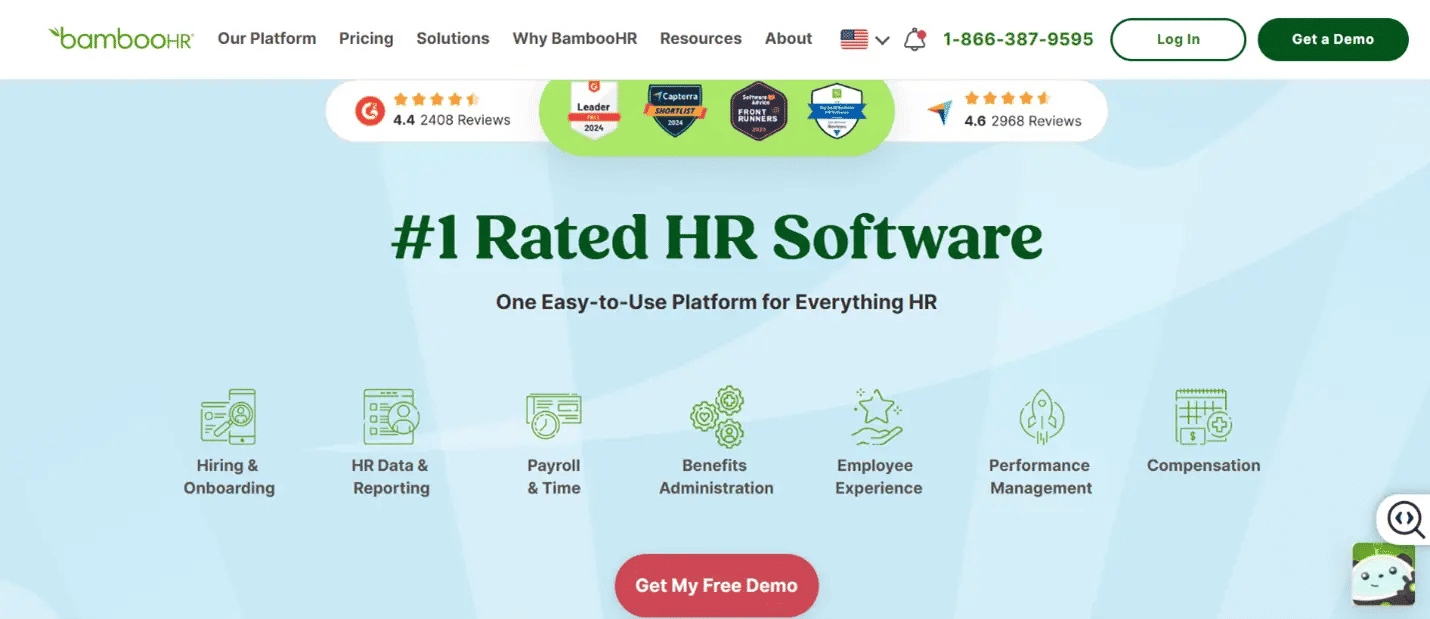
Primarily an HRIS for small to mid-sized companies, with added performance management tools built-in.
Key Features:
- Performance reviews embedded directly within the HRIS.
- Onboarding, time-off tracking, and employee database features.
- Goal-setting and tracking tools to align employee objectives with company priorities.
- Customizable review cycles and templates that simplify the performance process.
Integration:
Good integration ecosystem and support for growth.
Review Highlights:
Very user friendly for small companies; performance features may be less advanced than bespoke tools.
Pricing:
Starts around US$10 per employee per month for HRIS; performance module add-on extra.
8. Reflective
Description:
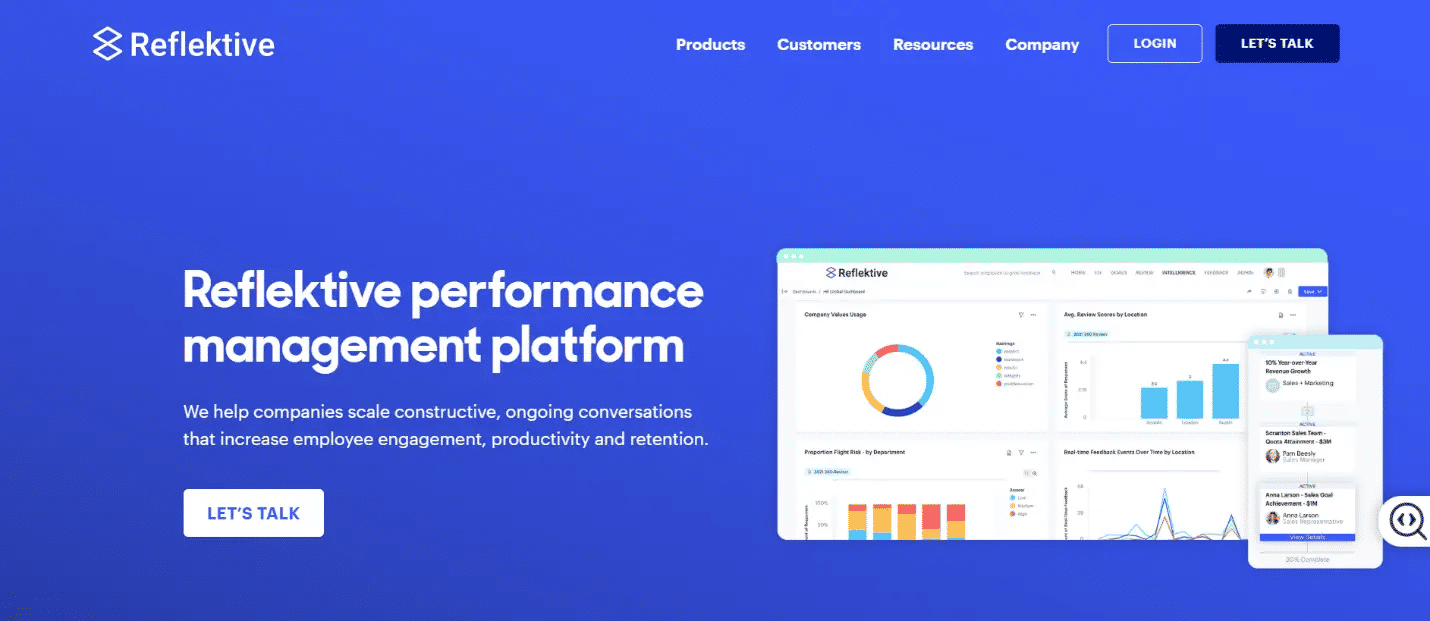
A feedback-heavy platform built for culture, recognition, and ongoing performance conversations.
Key Features:
- Real-time peer and manager feedback.
- Goal management and analytics.
- 1:1 meeting tools that help managers track progress and document conversations.
- Recognition and engagement features that celebrate achievements and encourage collaboration.
Integration:
Works with Slack, Microsoft tools, HR systems.
Review Highlights:
Very positive for feedback and recognition; some users report complexity in setup.
Pricing:
Custom pricing; higher for full feature access.
9. HiBob
Description:
A modern HR and performance platform designed for mid-sized companies with global teams, focusing on culture, engagement, and growth.
Key Features:
- Full HRIS with performance reviews, feedback, and engagement tools.
- Global language support and a modern, easy-to-navigate interface.
- Continuous performance conversations and real-time feedback options.
- Advanced analytics and reporting to track performance and employee engagement trends.
Integration:
Strong for HR, payroll, global workforce; many third-party connectors.
Review Highlights:
Users like the modern interface and combined HR & performance features; pricing is less transparent.
Pricing:
Reported around US$16-25 per user/month depending on modules.
10. Workleap
Description:
A newer contender focused on tailored review cycles, simplicity, and cost-effective performance management for smaller teams.
Key Features:
- Custom review cycles and simple goal tracking.
- Designed for smaller teams and affordable use.
- Built-in feedback and recognition tools that help strengthen manager–employee connections.
- Easy integration with popular workplace tools like Slack and Microsoft Teams for smoother collaboration.
Integration:
Basic integrations; built to be lean and easy.
Review Highlights:
Good for small and lean teams who want performance management without heavy overhead.
Pricing:
From around US$5/user/month for base plan.
How to Choose the Right Alternative
Finding the best Lattice alternative depends on what your company values most whether it is integration, engagement, simplicity, or growth opportunities. Every tool offers unique strengths, so it helps to start with a clear understanding of your team’s goals, size, and work environment.
The table below shows the top recommendations based on different organizational needs:
Primary Need | Best Option | Why It Fits Best |
Microsoft 365 Integration | Performance Management 365 | Works natively inside Microsoft Teams and SharePoint, keeping all data within your Microsoft tenant. |
Engagement & Culture | Culture Amp | Offers advanced analytics and employee engagement tools for culture-focused teams. |
Continuous Feedback | 15Five | Built for real-time check-ins, recognition, and frequent feedback to improve communication. |
Learning & Growth | Leapsome | Combines performance reviews with personalized learning and development paths. |
Simplicity & Ease of Use | PerformYard | Ideal for small and mid-sized teams that want straightforward reviews without complex setup. |
Goal Setting & Alignment (OKRs) | Betterworks | Strong OKR framework for connecting company-wide objectives and outcomes. |
All-in-One HR + Performance Suite | HiBob | Integrates HRIS, performance management, and engagement features in one platform. |
Recognition & Peer Feedback | Reflektive | Promotes real-time recognition and culture building through social feedback. |
Budget-Friendly Option | Workleap | Cost-effective, simple setup perfect for startups or small businesses. |
Holistic HR & Core Management | BambooHR | Blends HR functions with review and goal features, great for HR-driven organizations. |
Steps to Choose the Right Platform
- Define your goals clearly.
Identify what you want to improve is it employee engagement, regular feedback, or goal tracking? A clear goal helps narrow the options quickly. - Map your current tools and systems.
Look at your existing software stack especially if you use Microsoft 365 or similar systems. Choosing an integrated tool reduces duplicate work and improves adoption. - Check the scalability.
Pick a tool that grows with your team. Some platforms are great for startups, while others scale better for enterprises with hundreds of employees. - Review pricing transparency.
Evaluate not just the monthly cost but also how features are priced. Transparent annual pricing (like PM365’s structure) ensures predictability and easier budget planning. - Assess ease of use.
A tool is only as good as its adoption rate. Make sure the interface is intuitive and requires minimal training for employees and managers. - Look for flexibility and customization.
Every company has a different review structure. Choose platforms that let you customize review templates, rating scales, and workflows. - Evaluate reporting and insights.
Strong analytics help HR teams identify trends, highlight top performers, and support data-based decisions without complexity. - Consider support and onboarding.
A responsive support team and easy onboarding process reduce the time it takes to go live and help maintain employee confidence in the system. - Ask for a demo.
Always test before you decide. Seeing the tool in action helps you understand its usability, navigation, and alignment with your company - Think long-term.
Choose a partner that evolves with your organization’s needs. The best alternative is one that adapts as your people and processes grow.
Why Performance Management 365 Stands Out
For organizations that rely on Microsoft 365, Performance Management 365 offers everything teams need to manage performance effectively without adding another system to learn or maintain. It brings reviews, OKRs, goals, and 1:1 meetings together in one familiar environment, allowing employees and managers to work seamlessly within Microsoft Teams and SharePoint.
Unlike standalone tools that require complex integrations or separate data storage, PM365 keeps everything secure within your existing Microsoft tenant. That means no additional logins, no external data sharing, and no disruption to your workflow.
Here’s why Performance Management 365 is one of the most trusted Lattice alternatives in 2026:
- Built for Microsoft 365 users – Works natively with Microsoft Teams and SharePoint, ensuring smooth collaboration and a consistent user experience.
- Customizable review structure – HR teams can design review sections, question formats, and workflows that match their internal processes.
- Goal alignment and OKR tracking – Connects employee objectives with company-wide goals to maintain focus and accountability.
- Real-time analytics and dashboards – Offers data-driven insights into performance trends, review completion, and employee progress.
- Enterprise-grade security – Keeps all information safely stored inside your Microsoft tenant, following Microsoft’s compliance standards.
- Quick setup and affordable annual plans – Easy to deploy, maintain, and scale without technical complications or hidden costs.
With its deep Microsoft integration, flexible design, and strong focus on simplicity, Performance Management 365 gives HR and leadership teams complete control over performance management without leaving their everyday workspace.
Conclusion
Lattice has earned its place as a strong performance management platform, but it may not align with every organization’s needs. Many HR leaders today are choosing tools that are easier to use, quicker to set up, and more adaptable to their company culture.
If your goal is to build a performance process that encourages growth without the complexity, exploring Lattice alternatives like Performance Management 365, Leapsome, or 15Five can be a smart step forward. These platforms bring balance combining structure with simplicity, and insight with action.
In the end, the best tool is the one that matches your team’s rhythm, supports your goals, and fits naturally into how your people work every day.
See how Performance Management 365 can replace Lattice inside your Microsoft 365 workspace.
Frequently Asked Questions
What are the best Lattice alternatives for performance management?
Some of the top Lattice alternatives include Performance Management 365, 15Five, Leapsome, Culture Amp, and BambooHR. These tools offer features like employee performance tracking, goal management, continuous feedback, and engagement analytics to help companies improve productivity and employee growth.
Why should companies consider alternatives to Lattice?
Companies may look for Lattice alternatives due to high pricing, complex setup, limited customization, or integration challenges. Alternatives often provide easier implementation, cost-effective plans, and features tailored to specific business needs.
Which Lattice alternatives are ideal for small businesses or startups?
Small businesses and startups can benefit from tools like Performance Management 365 and PerformYard, which offer affordable pricing, simple performance review workflows, and easy integration with existing systems like Microsoft 365.
How can I choose the right Lattice alternative for my organization?
To choose the best alternative, define your performance management goals, check integration with current HR tools, evaluate scalability, and compare features such as goal tracking, feedback, 1:1 meetings, and reporting to ensure the platform matches your team’s needs.
Do Lattice alternatives offer the same features for employee performance and engagement?
Yes, many alternatives match or exceed Lattice’s capabilities. Most provide continuous feedback, OKR tracking, performance reviews, engagement analytics, and customizable workflows, allowing organizations to enhance productivity and employee satisfaction.


_JiluXJRGNl.svg)























