
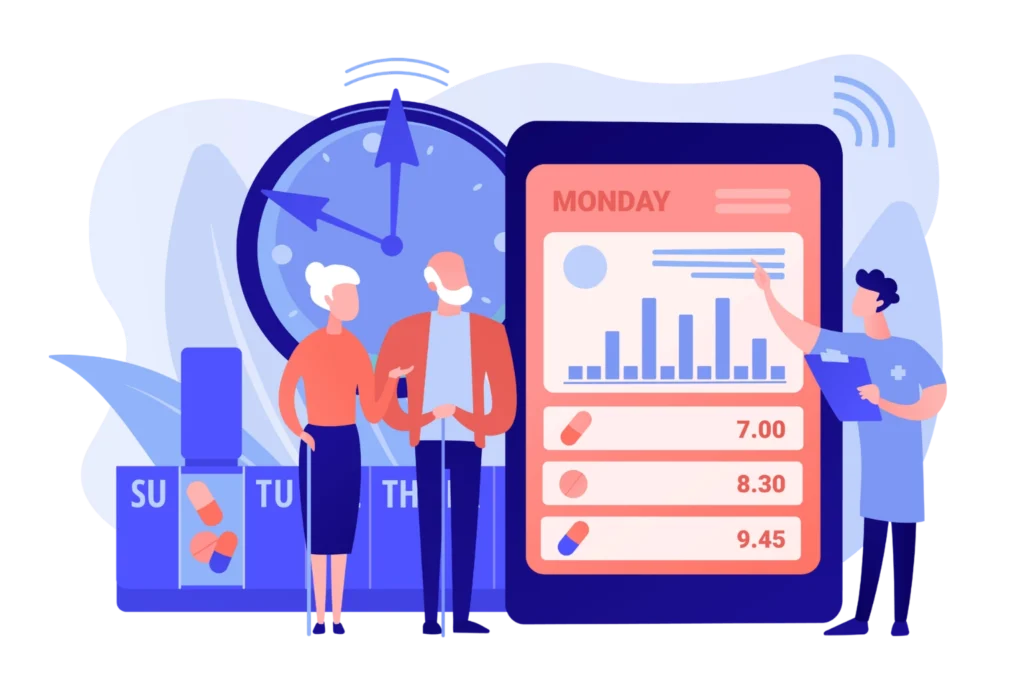

HR teams field the same requests over and over — leave balances, policy copies, payslip access, document updates. Every one of those is a small interruption, and small interruptions add up to hours lost every week. An employee self-service portal exists to take that repeated back-and-forth off HR’s plate and put it directly in employees’ hands.
- A self-service portal lets employees handle routine HR requests on their own, cutting down email threads and ticket queues.
- Login, dashboard, and request submission form the basic loop most actions complete in a few clicks with no HR handoff needed.
- Manual HR request handling breaks down past a certain headcount; a portal scales without adding HR headcount.
- Centralized visibility means HR and managers can track every request, approval, and document in one place instead of scattered inboxes.
What Is an Employee Self-Service Portal?
An employee self service portal is a secure, centralized system where employees can view and update their own HR information without emailing HR for every small change. It covers things like personal details, leave requests, payslips, company policies, and onboarding tasks, all accessible from one login. Gartner tracks employee self-service (ESS) as one of the standard building blocks of modern HR technology stacks.
For most companies, this portal becomes the backbone of a broader onboarding program, not just a place to store documents.
Employees no longer wait on HR for routine actions they complete them directly inside the portal, at their own pace.
Curious what a portal like this looks like inside Microsoft 365?
See Employee Onboarding 365’s self-service features in action.
How Does an Employee Self-Service Portal Work?
At its core, a self-service portal runs on a simple loop: log in, find the task, submit the request, get notified. Here’s how that breaks down in practice.
1. Secure Login and Role-Based Access
Employees sign in often through single sign-on tied to Microsoft 365 credentials — and land on a dashboard scoped to their role. A new hire sees onboarding tasks; a tenured employee sees leave balances and payslips.
2. Dashboard and Task Visibility
The dashboard surfaces what’s pending: forms to complete, documents to upload, policies to acknowledge, requests awaiting approval. Nothing requires a search it’s presented upfront.
3. Self-Directed Request Submission
Need to update a bank detail, request time off, or download a policy document? Employees submit the request directly in the portal. No email, no ticket, no waiting on a reply to start the process.
Most routine HR actions resolve in under a few clicks the portal removes the middle step of asking someone else to do it.
4. Automated Routing and Approvals
Once submitted, the request routes automatically to the right approver — a manager, HR admin, or both, depending on the request type. Approvers get a notification instead of having to check in.
5. Real-Time Status Updates
Employees can track exactly where their request stands pending, approved, or needs more information instead of wondering if anyone saw their email.
Why Do Businesses Need an Employee Self-Service Portal?
As a company grows past a handful of employees, manually handling every HR request becomes a full-time job by itself. A self-service portal exists to prevent that from happening.
1. Reduces HR's Administrative Load
Every request an employee handles independently is one less email, ticket, or interruption for HR. That time goes back into strategic HR work instead of repetitive admin.
2. Improves Response Time
Employees don’t wait days for a reply. Requests that used to sit in an inbox now move through predefined approval steps automatically.
Handling onboarding requests specifically?
See how Employee Onboarding 365 automates the full new-hire journey alongside self-service
3. Gives Employees More Control
People want to manage their own information update an address, check a leave balance, download a payslip without asking permission for basic tasks. Self-service meets that expectation directly.
4. Scales Without Adding Headcount
A portal handles the same volume of requests whether there are 50 employees or 5,000. HR doesn’t need to hire proportionally to keep up with request volume.
A growing headcount no longer means a growing HR backlog the portal absorbs the volume that used to require more people to manage.
What Can Employees Actually do Inside a Self-Service Portal?
A self-service portal only earns its place if employees actually use it. Coverage across the full employee lifecycle drives that adoption.
- Update personal and emergency contact details :- Employees can correct or refresh their own information the moment it changes, instead of emailing HR and waiting for a manual update.
- Submit and track leave or time-off requests :- A request goes in, routes to the manager automatically, and the employee can see exactly where it stands without asking anyone.
- Access and download payslips and tax documents :-Past and current payslips, tax forms, and compensation records stay available on demand, with no need to request copies from HR.
- Review and acknowledge company policies :- New or updated policies get pushed to employees directly, and digital acknowledgment replaces chasing down signatures.
- Complete onboarding checklists and upload documents :-New hires work through their onboarding tasks and submit required documents at their own pace, with progress visible to HR in real time.
- Submit expense claims for approval :- Receipts and claims go in directly through the portal and move through approval without a separate email thread or spreadsheet.
- View team directory and reporting structure :- Employees can look up colleagues, departments, and reporting lines without pinging HR for an org chart.
- Enroll in or review benefits information :- Benefits selections, coverage details, and enrollment windows are available directly, so employees aren’t relying on HR to explain what’s already documented.
Building out onboarding checklists specifically?
Check the EO365 blog on creating onboarding checklists in SharePoint for a walkthrough
How Does a Self-Service Portal Improve Employee Experience?
A self-service portal isn’t only an HR efficiency tool it directly shapes how supported and in-control an employee feels from their first week onward.
1. Removes the Wait for Simple Answers
Instead of asking a manager or HR for a policy detail or leave balance and waiting for a reply, employees find the answer themselves, on their own schedule.
2. Builds Confidence From Day One
New hires who can complete their own onboarding tasks without repeatedly asking “what do I do next?” – start their role with a clearer sense of control over the process.
Employees who solve their own routine questions feel more capable, not more isolated the portal supports them instead of replacing HR’s role entirely.
3. Cuts Down on Repetitive Follow-Ups
Employees don’t need to check back in on a request they already submitted — status updates come to them, so there’s no need to send a follow-up email just to confirm something is moving.
4. Creates Consistency Across the Organization
Every employee gets the same process, the same forms, and the same response times — regardless of who happens to be handling HR requests that week. That consistency builds trust in the system itself.
See Employee Onboarding 365’s onboarding experience end to end.
What Challenges Come Up Without a Self-Service Portal?
Every employee gets the same process, the same forms, and the same response times — regardless of who happens to be handling HR requests that week. That consistency builds trust in the system itself.
What breaks down without one in place. Where the hidden cost actually shows up. Why “we’ll add it later” gets expensive.
Running HR requests manually feels manageable early on until it doesn’t.
Inbox Overload for HR Teams
Every leave request, document ask, or policy question lands as a separate email. HR spends more time triaging inboxes than doing HR work.
Inconsistent Response Times
Without a system routing requests, response time depends entirely on when someone checks their inbox. Some requests get answered in minutes, others sit for days.
No Central Visibility
Managers can’t see what’s pending without asking HR directly. That creates blind spots around onboarding progress, leave coverage, and pending approvals.
Document Chaos
Policies, forms, and personal documents scattered across email attachments and shared drives make audits and compliance checks far harder than they need to be.
Manual HR Requests vs. Self-Service Portal
| Dimension | Manual HR handling | Self-service portal |
| Request submission | Email or in-person ask to HR | Submitted directly in-portal, any time |
| Response time | Depends on HR availability; often days | Routed instantly to the right approver |
| Visibility | HR must be asked for status updates | Real-time status visible to employee and manager |
| Document access | Scattered across email, drives, paper | Centralized, searchable, role-based access |
| Scalability | HR headcount grows with request volume | Handles growing headcount without added staff |
| Onboarding tasks | Manually tracked via spreadsheets or checklists | Self-guided checklists with automated reminders |
| Policy acknowledgment | Manually collected signatures or confirmations | Digital acknowledgment tracked automatically |
| Audit readiness | Difficult to reconstruct request history | Full activity log available on demand |
Core Features to Look For in a Self-Service Portal
What separates a real portal from a glorified form. Features that drive actual employee adoption. What to check before choosing one.
Role-Based Dashboards
Each employee should see only what’s relevant to their role and stage — new hires see onboarding tasks, tenured staff see leave and payslip tools.
Automated Workflow Routing
Requests should route to the correct approver automatically, without HR manually forwarding anything.
Document Management
Secure, centralized storage for policies, forms, and personal documents — with version control so employees always see the current version.
Mobile Access
Remote and field employees need the same self-service access from a phone as someone at a desk.
Integration With Existing Systems
A portal that connects with SharePoint, Teams, and Outlook removes the need to switch between separate tools for HR tasks.
How Secure Is Data Inside an Employee Self-Service Portal?
The security question every HR team asks before rollout. What actually keeps employee data protected. Where the real risk sits if this is skipped.
Employee data bank details, tax forms, personal identifiers — is exactly the kind of information that needs tighter access control than a shared drive can offer.
Role-Based Access Control
Employees only ever see their own records. Managers see what’s relevant to their team. HR sees what its role requires — nobody has blanket access by default.
Encrypted Storage and Transfer
Documents and personal data stay encrypted both at rest and while moving between the employee, the approver, and storage closing off the exposure points a shared inbox or drive can’t cover.
Sensitive HR data staying locked to role-based access is non-negotiable — a portal without this control creates more risk than the manual process it replaces.
Full Audit Trail
Every request, approval, and document upload gets logged with a timestamp — so if a question comes up during an audit, there’s a clear record instead of a reconstruction effort.
Compliance With Data Regulations
A properly built portal supports the access controls and data-handling standards required by regulations like GDPR, helping HR avoid compliance gaps that manual systems often create by accident.
Why Choose Employee Onboarding 365 for Self-Service?
Employee Onboarding 365 is built directly on SharePoint, giving employees a self-service portal inside the Microsoft 365 environment they already work in daily. New hires complete checklists, upload documents, and track onboarding progress without a separate login or a new tool to learn.
It connects with Teams, Outlook, and SharePoint so HR isn’t maintaining a disconnected system — self-service becomes part of the existing workflow rather than an add-on.
Conclusion
An employee self-service portal isn’t just a convenience feature — it’s the difference between HR spending its week on repetitive requests or on the work that actually needs a person’s judgment. As headcount grows, that difference compounds fast.
If you’re ready to give employees control over their own HR tasks while keeping HR in the loop, Employee Onboarding 365 is worth a look. Start your free trial today.
Want to see the security model behind a Microsoft-native portal?
Explore Employee Onboarding 365 built on SharePoint’s compliance framework.
Frequently Asked Questions
Does a self-service portal replace HR entirely?
No it removes routine, repetitive requests from HR’s queue so the team can focus on higher-value work like policy design and employee support.
Can employees access the portal from their phone?
Yes, most self-service portals are built to work on mobile, so remote and field employees aren’t limited to desktop access.
What happens if an employee submits an incorrect request?
Requests can usually be edited or withdrawn before approval, and HR or the manager can flag corrections during the review step.
Is a self-service portal secure for sensitive documents?
Yes, access is role-based, meaning employees only see their own records while HR and managers see what’s relevant to their scope.
Do small companies need a self-service portal, or is it just for large teams?
Even small teams benefit once requests start repeating weekly the earlier it’s in place, the less rework later as headcount grows.


_JiluXJRGNl.svg)























