How Employee Enablement Supports Employee Training and Development

Many companies spend a lot of money on training. But often, people forget what they learned. Or they go back to work and have no time, tools or help to use it.
This is where employee enablement helps. It connects learning to real work. In this post, you will learn what enablement is, how it supports training, and how AI makes it even stronger.
- Employee enablement means giving people the tools, knowledge and support they need to do great work.
- Training teaches new skills. Enablement helps people use those skills every day.
- Managers play a big role. They turn training into real results.
- AI can make learning personal, fast and part of daily work.
- You can measure enablement with simple numbers, like time-to-productivity and skill use.
What Is Employee Enablement?
Employee enablement is about giving your team everything they need to do their best work. This includes:
- The right tools and technology
- Clear information and knowledge
- Time to learn and practice
- Support from managers and coworkers
- Freedom to make decisions
Simply put, enablement removes the things that slow people down. It helps people grow, not just work.
Employee Enablement vs. Training vs. Engagement
These three ideas are linked, but they are not the same.
- Employee Training teaches a skill. For example, a course on a new software tool.
- Enablement makes it possible to use that skill. For example, giving access to the tool, a quick guide and a manager who checks in.
- Employee Engagement is how people feel about their work. It is about energy and commitment.
Engagement is still low around the world. Gallup’s State of the Global Workplace 2025 report found that only 21% of employees were engaged in 2024, down from 23% the year before. Gallup estimates that low engagement costs the world economy $438 billion in lost productivity.
Here is the key point: people may want to do well, but they can’t if they don’t have support. Enablement gives them that support. And when people feel supported, they often feel more engaged too.
How Employee Enablement Improves Training and Performance
Training is only one step. Real learning happens before, during and after a course. Enablement supports each stage.
Before Training: Clear Goals
People learn better when they know why they are learning. Before training starts, enablement means:
- Explaining how the new skill connects to their job
- Setting clear goals for what “good” looks like
- Asking employees what they actually need
During Training: Time and Tools
Many people say they are too busy to learn. Enablement fixes this by:
- Giving protected time for learning
- Offering short lessons (micro-learning) that fit busy days
- Making sure people have the right tools to practice
After Training: Practice and Feedback
This is the stage most companies forget. Without practice, new skills fade fast. Enablement helps with:
- Real tasks where people can use the new skill
- Quick feedback from managers or peers
- Easy job aids, like checklists and short guides
- A place to ask questions, such as a team chat or a mentor
When learning connects to daily work, performance gets better. People make fewer mistakes, work faster and feel more confident.
The Role of Employee Enablement in Skill Development
Skills are changing fast. The World Economic Forum’s Future of Jobs Report 2025 says that 39% of workers’ core skills are expected to change by 2030. It also says that if the world’s workforce were 100 people, 59 of them would need training by 2030.
This means learning can’t be a one-time event. It must be continuous. Enablement makes continuous learning possible.
Employees want this too. LinkedIn’s 2024 Workplace Learning Report found that 90% of organizations are worried about keeping their people. Offering learning opportunities was their number one way to keep them. The same report found that 4 in 5 people want to learn more about how to use AI in their jobs.
Start Strong With Onboarding
Onboarding is the first training every new hire gets. Good enablement makes onboarding faster and less stressful. Try these ideas:
- Give new hires their tools and logins on day one
- Pair them with a buddy or mentor
- Use job shadowing so they can learn by watching
- Share a simple 30-60-90 day plan
When onboarding goes well, new hires become productive sooner. They also feel welcome and are more likely to stay.
Managers Make the Difference
Managers are the bridge between training and real work. They decide who gets time to learn. They give feedback. They create chances to practice. Gallup research shows that managers account for 70% of the variance in team engagement. But managers need support too. Gallup’s 2025 report found that manager engagement fell from 30% to 27% in one year. So, enable your managers first. Give them coaching skills, simple tools and time to support their teams.How AI Supports Employee Enablement and Continuous Learning
AI is changing how people learn at work. Used well, it can make enablement faster and more personal. Here are some simple ways AI helps:
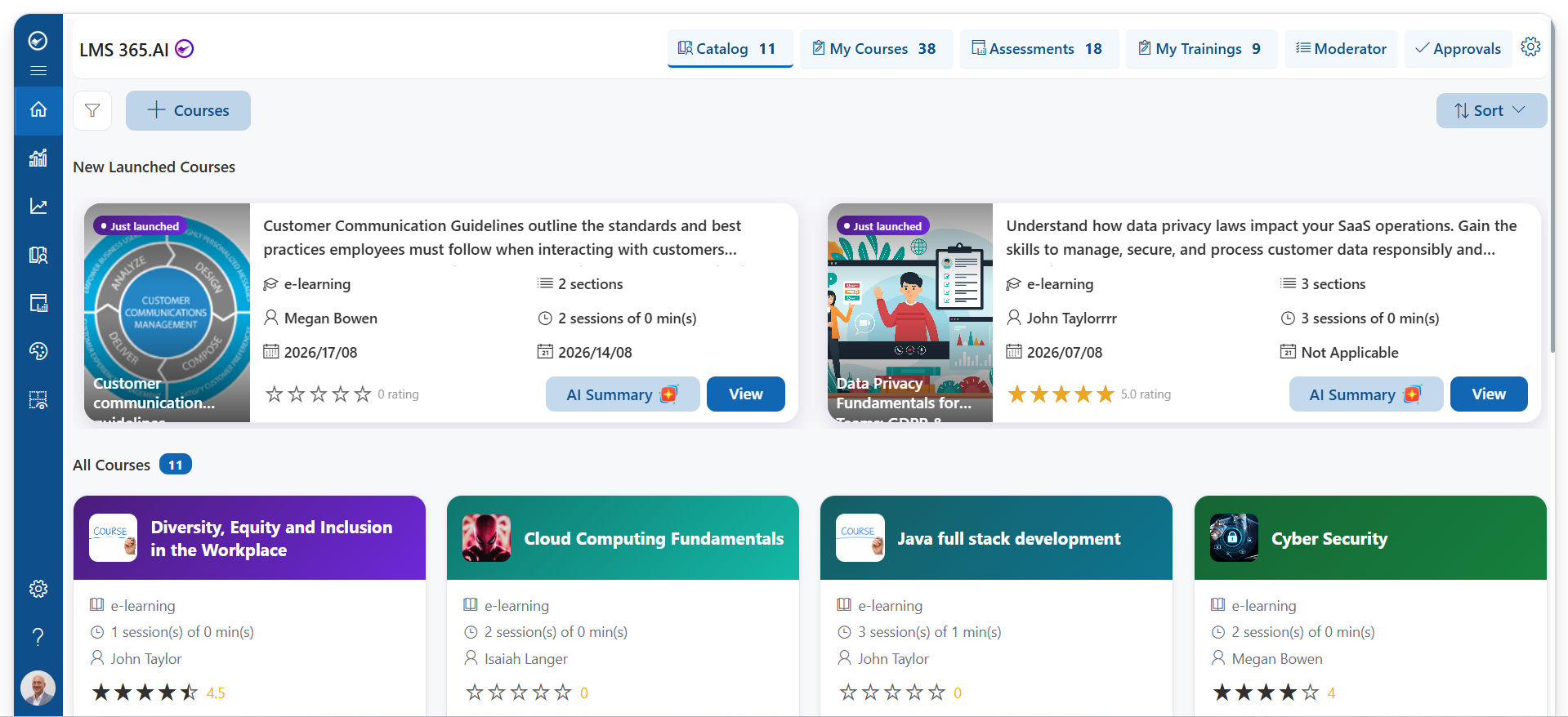
- Personalized learning paths: AI can suggest courses based on a person’s role, goals and skill gaps.
- Skill gap analysis: AI can look at the skills a team has and the skills it needs. Then it can show where to focus.
- Learning in the flow of work: People can ask an AI assistant a question and get an answer right away, without leaving their task.
- AI coaching: AI tools can help people practice skills, like sales calls or tough conversations, and give quick feedback.
- Smart knowledge sharing: AI can find the right document or expert in seconds.
There is strong proof that AI support works, especially for new workers. A study by economists from Stanford and MIT (Brynjolfsson, Li and Raymond, “Generative AI at Work”) looked at more than 5,000 customer support agents. Agents with an AI assistant solved about 14% more issues per hour on average. For new and less-skilled workers, the gain was 34%. In simple words, AI helped share the know-how of top workers with everyone else.
But AI is not magic. People need training to use it well. McKinsey’s 2025 “Superagency in the Workplace” report found that 48% of employees rank training as the most important factor for using generative AI. Yet nearly half say they get only moderate support or less. This is a clear enablement gap.
Tip: Start small. Pick one team and one AI tool. Train people, measure the results, and then grow.
Common Challenges (and Simple Fixes)
Enablement is not always easy. Here are common problems and how to fix them:
- Managers lack coaching skills. Fix: train managers first and give them simple coaching guides.
- Too many tools. Fix: do a technology check. Remove tools people don’t use. Connect the rest.
- Small budgets. Fix: use low-cost methods like peer learning, job shadowing and internal experts.
- Remote and global teams. Fix: record short videos, write things down, and offer learning in different time zones.
- No time to learn. Fix: protect learning time on the calendar, and use short lessons.
How to Measure the Impact
You can’t improve what you don’t measure. Use these simple numbers to track enablement and training results:
- Time-to-productivity: How long does it take new hires or trained staff to work at full speed?
- Skill use: Are people using the new skill on the job 30 to 90 days after training?
- Tool adoption: How many people use the tools you provide?
- Performance results: Look at quality, speed, sales or customer scores before and after training.
- Internal moves: How many people get promoted or move to new roles inside the company?
- Retention: Do trained and supported people stay longer?
- Employee feedback: Ask simple questions like “Do you have what you need to do your job well?”
Pick three or four numbers. Track them every quarter. Share the results with leaders to show the value of training.
Conclusion
Training gives people new skills, but employee enablement makes sure they can use them. When employees have the right tools, time and support from their managers, learning becomes part of everyday work instead of something they forget.
Start small: ask your team what they need, support your managers, and use AI to make learning personal and fast. Then measure the results and keep improving. When people are enabled to learn and grow, they work better, stay longer and help your business succeed.
Join Our Creative Community
Frequently Asked Questions
What is employee enablement in simple words?
It means giving employees the tools, knowledge, time and support they need to do their best work and keep growing.
What is the difference between employee training and employee enablement?
Training teaches a skill. Enablement gives people what they need to use that skill at work, such as tools, practice time and manager support.
Is employee enablement the same as employee engagement?
No. Engagement is about how people feel about their work. Enablement is about whether they can do their work well. Good enablement often improves engagement.
How does AI help employee enablement?
AI can create personal learning paths, find skill gaps, answer questions during work and give quick coaching feedback. It helps people learn in the flow of work.
How do you measure employee enablement?
Track time-to-productivity, skill use after training, tool adoption, performance results, internal moves and retention. Employee surveys also help.
Who is responsible for employee enablement?
Everyone plays a part. HR and L&D teams build programs, leaders provide budget and tools, and managers give daily support and feedback.