

- AI redlining automatically reviews contracts and highlights risky clauses, deviations, and compliance issues in minutes.
- Organizations can reduce contract review time, accelerate negotiations, and improve consistency across agreements.
- AI supports legal, sales, procurement, and HR teams by simplifying contract analysis and reducing manual effort.
- While AI speeds up contract reviews, human expertise remains essential for complex negotiations and final legal decisions.
Contracts sit at the center of almost every business relationship. They define what you will deliver, what you will receive, and what happens when things do not go as planned. Yet the process of reviewing and negotiating contracts has remained slow, expensive, and inconsistent for decades.
That is starting to change. AI is now being applied directly to contract review and negotiation a practice widely known as AI contract redlining.
Instead of sending a document back and forth over days or weeks, legal and commercial teams can now use AI to surface risky clauses, suggest edits, and track changes in a fraction of the time. As per study by McKinsey, 78% of organizations now use AI in at least one business function.
This post explains what AI contract redlining is, how it works in practice, where it creates real value for legal teams, and what to think about before you adopt it.
What Is Contract Redlining and Why Does It Matter?
Redlining is the process of marking up a contract to propose changes. Traditionally, this meant one party editing a Word document in tracked changes mode, the other party reviewing and responding, and the two sides going through multiple rounds until both agreed on the final language.
It sounds simple, but in practice it consumes enormous time and attention. A single mid-sized commercial agreement can easily run 20 to 40 pages. Each clause may need to be compared against company policy, past precedents, regulatory requirements, and negotiation history.
A survey from ALM and Bloomberg Law found that contracts-related tasks represent at least half of the daily work of more than 4 in 10 corporate counsel (43%).
Where AI Fits into the Contract Review Process?
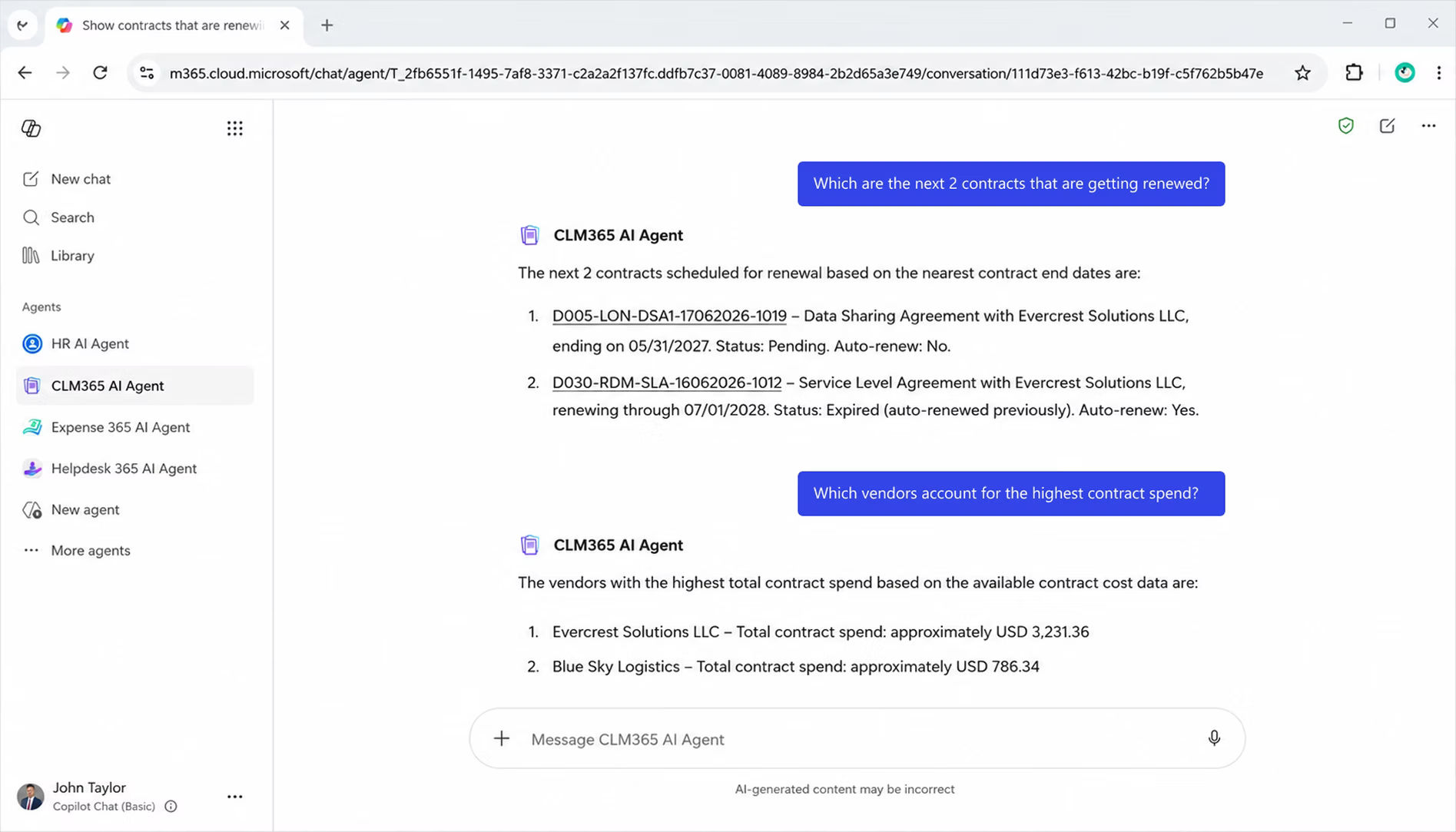
AI contract redlining uses machine learning and natural language processing to read contract text, identify clauses that carry risk or deviate from standard positions, and suggest alternative language. Think of it as a trained reviewer that has read thousands of contracts and can flag patterns in seconds.
- AI analyses contracts and flags clauses that may create risk or differ from company standards.
- It can identify issues such as unfavourable liability caps, broad indemnification clauses, and incorrect payment terms.
- Goldman Sachs estimates that 44% of current legal work tasks could be automated by AI (compared to 25% across all industries).
- AI helps reviewers focus on decisions by highlighting issues instead of manually searching for them.
- Organizations can upload approved clause language, allowing AI to suggest preferred alternatives when deviations are found.
See how AI contract redlining can cut your review time in half
How Does AI Redlining Works?
AI redlining reviews contracts automatically, flags potential risks, and suggests changes based on approved standards.
- A contract is uploaded to the AI redlining platform for review.
- The AI scans the document and identifies key clauses such as liability, indemnification, payment terms, confidentiality, and termination.
- It compares the contract language against approved templates, playbooks, or company standards.
- Clauses that create risk or deviate from preferred positions are automatically flagged.
- The system suggests alternative language based on pre-approved legal clauses.
- Reviewers can accept, reject, or modify the AI’s recommendations.
- Once the review is complete, the contract moves forward for negotiation, approval, or signature.
The Role of Human Review in an AI-Assisted Process
A common concern about AI contract redlining is whether it reduces the role of lawyers and experienced contract professionals. The short answer is no it changes where their time goes, not whether their judgment is needed.
AI handles the mechanical part of review: reading the document, comparing it against known positions, and flagging deviations. Humans handle the judgment part: deciding whether a flagged clause is a problem in this specific context, understanding what the counterparty’s position signals about their priorities, and deciding what to push on and what to concede.
That judgment layer is not replaceable by AI. The commercial context of a deal the relationship history, the relative negotiating leverage, the strategic importance of the counterparty requires human understanding. AI makes that judgment possible faster and at greater scale, but it does not substitute for it.
This matters for how you set up your workflow. The goal is not to remove lawyers from the loop. The goal is to remove from lawyers’ plates the work that does not require a lawyer, so they can focus on the work that does.
Data Security and Confidentiality in AI Contract Review
Contracts often contain sensitive business information, so data security is a key consideration when using AI for contract review. Organizations need assurance that their contract data remains protected and under their control.
CLM 365 is built on the Microsoft ecosystem, which means your contracts and related data remain within your Microsoft 365 environment and are stored in your own Microsoft tenant. Unlike many standalone AI tools, your contract data does not need to be moved to external repositories for management
Organizations can continue to leverage Microsoft’s enterprise-grade security, access controls, compliance capabilities, and data governance policies already in place. This helps legal, procurement, and business teams review contracts with AI while maintaining control over where their data resides.
For businesses with strict security, compliance, or data residency requirements, keeping contract data within their existing Microsoft environment can provide additional peace of mind when adopting AI-powered contract review.
Have questions about data security in AI contract review?
Why Traditional Contract Redlining Takes So Much Time?
Traditional contract redlining is often slow because legal teams must review complex documents, identify risks, and negotiate terms while managing multiple stakeholders and versions.
High Volume of Contracts
Legal and contract teams often review dozens of agreements at the same time. Carefully summarizing each contract for risks, obligations, and unusual terms requires significant time and attention.
Inconsistent Contract Structures
Counterparty contracts rarely follow the same format. Clauses appear in different locations, terminology varies, and important obligations may be hidden within lengthy sections, making reviews more time-consuming.
Reliance on Institutional Knowledge
Effective contract review depends heavily on experience. Understanding which clauses require negotiation and what fallback positions are acceptable often relies on knowledge held by senior legal professionals.
Multiple Review Cycles and Approvals
Contracts typically pass between legal teams, business stakeholders, and counterparties several times. Each review cycle adds comments, revisions, and negotiations that slow the process.
Version Control Challenges
Managing multiple versions of contracts through emails and shared files can create confusion. Reviewers often spend time identifying changes and ensuring they are working from the latest version.
Significant Legal Review Time
When these challenges combine, even a standard commercial agreement can require many hours of review before reaching a final signed version. This is why organizations are increasingly adopting AI-powered contract review tools to reduce manual effort and focus attention on the clauses that matter most.
What Other Contract Tasks Can AI Help With?
AI contract redlining gets most of the attention, but the same underlying capabilities apply to a wider range of contract-related work. For legal and commercial teams handling significant contract volume, these adjacent use cases often deliver as much value as the redlining function itself.
1. Contract Summarization
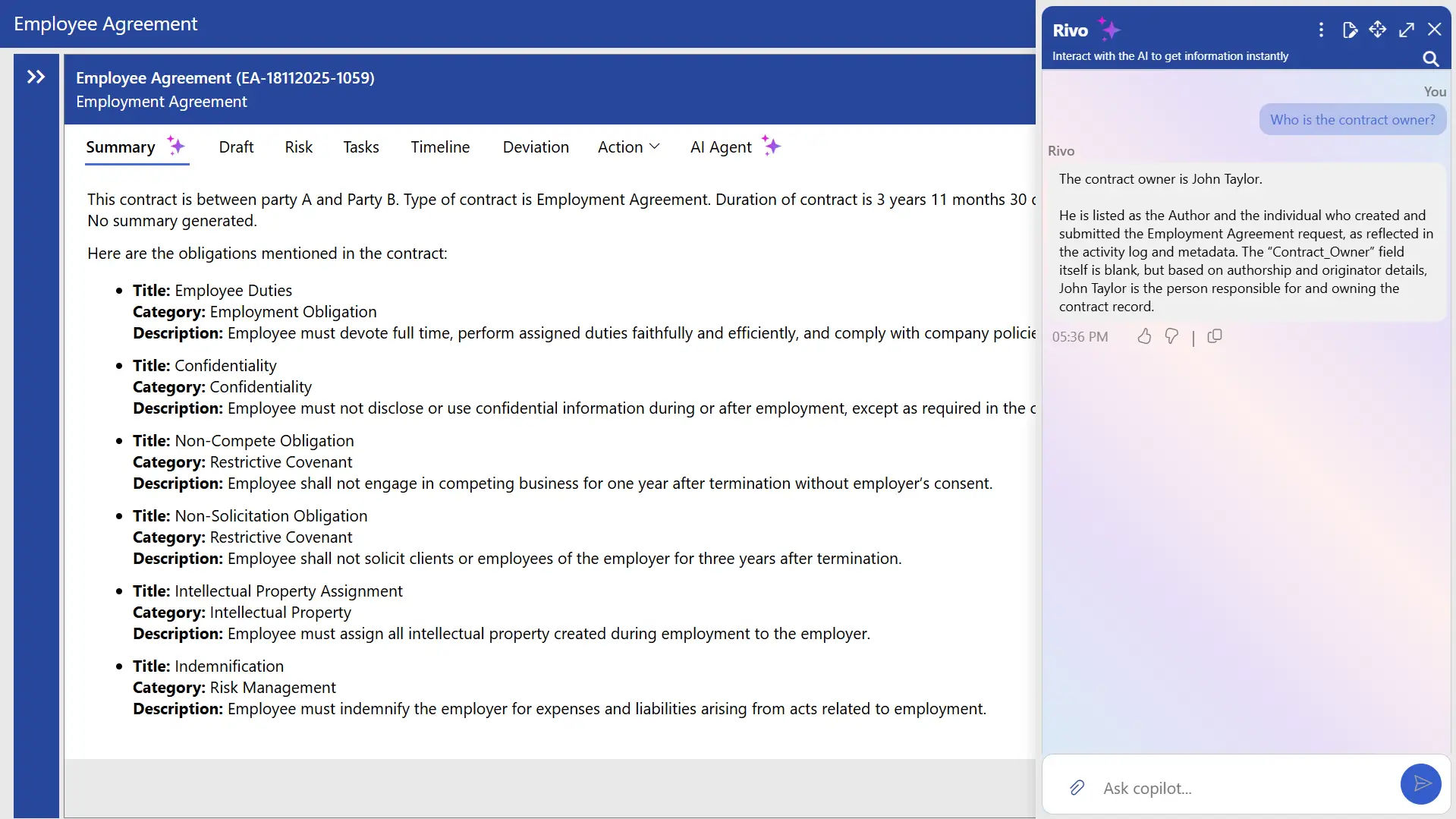
Before deciding whether to sign, escalate, or negotiate a contract, stakeholders need to understand what it contains. AI can generate plain-language summaries that highlight the parties involved, key obligations, risks, and important terms. This allows teams to understand contracts quickly without reading every page.
2. Clause Extraction and Comparison
9.2%, average annual revenue lost due to poor contract management — World Commerce & Contracting. Finding specific clauses across hundreds of contracts can be time-consuming. AI can automatically abstract contracts and compare clause types, such as indemnity or limitation of liability provisions, making audits, due diligence, and portfolio reviews much faster.
3. Contract Metadata Extraction
Contracts contain important details such as renewal dates, notice periods, payment terms, and expiration dates. Finding this information manually can be time-consuming, especially across large contract portfolios. AI automatically extracts contracts and organizes these details, making them easier to track and manage.
4. Risk Scoring and Prioritization
Not every contract carries the same level of risk. AI can identify unusual clauses, missing protections, and terms that differ from company standards. This helps legal teams prioritize high-risk agreements and review low-risk contracts more efficiently.
5. Obligation Tracking
Important obligations often remain hidden within lengthy contract documents. AI can identify key deadlines, milestones, payment commitments, and reporting requirements. This helps teams stay compliant and avoid missing critical obligations after a contract is signed.
Benefits of AI Contract Redlining
The case for contract redlining is not just about speed. The value it creates touches multiple parts of the business legal capacity and organizational knowledge. Understanding these benefits helps make the right business case internally when evaluating whether to invest.
Benefits | What it Means in Practice |
Faster review cycles | Standard contracts reviewed in minutes, not days deals progress without waiting on legal |
Consistent application of positions | Every contract reviewed against the same playbook, regardless of who does the review
|
Higher-quality risk identification
| AI catches deviations that manual reviewers miss under time pressure or volume |
Reduced escalation volume | Routine issues handled automatically; lawyers focus only on genuinely complex matters
|
Faster deal velocity | Shorter contract negotiation timelines translate directly to faster revenue recognition |
Audit trail and documentation | Every flagged issue and accepted change is logged, creating a clear record of decisions
|
Portfolio-level visibility | Risk patterns visible across all contracts, not just individual agreements |
Consistent contract reviews help organizations maintain a stronger negotiation position. When the same standards are applied across agreements, counterparties receive consistent responses and expectations. AI also reduces time spent on repetitive review tasks, allowing legal teams to focus on negotiations, risk assessment, and other higher-value work.
Goldman Sachs (PDF) estimates that 44% of current legal work tasks could be automated by AI (all industries average is 25%).
How AI Redlining Helps Non-Legal Teams?
Contract redlining with AI is not just for legal teams. It helps sales, procurement, finance, and other business teams quickly understand contract risks, key terms, and obligations without requiring deep legal expertise.
- Helps sales teams understand contract risks before involving legal.
- Identifiesclauses that require escalation and those that are within company standards.
- Speeds up contract negotiations and helps deals close faster.
- Assistsprocurement teams in reviewing supplier contracts more confidently.
- Highlights payment terms, warranties, obligations, and termination rights.
- Gives finance teams quick access to payment schedules, milestones, and invoicing terms.
- Reduces the need to manually search through lengthy contracts and email threads.
- Makes legal knowledge available across the organization, helping teams make faster and better decisions.
See how AI brings contract intelligence to your whole team
Where Does Human Review Still Matter?
AI can speed up contract reviews, but some situations still require human expertise and judgment.
- Reviewing unusual or highly customized contract structures.
- Evaluating strategic agreements with major customers, partners, or acquisitions.
- Making decisions on disputed terms during contract negotiations.
- Assessing contracts with complex regulatory or compliance requirements.
- Reviewing jurisdiction-specific legal obligations and risks.
- Interpreting ambiguous contract language and legal intent.
- Handling post-signature disputes, claims, or litigation matters.
- Making final business and legal decisions where risk tolerance and commercial strategy are involved.
The most effective approach is to use AI for routine reviews and analysis while relying on legal professionals for high-risk, complex, and strategic decisions.
How CLM 365 Makes AI Contract Redlining Easier?
CLM 365 brings AI-powered contract redlining directly into the Microsoft ecosystem. Legal and business teams can review, redline, and negotiate contracts within Microsoft Word while using AI to identify risks, summarize key clauses, and suggest fallback language.
Contracts remain securely stored within your Microsoft tenant, enabling collaboration through SharePoint, Teams, and Outlook.
Contract negotiations can also be securely managed through an OTP-based process, helping ensure controlled access and secure collaboration between parties.
Conclusion
AI contract redlining is transforming the way organizations review and negotiate contracts. By identifying risks, highlighting non-standard clauses, and summarizing key terms, AI helps legal and business teams review agreements faster. While human expertise remains essential for strategic and high-risk decisions, AI enables teams to focus on work that delivers greater business value.
Ready to see AI contract redlining in action?
Start your 14-day free trial of CLM 365 and experience faster contract reviews, secure Microsoft Word redlining and AI-powered insights.
Frequently Asked Questions
Does AI only detect contract risks, or can it recommend better wording too?
AI does more than flag risky or unusual clauses. It can also recommend approved alternative wording and fallback clauses based on your organization’s legal playbooks, helping teams negotiate with greater confidence.
Can sales teams review contracts with AI without sending every agreement to legal?
Yes. For routine and low-risk contracts, sales teams can use AI-powered contract insights to review key terms and identify potential issues.
Can AI explain complex legal language in simple terms?
Yes. AI creates concise summaries and plain-language explanations that make legal terminology easier for business users to understand without requiring legal expertise.
How much faster does AI make contract reviews?
The time saved varies depending on the size and complexity of the agreement. However, AI can reduce manual review by quickly highlighting important clauses, identifying potential risks, and focusing attention on areas that need review.
Can external stakeholders collaborate on contracts securely?
Yes. CLM 365 provides secure collaboration features with role-based access controls, allowing both internal teams and external parties to participate in contract reviews and negotiations while maintaining document security.
Table of Contents

Trusted by the Best

_JiluXJRGNl.svg)























