
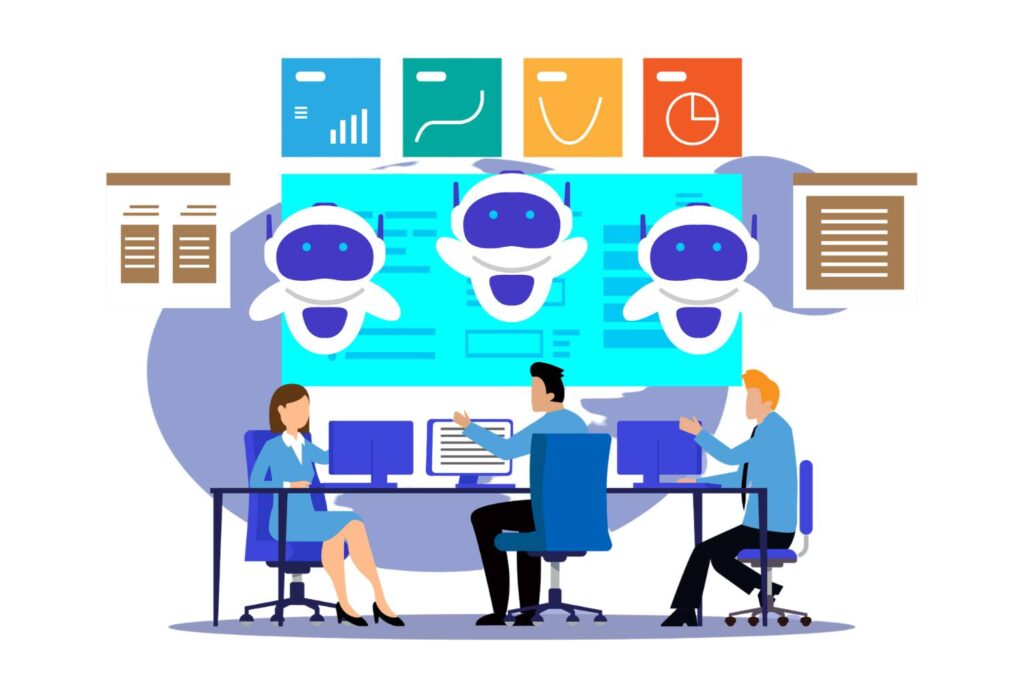
AI-Driven KRA Management: How Artificial Intelligence is Transforming Reviews

Performance reviews have traditionally depended on manual goal-setting, spreadsheets, and manager evaluations. While this approach works for smaller teams, it becomes difficult to maintain consistency, transparency, and accuracy as organizations grow.
- AI-driven KRA management helps organizations create measurable employee goals using role responsibilities, business objectives, and performance data.
- AI improves performance reviews by providing continuous insights to track progress, identify improvement areas, and support timely feedback.
- Human involvement remains essential in AI-powered performance management as managers provide coaching, context, and final evaluations.
- Successful AI adoption requires clear goals, accurate data, and employee trust for effective and transparent recommendations.
- Performance platforms like Performance 365 help organizations manage goals, KRAs, KPIs, reviews, and feedback within Microsoft 365.
AI-driven KRA management is changing how companies approach employee performance reviews by helping HR teams and managers create meaningful goals, track progress, and generate performance insights using artificial intelligence.
Instead of manually defining Key Result Areas (KRAs), organizations can use AI to recommend role-specific objectives, identify performance trends, and support more data-driven evaluation decisions.
AI-driven KRA management helps organizations use artificial intelligence to create measurable employee goals, track KRA progress, improve performance reviews, and provide data-based insights for better workforce decisions.
By combining AI capabilities with performance management processes, companies can move from periodic reviews to a more continuous, goal-focused approach that improves employee alignment and business outcomes.
👉Want to understand how AI is changing performance management?
Explore how artificial intelligence is helping organizations create better goals, improve employee reviews, and make smarter workforce decisions.
What is KRA Management in Performance Reviews?
KRA management refers to the process of defining, tracking, and evaluating the Key Result Areas (KRAs) that determine an employee’s responsibilities and expected outcomes.
KRAs help organizations answer an important question:
“What key areas should an employee focus on to contribute toward business goals?”
A well-defined KRA connects an employee’s role with measurable business objectives. For example:
A Sales Manager may have KRAs related to:
- Revenue growth
- Customer acquisition
- Sales pipeline management
- Customer retention
An HR Manager may have KRAs focused on:
- Recruitment efficiency
- Employee engagement
- Training completion
- Workforce planning
During performance reviews, managers evaluate how effectively employees achieved their assigned KRAs and identify areas for improvement.
However, traditional KRA management often depends heavily on manual processes, which can create challenges such as inconsistent goal-setting, delayed feedback, and limited visibility into employee progress.
KRA vs KPI: Understanding the Difference
Although KRAs and KPIs are often used together, they serve different purposes.
KRAs (Key Result Areas) | KPIs (Key Performance Indicators) |
Define the major responsibility areas | Measure performance within those areas |
Focus on outcomes and responsibilities | Focus on measurable metrics |
Explain what needs to be achieved | Explain how success is measured |
Example:
KRA: Improve customer satisfaction
KPIs:
- Increase customer satisfaction score from 85% to 90%
- Reduce customer complaints by 20%
- Improve response time by 30%
KRAs provide direction, while KPIs provide measurable indicators of progress.
What is AI-Driven KRA Management?
AI-driven KRA management uses artificial intelligence to assist organizations in creating, managing, tracking, and evaluating employee Key Result Areas more effectively.
Instead of relying completely on manual KRA creation, AI analyzes factors such as:
- Employee roles
- Department objectives
- Business goals
- Previous performance data
- Industry benchmarks
and provides recommendations that help managers create more relevant and measurable goals.
AI can support the entire KRA lifecycle, including:
AI-Assisted KRA Creation
AI can suggest relevant KRAs based on an employee’s job responsibilities.
For example:
For a Marketing Manager, AI may recommend KRAs around:
- Campaign performance
- Lead generation
- Brand awareness
- Customer engagement
Automated Goal Alignment
AI helps connect individual employee goals with broader organizational objectives.
For example:
Company goal:
Increase customer retention by 15%
Team goal:
Improve customer engagement strategies
Individual KRA:
Increase customer retention initiatives and improve customer satisfaction scores
This creates better alignment between employee performance and business priorities.
Intelligent Performance Insights
AI can analyze performance data and identify:
- Achievement trends
- Areas where employees are performing well
- Potential improvement areas
- Progress toward goals
This helps managers make performance discussions more meaningful and data-driven.
See how AI supports every stage of the performance management process from goal creation to employee development.
Why Organizations Need AI-Powered KRA Management
Many organizations still manage KRAs through spreadsheets, documents, or disconnected systems. As teams grow, these methods create several challenges.
1. Manual KRA Creation Takes Too Much Time
Managers often spend significant time creating KRAs from scratch for different employees and roles.
AI helps reduce this effort by suggesting relevant goals based on:
- Job roles
- Previous objectives
- Business priorities
This allows managers to spend more time on coaching and employee development.
2. Ensuring Consistent Performance Standards
Different managers may create and evaluate KRAs differently, leading to inconsistent performance reviews.
AI helps establish more standardized approaches by recommending structured goals and evaluation criteria across teams.
3. Improving Visibility Into Employee Progress
Traditional performance reviews often happen once or twice a year, making it difficult to identify challenges early.
AI-powered KRA management enables continuous tracking of:
- Goal progress
- Performance trends
- Achievement levels
- Development areas
Managers can address issues before they impact final review outcomes.
4. Supporting Data-Driven Performance Decisions
Performance reviews can sometimes be influenced by personal opinions or incomplete information.
AI helps managers make better decisions by analyzing available performance data and providing additional insights during evaluation discussions.
5. Creating a Better Employee Experience
Employees perform better when they clearly understand:
- What is expected from them
- How success is measured
- Where they need improvement
AI-driven KRA management provides better goal visibility and helps employees stay aligned with their responsibilities.
How AI Improves KRA Management for Performance Reviews
AI is transforming performance reviews by making KRA management more intelligent, continuous, and data-driven. Instead of treating performance reviews as an annual activity, AI helps organizations create an ongoing process where goals are continuously monitored, evaluated, and improved.
Here are the key ways AI improves KRA management:
1. AI Helps Create Role-Based KRAs
Creating meaningful KRAs for every employee can be challenging, especially in large organizations where roles, departments, and responsibilities vary.
AI helps managers create more relevant KRAs by analyzing:
- Job responsibilities
- Department objectives
- Organizational goals
- Previous performance data
- Industry-based role expectations
For example:
A traditional approach may require a manager to manually create KRAs for a Software Developer.
AI can suggest KRAs such as:
- Deliver assigned projects within defined timelines
- Improve code quality and reduce defects
- Contribute to product enhancements
- Increase automation and development efficiency
This allows managers to create role-specific KRAs faster while maintaining consistency across teams.
2. AI Converts Broad Goals Into Measurable Objectives
One of the biggest challenges in performance management is creating goals that are clear and measurable.
Many goals are too general, such as:
- Improve customer satisfaction
- Increase productivity
- Support business growth
AI can help transform these into measurable objectives.
Example:
General Goal:
Improve customer satisfaction
AI-Suggested Measurable KRA:
Increase customer satisfaction score from 85% to 92% within six months by improving response time and resolution quality.
This helps employees understand exactly what success looks like and enables managers to evaluate performance more objectively.
3. AI Tracks KRA Progress in Real Time
Traditional performance reviews often depend on information collected at the end of a review cycle. This can result in outdated or incomplete performance evaluations.
AI-powered KRA management enables continuous tracking by analyzing:
- Goal completion status
- Milestone achievements
- Performance trends
- Progress against targets
Managers can quickly identify whether employees are:
- On track
- Falling behind
- Exceeding expectations
- Requiring additional support
This allows organizations to move from reactive performance reviews to proactive performance management.
4. AI Provides Performance Insights for Better Reviews
Performance evaluations require more than simply checking whether goals were completed.
AI helps managers understand the overall performance picture by analyzing available data and identifying patterns.
AI-powered insights can help answer questions such as:
- Which goals were successfully achieved?
- Where did performance improve?
- Which areas require development?
- What support does an employee need?
For example:
Instead of writing:
“Employee performed well this year.”
AI-assisted insights can help create more meaningful observations:
“The employee exceeded quarterly sales targets by 12%, improved customer retention metrics, and consistently achieved assigned business objectives.”
This makes performance discussions more specific and valuable.
5. AI Supports Fairer and More Objective Performance Evaluations
Performance reviews can sometimes be influenced by subjective opinions, inconsistent evaluation methods, or limited visibility into employee contributions.
AI helps create a more structured evaluation process by supporting managers with:
- Performance data
- Goal achievement insights
- Consistent evaluation frameworks
- Historical performance information
While AI does not replace managerial judgment, it helps managers make decisions based on better information.
6. AI Enables Continuous Feedback and Coaching
Modern employees expect regular feedback instead of waiting for annual reviews.
AI helps organizations support continuous performance conversations by identifying:
- Progress updates
- Development opportunities
- Areas requiring coaching
Managers can use these insights to have more meaningful one-on-one discussions and provide timely guidance.
This creates a culture focused on continuous improvement rather than only evaluating past performance.
Benefits of AI-Driven KRA Management
AI-powered KRA management provides benefits across HR teams, managers, and employees by making performance processes faster, smarter, and more transparent.
Benefits for HR Teams
1. Reduces Performance Management Administration
HR teams often spend significant time managing:
- Goal-setting processes
- Review cycles
- Employee evaluations
- Performance documentation
AI reduces manual effort by assisting with KRA creation, tracking, and performance analysis.
This allows HR professionals to focus more on strategic workforce initiatives.
2. Creates Standardized Performance Processes
Large organizations often face challenges maintaining consistent performance standards across departments.
AI helps HR teams create structured approaches for:
- Goal setting
- KRA definitions
- Evaluation criteria
- Performance measurement
This improves fairness and consistency across the organization.
3. Improves Workforce Visibility
AI-powered analytics provide HR leaders with better visibility into:
- Employee performance trends
- Team productivity
- Skill gaps
- Development opportunities
These insights support better workforce planning decisions.
Benefits for Managers
1. Faster Goal Creation
Managers no longer need to create every KRA manually.
AI suggestions help managers quickly develop relevant goals based on employee roles and responsibilities.
2. Better Performance Conversations
Instead of relying only on personal observations, managers can use performance insights to have more meaningful discussions.
They can focus conversations on:
- Achievements
- Challenges
- Development areas
- Future goals
3. Early Identification of Performance Issues
AI helps managers identify potential challenges before the formal review cycle.
For example:
If an employee consistently misses important milestones, managers can provide support early instead of addressing the issue months later.
Benefits for Employees
1. Clear Understanding of Expectations
Employees perform better when they understand:
- Their responsibilities
- Expected outcomes
- Success measurements
AI-supported KRA management provides clearer goal visibility.
2. More Transparent Evaluations
Employees benefit from performance reviews based on measurable goals rather than unclear expectations.
This creates greater trust in the evaluation process.
3. Better Career Development
AI insights can help identify:
- Skill improvement areas
- Training needs
- Growth opportunities
This supports continuous employee development.
AI-Driven KRA Management Use Cases in Hospitality and Travel Organizations
AI-driven KRA management helps hospitality organizations create role-specific goals, recommend relevant KPIs, track progress, and support meaningful performance discussions across different employee groups. For organizations with diverse workforces, including corporate teams, lodge employees, and operational staff, AI can help align individual performance with business objectives.
Use Case 1: Guest Experience and Lodge Operations Teams
Hospitality teams directly impact customer satisfaction and brand reputation. AI-driven KRA management can help managers create measurable goals based on service quality, operational performance, and guest experience.
Examples:
KRA: Improve Guest Experience
AI-supported KPI suggestions:
- Maintain guest satisfaction scores above the defined target
- Improve response time for guest requests
- Increase positive guest feedback ratings
- Reduce service-related complaints
KRA: Improve Lodge Operational Excellence
AI-supported KPI suggestions:
- Complete operational tasks within scheduled timelines
- Maintain compliance with safety and service standards
- Improve coordination between housekeeping, food services, and guest relations teams
Use Case 2: Human Resources and Talent Acquisition Teams
HR teams can use AI-driven KRAs to improve workforce planning, recruitment efficiency, and employee engagement across a distributed workforce.
Examples:
KRA: Improve Recruitment Effectiveness
AI-supported KPI suggestions:
- Reduce time-to-hire for priority roles
- Improve candidate experience scores
- Increase offer acceptance rates
- Maintain hiring targets across business locations
KRA: Improve Employee Engagement
AI-supported KPI suggestions:
- Increase employee participation in training programs
- Improve engagement survey scores
- Track completion of performance reviews
- Support employee development plans
Use Case 3: Managers Handling Distributed and Non-Digital Employees
Organizations with employees working across remote locations, lodges, or operational sites often face challenges tracking performance consistently.
AI-driven KRA management can help managers create and monitor goals even when employees have limited digital interaction.
Examples:
KRA: Improve Team Performance Management
AI-supported KPI suggestions:
- Complete employee reviews within defined timelines
- Maintain updated employee goals and progress records
- Track development actions for team members
- Provide structured performance feedback
KRA: Support Employee Development
AI-supported KPI suggestions:
- Identify skill gaps based on review outcomes
- Recommend relevant training areas
- Create development plans with measurable objectives
Use Case 4: Corporate and Administrative Teams
Corporate teams such as finance, IT, operations, and support functions can use AI-generated KRAs aligned with organizational priorities.
Examples:
KRA: Improve Process Efficiency
AI-supported KPI suggestions:
- Reduce manual process dependency
- Complete assigned projects within deadlines
- Improve reporting accuracy
- Increase automation adoption
KRA: Strengthen Collaboration
AI-supported KPI suggestions:
- Improve cross-functional project completion
- Increase stakeholder satisfaction
- Maintain timely communication and updates
Use Case 5: Leadership and Senior Management Teams
Leaders can use AI-driven KRA insights to align employee performance with broader business goals and identify improvement opportunities.
Examples:
KRA: Drive Organizational Growth
AI-supported KPI suggestions:
- Improve department-level performance outcomes
- Track progress against strategic objectives
- Identify recurring performance challenges
- Support data-based workforce decisions
AI-Driven KRA Management vs Traditional KRA Management
Many organizations still manage employee KRAs using spreadsheets, documents, or manual review processes. While traditional methods may work for smaller teams, they become difficult to manage as organizations grow.
AI-driven KRA management introduces automation, intelligence, and continuous insights to overcome the limitations of traditional approaches.
Traditional KRA Management | AI-Driven KRA Management |
Managers manually create KRAs | AI suggests role-based KRAs |
Goals may differ across teams | Standardized goal-setting approach |
Performance data collected during review cycles | Continuous performance insights |
Heavy dependency on spreadsheets | Automated tracking and dashboards |
Evaluations may rely on subjective opinions | Data-supported performance decisions |
Limited visibility into employee progress | Real-time goal tracking |
Manual reporting takes significant effort | AI-generated insights and reports |
The goal of AI is not to replace managers but to support them with better information, faster processes, and more structured performance management practices.
How to Implement AI-Based KRA Management in Your Organization
Adopting AI-driven KRA management requires more than simply introducing a new technology. Organizations need a structured approach that combines business goals, employee responsibilities, and AI capabilities.
Here are the key steps:
Step 1: Define Organizational Goals
Before creating employee KRAs, organizations should clearly define their broader business objectives.
Examples:
- Increase revenue growth
- Improve customer satisfaction
- Enhance operational efficiency
- Improve employee productivity
These goals provide the foundation for creating meaningful employee objectives.
Step 2: Map Roles and Responsibilities
Each role should have clearly defined responsibilities.
Organizations should identify:
- Job roles
- Department objectives
- Expected outcomes
- Required skills
This information helps AI recommend more relevant KRAs.
Step 3: Create Role-Based KRAs
Use AI capabilities to generate recommendations based on employee roles and organizational priorities.
For example:
For a Customer Success Manager:
AI may recommend KRAs related to:
- Customer retention
- Customer satisfaction
- Account growth
- Issue resolution efficiency
Managers can review and customize these recommendations based on specific requirements.
Step 4: Define Measurable KPIs
KRAs become more effective when they include measurable indicators.
For every KRA, define:
- Performance targets
- Measurement criteria
- Expected timelines
- Success indicators
Example:
KRA:
Improve customer response experience
KPI:
Reduce average response time from 8 hours to 4 hours within six months.
Step 5: Enable Continuous Performance Tracking
Instead of waiting until annual reviews, organizations should continuously monitor progress.
Track:
- Goal completion
- Milestones achieved
- Performance trends
- Employee development areas
This enables timely feedback and better coaching.
Step 6: Use AI Insights During Performance Reviews
During review discussions, AI-generated insights can help managers evaluate performance more effectively.
Managers can analyze:
- Completed goals
- Performance patterns
- Areas of improvement
- Employee achievements
This creates more meaningful and objective conversations.
Features to Look for in AI-Powered KRA Management Software
When evaluating AI-based performance management solutions, organizations should look for features that support the complete performance lifecycle.
Important capabilities include:
AI-Assisted Goal and KRA Creation
The platform should help managers create relevant KRAs using:
- Employee roles
- Business objectives
- Department goals
- Previous performance information
Goal and KPI Tracking
A strong solution should allow organizations to monitor:
- Goal progress
- KPI achievement
- Completion status
- Performance trends
Performance Review Automation
The system should simplify:
- Review cycle creation
- Employee self-assessments
- Manager evaluations
- Approval workflows
Continuous Feedback Management
Modern performance management requires regular feedback.
Look for capabilities such as:
- Employee feedback
- Manager comments
- One-on-one discussions
- Recognition features
Performance Analytics and Reporting
AI-powered analytics should help leaders understand:
- Individual performance
- Team productivity
- Goal achievement
- Development opportunities
Integration With Existing Workplace Tools
Organizations should consider solutions that integrate with existing platforms to improve adoption.
For Microsoft 365 organizations, solutions integrated with:
- Microsoft Teams
- Outlook
- Power BI
can provide a smoother employee experience.
Organizations looking for AI-enabled performance management solutions should consider platforms that combine goal tracking, KRA management, performance reviews, and employee feedback in one place. Microsoft 365-based solutions like Performance 365 help businesses manage these processes within their existing Microsoft environment.
Common Challenges When Using AI for KRA Management
Although AI provides significant benefits for KRA management, organizations should consider several important factors before implementing AI-powered performance management processes. Successful adoption requires a balance between AI-driven insights and human decision-making.
1. Poor Goal Definition
AI can help organizations generate KRA suggestions and identify relevant performance areas, but the quality of outcomes depends on having clear business objectives. When goals are unclear or not aligned with organizational priorities, AI recommendations may not create meaningful results. Organizations should define specific, measurable, and role-based goals to ensure AI supports effective KRA management.
2. Data Quality Issues
AI-powered KRA management relies on accurate and reliable data to generate useful insights. Incomplete, inconsistent, or outdated information can impact the quality of recommendations and performance analysis. Organizations should maintain accurate employee information, performance records, goal details, and progress updates to help AI provide relevant insights.
3. Maintaining Human Involvement
AI should support managers in making informed decisions rather than completely replacing human involvement in performance management. Managers still play an important role in understanding employee situations, providing feedback, and having meaningful performance conversations. Combining AI insights with manager judgment creates a more balanced and effective review process.
4. Employee Trust and Adoption
Employee trust is important for successful AI adoption in KRA management. Organizations should clearly communicate how AI is being used, what information is analyzed, and how recommendations support performance discussions. Transparency around AI usage helps employees understand its purpose and encourages greater acceptance of AI-driven performance processes.
5. Integration With Existing Systems
AI-powered KRA management works best when it can connect with existing HR and performance management systems. Organizations may face challenges when employee data, goals, and performance records are stored across multiple platforms. Proper integration helps ensure consistent information flow and enables AI to provide more accurate performance insights.
6. Managing AI Bias
AI systems learn from existing data, which means biased or incomplete data can influence the recommendations they generate. Organizations should regularly review AI-driven suggestions to ensure KRAs, evaluations, and performance insights remain fair and objective. Human oversight is necessary to identify and address potential biases.
7. Change Management and Training
Introducing AI into performance management requires employees and managers to understand how the technology works and how it supports their daily activities. Without proper training and communication, teams may hesitate to adopt AI-based processes. Organizations should provide guidance and support to help users confidently work with AI-powered KRA management tools.
The Future of AI in Performance Management
AI is expected to play a larger role in helping organizations create more personalized, continuous, and data-driven performance experiences. As AI technology evolves, organizations will be able to support employees with better insights, timely guidance, and more effective development opportunities.
1. Predictive Performance Insights
AI can help organizations identify potential performance trends by analyzing employee goals, progress patterns, and historical performance data. These insights can help managers recognize challenges early, provide timely support, and make informed decisions to improve employee outcomes.
2. AI-Powered Employee Coaching
AI assistants can support employees throughout their performance journey by providing personalized guidance and recommendations. They can help employees set meaningful goals, identify areas for improvement, and receive suggestions for skills development based on their performance needs.
3. Personalized Career Development
AI can analyze employee skills, achievements, goals, and development areas to recommend personalized growth opportunities. Organizations can use these insights to suggest relevant training programs, career pathways, and development plans that align with both employee aspirations and business requirements.
4. Continuous Performance Management
Organizations are gradually moving beyond annual-only performance reviews toward continuous performance discussions. AI can support this shift by providing regular insights, tracking goal progress, and helping managers and employees have more meaningful performance conversations throughout the year.
5. Automated Goal and KRA Recommendations
AI can help organizations create more relevant KRAs by analyzing job roles, business objectives, and previous performance data. Future AI systems may suggest role-specific goals, performance indicators, and improvement areas, helping managers create clearer expectations for employees.
6. Real-Time Performance Feedback
Future AI capabilities may enable employees and managers to receive timely feedback based on ongoing performance activities. This can help organizations address challenges quickly, recognize achievements, and encourage continuous improvement rather than waiting for scheduled review cycles.
7. Advanced Workforce Analytics
AI can provide deeper workforce insights by analyzing performance trends across teams and departments. Organizations can use these insights to identify skill gaps, improve workforce planning, and make better decisions around employee development and organizational growth.
How Performance 365 Helps With AI-Powered Performance Management
Managing KRAs effectively requires more than just creating goals. Organizations need a structured approach that connects goal setting, performance tracking, feedback, and employee development throughout the performance cycle.
Performance 365 helps organizations manage their complete performance management process within the Microsoft 365 environment. It provides a centralized platform to create goals, track progress, conduct reviews, and support meaningful employee development discussions.
With Performance 365, organizations can:
Create and Manage Employee Goals
Performance 365 helps organizations define clear employee goals aligned with business objectives. Managers can set expectations, assign goals, and provide employees with better visibility into their priorities.
Track KRAs and KPIs
Organizations can monitor KRA and KPI progress by tracking employee performance against defined objectives. This helps managers understand progress, identify improvement areas, and support employees throughout the review cycle.
Conduct Structured Performance Reviews
Performance 365 enables organizations to configure and manage performance review cycles with structured evaluation processes. Managers and employees can complete reviews with better consistency and transparency.
Enable Self and Manager Assessments
Employees can complete self-assessments while managers provide their evaluations. This two-way approach helps create more balanced performance discussions by including both employee reflections and manager feedback.
Support Continuous Feedback
Performance 365 helps organizations encourage regular feedback conversations instead of relying only on annual reviews. Managers and employees can share feedback, recognize achievements, and discuss improvement opportunities throughout the year.
Generate Performance Insights Through Dashboards
Performance 365 provides dashboards that help organizations view performance trends, goal progress, and review-related insights. These insights support better decision-making and help managers take informed actions.
By bringing performance management into Microsoft 365 tools such as SharePoint and Microsoft Teams, Performance 365 helps organizations improve adoption while keeping performance processes connected with their existing workplace environment. It enables organizations to manage goals, reviews, feedback, and employee development using familiar Microsoft 365 solutions.
Conclusion:-
AI-driven KRA management helps organizations create better goals, track performance, and make reviews more data-driven. While AI provides valuable insights, effective performance management still requires human feedback and coaching.
With solutions like Performance 365, organizations can manage KRAs, KPIs, reviews, and feedback within Microsoft 365 to build a more aligned and continuous performance management process.
👉Ready to transform your performance review process with AI-powered KRA management?
Performance 365 helps organizations manage goals, KRAs, KPIs, appraisals, 360-degree feedback, and performance insights all within the Microsoft 365 ecosystem.
Join Our Creative Community
Frequently Asked Questions
What is AI-driven KRA management?
AI-driven KRA management uses artificial intelligence to help organizations create, track, and evaluate employee Key Result Areas by providing automated recommendations, performance insights, and data-driven support.
How does AI help create employee KRAs?
AI analyzes employee roles, business objectives, and performance information to recommend relevant and measurable KRAs that align individual responsibilities with organizational goals.
Can AI automate performance reviews?
AI can automate several parts of performance reviews, including goal recommendations, progress tracking, performance summaries, and insights. However, managers remain responsible for final evaluations and employee discussions.
What is the difference between KRA and KPI?
KRA defines the key responsibility area an employee needs to achieve, while KPI measures the specific metrics used to evaluate success in that area.
How does AI improve employee performance management?
AI improves performance management by helping organizations create better goals, track progress continuously, identify improvement areas, and support more objective performance discussions.


_JiluXJRGNl.svg)























