

Enterprise Performance Management (EPM): Complete 2026 Guide

Most organisations do not have a data problem. They have a connection problem. Strategy lives in a slide deck, budgets live in spreadsheets, actuals live in the ERP, and the board pack is stitched together by hand every month. By the time leaders see the numbers, the moment to act has often passed.
- EPM software connects strategy, planning, budgeting, forecasting, reporting, and analysis in one process.
- AI helps teams speed up forecasting, reporting, anomaly detection, and financial analysis.
- EPM is mainly used by finance teams, but also supports HR, sales, operations, and supply chain planning.
- Costs and implementation timelines vary widely based on company size, modules, users, and data complexity.
Enterprise performance management (EPM) exists to close that gap. It links strategy, plans and results so a business can see where it is, decide where it should go, and track whether it is getting there. In this guide you will learn what EPM is, how the enterprise performance management process works, what to look for in enterprise performance management software, what it costs, and how generative AI is reshaping the category.
What Is Enterprise Performance Management?
Enterprise performance management is the set of processes, methods and software an organisation uses to plan, budget, forecast, consolidate, report on and analyse its performance against strategic goals. It is sometimes called corporate performance management (CPM) or business performance management (BPM), and the terms are largely interchangeable.
EPM traditionally sat inside the office of the CFO, but modern EPM extends to sales, HR, supply chain and operations. The goal is a single, trusted view of performance that every department plans against, often described as connected planning or extended planning and analysis (xP&A).
EPM vs. ERP: What Is the Difference?
The two are complementary. An ERP records what happened; an EPM system helps you understand why it happened and what to do next.
| ERP | EPM |
Core purpose | Run daily transactions | Plan, measure and steer performance |
Time focus | Past and present (actuals) | Past, present and future (actuals + forecasts) |
Typical users | Operations, accounting, procurement | FP&A, CFO, executives, business unit leaders |
Key outputs | Ledgers, invoices, orders | Budgets, forecasts, scenarios, consolidated reports |
Why Enterprise Performance Management Matters
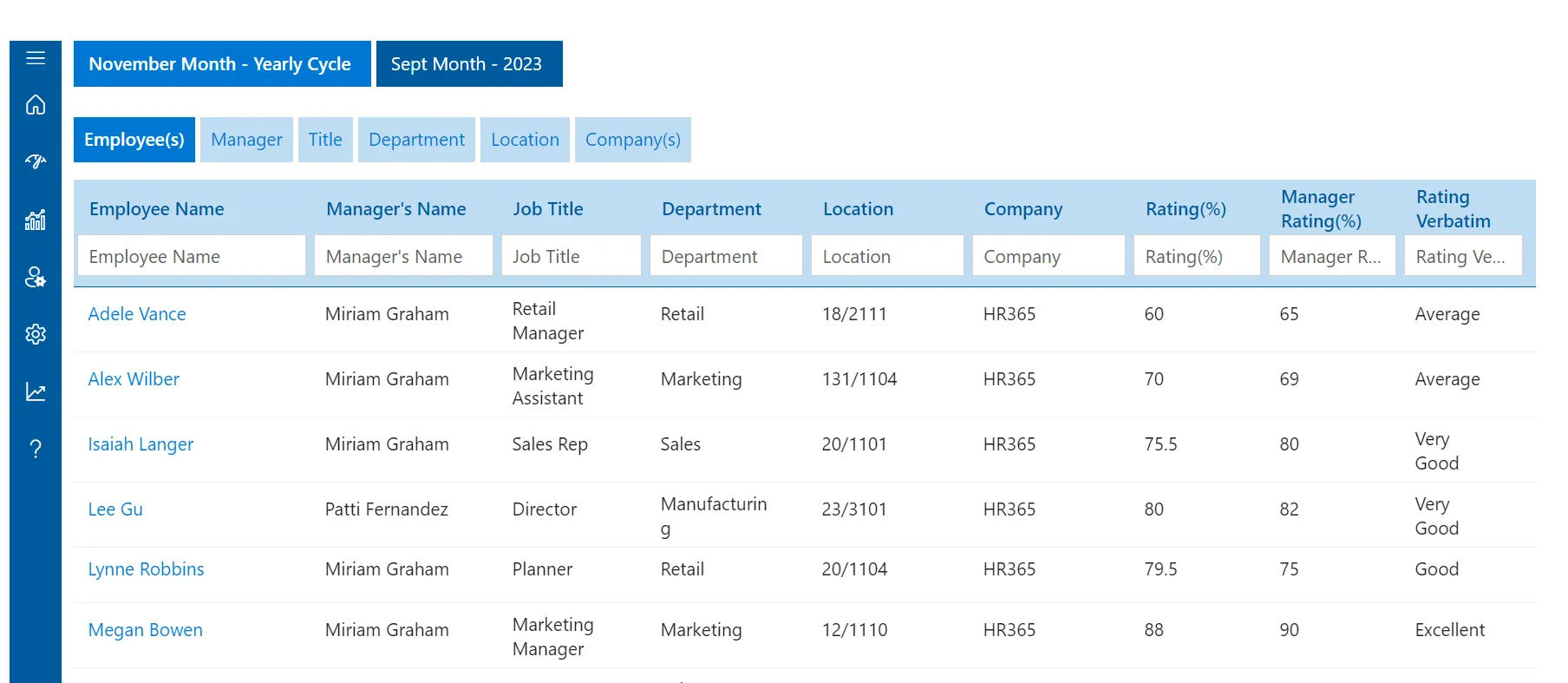
- Strategy becomes measurable. Goals are translated into targets, budgets and KPIs that teams can actually track.
- Faster, more accurate decisions. Rolling forecasts and scenario models replace static annual budgets that go stale within months.
- A shorter financial close. Automated consolidation, intercompany eliminations and reconciliations reduce close cycles from weeks to days.
- One version of the truth. Finance and operations work from the same governed data instead of competing spreadsheets.
- Stronger compliance. Audit trails, controls and standardised reporting support regulatory and statutory requirements.
The Enterprise Performance Management Process
The enterprise performance management process is best understood as a continuous loop rather than a once-a-year event. Most organisations follow five connected stages.
- Strategize and Set Goals: Define clear objectives, KPIs, and ownership for each business goal.
- Plan, Budget and Forecast: Turn goals into flexible financial and operational plans using forecasts and scenarios.
- Close and Consolidate: Collect, reconcile, and consolidate actuals to produce accurate group financials.
- Report and Communicate: Share results through dashboards, board reports, filings, and performance management reports.
- Analyse and Adjust: Compare actuals with plans, identify gaps, and use insights to improve the next planning cycle.
What Is an Enterprise Performance Management System?
An enterprise performance management system is the technology platform that supports this process end to end. Rather than a single tool, it is usually a suite of integrated modules sharing one data model.
Module | What it does |
Planning, budgeting and forecasting | Builds driver-based budgets, rolling forecasts and scenarios across finance and operations |
Financial close and consolidation | Automates reconciliations, eliminations, currency translation and group close |
Account reconciliation | Matches transactions and tracks reconciliation status with controls |
Profitability and cost management | Allocates costs and measures profitability by product, customer or channel |
Narrative and regulatory reporting | Produces board packs, management reports and statutory filings |
Analytics and dashboards | Visualises KPIs, variances and trends for self-service analysis |
Data integration | Connects ERP, CRM, HR, data warehouses and spreadsheets |
Enterprise Performance Management Software: Key Features to Look For
Enterprise performance management software has moved decisively to the cloud, and the differences between products now lie in flexibility, usability and intelligence. Use this checklist when evaluating vendors.
- Cloud deployment and scalability: handles growing data volumes, entities and users without heavy IT effort.
- Flexible modelling: finance teams can build and change models without relying on developers.
- Native integrations: prebuilt connectors to your ERP, CRM and HRIS, plus APIs for everything else.
- Scenario and what-if analysis: compare multiple outcomes side by side in minutes.
- Embedded AI and machine learning: predictive forecasts, anomaly detection and natural language queries.
- Excel and Office integration: users can work in familiar spreadsheets while data stays governed.
- Security and auditability: role-based access, workflow approvals and full audit trails.
- Usability for non-finance users: sales, HR and operations leaders can contribute to plans easily.
Types of Enterprise Performance Management Tools
Not every business needs a full suite on day one. Enterprise performance management tools generally fall into four groups.
Tool type | Best for | Trade-off |
Spreadsheets | Very small teams and simple budgets | Error-prone, hard to scale, weak version control |
Point solutions (e.g. FP&A-only) | Mid-market teams solving one pain point fast | May need extra tools for close and consolidation |
Unified EPM suites | Large, multi-entity or regulated enterprises | Higher cost and longer implementation |
Connected / xP&A platforms | Organisations planning across finance and operations | Requires cross-functional ownership and change management |
How to Choose the Right EPM Solution
- Map your pain points. Is the biggest problem slow closes, inaccurate forecasts or disconnected departments?
- Define scope. Decide whether you need FP&A only, close and consolidation, or a full suite.
- Audit your data landscape. List the source systems the platform must integrate with.
- Shortlist and demo with your own data. Ask vendors to model a real scenario from your business.
- Assess total cost of ownership. Include licences, implementation, training and ongoing admin.
- Plan for adoption. Assign process owners and roll out in phases, starting where value is quickest.
The Role of AI in Enterprise Performance Management
AI is the biggest shift in EPM in a decade. Traditional machine learning already powers predictive forecasting and anomaly detection. Generative AI adds a conversational layer: users can ask questions in plain language, get draft commentary, and build models faster. The result is less time preparing numbers and more time acting on them.
That said, AI outputs still need human review. The strongest EPM teams use AI to accelerate analysis while keeping finance professionals accountable for judgement, controls and final sign-off.
Best Practices for EPM Success
- Start with the process, not the tool. Software amplifies good processes and exposes bad ones.
- Secure executive sponsorship. The CFO and business leaders should co-own the programme.
- Clean your master data early. Consistent charts of accounts, entities and hierarchies prevent rework.
- Move to rolling forecasts. Update forecasts monthly or quarterly instead of relying only on an annual budget.
- Measure value. Track close days, forecast accuracy and time saved to prove ROI.
Conclusion
Enterprise performance management turns strategy into a living, measurable plan. By connecting goals, budgets, forecasts and actuals in one system, organisations close faster, forecast more accurately and respond to change with confidence. With generative AI now built into leading enterprise performance management software, the gap between asking a question and getting an answer is shrinking fast.
The right starting point is a clear view of your biggest performance management pain point, followed by tools that solve it today and scale with you tomorrow.
Join Our Creative Community
Frequently Asked Questions
What can generative AI do in enterprise performance management tools?
Generative AI can answer finance questions, draft variance commentary, summarize forecasts, suggest assumptions, explain models, and highlight anomalies. Finance teams should still review outputs before use.
What are the top enterprise performance management software with AI capabilities?
Leading options include Performance 365, Oracle Fusion Cloud EPM, SAP Analytics Cloud, Anaplan, IBM Planning Analytics, Workday Adaptive Planning, OneStream, Planful, and Pigment.
What is the difference between EPM and CPM?
EPM, CPM, and BPM generally refer to the same performance management discipline, with different vendors using different terms.
Who uses enterprise performance management software?
EPM software is mainly used by CFOs, FP&A, finance, and accounting teams, as well as HR, sales, supply chain, and operations leaders.
How long does it take to implement an EPM system?
A cloud FP&A setup may take 8–16 weeks, while larger multi-module implementations can take 6–12 months.


























