
B2B Contracts: What They Are & How to Manage Them Effectively

Every deal between two companies runs on written promises, and those promises live in B2B contract.
- B2B contracts are written deals between two companies that state who delivers what, when payment is due, and what happens if a promise is broken.
- Common B2B agreements include sales, service, supply, confidentiality, partnership, and license deals, and each one needs clear scope, price, timing, liability, and exit terms.
- Most value is lost after signing, so tracking dates, duties, and renewals matters as much as drafting.
- A shared system like keeps drafts, approvals, signatures, and reminders in one place.
When the wording in a business contract is vague or the document gets lost, small misunderstandings can turn into late payments, missed deadlines, and costly disputes.
Research from World Commerce & Contracting (WorldCC) puts average value loss at 8.6%, which is a lot to give up for something many teams treat as paperwork.
This guide explains business to business contracts in simple words, shows which clauses to check, and covers how to manage each deal after the signature.
What Is a B2B Contract?
A B2B contract is a legally binding agreement between two businesses that defines what each party will provide, receive, and deliver under agreed terms. One company promises to provide something, such as goods, software, labor, or advice. The other contractual obligation are like pay or give something of value in return
Every valid deal, big or small, rests on the same building blocks:
- Two or more parties: the companies, and the people allowed to sign for them.
- An offer and an acceptance: one side proposes terms and the other agrees.
- Something of value: money, goods, services, or a promise.
- A lawful purpose: the deal cannot ask either side to break the law.
- Signatures: proof that both sides agreed.
For example, a software company selling a yearly plan to a delivery firm. The paper states how many people can log in, the annual fee, how fast support must reply, and what happens if the service goes down. Without it, both sides lean on memory and goodwill, and those rarely hold up once money is involved.
Common Types of B2B Agreements Businesses Use
B2B agreements vary based on the nature of the business relationship. Here are some common types businesses use to define responsibilities, expectations, and terms.
- Sales and purchase agreements: One company sells goods and the other buys them. They set price, quantity, delivery date, and what happens if items arrive damaged.
- Service agreements: One business does work for another, such as design, IT support, or consulting. Many firms use a service contract (a main contract with shared terms) plus a statement of work (a short add-on for one project).
- Supply agreements: These cover repeat orders over time, like a factory buying steel every month. They fix pricing rules, minimum volumes, and delivery schedules.
- Non-disclosure agreements (NDAs): Both sides promise to keep shared information private. They are often signed before serious talks begin.
- Distribution and reseller agreements: A maker lets another company sell its products in a set region. The paper covers territory, sales targets, and returns.
- Partnership and joint venture agreements: Two companies team up on a shared goal and split cost, work, and profit.
- Licensing agreements: One company lets another use its software, brand, or patent for a fee.
- Subcontractor agreements: A main contractor hires a smaller firm for part of a job, and the terms must match what the main contractor promised the client.
The right type depends on the risk, the length of the relationship, and how much each side relies on the other. A one-off order may only need a short purchase agreement, while a multi-year cloud deal needs far more detail.
Ready to take control of your B2B contracts?
From vendor and sales agreements to service contracts, NDAs, and partnerships, CLM 365 helps you manage every agreement throughout its lifecycle.
What Should a B2B Contract Include?
A good contract answers the questions both sides will ask later. When a term is missing, each party fills the gap from memory, and memories rarely match. These are the core parts.
- Parties: Include the legal names and addresses of both businesses and their authorized signatories.
- Scope of Work: Clearly define what will be delivered, including quantity, quality, specifications, and expected outcomes.
- Price and Payment Terms: Specify fees, invoice schedules, payment methods, taxes, and late payment charges.
- Timeline: Mention the contract start date, key milestones, delivery dates, and important deadlines.
- Term and Renewal: State how long the agreement lasts and whether it renews automatically or requires approval.
- Roles and Responsibilities: Explain what each business must provide, including resources, information, access, or approvals.
- Confidentiality: Define what information must remain private and how long confidentiality applies.
- Ownership of Work: Clarify who owns any content, designs, software, data, or intellectual property created under the agreement.
- Representations and Warranties: Outline the promises each party makes about the products, services, quality, or legal rights involved.
- Liability Limits: Define each party’s financial responsibility if something goes wrong and set any agreed limits.
- Termination: Explain when either party can end the contract, including notice periods and termination conditions.
- Dispute Resolution: State how disagreements will be handled and which laws or jurisdiction will apply.
- Signatures and Date: Add authorized signatures and the signing date to confirm both parties accept the agreement.
Write each term so a new employee could read it and know what to do. Define key words once and use them the same way throughout. Add a short change process too: any edit should be written down and signed by both sides.
B2B vs. B2C vs. Vendor Contracts: What's the Difference?
The three contract types serve different business relationships, with differences in who the parties are, what they cover, and how their terms are structured.
Aspects | B2B contract | B2C contract | Vendor contract |
Who signs | Two companies | A company and a consumer | A company and its supplier |
Negotiation | Common, with custom edits | Rare, fixed terms | Common, often on the buyer’s paper |
Typical value | Often high | Usually small | Ranges widely |
Length | Months or years | Short or one-time | Often multi-year |
Legal protection | Mostly contract law | Strong consumer protection rules | Contract law |
Key Challenges | Scope, payment, liability | Fair terms and clear disclosure | Supplier reliability, price, service levels |
B2C contracts typically protect consumers through standardized terms and consumer laws, while B2B contracting involves negotiating business contracts between businesses, with vendor contracts covering supplier relationships from the buyer’s perspective.
Why Do B2B Contracts Matter to Businesses?
B2B agreements affect almost every part of a company’s financial and operational activity. When contracts are poorly managed, businesses can lose money, miss deadlines, and struggle to track important commitments.
B2B contracts clearly define what each party is responsible for, including payments, contract deliverables, timelines, service levels, and other commitments.
This gives both businesses a shared understanding of what they need to provide and what they can expect in return.
With almost 90% of business users finding contracts difficult or impossible to understand, according to World Commerce & Contracting, writing clear terms is especially important.
A contract gives teams a clear reference for tracking payment dates, delivery milestones, renewals, approvals, and other obligations.
This becomes difficult when contract information is scattered across different locations.
World Commerce & Contracting found that contract-related data sits across an average of 24 different systems, making it harder to track commitments and make timely decisions.
Many contract disputes start with unclear expectations or different interpretations of an agreement.
A detailed B2B documents what both parties agreed to, giving them a reliable reference when questions arise.
Clear terms around scope, payments, timelines, and responsibilities can help reduce avoidable disagreements.
A B2B contract protects both parties by defining important areas such as pricing, confidentiality, intellectual property, liability, warranties, and termination.
This is important because poor contract management can result in significant value loss.
When responsibilities are clearly assigned, each party knows what it is accountable for.
Teams can refer to specific deliverables, deadlines, and service requirements to check whether commitments are being met.
This creates greater visibility and makes it easier to address issues before they become larger problems.
A well-structured contract creates a strong foundation for long-term partnerships.
It gives both parties a clear understanding of their responsibilities and commitments.
This reduces misunderstandings and allows teams to focus more on building a productive business relationship.
Key B2B Contract Clauses to Review
Most business to business contracts share a similar layout, but a few clauses carry most of the risk. Give these extra time.
- Payment terms. Check due dates, late fees, currency, and whether prices can change during the term. A “net 60” clause means you wait two months for cash, which may strain a small business.
- Scope and changes. Deliverables should be specific. Any extra work should need a written and priced change, so a small favor does not turn into unpaid labor.
- Term and auto-renewal. Many deals renew on their own unless someone gives notice inside a set window, often 30 to 90 days. Miss that window and you may be locked in for another year.
- Termination. Look for the right to leave if the other side breaks the deal, and the right to leave without cause. Check the notice period and any exit fees.
- Liability and indemnity. Liability is who pays when damage happens. Indemnity is a promise to cover the other side’s costs if a third party sues. Read the caps and the exclusions closely, since they decide how big a loss you could face.
- Warranties. These are promises about quality and legal rights. Look at what happens if a promise proves false, such as a repair, refund, or replacement.
- Ownership of ideas and work. If a supplier builds something for you, confirm who owns it at the end. Also check whether the supplier may reuse pieces of it for other clients.
- Confidentiality and data. Look at how shared data is stored, used, returned, and deleted. If personal data is involved, privacy laws may add duties for both sides.
- Force majeure. This covers events outside anyone’s control, such as floods, strikes, or war. Check which events count and how long they can pause the deal before someone can walk away.
- Dispute resolution and governing law. These clauses name which state or country’s law applies and where a case would be heard. Many contracts require talks or mediation first, which is often cheaper than court.
- Assignment. This decides whether the other side can hand the contract to a different company, for example after a sale of its business. You may want a say in who you end up working with.
Still reviewing B2B contracts manually?
With CLM 365, an AI Agent can review clauses, identify potential risks, and highlight key obligations in minutes, helping your team move contracts forward faster.
Best Practices for Building Stronger Business Partnerships
Good contract management goes beyond getting signatures. Experienced contract managers focus on making agreements clear, practical, and easier to manage throughout the relationship.
- Understand the deal first: Know the business goals, parties involved, and major risks before reviewing the contract.
- Don’t reuse terms blindly: Adapt old templates to the current deal, scope, industry, and risk level.
- Clear up vague clauses: If a term can be interpreted in different ways, resolve it before signing.
- Plan beyond the start date: Think about renewals, price changes, performance issues, and exit scenarios upfront.
- Balance protection with practicality: Protect business interests without adding terms that make the relationship difficult to manage.
- Focus negotiations where they matter: Prioritize clauses that could significantly affect cost, risk, operations, or the relationship.
- Get input from key teams: Sales, finance, procurement, operations, and legal may identify different issues in the same contract.
- Learn from completed deals: Review what caused delays or confusion and use those lessons to improve future contracts.
Trust still matters. A contract cannot fix a partner who acts in bad faith, but it can keep two good partners from drifting apart over unclear terms.
Role of CLM 365 in Managing B2B Contract Lifecycle
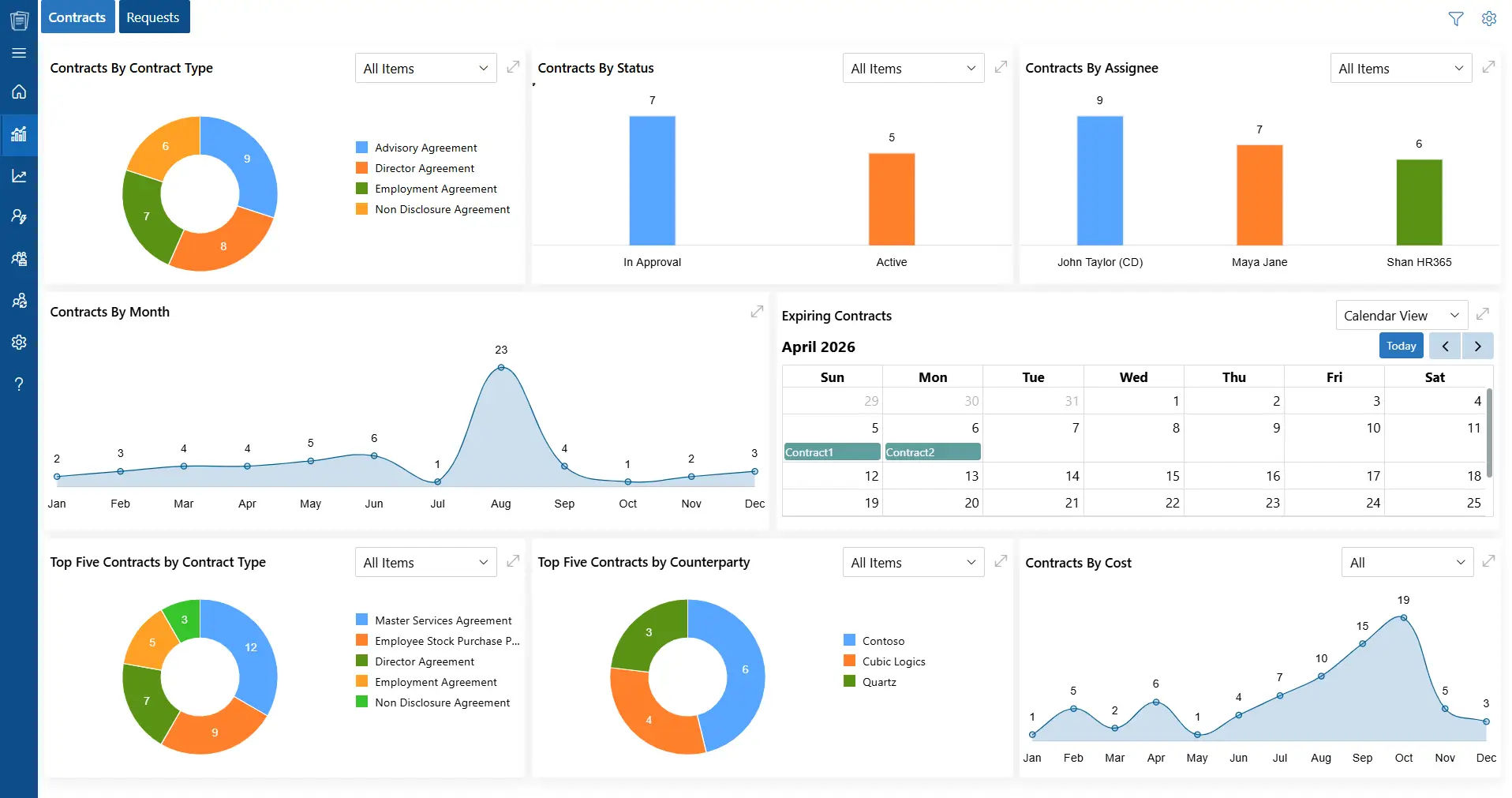
CLM 365 helps businesses manage B2B agreements throughout their lifecycle, from drafting and review to approvals, signing, obligations, and renewals. It integrates with SharePoint, MS Teams, Outlook, Microsoft Copilot, Power BI, and Power Automate, helping teams manage contract processes within their existing workflows.
- Manage sales contracts, vendor agreements, service contracts, NDAs, partnership agreements, and other B2B documents from one centralized platform.
- Automate approvals, track obligations, and identify important contract details with AI-powered workflows, reducing manual follow-ups across multiple agreements.
- Protect sensitive business and contract data with enterprise-grade security and controlled access.
- Support GCC and GCC High environments, making CLM 365 suitable for organizations with strict government and regulatory security requirements.
- Backed by SOC 2 compliance, Microsoft certification, and Microsoft Solutions Partner status, providing businesses with a trusted platform for managing critical B2B agreements.
CLM 365 differentiates itself through a Zero Trust security model, AI-driven capabilities, and user-focused features, while allowing businesses to keep their contract data within their own SharePoint environment.
Hear What Our Clients Says About CLM 365
“CLM 365 helped us transition from a folder-based document repository to a structured contract management system. Contracts are now easier to organize, search, and manage, while standardized processes have significantly improved consistency across our organization.”
– IT Specialist, Arianna 2001 S.p.A., Italy
Conclusion
B2B contracts define how businesses work together, from pricing and responsibilities to risks and commitments. Managing them effectively helps reduce misunderstandings, missed deadlines, and contract-related risks.
Ready to manage your B2B contracts more efficiently? CLM 365 helps you create, review, approve, sign, and manage different types of B2B agreements from one centralized platform.
Frequently Asked Questions
How do we manage contracts with multiple vendors?
A centralized contract system can organize vendor agreements while tracking their terms, obligations, renewal dates, and related documents.
What if the scope of a B2B contract changes during the project?
Document the new scope, pricing, timelines, and responsibilities through a formal amendment before proceeding.
How does a system help with contract renewals?
The system tracks renewal dates, sends timely reminders, and gives teams visibility into upcoming expirations so they can review terms and take action before a contract renews or expires.
Can B2B agreements be signed electronically?
Yes, electronic signatures can be used where legally valid and accepted by the parties involved.
Where is my contract data stored?
Your contract data remains within your organization’s existing Microsoft 365 and SharePoint setup. This lets your organization manage access and permissions using its established Microsoft 365 security controls.
What are the common challenges businesses face when managing B2B contracts?
Common challenges include scattered contract documents, unclear terms, lengthy approval cycles, missed renewal dates, difficulty tracking obligations, version control issues, and limited visibility into contract status.


_JiluXJRGNl.svg)























