

Automation now touches nearly every corner of a modern business from HR and IT to marketing and data integration. Zapier helped popularize this shift, giving teams a no-code way to link thousands of apps and cut out repetitive manual work.
Yet as companies scale, their automation needs often outgrow what Zapier was built for. Rising costs, limited customization, and app-level constraints can leave growing teams looking for something more tailored to how they actually operate.
That’s where Zapier alternatives come in platforms built to match or exceed Zapier’s core capabilities while offering deeper workflows, stronger enterprise integrations, and pricing that scales more sensibly.
- Zapier is a strong general-purpose automation tool, but it can fall short for companies with complex, industry-specific, or enterprise-scale workflow needs.
- Purpose-built platforms especially in HR and payroll often replace multiple point-to-point Zapier connections with native, end-to-end automation.
- Employee Onboarding 365 stands out for organizations already running on Microsoft 365, since it automates HR workflows directly inside Teams, Outlook, and SharePoint.
- The right alternative depends on your priorities: cost efficiency, enterprise-grade compliance, or deep integration with tools you already use.
Why Businesses Are Searching for Zapier Alternatives
Zapier remains a go-to for connecting apps through no-code workflows, but it isn’t always the right fit particularly for organizations with enterprise-level or industry-specific requirements.
Common reasons teams start evaluating alternatives include:
- Limited customization for more complex, multi-step workflows
- Costs that climb as automation volume increases
- Advanced multi-step automations locked behind higher-tier plans
- Weaker native integration with enterprise systems
- A lack of deeper analytics or workflow-level reporting
Which alternative makes sense ultimately comes down to what your organization values most — affordability, scalability, or tighter integration with your existing tech stack.
What Is Zapier?
Founded in 2011, Zapier now connects more than 6,000 apps and helps businesses automate everyday tasks like updating spreadsheets, managing email, and syncing CRM data. Its simplicity makes it especially popular with startups and small teams that don’t have dedicated developer resources.
What Zapier does well
- An intuitive, drag-and-drop workflow builder
- Thousands of pre-built app integrations
- Solid documentation and an active user community
- Reliable, cloud-based infrastructure
- No coding required to get started
Where Zapier falls short
- Free and lower-tier plans come with real functional limits
- More complex processes often require pairing it with additional third-party tools
10 Best Zapier Alternatives in 2025
The platforms below span HR, payroll, and onboarding automation, each offering deeper functionality in their focus area than Zapier’s general-purpose workflow builder.
Product | Key Difference from Zapier | Free Trial / Demo |
Employee Onboarding 365 | Purpose-built for HR and onboarding automation inside Microsoft 365 — tightly integrated with Teams, Outlook, and SharePoint rather than general app-linking | 14 days |
Rippling | Unifies HR, IT, and payroll automation across the full employee lifecycle in one platform | Request Demo |
BambooHR | Centers on people operations — onboarding, PTO tracking, and employee data — rather than generic workflow triggers | 7 days |
Gusto | Focused on payroll, benefits, and compliance automation for small and mid-sized businesses | 30 days |
ADP Workforce Now | Enterprise-grade HR and payroll automation built for compliance and reporting at scale | Contact Sales |
Workday | AI-driven HR, finance, and analytics automation designed for global, enterprise-level operations | Contact Sales |
Paylocity | Native, in-platform HR, payroll, and analytics automation without relying on third-party connectors | Request Demo |
Paycom | A single integrated HR and payroll platform built around native automation | Contact Sales |
TriNet | End-to-end HR automation and compliance support for small and mid-sized businesses | — |
1. Employee Onboarding 365
G2 rating: 4.8/5
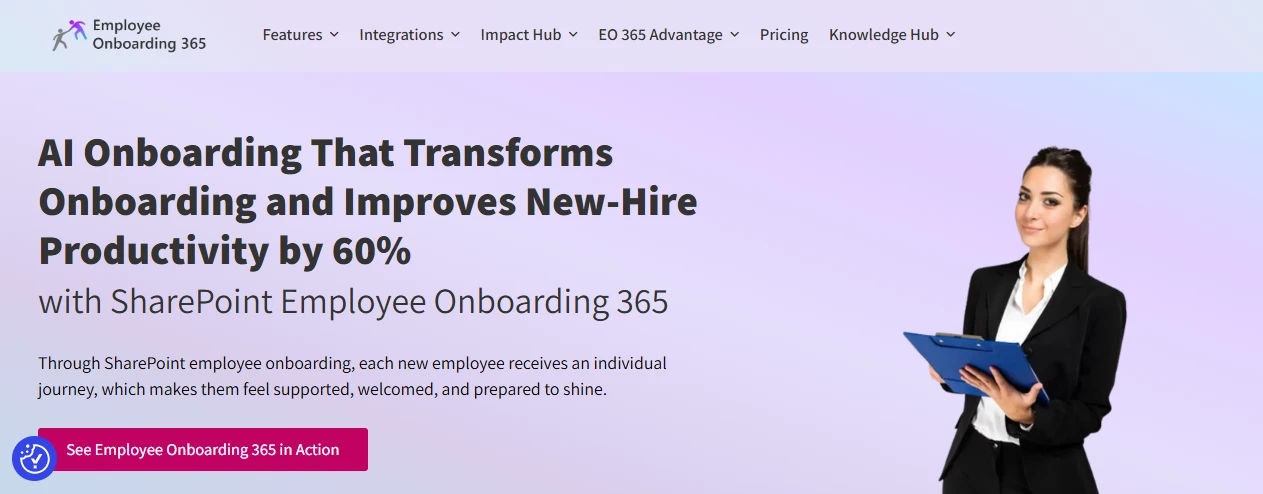
Employee Onboarding 365 is an HR automation platform purpose-built for organizations already running on Microsoft 365. It connects directly with Teams, Outlook, SharePoint, and Power BI to automate onboarding and broader employee lifecycle processes — all within an ecosystem your team already knows. The result is less manual HR work, tighter cross-departmental collaboration, and a more unified onboarding experience for new hires.
Key Features
- Deep integration with Teams, Outlook, and SharePoint
- Automated onboarding and HR workflow creation
- Real-time task tracking and reporting
- Role-based access for HR and managers
- Built-in e-signature and document management
- Interactive HR analytics dashboard
- Automated PTO and leave tracking
- Cloud accessibility for distributed and remote teams
Benefits
- Shortens and simplifies HR onboarding timelines
- Cuts manual, repetitive work across departments
- Strengthens collaboration between HR, IT, and management
- Improves documentation accuracy and compliance
- Delivers a single, unified onboarding experience inside Microsoft 365
- Adds transparency through built-in analytics and task tracking
- Scales comfortably from small teams to large organizations
Key Metrics
- Free trial: 14 days
- Best for: Microsoft 365-based teams automating onboarding and HR workflows
Why it’s a Zapier alternative:
Rather than stitching together generic app integrations, Employee Onboarding 365 delivers HR automation purpose-built for Microsoft 365. It suits companies that want native automation, reporting, and collaboration without relying on third-party connectors — a more secure, streamlined approach to HR workflows.
2. Rippling
G2 rating: 4.7/5
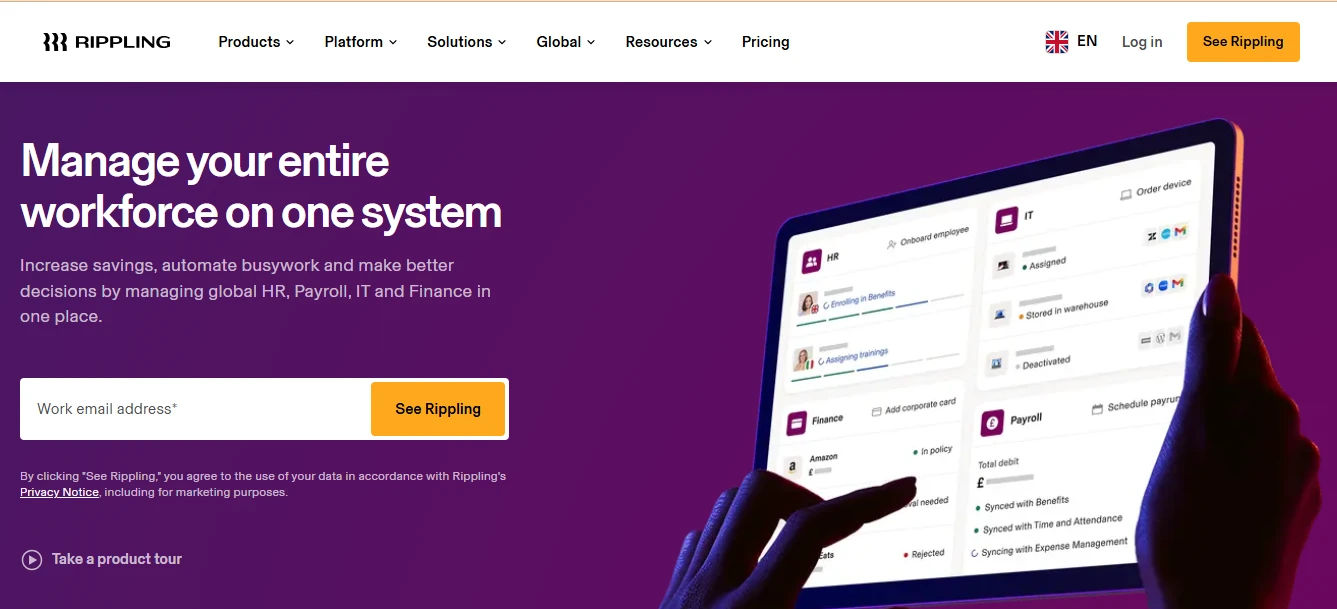
Rippling brings HR, IT, and payroll automation together in a single platform, managing the full employee lifecycle onboarding, payroll, app provisioning, and device management in one place. That consolidation removes the need for disconnected point tools, helping businesses manage people, policy, and process consistently while staying compliant and accurate.
Key Features
- One platform for HR, payroll, and IT automation
- Automated app provisioning and access removal
- Built-in PTO and time tracking
- Compliance tooling for tax, labor, and device security
- A centralized, real-time employee database
- Single sign-on (SSO) and device management
- Multi-country payroll and workforce support
Benefits
- Removes reliance on disconnected tools
- Simplifies onboarding, offboarding, and IT management
- Improves data quality with built-in protections
- Boosts productivity through automated HR and IT processes
- Creates a smoother employee lifecycle end to end
- Saves time and resources through full automation
- Scales well for remote-first organizations
Key Metrics
- Free trial: Request demo
- Best for: Companies wanting HR, IT, and payroll unified in one system
Why it’s a Zapier alternative:
Rippling offers native HR, IT, and payroll automation that goes well beyond generic app connections. Where Zapier links third-party tools, Rippling automates people operations, device management, and compliance directly — a better fit when organizations need automation at the operational level.
3. BambooHR
G2 rating: 4.7/5
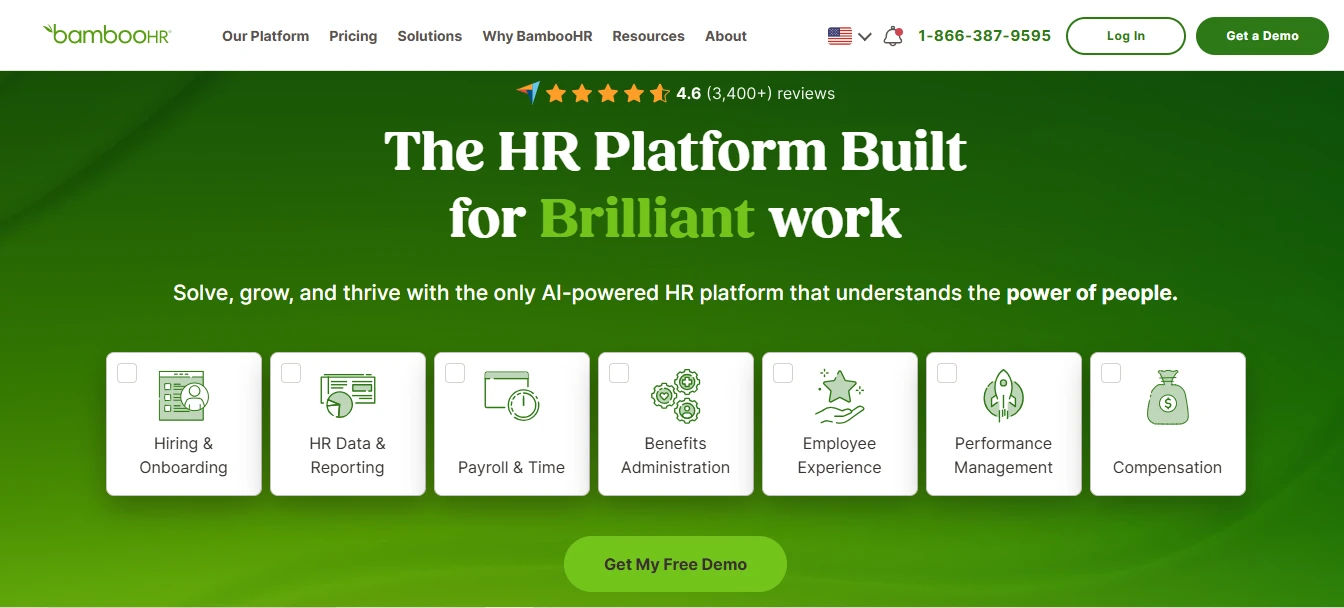
BambooHR is a people-first HR platform built to help teams move away from spreadsheets and manual processes. It puts the employee experience at the center, with intuitive workflows for onboarding, time-off tracking, and employee data management — modern automation without unnecessary complexity.
Key Features
- Automated new-hire onboarding
- Secure, centralized employee database
- Automated PTO tracking and approvals
- Performance management and feedback tools
- Payroll and benefits management
- Mobile access for employees and managers
- Integration with popular HR and communication tools
Benefits
- Saves time by automating repetitive HR tasks
- Improves accuracy and visibility of employee data
- Streamlines the new-hire onboarding experience
- Surfaces up-to-date workforce trends
- Frees HR teams to focus on people, not paperwork
- Supports hybrid and remote work models
- Scales easily alongside company growth
Key Metrics
- Free trial: 7 days
- Best for: People-first HR teams focused on onboarding and employee data
Why it’s a Zapier alternative
While Zapier connects separate applications, BambooHR builds automation like onboarding and performance reviews directly into its HR platform. It’s a strong fit for HR teams that want robust, native automation instead of assembling individual tools.
4. Gusto
G2 rating: 4.4/5
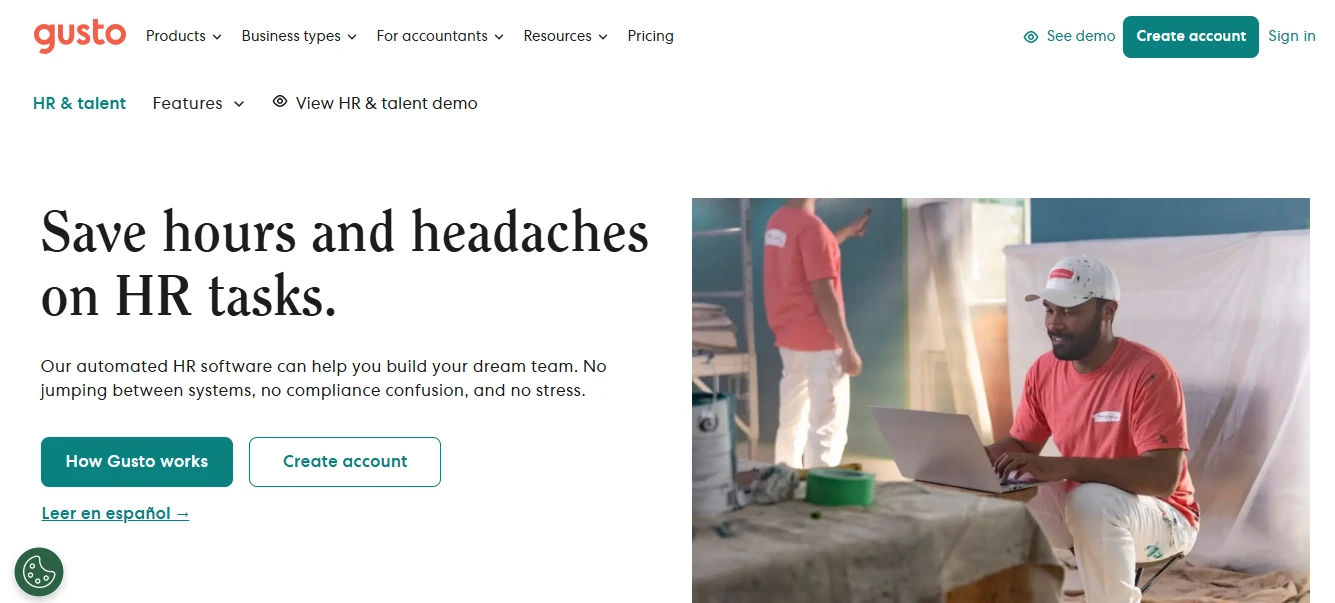
Gusto automates payroll, benefits, and compliance for small and mid-sized businesses. Built to be easy to use, it handles pay runs, tax filing, and benefits administration automatically freeing HR teams from paperwork so payroll stays accurate, smooth, and stress-free.
Key Features
- Automated payroll with built-in tax compliance
- Benefits and insurance management
- Synced PTO tracking and time management
- Self-service portals for pay stubs and benefits
- Automated tax filing and annual reporting
- Integration with major HR and accounting tools
- Customizable onboarding
Benefits
- Saves time through automated payroll and tax handling
- Reduces compliance risk with built-in legal safeguards
- Improves transparency through employee self-service
- Simplifies HR management as companies grow
- Offers straightforward, predictable pricing
- Ensures accuracy in benefits and deductions
- Boosts employee satisfaction with faster, paperless processes
Key Metrics
- Free trial: 30 days
- Best for: Small and mid-sized businesses automating payroll and benefits
Why it’s a Zapier alternative:
Gusto delivers native, end-to-end automation for payroll, tax, and benefits no third-party connectors required. It’s a strong choice for SMBs that want built-in automation without piecing together multiple app integrations.
5. ADP Workforce Now
G2 rating: 4.4/5
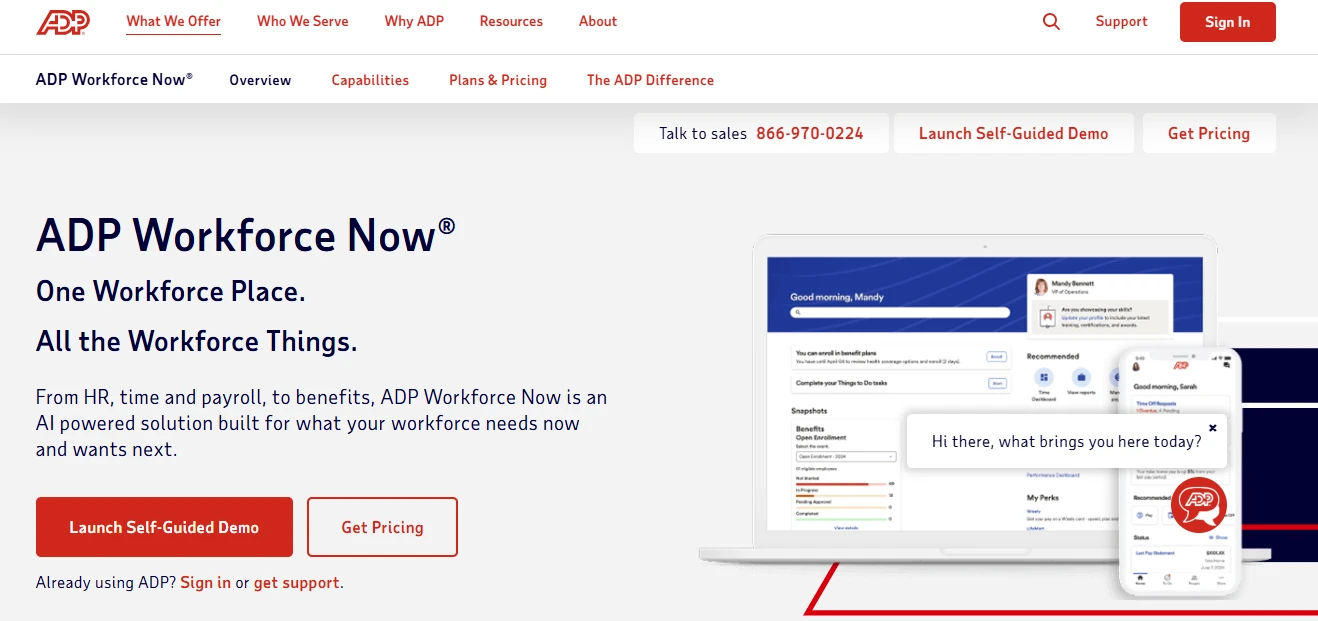
ADP Workforce Now is an enterprise-grade HR and payroll platform built for complex, large-scale workforce operations. It combines payroll, compliance, and benefits management with strong analytics and integration capabilities, helping enterprises automate HR processes, stay compliant, and make informed workforce decisions at scale.
Key Features
- Automated payroll and tax compliance management
- Self-service dashboard for HR, benefits, and pay
- Advanced analytics and custom reporting
- Automated onboarding and benefits workflows
- CRM and ERP integration for consistent data flow
- Role-based access with multi-level approvals
- Time, attendance, and performance management modules
Benefits
- Simplifies complex HR and payroll for multinational teams
- Strengthens compliance as regulations evolve
- Improves transparency through self-service tools
- Reduces administrative overhead and paperwork
- Delivers actionable workforce insight through advanced reporting
- Integrates cleanly with enterprise systems
- Scales effectively across growing or multi-location organizations
Key Metrics
- Best for: Large or multinational enterprises needing compliance-heavy payroll automation
Why it’s a Zapier alternative:
Where Zapier focuses on custom workflows between apps, ADP Workforce Now provides built-in enterprise automation for HR, payroll, and compliance without external connectors well suited to large organizations that need robust, native automation beyond an integration-based approach.
6. Workday
G2 rating: 4.3/5
Workday is a global enterprise automation platform that unifies HR, finance, and analytics. Designed for organizations with complex operations, it uses AI-driven insights to support better decision-making, stronger employee experiences, and simplified end-to-end processes — from talent management to financial planning.
Key Features
- Unified HR, financial, and payroll system
- AI-powered predictive analytics and workforce insights
- Global compliance and data security tools
- Live org charts, dashboards, and workflow automation
- Automated onboarding and learning management
- Combined performance and talent management
- Mobile access for workforce engagement
Benefits
- Provides real-time access to workforce and financial data
- Automates manual processes using AI
- Strengthens compliance across global operations
- Improves overall HR efficiency
- Sharpens decision-making through predictive analytics
- Unifies complex HR and finance functions
- Scales smoothly at the enterprise level
Key Metrics
- Best for: Global enterprises wanting AI-driven HR and finance automation together
Why it’s a Zapier alternative:
While Zapier connects apps to enable automation, Workday delivers comprehensive, built-in automation across HR, finance, and analytics without external connections ideal for large businesses seeking intelligent, AI-driven automation on one unified platform.
7. Paylocity
G2 rating: 4.5/5
Paylocity is a mid-market HR and payroll platform focused on making automation both efficient and simple. It brings payroll, benefits, time tracking, and employee engagement tools into one streamlined system — flexible and usability-focused, helping HR teams manage the workforce while keeping employees connected and informed.
Key Features
- Automated payroll and benefits management
- Custom HR workflow builder
- Self-service access to pay, time, and benefits
- Mobile time and labor tracking
- Enhanced workforce reporting and analytics
- Performance management and engagement tools
- Integration with accounting and HR systems
Benefits
- Reduces administrative workload
- Improves employee satisfaction through self-service access
- Delivers actionable insight through analytics
- Increases flexibility with customizable workflows
- Automates payroll and compliance tasks
- Supports remote workforce management
- Strengthens collaboration between HR and employees
Key Metrics
- Free trial: Request demo
- Best for: Mid-sized companies wanting payroll, HR, and engagement in one system
Why it’s a Zapier alternative:
Rather than linking separate third-party apps, Paylocity delivers automated payroll, HR, and engagement tools within a single platform removing the need for external connectors and offering unified automation instead of app-based linkages.
8. Paycom
G2 rating: 4.3/5
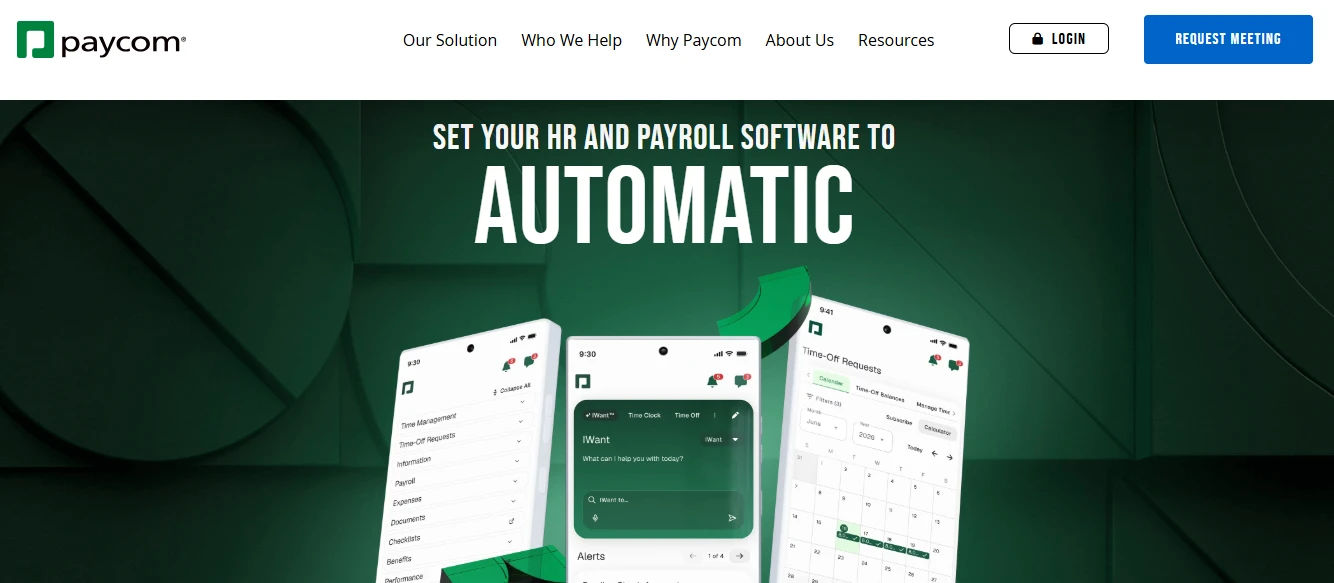
Paycom is an integrated HR and payroll platform built to give organizations complete control over their workforce data. It consolidates HR, payroll, and compliance into one system — avoiding the need for multiple third-party integrations — and automates the full employee lifecycle, from onboarding to performance tracking, with real-time insight built in.
Key Features
- End-to-end automation of HR, payroll, and compliance
- Automated employee onboarding
- Combined e-signature and document management
- Performance tracking and goal-setting tools
- Time and attendance management
- Workforce analytics dashboard
- Mobile self-service for employees and managers
Benefits
- Consolidates HR and payroll into a single system
- Reduces reliance on external integrations and manual work
- Improves automated recordkeeping
- Boosts engagement through simple self-service
- Surfaces workforce performance trends
- Reduces errors and speeds up payroll
- Scales securely as businesses grow
Key Metrics
- Best for: Organizations wanting full control over HR, payroll, and compliance in-house
Why it’s a Zapier alternative:
Where Zapier integrates separate HR and payroll apps, Paycom provides native automation within a single ecosystem, removing the need for external workflows. It’s a strong fit for organizations that want full control over HR, payroll, and compliance without managing several interconnected tools.
9. TriNet
G2 rating: 4/5
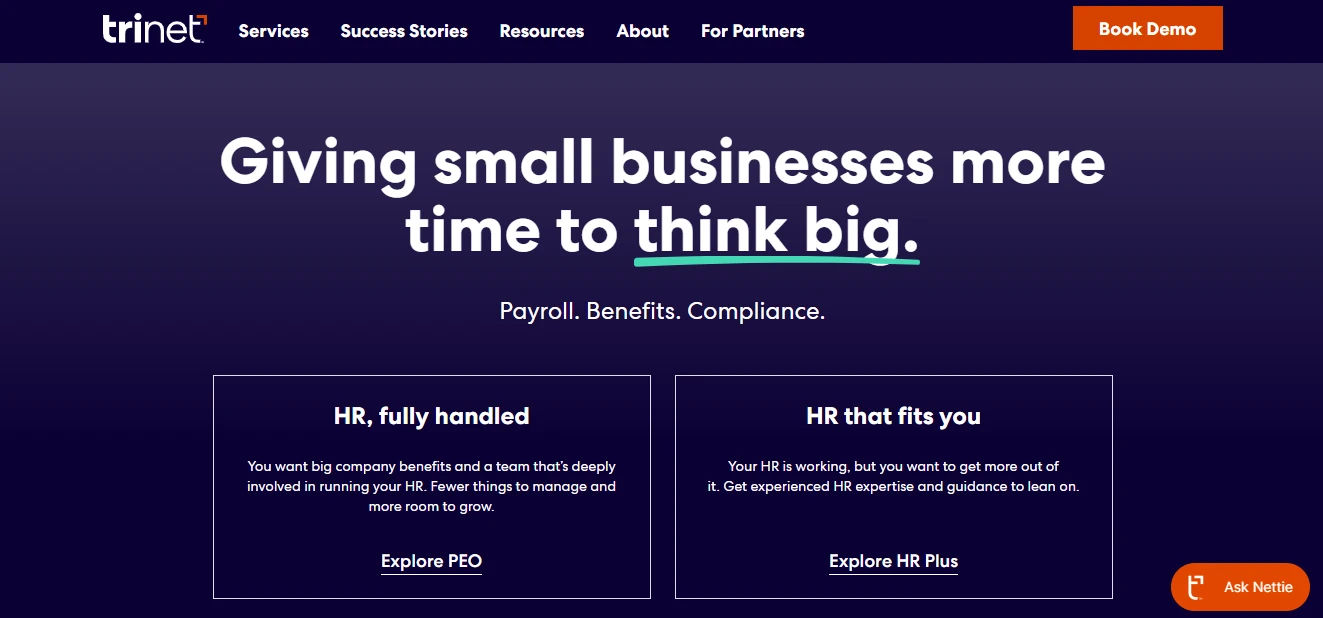
TriNet is a comprehensive HR automation platform that simplifies payroll, compliance, and benefits management for small and mid-sized businesses. It helps companies manage people operations efficiently, reducing administrative overhead and risk so businesses can focus on growth instead of HR complexity.
Key Features
- Automated tax and payroll management
- Benefits enrollment and administration tools
- Real-time compliance monitoring and alerts
- Automated employee database management
- Workforce reporting and analytics
- Mobile HR access for employees and managers
- Dedicated HR and compliance support
Benefits
- Automates HR processes for small and mid-sized organizations
- Reduces compliance risk through proactive monitoring
- Automates payroll and benefits administration
- Improves mobile accessibility for employees
- Provides on-demand HR and legal expertise
- Centralizes workforce data for better decisions
- Scales easily as the business grows
Key Metrics
- Best for: SMBs wanting outsourced HR, payroll, and compliance support
Why it’s a Zapier alternative:
TriNet delivers end-to-end HR automation and compliance management directly, rather than connecting third-party HR apps the way Zapier does. It suits SMBs that want a ready-made HR system with built-in payroll, tax, and benefits automation — no need to configure multiple integrations or external workflows.
How to Choose the Right Zapier Alternative
With so many automation platforms available, choosing one can feel overwhelming. The right fit depends on your company’s size, goals, and the specific workflows you want to automate. Here’s what to consider when evaluating options for HR, IT, or cross-departmental automation.
Identify what you actually need to automate
Start by mapping out your longest-running processes is it employee onboarding, payroll, or cross-team communication? The clearer your automation goals, the easier it is to narrow down the right fit for your operations.
Check compatibility with your current tools
Not every platform integrates cleanly with your existing stack. Confirm the tool works well with what you already use Microsoft 365, Salesforce, QuickBooks, or similar — without requiring heavy configuration.
Consider pricing as automation volume grows
Some tools charge per action or integration; others offer flat pricing. Think about how your usage will scale and choose accordingly many Zapier alternatives offer more flexible pricing for high-volume automation.
Prioritize data privacy, compliance, and security
Automation tools often handle sensitive employee and financial data. Look for strong security practices, GDPR compliance, and encrypted storage enterprise-grade alternatives typically offer more robust protections for regulated industries.
Choose a platform that can grow with you
Your automation needs today may be simple, but they’ll likely evolve. Pick a tool that can support future growth additional departments, higher data volumes, or international expansion so you’re not forced to switch platforms later.
Evaluate the level of support and training available
A good automation tool is about more than features it’s also about support. Look for onboarding assistance, responsive support channels, and helpful documentation so your team can build and maintain workflows confidently, regardless of technical skill level.
Conclusion
Automation now drives business efficiency across nearly every department. Zapier remains a solid starting point, but the right alternative can offer deeper integration, smarter scalability, and workflows built for your industry.
Whether your priority is HR automation, payroll management, or broader enterprise workflows, there’s a Zapier alternative designed to move your operations forward.
Ready to see seamless, business-specific automation in action?
Request a demo today and start a 14-day free trial to see how the right automation platform can simplify workflows, boost productivity, and transform the way your team works.
Join Our Creative Community
Frequently Asked Questions
Why would a business choose a Zapier alternative instead of Zapier itself?
Companies typically move away from Zapier when their workflows get more complex, automation costs climb with volume, or they need deeper native integration with systems like Microsoft 365, payroll, or HR platforms than a general app-connector can offer.
Is Employee Onboarding 365 only useful for onboarding, or does it handle broader HR automation too?
While onboarding is its core focus, Employee Onboarding 365 also supports ongoing HR workflow automation, PTO tracking, document management, and reporting — all within Teams, Outlook, and SharePoint.
Are these Zapier alternatives suitable for small businesses, or just large enterprises?
It varies by platform. Tools like Gusto, BambooHR, and TriNet are built with small and mid-sized businesses in mind, while ADP Workforce Now and Workday are better suited to large, complex, or multinational organizations.
Do these platforms still integrate with other business tools, or do they replace integrations entirely?
Most still integrate with common HR, accounting, and communication tools the difference is that core workflows (like onboarding or payroll) run natively within the platform instead of depending on external connectors to function
How should I decide between a general automation tool and an HR-specific platform?
If your automation needs span many departments and simple app-to-app triggers, a general tool may still work. If HR, onboarding, or payroll is your main pain point, a purpose-built platform like Employee Onboarding 365 or Gusto will typically save more time with less setup.


_JiluXJRGNl.svg)























