

_mVFFaHUZhS.webp)
A structured onboarding process is not only a checklist because it is the first time you get to make new employees feel welcome, appreciated, and secure in their position. The initial few days will determine the way employees relate to your company culture and how soon they turn out to be productive employees.
A structured onboarding process gives new hires a confident start, guiding them step-by-step from preboarding to full productivity. With clear goals, mentorship, and automation, HR teams can create an experience that’s consistent, engaging, and easy to manage.
Modern structured onboarding software simplifies everything from paperwork automation to real-time analytics cutting admin time by up to 40%. It helps HR focus less on forms and more on people, ensuring every new hire feels welcomed, supported, and ready to thrive.
There is not a second chance to make the first impression, and in the case of onboarding, this impression may shape the whole journey of the employee. A thoughtful beginning creates excitement, trust, and motivation at the beginning.
SHRM states that the retention of new hires in an organization increases by 82 percent when the onboarding process is structured, which proves that the right start determines the long-term success of an organization.
What Is a Structured Onboarding Process
The structured onboarding process is well-defined strategy that enables new employees to adapt easily. It is their road map, a GPS to the new employees, which shows them the values of the company and their daily routines so that they do not get lost in the wrong path.
Conversely, unstructured onboarding is whereby new employees are left to discover things by themselves. It has no plans, no clear communication, and no uniform experience. That tends to cause confusion, frustration, and decreased self-confidence in their new position.
An effective structured onboarding process entails:
- Consistency: All new employees receive the same transparent and positive experience.
- Transparency: Roles, goals, and expectations are discussed on the first day.
- Connection: New employees are made to feel welcome, appreciated, and included in the team at the initial stages.
HR automation and onboarding tools allows companies to make this process quicker, more interactive, and stress-free so that each new member of the team begins their work on a high note and remains motivated.
The importance of Structured Onboarding Process
A structured onboarding process is not just a welcome to the new employees but a source of confidence, interest, and success in the long term. In LinkedIn Talent Trends, businesses that have formal onboarding increase productivity by 60 percent.
SHRM Research indicates that 69 percent of employees remain at a minimum of three years when they are greatly onboarded. However, Gallup indicates that just 12% of people strongly agree that their company does onboarding well, which means that there is still an opportunity to improve.
Feeling supported at an early age, people will remain longer, perform better and turn into their best supporters. That is the strength of thoughtful employee orientation and the planned process of new hire integration.
Step-by-Step Framework for Building a Structured Onboarding Process
Building a structured onboarding process is not merely a paperwork task, but a process of creating a journey that fosters trust, rapport, and success over time. Here’s how to do it step by step:
Step 1: Set Clear Objectives
The first step would be to clarify what you would like for you onboarding program to accomplish. Goals that are measurable keep you on track and make sure that your work produces tangible results.
Key goals to focus on:
Faster time-to-productivity:
- Monitor the rate of new employees joining their positions.
- Establish certain learning standards of important tools or processes.
Increased new-hire satisfaction:
- Get feedback by conducting surveys at the end of the first week and month.
- Refine training materials and communication with the help of feedback.
Lower turnover rates:
- Compare pre-implementation and post-implementation retention metrics.
- Determine early exit trends and deal with them in advance.
Lower turnover rates:
- Compare pre-implementation and post-implementation retention metrics.
- Determine early exit trends and deal with them in advance.
Step 2: Map the Onboarding Journey
Consider the onboarding process to be a roadmap that will take all new employees from the first day to full productivity. The imagery of this journey assists in establishing coherence and eliminating confusion.
Outline key milestones:
Preboarding (Before Day 1):
- Send a welcome email with information about the company and team members.
- Pre-distribute login credentials and access to the necessary tools.
Day 1:
- Welcome session (online or face-to-face).
- Give a concise agenda, workstation setup, and fast team meet and greet.
Week 1:
- Start formal training tools, workflows, and expectations.
- Provide a mentor or a buddy to the new employee.
Month 1:
- Check-in meeting with the manager to review progress.
- Promote feedback regarding the onboarding experience.
Step 3: Automate the Paperwork
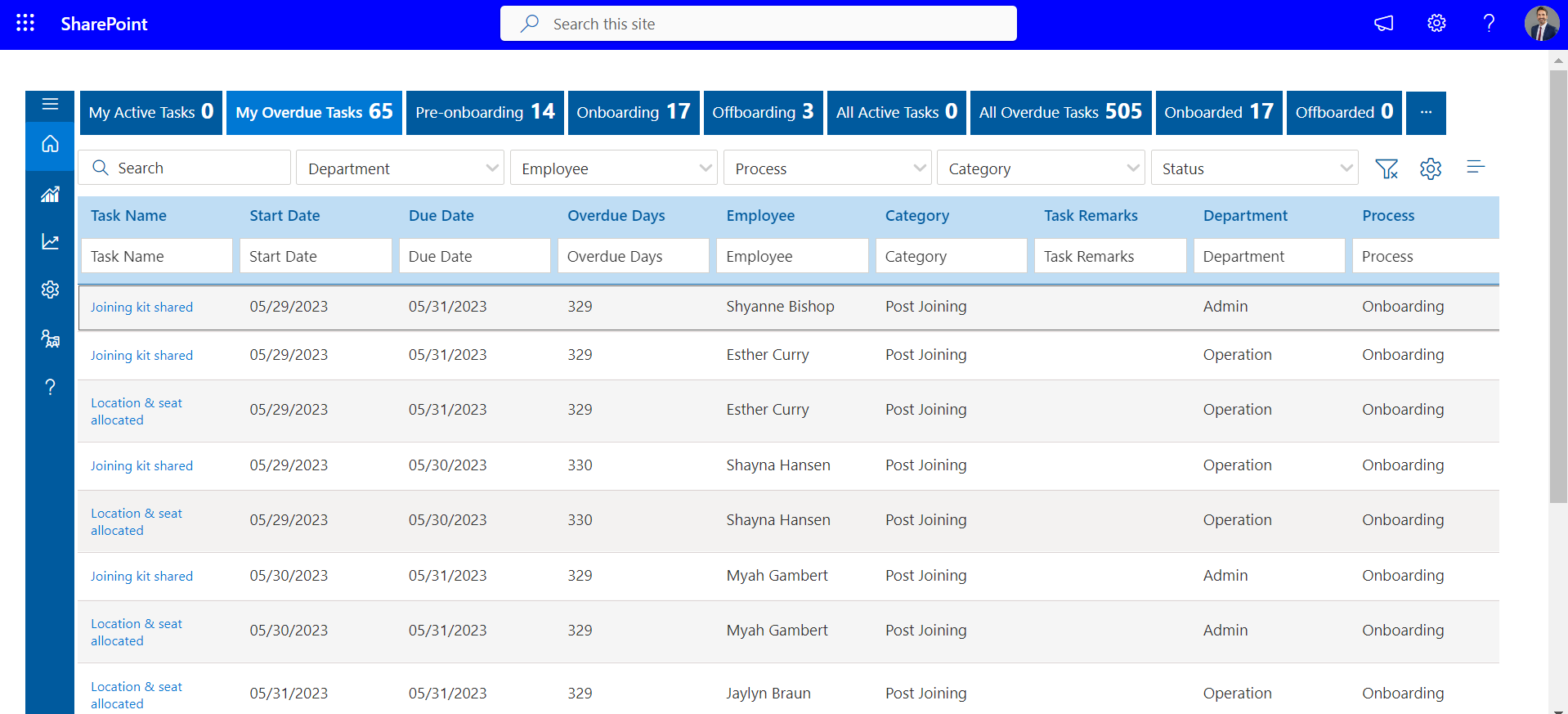
Nobody is excited about filling in forms, but automation makes it painless. Onboarding software or HR systems help avoid repetitive tasks and simplify document handling.
Automation helps by:
Easing the process of document collection:
- Store offer letters, tax forms, and employee agreements securely online.
- Enable e-signatures for convenient form completion anytime, anywhere.
Centralizing employee data:
- Automate new hire information with Microsoft365, attendance, and benefits tools.
- Maintain all employee records in a single system.
Spending time on actual relationships:
- Eliminate manual paperwork so HR professionals can focus on people.
- Use saved time for personal check-ins and relationship building.
Step 4: Individualize the Experience
Onboarding should not be one size fits all, even with structure. Each new employee should receive a warm reception based on their job and personality.
Onboarding can be personalized in the following ways:
Role-specific training:
- Construct learning plans that align with each role’s duties.
- Add short-term objectives so employees can celebrate early wins.
Mentorship and peer support:
- Assign every new employee a mentor or buddy to guide and support them.
- Encourage open discussions to help them adapt faster.
Cultural immersion:
- Share company traditions, success stories, and team values engagingly.
- Host informal team-building events or welcome lunches.
Step 5: Assign a Buddy or Mentor
It’s all about having an amiable guide. Assigning a new employee to a buddy or mentor enables them to integrate more quickly and feel comfortable in their new surroundings.
Benefits of a buddy system:
Accelerated learning:
- New employees receive immediate responses to queries and guidance.
- Observing others naturally helps them understand company norms and workflows.
Step 6: Communicate Expectations
Success is built on clarity. New employees must know what success looks like and how their performance will be evaluated from day one.
How to set expectations:
Define 30–90-day goals:
- Identify specific performance targets for the first three months.
- Provide measurable deliverables that show what good looks like.
Encourage two-way feedback:
- Ask new employees about their expectations or challenges.
- Maintain open conversations to build alignment and confidence.
Step 7: Continuous Feedback and Recognition
Onboarding doesn’t end after week one. Continuous feedback and appreciation help employees grow, feel valued, and stay motivated.
How to maintain engagement:
Ongoing coaching:
- Schedule one-on-one feedback and career development meetings.
- Keep communication open through feedback tools or pulse surveys.
Appreciation and motivation:
- Celebrate small wins within the first 90 days.
- Publicly recognize improvements to boost morale and belonging.
Step 8: Optimize and Evaluate the Process
There’s no such thing as a flawless process; onboarding must evolve as your company grows. Measure what’s working and improve what isn’t.
Refine through iteration:
- Update training materials, content, or schedules based on feedback.
- Treat onboarding as a living system that grows with your organization.
Key Components of a Great Structured Onboarding Process
Preboarding Activities -Send welcome packets, company manuals, and intro emails. This phase predetermines the mood and enthusiasm prior to the first day and makes new employees feel ready and appreciated.
Orientation Program -Day-one, culture overview, and IT setup. It assists employees to realize the mission of the company, the key team members, and familiarize themselves with the tools and systems.
Training Schedule -Job-specific training, shadowing, skills roadmap. This would guarantee that all employees understand what to do, how to do it, and whom to approach in case of any support – improving early productivity.
Engagement & Culture – Integration Team lunches, social check-ins, or virtual meetings. These will create a bond, and new employees will feel that they are part and parcel.
Checkpoints on performance – Weekly reviews and manager one-on-ones. Frequent feedback keeps the employees on track, monitors their progress, and develops them with confidence.
Feedback Loop – Survey anonymous and manager comments on how to improve. This will enable HR teams to perfect the procedure and ensure that each onboarding process is better than the previous one.
Benefits of Having a Structured Onboarding Process
A structured onboarding process is not only important to introduce new employees to your company, but it also establishes the atmosphere of their whole experience with your organization. Here’s why it matters:
- More Rapid Productivity: New employees achieve full potential 25 percent quicker when they are taken through an structured onboarding program. They know their roles well, learn workflows faster, and begin to make meaningful contributions in a shorter time.
- Less Turnover: When employees are made to feel supported at the very beginning, companies save thousands of dollars in rehiring expenses. A standardized onboarding process contributes to developing early trust and confidence and minimizing the chances of new employees leaving the door too soon.
- Strengthened Culture: When the onboarding process is based on the values of the company, the employees will feel that they belong there from the very beginning. This emotional bond drives loyalty, teamwork, and satisfaction in the long run.
- Consistency: The high-quality experience of onboarding is provided to all new employees, making it fair and consistent across the departments. A structured onboarding will remove misunderstandings and maintain expectations.
- Increased Engagement: Supportive onboarding increases employee retention by 3 times. The process helps to remind them that they are appreciated – not another face on the payroll.
Glassdoor states that excellent onboarding enhances retention by 82%. An effective onboarding process is not only good practice in HR, but also a smart business investment.
Common Mistakes to Avoid in Onboarding Process
Unstructured processes not only waste time but destroy trust and confidence at the time when they are needed the most. The following are some of the typical onboarding errors that can subtly damage the morale and momentum of your team:
- Information Overload on New Hires: It is possible to overload employees with forms and details on the first day. Disseminate information gradually so that they can internalize it and not feel pressured.
- Failure to follow up after the first week: The initial week is not the end of the game it is the beginning. New hires might feel that they are left behind or that their onboarding process is not taking place without frequent check-ins.
- Failing to Involve Managers: When managers remain on the margins, employees lose important direction and perspective. Direct involvement of the managers makes sure that new employees know what is important and feel that they are working towards the team’s objectives.
- Not Measuring Results: You can never improve what you do not measure. Monitor important onboarding indicators such as time-to-productivity and retention to optimize the process and demonstrate its worth.
- Disregarding Employee Feedback: New employees are the most truthful about your onboarding process. Hearing their feedback would instill trust and assist you in making the process of acquiring employees a more human experience in the future.
How Technology Simplifies Structured Onboarding Process
The automation software of onboarding in the modern world has totally changed the way companies receive and train new employees. Rather than handling a multitude of spreadsheets or email, now the entire structured onboarding process can be handled by a single, connected platform by the HR teams.
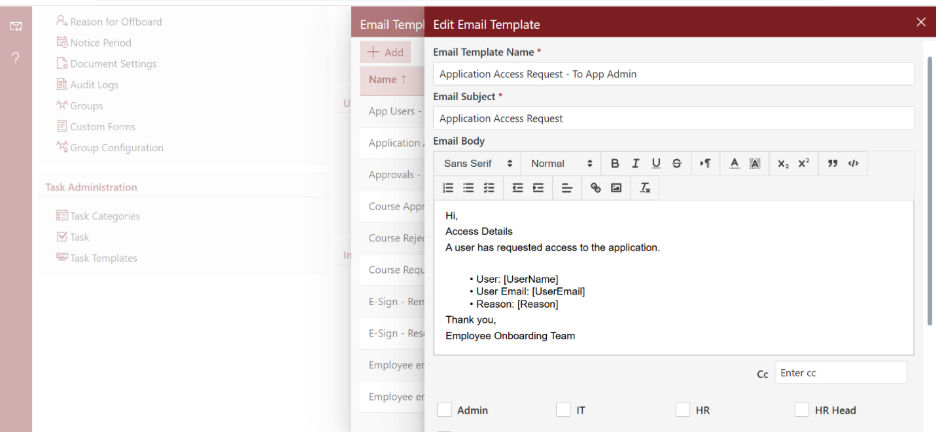
Onboarding is a smooth component of everyday processes without the need to switch applications or seek approvals by integrating with such tools as Microsoft Teams, Outlook, and well-known HRMS systems. All the document signing and progress tracking occur under a single location.
- Automation can change the situation here in the following way:
- Electronic records are time-saving and manual filing is removed.
- There are automated task reminders that make sure that no step in the onboarding process is overlooked.
- The centralized employee dashboards provide new employees with an evident picture of their progress.
- Real-time analytics allow the HR to gauge engagement, completion rates, and satisfaction in real-time.
TechJury reports that administrative work can be cut down to 40 percent through automation, and the HR professionals can concentrate on what is important in building relationships, facilitating growth, and providing meaningful first experiences to every new employee.
How to Choose the Right Onboarding Software
The selection of the appropriate structured onboarding software is not only a technical choice but also a way to provide an experience where every new employee feels comfortable and assured during the initial stages. The most structured onboarding system streamlines the HR processes, automates manual operations, and provides a uniform and interactive employee experience.
The following are your checklist to the ideal fit:
- Connection to the HR tools and Microsoft 365 to be connected and shared data.
- Simple user interface to enable HR departments and new employees to move around without getting lost.
- Tailored workflows to suit your company culture and onboarding objectives.
- Progress, engagement, and completion rates of analytics and reporting.
- Data protection to ensure that all the information of the employees is safe and compliant.
- Since ultimately, the right platform is not technology; it is about establishing a sense of belonging in the first place.
Conclusion
An effective designed onboarding program forms the basis of sustained employee engagement and retention. With the right onboarding software in place, it transforms ordinary duties into special moments that make new employees feel a part of the company, confident, and prepared to work.
Ready to simplify your onboarding process?
Book a free demo and find out how structured onboarding software can streamline your HR processes and provide a smooth entry point to every new employee.
Join Our Creative Community
Frequently Asked Questions
What is an onboarding process to employees?
A structured onboarding process is a methodical system where new employees are taken through a step by step procedure, through the tasks, documents, training, and introduction systematically. It also provides each employee, irrespective of the department, with a well-consistent and quality onboarding experience.
What is included in onboarding process in HR?
Documentation, policy recognition, orientation, role-related training, and liaison with IT and managers are usually the areas of the HR onboarding process. HR makes sure that new employees are provided with all they require to work with both in terms of access to equipment and company data to start their work confidently.
How does the protocol of employee onboarding look?
The flow of onboarding process describes the experience between pre-boarding and being fully ready to take the role. It typically starts with welcome communication, followed by orientation and training and proceeds with check-ins, evaluations, and team entry.
What would be in an onboarding process checklist?
An entire onboarding checklist consists of such duties as submission of documents, setting up of tools, training modules, introduction, policy acknowledgement and first week goals. It makes sure that no significant steps are overlooked and that the relationships between the new hire and the HR are in sync.
So, what is an onboarding process flowchart?
Onboarding flowchart is a graphical representation of the progression of onboarding activities, including pre-boarding and departmental assignments and training milestones. It makes HR and managers, as well as new hires, understand the timeline of the process and all obligations clearly.


_JiluXJRGNl.svg)























