
Performance Management System Complete Guide for 2026
A performance management system helps organizations manage goals, feedback, reviews, and employee development in one structured process.
_eH2jDg7dZ.png)
Managing employee performance has moved beyond annual reviews. Organizations now need a continuous way to set expectations, track progress, provide feedback, recognize achievements, and support employee growth.
A performance management system brings these activities together through goal setting, reviews, feedback, competencies, analytics, and AI-assisted insights. This guide explains how performance management systems work, their key benefits and features, the different types available, and how to choose the right solution for your organization.
What Is a Performance Management System?
A performance management system is a structured process that helps organizations set employee goals, monitor progress, provide feedback, evaluate performance, and support professional development.
An effective employee performance management system connects individual objectives with wider business priorities. It gives employees a clear understanding of what is expected from them while helping managers identify achievements, performance gaps, and development opportunities.
Modern performance management software brings these activities into one centralized platform. Instead of managing evaluations through spreadsheets, emails, documents, and disconnected processes, organizations can use software to simplify goal management, reviews, feedback, reporting, and employee development.
A typical system may include:
- Goal setting and tracking
- Performance reviews
- One-on-one meetings
- Employee self-assessments
- Competency assessments
- 360-degree feedback
- Development planning
- Recognition
- Performance analytics and reporting
The purpose of performance management is not simply to assign ratings. It is to create an ongoing process that helps employees understand expectations, improve performance, and grow within the organization.
Why Is a Performance Management System Important?
A performance management system helps organizations create a consistent approach to employee performance.
Without a structured process, managers may evaluate employees differently, feedback may happen irregularly, goals can become outdated, and important achievements may be forgotten during formal reviews.
An employee performance management system provides greater visibility throughout the performance cycle. Employees can see their goals and responsibilities, while managers can track progress and provide support before small issues become larger performance problems.
A structured system also helps organizations connect employee performance with business objectives. When employees understand how their individual work contributes to team and organizational goals, they can focus on the activities that matter most.
For HR teams, centralized performance information can also support:
- Employee development
- Workforce planning
- Succession planning
- Skills development
- Recognition programs
- Performance improvement
- Talent decisions
Using a dedicated performance management solution can also reduce administrative work by automating reminders, reviews, feedback requests, and reporting.
How Does a Performance Management System Work?
A performance management system creates a continuous process between goal setting, progress tracking, feedback, evaluation, and development.
Set employee goals
Managers and employees begin by defining clear expectations, objectives, responsibilities, or KPIs.
Goals should explain what employees need to achieve and how success will be measured.
Monitor progress
Managers and employees regularly review progress instead of waiting until the end of the year.
This makes it easier to identify blockers, changing priorities, and areas where additional support is required.
Provide continuous feedback
Regular feedback allows managers to recognize good performance and address areas for improvement while work is still fresh.
Feedback may come from managers, peers, project leaders, direct reports, or other stakeholders.
Conduct one-on-one meetings
Regular check-ins give managers and employees an opportunity to discuss progress, priorities, challenges, workload, development, and career goals.
Complete performance reviews
Formal performance reviews bring together goals, achievements, competencies, feedback, and development information.
Modern employee performance management software can make this process easier by centralizing all relevant performance information.
Create development actions
The final stage is turning performance discussions into action.
This may include new goals, training, coaching, mentoring, certifications, or career development opportunities.
The Performance Management Cycle
Performance management is most effective when treated as a continuous cycle rather than a once-a-year activity.
A typical performance management cycle includes five stages.
- Plan
Managers and employees define goals, responsibilities, development priorities, and performance expectations.
Clear goals provide employees with direction and create measurable standards for evaluating progress.
- Monitor
Progress is tracked throughout the performance period.
Managers can review goal updates and identify where support, coaching, or adjustments may be required.
- Review
Employees and managers discuss progress, achievements, challenges, competencies, and overall performance.
Reviews may include self-assessments, manager evaluations, peer feedback, and 360-degree feedback.
- Develop
Performance information is used to identify skills, learning needs, career goals, and development opportunities.
- Recognize and Improve
Strong performance can be recognized, while improvement areas can be addressed through clearer expectations, coaching, or development plans.
The cycle then starts again with updated goals and priorities.
Ready to move from annual reviews to a more continuous performance process?
Key Components of a Performance Management System
Key Components of a Performance Management System
1. Goal Setting and Alignment
Employees should understand their priorities and how their work connects to wider business objectives.
Goal alignment helps connect individual performance with team and organizational success.
2. Continuous Feedback
Feedback should happen throughout the year rather than only during formal evaluations.
Timely feedback helps employees understand what is working and what needs improvement.
3. One-on-One Meetings
Regular manager-employee conversations provide an opportunity to discuss progress, challenges, expectations, development, and support.
4. Performance Reviews
Structured reviews provide a formal assessment of employee achievements, goals, skills, behaviors, and development.
5. Self-Assessments
Employees can reflect on their own achievements, challenges, learning, and future priorities.
6. 360-Degree Feedback
Feedback can be gathered from multiple sources, including managers, colleagues, direct reports, and project stakeholders.
7. Competency Management
Organizations can define the skills, behaviors, and capabilities required for specific roles.
Competency assessments help identify strengths and skill gaps.
8. Development Planning
Performance management should support future growth, not only evaluate past performance.
Development plans may include learning, mentoring, coaching, job rotations, or new responsibilities.
9. Performance Calibration
Calibration allows HR teams and managers to compare ratings across teams and improve consistency in evaluation standards.
10. Analytics and Reporting
Performance data can help organizations identify trends, goal completion rates, review progress, development needs, and workforce performance patterns.
Types of Performance Management Systems
Different organizations use different performance management approaches depending on their culture, workforce, and business objectives.
Traditional Performance Appraisal Systems: Traditional systems usually rely on annual or semiannual evaluations. Managers assess employee performance during a scheduled review period and assign ratings based on predefined criteria.
Continuous Performance Management: Continuous performance management focuses on regular feedback, goal updates, check-ins, coaching, and development throughout the year.
OKR-Based Performance Management: Objectives and Key Results connect ambitious objectives with measurable outcomes.
This approach helps teams align individual and organizational priorities.
KPI-Based Performance Management: KPI-based systems measure employee performance against defined metrics such as productivity, sales, quality, customer satisfaction, or project delivery.
Competency-Based Performance Management: Employees are evaluated based on the knowledge, skills, and behaviors required for their roles.
360-Degree Performance Management: Feedback is collected from multiple stakeholders to provide a broader view of employee performance.
Project-Based Performance Management: Employees are evaluated based on contributions to projects, outcomes, collaboration, delivery, and responsibilities.
AI-Powered Performance Management: AI-powered performance management tools can assist with summaries, goal creation, feedback drafting, trend analysis, and development recommendations.
Key Features of Performance Management Software
Choosing the right performance management software depends on the features your organization needs.
Goal Management: Managers and employees should be able to create, assign, update, and track individual and team goals.
Customizable Review Templates: Organizations should be able to design performance reviews that match their existing processes, rating scales, competencies, and timelines.
Continuous Feedback: Employees and managers should be able to exchange feedback outside formal review periods.
One-on-One Management: The system should support structured check-ins, discussion points, action items, and follow-ups.
360-Degree Feedback: Organizations may need tools that allow feedback to be collected from peers, managers, employees, and other stakeholders.
Competency Assessments: Managers should be able to assess employees against role-specific skills and competencies.
Automated Notifications: Automated reminders can help ensure reviews, goals, and feedback requests are completed on time.
Performance Dashboards: Managers and HR teams should be able to monitor performance progress from centralized dashboards.
Reporting and Analytics: Strong performance management tools should provide insights into goals, review completion, ratings, competencies, and development areas.
Integration: The software for performance management should connect with the systems employees already use, such as Microsoft Teams, HR platforms, and productivity tools.
Security and Permissions: Employee performance data is sensitive, so role-based access, data protection, and secure permissions are essential.
Benefits of a Performance Management System
Using a dedicated performance management solution can provide benefits for employees, managers, HR teams, and business leaders.
Clearer Expectations: Employees understand what they are expected to achieve and how their performance will be measured.
Better Goal Alignment: Individual objectives can be linked to team and organizational priorities.
Continuous Feedback: Employees receive feedback regularly instead of waiting for annual reviews.
Stronger Communication: Regular check-ins create more meaningful conversations between employees and managers.
Better Employee Development: Performance information helps identify training needs, skill gaps, and development opportunities.
More Consistent Evaluations: Structured templates and defined criteria help managers follow a consistent review process.
Greater Visibility: Managers gain a clearer view of employee goals, achievements, progress, and development.
Improved Recognition: Documented achievements make it easier to recognize and reward strong performance.
Less Administrative Work: Automated performance management software can reduce time spent sending reminders, managing forms, and consolidating review information.
Better HR Decisions: Centralized performance information supports development, succession planning, skills management, and workforce planning.
Looking for an easier way to manage goals, feedback, reviews, and employee development?
Performance Management System vs. Performance Appraisal
Performance management and performance appraisal are closely related, but they serve different purposes.
Performance Management System | Performance Appraisal |
Continuous process | Periodic evaluation |
Focuses on current and future performance | Mainly reviews past performance |
Includes goals, feedback, and development | Focuses primarily on evaluation |
Encourages regular conversations | Usually happens at fixed intervals |
Supports employee development | Primarily measures performance |
Can include multiple feedback sources | Often manager-led |
Tracks progress throughout the year | Evaluates performance at one point |
A performance appraisal is usually one part of a broader performance management system.
Modern organizations increasingly combine formal appraisals with continuous feedback, goal tracking, coaching, and development.
Traditional vs. Modern Performance Management Systems
| Traditional Performance Management | Modern Performance Management |
| Annual reviews | Continuous check-ins |
| Manager-driven | Collaborative |
| Focuses on past performance | Focuses on improvement and growth |
| Fixed annual goals | Flexible and regularly updated goals |
| Limited feedback | Continuous feedback |
| Manual processes | Automated workflows |
| Basic ratings | Analytics and performance insights |
| Separate HR activity | Integrated into everyday work |
How to Choose the Right Performance Management System
The best performance management system is not necessarily the platform with the largest number of features.
The right solution should match your organization’s size, structure, technology, review process, and performance goals.
Ease of Use: Employees and managers are more likely to use a platform that is simple and intuitive.
Customization: Review templates, rating scales, competencies, workflows, and goals should be configurable.
Goal Management: Look for performance management software that makes setting and tracking goals straightforward.
Continuous Feedback: Employees and managers should be able to exchange feedback throughout the year.
Analytics: Reporting should make performance information easy to understand and act on.
Integrations: Choose a system that connects well with your HR and workplace technology.
Scalability: Your performance management solution should continue supporting your organization as it grows.
Security: Check how employee data is stored, protected, and accessed.
Customer Support: Implementation guidance and ongoing support can make adoption easier.
Cost: Compare licensing, implementation, training, integrations, and maintenance rather than looking only at subscription pricing.
Top 10 Performance Management Systems
Choosing the best performance management system depends on your workforce size, existing technology, budget, and review requirements.
Here are ten platforms organizations may consider.
1. Performance 365
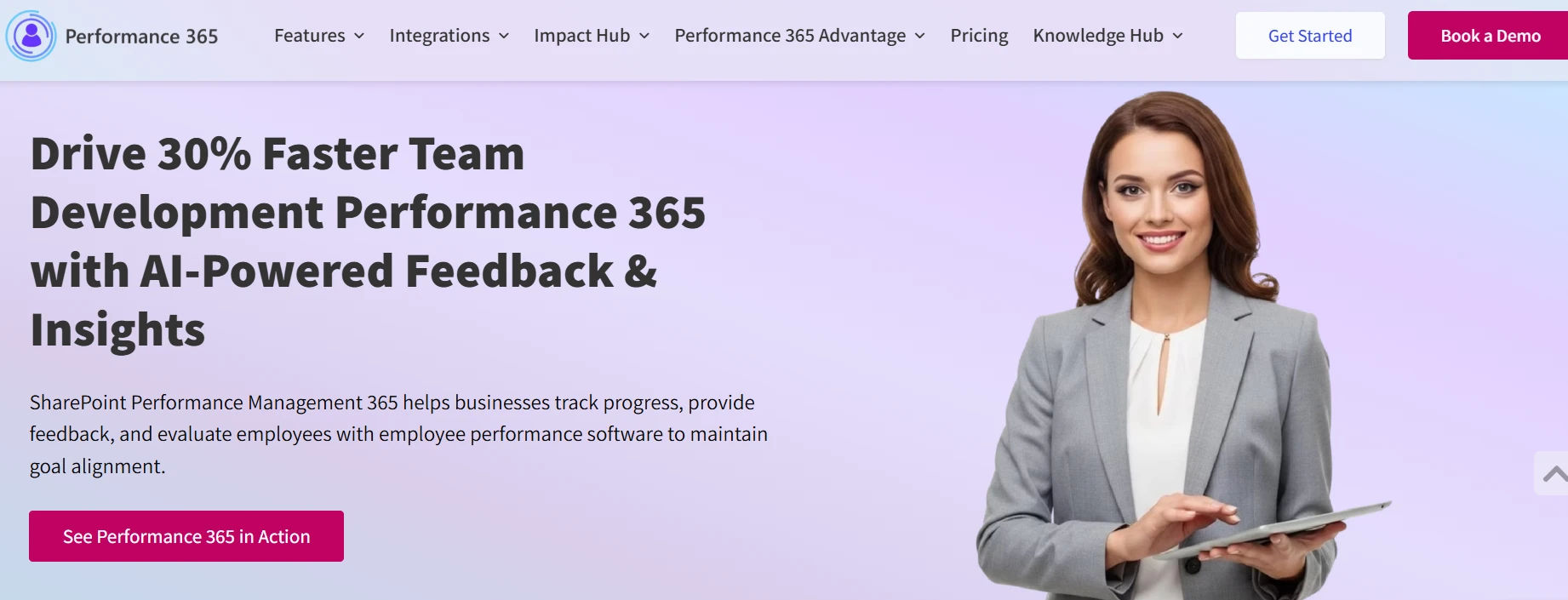
Performance 365 is an employee performance management solution designed for organizations using the Microsoft ecosystem.
It supports structured performance reviews, goals, feedback, development, performance insights, and related employee performance processes.
Its Microsoft-focused approach makes it particularly relevant for organizations that already rely on Microsoft Teams, SharePoint, and Microsoft 365.
Best for: Organizations looking for Microsoft-centric performance management software.
2. Lattice
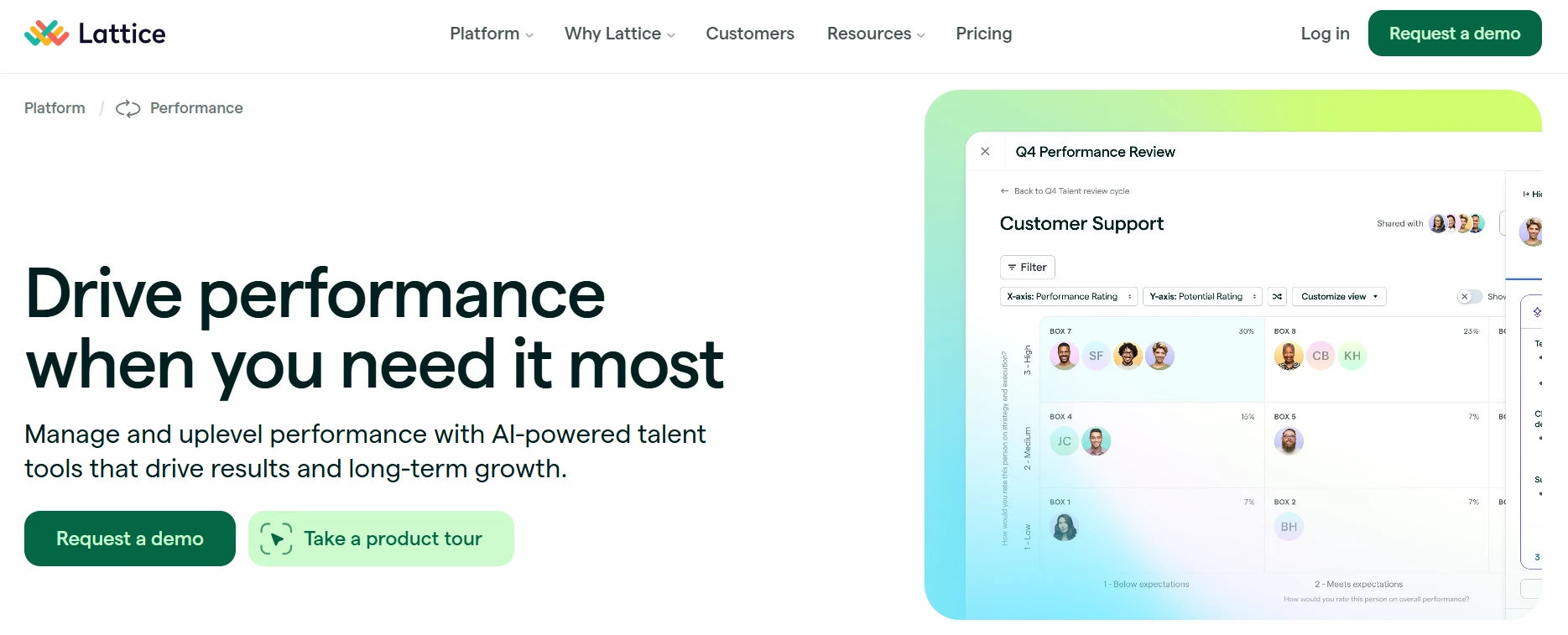
Lattice combines performance reviews, goals, feedback, employee engagement, and development tools.
Best for: Organizations seeking performance and employee engagement capabilities in one platform.
3. Culture Amp
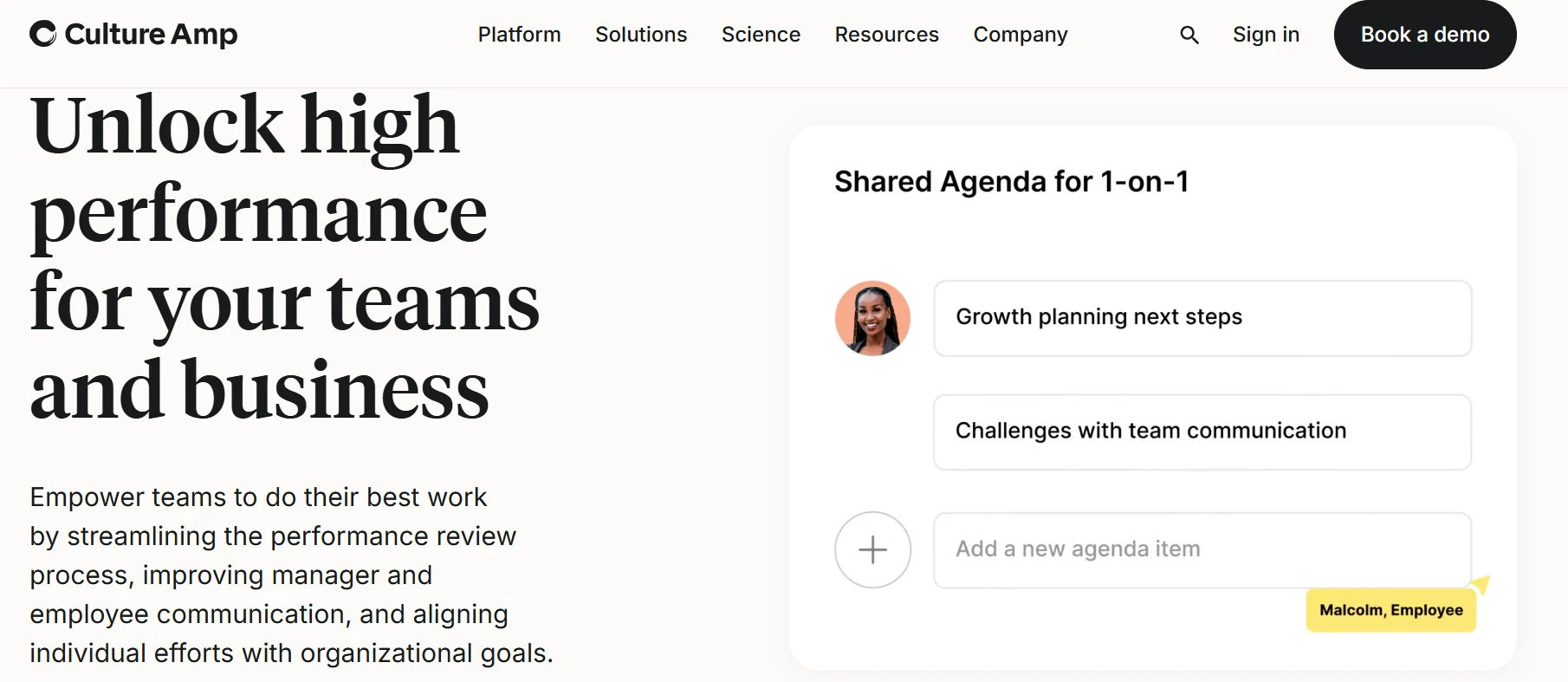
Culture Amp combines performance management with employee engagement, feedback, and development capabilities.
Best for: Organizations that prioritize employee experience alongside performance.
4. 15Five
15Five focuses on continuous performance management through check-ins, goals, feedback, reviews, and manager development.
Best for: Organizations that want frequent manager-employee conversations.
5. Leapsome
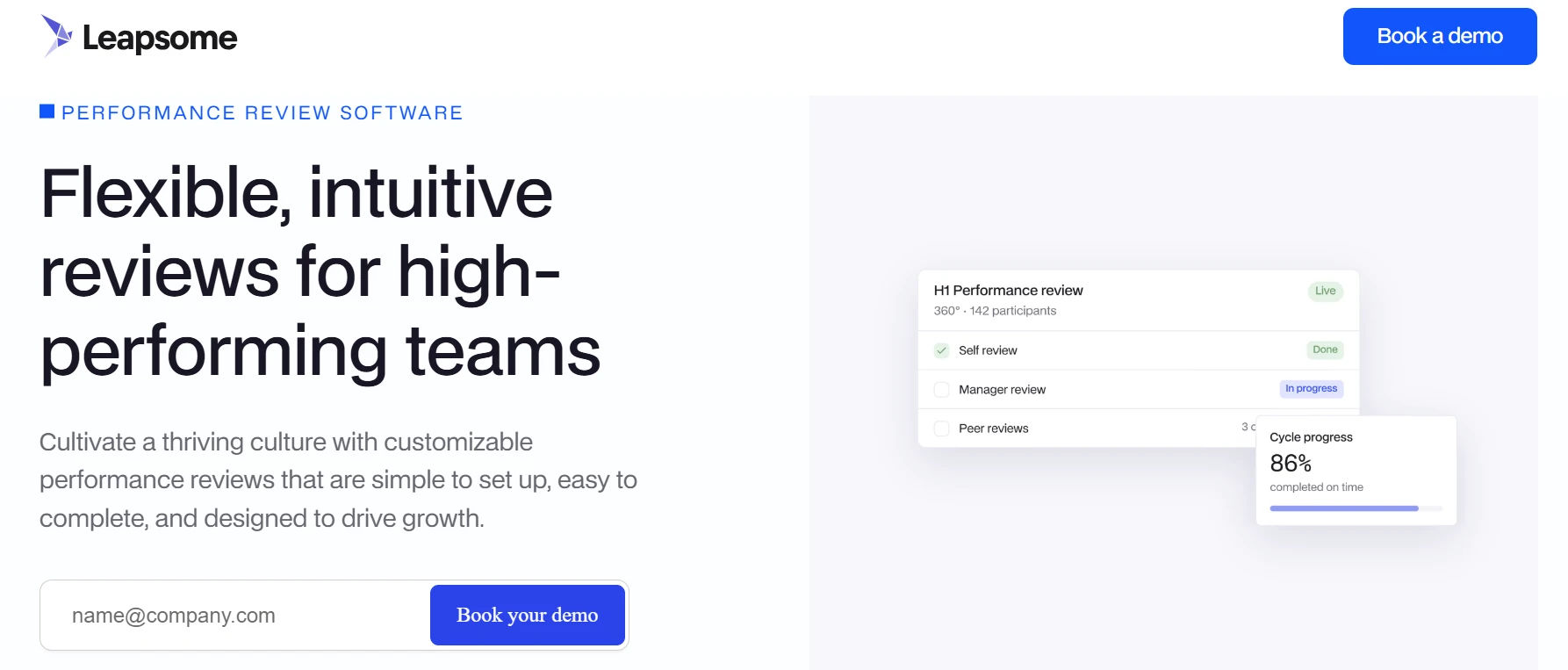
Leapsome combines reviews, goals, learning, feedback, engagement, and employee development.
Best for: Organizations looking to combine performance and learning workflows.
6. Betterworks
Betterworks supports goal management, performance conversations, feedback, and enterprise performance processes.
Best for: Larger organizations with structured goal and performance programs.
7. PerformYard
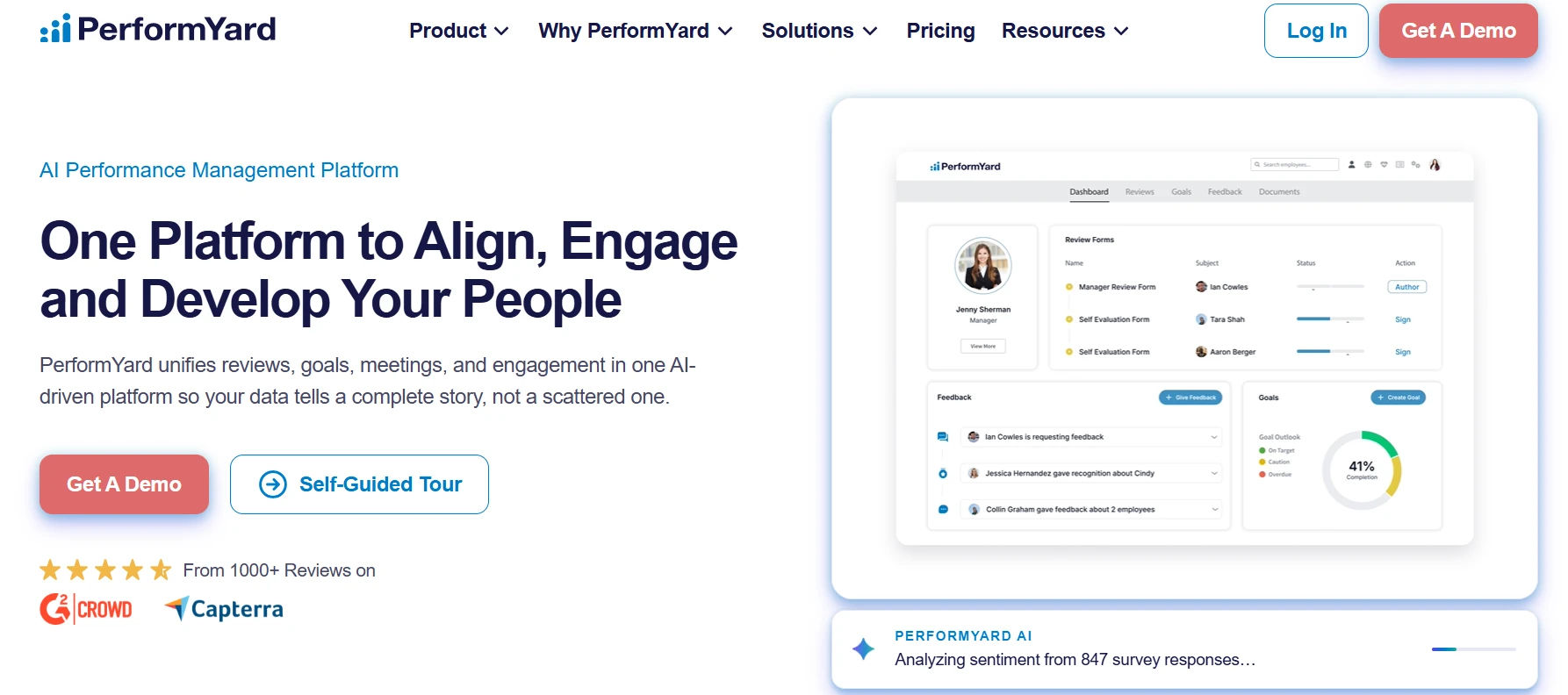
PerformYard provides configurable performance reviews, feedback, goal management, and reporting.
Best for: Organizations that need flexible review workflows.
8. BambooHR
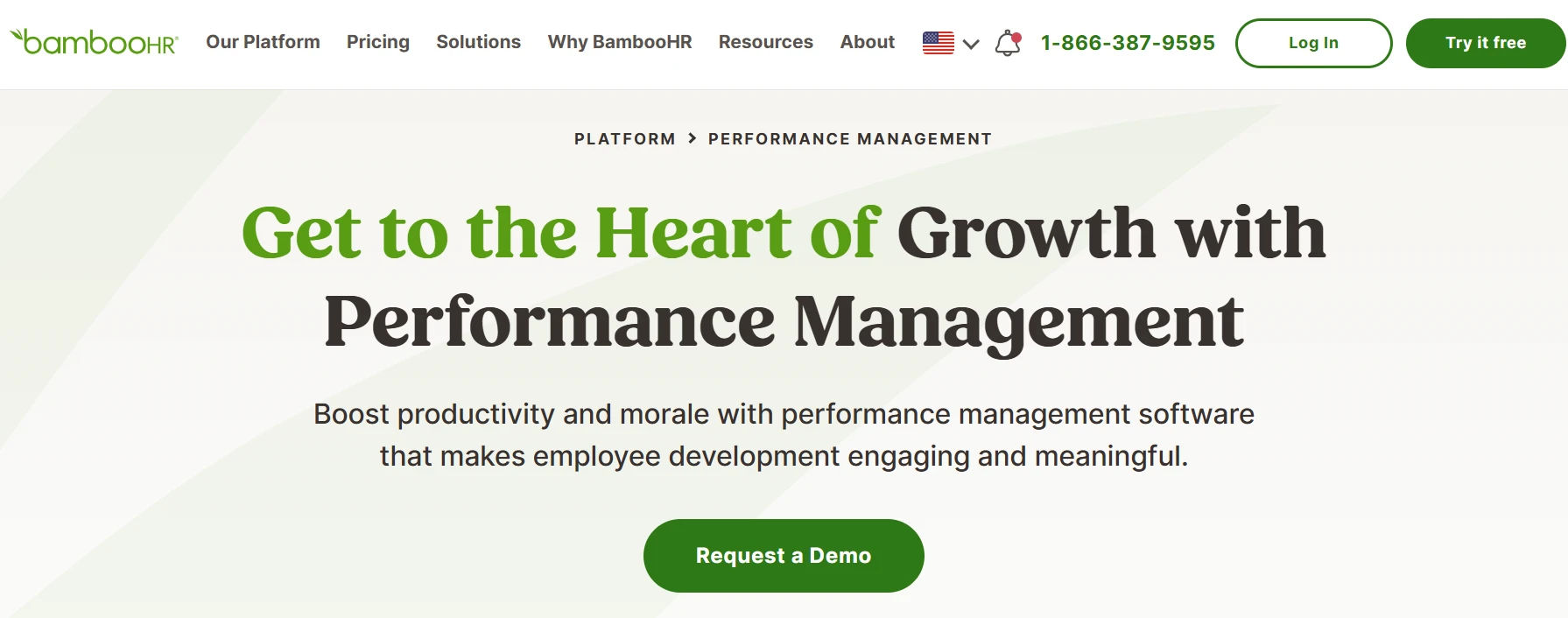
BambooHR combines core HR features with performance management capabilities.
Best for: Small and midsize businesses looking for HR and performance capabilities together.
9. Zoho People
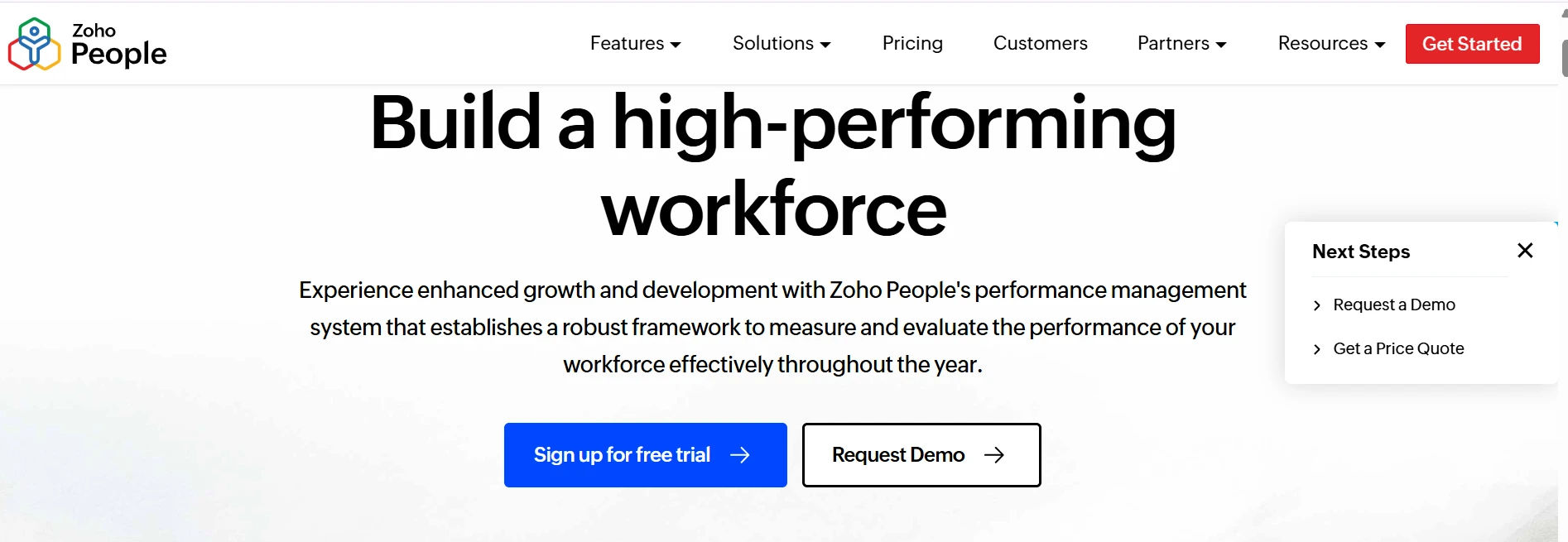
Zoho People includes appraisals, goals, competencies, feedback, and other HR features.
Best for: Businesses already using the Zoho ecosystem.
10. Workday
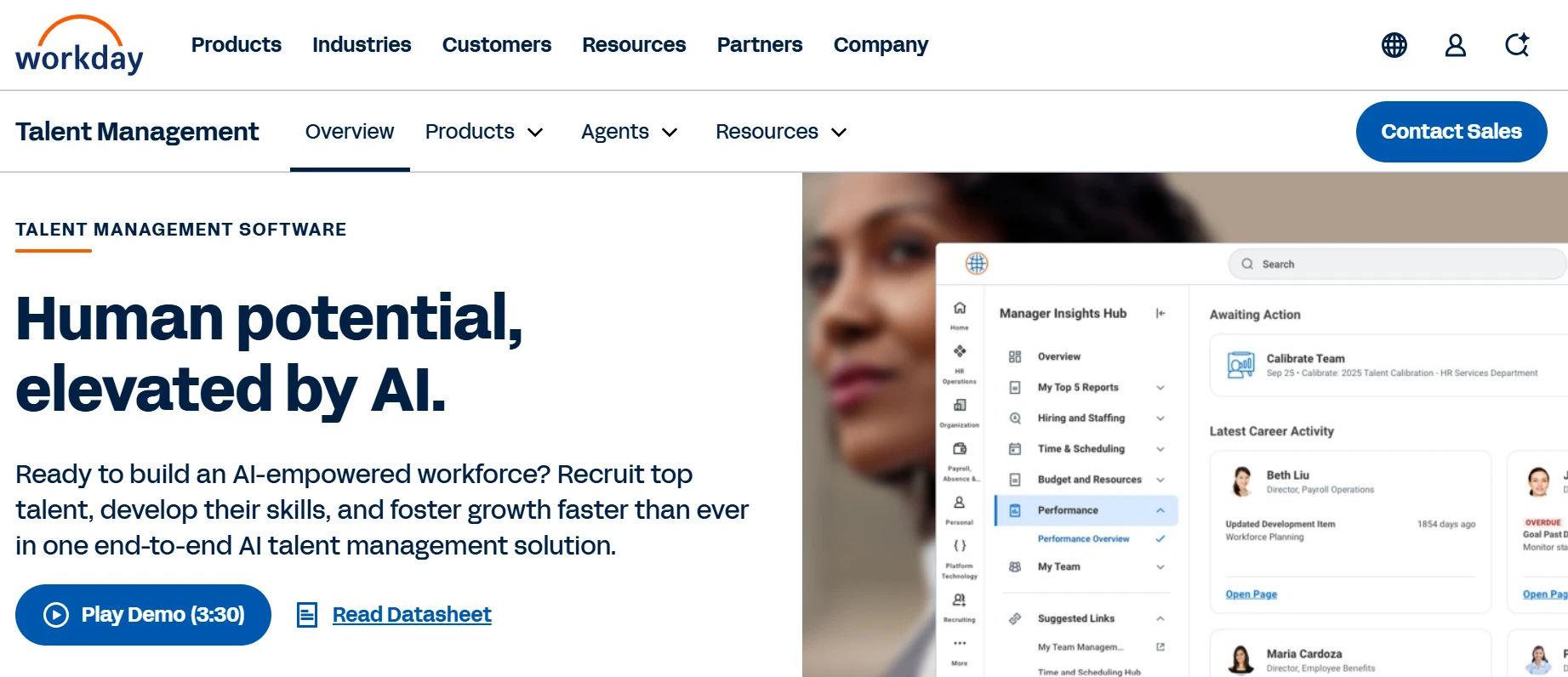
Workday provides enterprise HR and talent management capabilities that include goals, performance, skills, and employee development.
Best for: Large enterprises requiring broader HR functionality.
Comparing performance management solutions for your organization? See how Performance 365 fits into your existing Microsoft 365 environment.
How Performance 365 Supports Performance Management
Performance 365 helps organizations create a more structured and connected approach to employee performance.
Instead of relying on disconnected spreadsheets, emails, review documents, and manual reminders, teams can manage performance activities through a centralized environment.
Structured Reviews
Organizations can create consistent review cycles so managers and employees clearly understand what needs to be completed.
Goal Tracking
Managers and employees can define goals and monitor progress throughout the review period.
Continuous Feedback
Performance discussions can happen regularly instead of being limited to annual reviews.
Customizable Processes
Organizations can adapt reviews to match different departments, teams, or performance frameworks.
Performance Insights
Centralized performance information gives HR teams and managers greater visibility into employee progress and development.
Microsoft 365 Environment
For organizations already using Microsoft technologies, Performance 365 can help keep employee performance activities closer to the tools employees already use.
Secure Access
Role-based access can help ensure that performance information is only available to appropriate employees, managers, and HR teams.
For Microsoft-focused organizations, Performance 365 can provide a practical performance management solution without requiring employees to move between multiple disconnected systems.
How AI Is Changing Performance Management
AI is increasingly becoming part of modern performance management tools.
It can reduce administrative work, summarize performance information, and help managers prepare more meaningful performance conversations.
AI-Assisted Goal Creation
AI can help managers turn broad expectations into clearer and more measurable goals.
Feedback Assistance
AI can help structure manager feedback and make it more specific, constructive, and actionable.
Performance Summaries
AI can summarize goals, achievements, feedback, and review information before performance discussions.
Review Drafting
Managers can use AI to prepare an initial review draft based on available performance information.
Human review should always remain part of the final process.
Development Recommendations
AI may help identify development opportunities based on goals, competencies, and recurring performance themes.
Performance Trend Analysis
AI can help HR teams identify patterns across employee reviews, feedback, goals, and development data.
Reduced Administrative Work
AI can help organize notes, summarize meetings, identify follow-up actions, and simplify review preparation.
AI should support rather than replace managerial judgment. Employee performance decisions still require human context, fairness, and appropriate oversight.
Need a performance management system that works with the tools your team already uses?
Conclusion
A performance management system helps organizations create a continuous approach to employee growth by combining clear goals, regular feedback, structured reviews, development plans, competencies, and performance insights. This creates a more consistent and transparent way to manage employee performance.
The right solution should fit your organization’s size, culture, technology, and review processes. For businesses using Microsoft 365, Performance 365 helps bring goals, feedback, reviews, and performance activities into a familiar digital workplace while supporting more meaningful manager-employee conversations.
Frequently Asked Questions
Can a performance management system replace manual evaluation processes?
Yes. A performance management system can replace many manual evaluation tasks such as spreadsheets, review forms, reminders, feedback collection, and reporting by centralizing and automating the process.
Which performance management systems deliver the best balance of affordability and customization for SMBs?
SMBs should look for flexible review templates, goal tracking, feedback, reporting, and scalable pricing. Performance 365 is a strong option for Microsoft 365-based businesses looking for customization within their existing workplace environment.
Can a performance management system integrate with employee recognition tools?
Yes. Many performance management tools can connect with recognition or HR platforms, allowing achievements and peer feedback to become part of performance and development conversations.
What is the best performance management system for service-based companies?
Service-based organizations should look for a system that supports goal tracking, continuous feedback, competency assessments, customer-focused KPIs, and regular check-ins. Performance 365 can be a good fit for service companies already using Microsoft 365.
What are the most trusted performance management systems based on HR manager reviews?
Platforms commonly considered by HR teams include Performance 365, Lattice, Culture Amp, 15Five, Betterworks, PerformYard, and Leapsome. The right choice depends on business size, integrations, budget, and performance requirements.
What are the best performance management systems for hybrid teams?
Hybrid teams benefit from systems that make goals, reviews, feedback, and check-ins accessible from any location. Performance 365 is especially relevant for organizations already using Microsoft Teams and Microsoft 365.
Where can I find performance management systems with analytics?
Most modern performance management software includes dashboards and reporting for goals, reviews, ratings, and performance trends. Performance 365 also provides centralized performance insights for managers and HR teams.
How can small teams manage performance management system implementation without consultants?
Small teams can start with simple goals, review templates, feedback processes, and regular check-ins rather than introducing a complex framework immediately. Choosing easy-to-configure employee performance management software can also reduce implementation effort.
Are there affordable performance management systems for small businesses?
Yes. Small businesses can choose from several performance management solutions with different pricing models and feature sets. Compare affordability alongside customization, integrations, reporting, and ease of use.
Our HR team needs a performance management system that works well with Microsoft Teams. Any suggestions?
For Microsoft-focused organizations, Performance 365 is designed to work within the broader Microsoft 365 ecosystem and can support goals, reviews, feedback, and employee performance activities in a familiar environment.
What are the best employee performance management systems for small businesses with under 100 employees?
Small businesses should prioritize simple setup, affordable pricing, customizable reviews, goal tracking, feedback, and reporting. Performance 365, 15Five, PerformYard, BambooHR, and Zoho People are options worth evaluating based on your existing HR and technology environment.
Try It Free, No Obligation










Schedule a free personalized 1:1 demo
By proceeding, you accept Cubic Logics’s terms and conditions and privacy policy





Don't Miss Out! Halloween Offer
Avail up to Flat 30% Discount until
November 06th, 2026.
Enter your business email ID and we will send a personalized coupon code straight to your inbox.
Please provide your contact details, we will connect with you soon!
Please provide your contact details, we will connect with you soon!
By proceeding, you accept Cubic Logics Terms and Conditions and Privacy Policy
Schedule a free personalized 1:1 demo
By proceeding, you accept Cubic Logics’s terms and conditions and privacy policy







