
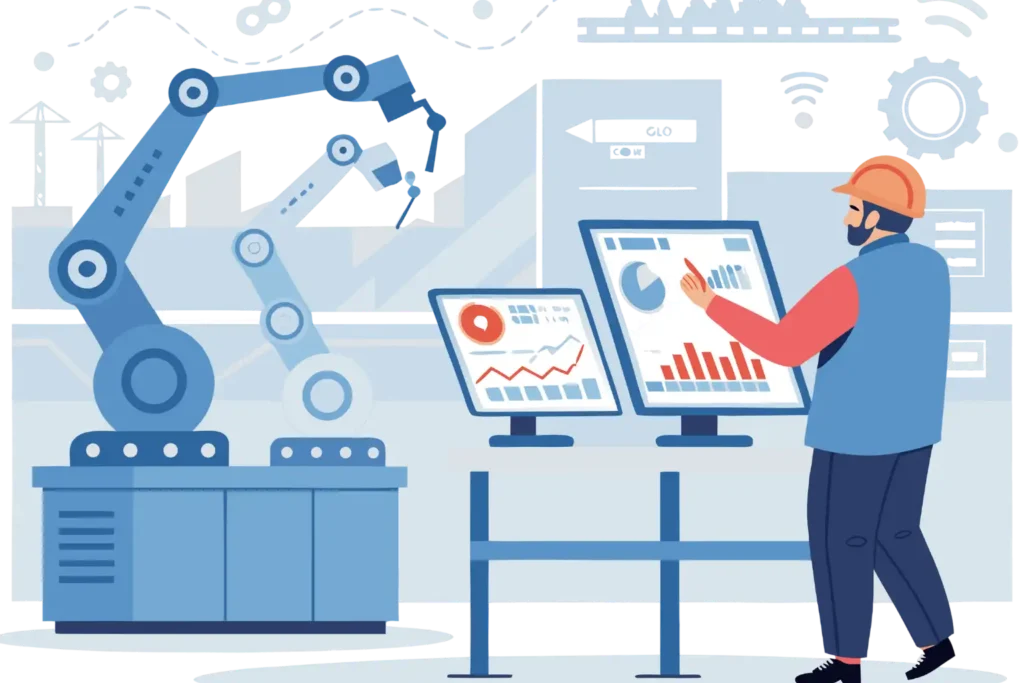

Manufacturing is evolving faster than many businesses ever expected. Machines are becoming smarter, production lines are more connected and data now moves in real time across operations. At the same time, manufacturers face growing pressure from labor shortages, rising operating costs, unexpected equipment failures and increasing customer expectations.
Yet many companies still depend on spreadsheets, disconnected systems, manual reports or outdated processes to manage equipment and production assets. Over time, this creates a bigger problem than most realize. The issue is not the machines. The real issue is visibility.
When businesses cannot clearly see what is happening across their assets, small inefficiencies quickly turn into expensive problems. They struggle to know:
- Where assets are located
- What condition equipment is in
- When maintenance should happen
- Which assets generate the highest costs
- What equipment is causing production delays and downtime
Without this visibility, decisions become slower, maintenance becomes reactive and operational costs continue to rise. That is why manufacturing asset management software is becoming one of the most important technologies for business growth in 2026.
What is Manufacturing Asset Management Software?
Manufacturing asset management software is a centralized system that helps manufacturers track, monitor, maintain and optimize physical assets throughout their entire lifecycle. Assets can include:
- Production machines
- Industrial equipment
- Tools
- Vehicles
- Robotics
- Assembly lines
- IT equipment
- Plant infrastructure
- Safety equipment
Instead of using disconnected systems, manufacturers can manage all assets in one place. The software helps businesses:
- Track equipment locations
- Monitor performance
- Schedule maintenance
- Reduce downtime
- Extend equipment life
- Improve productivity
- Control operational costs
Think of it as the digital control center of your manufacturing operations.
Interesting Fact:
- Smart manufacturing initiatives produced up to 20% improvement in production output
- Companies saw up to 20% growth in employee productivity
- Businesses unlocked 10–15% additional operational capacity
Why Manufacturing Companies Need Smart Asset Management in 2026
Manufacturing leaders face several major challenges:
Unplanned downtime
A single machine breakdown can stop production completely. Unexpected downtime creates:
- delayed orders
- missed deadlines
- overtime costs
- wasted materials
- customer dissatisfaction
Rising labor shortages
- Skilled manufacturing workers continue to become harder to find.
- Companies need automation and smarter workflows.
Increasing maintenance costs
- Reactive maintenance costs significantly more than preventive maintenance.
- Waiting until machines fail creates expensive repair cycles.
Limited asset visibility
Many companies still cannot answer basic questions:
- Which machine needs service?
- Which equipment causes delays?
- What assets are underused?
- Which machines should be replaced?
Without answers, decision-making becomes difficult.
How Smart Manufacturing Asset Management Software Works
A modern manufacturing asset management software platform combines multiple technologies.
Centralized asset database
Every asset receives a digital profile including:
- serial numbers
- purchase details
- maintenance history
- warranty information
- location
- ownership data
Real-time asset tracking
Using:
- QR codes
- RFID
- IoT sensors
- mobile devices
Companies can track assets instantly.
Automated maintenance scheduling
The system can automatically create:
- preventive maintenance tasks
- inspections
- alerts
- work orders
Predictive analytics
Artificial intelligence analyzes patterns and identifies possible failures before breakdowns happen.
Reporting dashboards
Managers can view:
- asset utilization
- maintenance costs
- downtime trends
- performance metrics
Key Features to Look for in Manufacturing Asset Management Software
Not all solutions are built for manufacturing environments. Here are essential capabilities:
Asset lifecycle management
Track assets from:
- Purchase → Deployment → Maintenance → Upgrade → Retirement
Preventive maintenance
Reduce failures through scheduled servicing.
Predictive maintenance
AI identifies early warning signs before equipment fails.
Mobile accessibility
Technicians can:
- scan assets
- update tasks
- submit reports
- receive notifications from mobile devices.
Workflow automation
Automation reduces manual work and human errors. Examples:
- Auto work orders
- Approval workflows
- Maintenance reminders
SharePoint integration
Organizations using Microsoft ecosystems benefit from integration with:
- Microsoft 365
- Teams
- SharePoint
- Power BI
Asset audit tracking
Maintain complete compliance records.
Dashboard analytics
Real-time insights improve decisions.
Top Benefits of Manufacturing Asset Management Software
1.Reduce Equipment Downtime
- Downtime creates lost revenue. Smart monitoring identifies issues early.
- Result: More production time.
2.Increase Productivity
- Employees spend less time searching for information.
- Workflows become faster.
3. Extend Asset Life
- Regular maintenance increases equipment lifespan.
4. Lower Maintenance Costs
- Preventive maintenance costs less than emergency repairs.
5. Better Asset Utilization
- Companies often discover underused equipment.
6. Improved Compliance
- Manufacturers can maintain records and audit trails.
7. Stronger Decision-Making
- Real-time data replaces assumptions.
Real Manufacturing Scenario
Imagine a manufacturing company with:
- 500 machines
- 3 factories
- multiple maintenance teams
Without a centralized system:
- Machine records exist in spreadsheets.
- Maintenance requests arrive by email.
- Equipment inspections happen manually.
- Nobody sees a complete picture.
Now imagine using smart manufacturing asset management software. A machine sensor detects abnormal vibration. The system automatically:
- generates a work order
- alerts technicians
- checks maintenance history
- recommends replacement parts
- schedules repair
The issue gets resolved before failure occurs.
Industries Using Manufacturing Asset Management Software
Automotive manufacturing
Track:
- assembly robots
- tooling systems
- production machinery
Food manufacturing
Monitor:
- refrigeration equipment
- packaging systems
- compliance assets
Electronics manufacturing
Track:
- precision machinery
- testing equipment
- production lines
Pharmaceutical manufacturing
Manage:
- regulated equipment
- quality compliance
- maintenance documentation
Heavy equipment manufacturing
Monitor:
- industrial machines
- transport equipment
- large-scale assets
Manufacturing Asset Management Software vs Traditional Systems
| Traditional Process | Smart Asset Management |
| Manual spreadsheets | Centralized database |
| Reactive maintenance | Predictive maintenance |
| Limited visibility | Real-time monitoring |
| Paper inspections | Digital workflows |
| Delayed reporting | Live dashboards |
Future Trends in Manufacturing Asset Management for 2026
Artificial Intelligence
AI helps identify patterns humans may miss. AI-driven systems can:
- forecast failures
- optimize maintenance
- recommend actions
Compliance Audits
- Create audit checklists, assign owners and maintain proof of completion.
Industrial IoT
- Connected sensors provide live equipment data.
Digital twins
- Manufacturers increasingly create digital models of assets.
Cloud-based systems
Cloud platforms improve:
- accessibility
- scalability
- Security
Automation workflows
- Routine maintenance tasks will become highly automated.
Signs Your Manufacturing Company Needs Asset Management Software
Your company may need a solution if:
- downtime is increasing
- maintenance costs continue growing
- asset records are difficult to find
- teams rely on spreadsheets
- audits are stressful
- equipment utilization is unclear
- maintenance requests get delayed
If multiple items apply, operational inefficiencies are likely costing more than expected.
Ask Before Choosing Software
Does the system support manufacturing environments?
Generic solutions often miss manufacturing requirements.
Does it integrate with existing tools?
Look for integration with:
- ERP systems
- Power BI
Is mobile support available?
Field technicians need fast access.
Does it support predictive maintenance?
Future-focused systems should include AI capabilities.
Can it scale?
Growth should not require changing platforms later.
Why SharePoint-Based Manufacturing Asset Management is Growing
Many organizations already use Microsoft ecosystems. A SharePoint-based asset management solution provides:
- centralized document management
- workflow automation
- secure permissions
- collaboration tools
- Microsoft integration
Companies avoid disconnected software environments.
How Smart Asset Management Supports Revenue Growth
Manufacturing leaders sometimes view asset management as an expense. That view misses the larger picture. Better asset management directly impacts revenue by:
- increasing production output
- reducing downtime
- improving delivery performance
- lowering repair costs
- reducing asset waste
- improving customer satisfaction
Growth does not happen only from selling more. Growth also comes from operating smarter.
The Hidden Cost of Waiting
Many businesses delay digital transformation because: “We can manage for another year.”
But hidden costs continue:
- emergency repairs
- production delays
- inefficient labor
- lost productivity
- customer frustration
Small problems become larger over time. Waiting often costs more than implementation.
Conclusion
Manufacturing is entering a smarter and more connected era. The companies achieving the strongest growth are not simply investing in more machines or larger facilities. They are getting more value from the assets they already own. Successful manufacturers are using technology to see issues before they become costly problems, automate routine processes, reduce waste and make faster decisions backed by real-time data.
Smart manufacturing asset management software makes this possible by turning disconnected information into clear operational insights. It helps businesses improve efficiency, reduce downtime, control costs and create a stronger foundation for long-term growth.
Ready to Transform Manufacturing Operations?
Explore a smart manufacturing asset management solution built for growth and discover how connected assets can create measurable business value in 2026 and beyond. Book a free demo today!
Join Our Creative Community
Frequently Asked Questions
What is the best manufacturing asset management software?
The best manufacturing asset management software depends on business requirements, integrations, scalability, predictive maintenance capabilities and workflow automation features.
How much does manufacturing asset management software cost?
Pricing varies based on:
- number of users
- deployment type
- customization
- integrations
- advanced features
Cloud-based subscription models typically offer flexible pricing structures.
Can manufacturing asset management software reduce maintenance costs?
Yes. Smart maintenance scheduling and predictive analytics help reduce unnecessary repairs and emergency maintenance expenses.
Does manufacturing asset management software support multiple facilities?
Yes. Modern systems allow organizations to manage assets across multiple factories and locations from one platform.
Is manufacturing asset management software suitable for small manufacturers?
Yes. Small and medium businesses increasingly adopt cloud-based systems because they provide scalability without major infrastructure investment.


_JiluXJRGNl.svg)























