

Best Enterprise Asset Management Software in 2026: Ultimate Guide & Comparison
_eH2jDg7dZ.png)
What Is Enterprise Asset Management Software?
Enterprise Asset Management, or EAM, is software that helps businesses take care of all their important assets, from machines and buildings to vehicles and equipment, throughout their entire life at the company. It doesn’t just track where an asset is; it helps plan and execute everything needed to keep assets running well and working longer.
This includes maintenance scheduling, tracking repairs, managing spare parts, and analyzing how well assets are performing.
Enterprise asset management software in 2026 goes beyond asset tracking. Organizations now rely on it to manage asset lifecycles, maintenance, compliance, and performance from a single system, helping teams stay organized and reduce operational risks.
This quick guide compares leading enterprise asset management software based on scalability, integrations, reporting, and ease of use, so decision-makers can identify the right solution without unnecessary complexity.
Think of EAM as a central system that brings all asset-related data into one place. Instead of using spreadsheets, sticky notes, or disconnected tools, teams use EAM software to see real-time information about their assets and make better decisions faster.
According to recent market research, the global EAM software market is expanding steadily as companies adopt digital tools to manage assets more intelligently. The industry is expected to grow significantly between now and the end of the decade as organizations shift from manual methods to automated and connected systems that improve efficiency and reduce unexpected failures. In fact, more than 55 % of enterprises are now using cloud-based EAM systems, and many are integrating IoT sensors and real-time monitoring to get better insights into asset health.
Why EAM Matters for Modern Enterprises?
Today’s enterprises run on complex networks of equipment. If something breaks unexpectedly, it can stop production, slow down work, or even cost millions in lost output.
That’s why EAM is so important. It helps companies:
Improve Reliability and Uptime
EAM minimizes unexpected breakdowns by planning maintenance before issues happen. This means machines run longer without stopping, which boosts productivity and keeps operations smooth.
Reduce Costs and Improve ROI
Instead of reacting to problems after they occur, EAM lets teams maintain assets at the right time. That reduces expensive repairs, extends asset life, and helps companies get more value from each investment. Businesses often see major savings in maintenance and replacement costs thanks to better planning.
Increase Operational Efficiency
With all asset information in one place, teams can schedule work smarter, manage spare parts better, and avoid delays. This keeps workflows steady and reduces wasted time and effort.
Overall, EAM isn’t just a software tool, it’s a strategic system that supports smarter operations, better planning, and stronger financial management across the organization.
How EAM Has Evolved - From CMMS to Full Lifecycle Management?
In the past, many companies used CMMS (Computerized Maintenance Management Systems) to help with maintenance tasks like scheduling repairs and tracking work orders. CMMS was useful, but it focused mostly on fixing problems and routine maintenance.
EAM grew out of CMMS, expanding the focus from just maintenance to managing the entire lifecycle of assets. That means EAM not only handles repairs, but also tracks where assets are, how much they cost to operate, when they should be replaced, and how they affect overall business goals.
Modern EAM tools go even further by using cloud computing, IoT sensors, mobile access, and data analytics. These technologies let companies monitor asset performance in real time and even predict problems before they happen using smart data and artificial intelligence.
So, while CMMS helped teams keep things running, EAM helps businesses get the most value from their assets from start to finish, and that’s why it’s a cornerstone of enterprise operations in 2026.
EAM Landscape in 2026
Enterprise Asset Management has changed a lot in recent years. In 2026, EAM is no longer just about tracking assets or scheduling maintenance. It plays a bigger role in how enterprises plan, operate, and control costs. Here are the key trends shaping the EAM landscape today.
AI & Predictive Maintenance: What’s New in 2026
AI has become a core part of modern EAM systems. Instead of fixing assets after they break, companies now use AI to predict failures before they happen.
- EAM software analyzes past maintenance data and asset usage patterns
- Systems alert teams when an asset shows early signs of failure
- Maintenance teams fix issues early, avoiding costly downtime
- Businesses reduce emergency repairs and extend asset life
In 2026, predictive maintenance is no longer optional, it’s a standard expectation for enterprise-level EAM.
IoT, Sensors & Real-Time Monitoring
More enterprises now connect their assets to IoT sensors for real-time visibility.
- Sensors track temperature, vibration, pressure, and usage
- EAM systems receive live data from machines and equipment
- Teams spot performance issues instantly instead of waiting for reports
- Real-time insights help improve safety, uptime, and productivity
This shift helps enterprises move from guesswork to data-driven decisions.
Cloud-First & Hybrid Deployment Models
Most enterprises now prefer cloud-based EAM, but some still need on-premise systems for security or compliance reasons.
- Cloud EAM offers faster updates and easier access across locations
- Hybrid models combine cloud flexibility with on-premise control
- Remote teams and field technicians access asset data from anywhere
- IT teams reduce infrastructure and maintenance overhead
In 2026, flexibility matters more than a one-size-fits-all approach.
Integration with ERP, Finance, and Supply Chain Systems
Modern EAM does not work alone. Enterprises expect it to connect smoothly with other business systems.
- ERP integration links asset data with operations and planning
- Finance teams track asset costs, depreciation, and ROI
- Supply chain systems help manage spare parts and inventory
- Integrated data improves forecasting and budgeting decisions
When EAM connects with core business systems, it delivers real business value, not just maintenance support.
Top 13 Enterprise Asset Management Software in 2026
Asset Management Solution | Cloud Support | Predictive / AI Capabilities | Best For |
Asset Management 365 | Yes – Cloud & Microsoft 365 integration | Basic automation (workflows & alerts) | Microsoft ecosystem & centralized asset tracking |
IBM Maximo | Yes – Cloud & on-premise options | Advanced predictive maintenance | Large enterprises & industrial operations |
SAP Enterprise Asset Management (SAP EAM) | Yes – SAP Cloud | Emerging predictive analytics | Enterprises with SAP ERP ecosystem |
Infor EAM (HxGN EAM) | Yes – Cloud & hybrid | Predictive tools supported | Mid-large organizations with diverse assets |
IFS Cloud (EAM) | Yes – Cloud native | AI-enabled insights | Multi-industry with real-time needs |
ServiceNow EAM / ITAM | Yes – Cloud platform | AI-driven workflows | IT-centric enterprises & service teams |
Asset Panda | Yes – Cloud first | Basic forecasting workflows | Flexible asset tracking & mobile teams |
Cloudaware | Yes – Cloud | Analytics & monitoring | IT asset management + CMDB focus |
ManageEngine Asset Management | Yes – Cloud & on-prem | Alerts & reporting | IT & physical asset visibility |
Dynaway EAM (Business Central) | Yes – Cloud via D365 | Basic maintenance planning | Microsoft Dynamics 365 users |
Facilio | Yes – Cloud native | Real-time IoT analytics | Facilities & buildings operations |
Snapfix | Yes – Cloud | Focused task updates | Field teams & simple asset tasks |
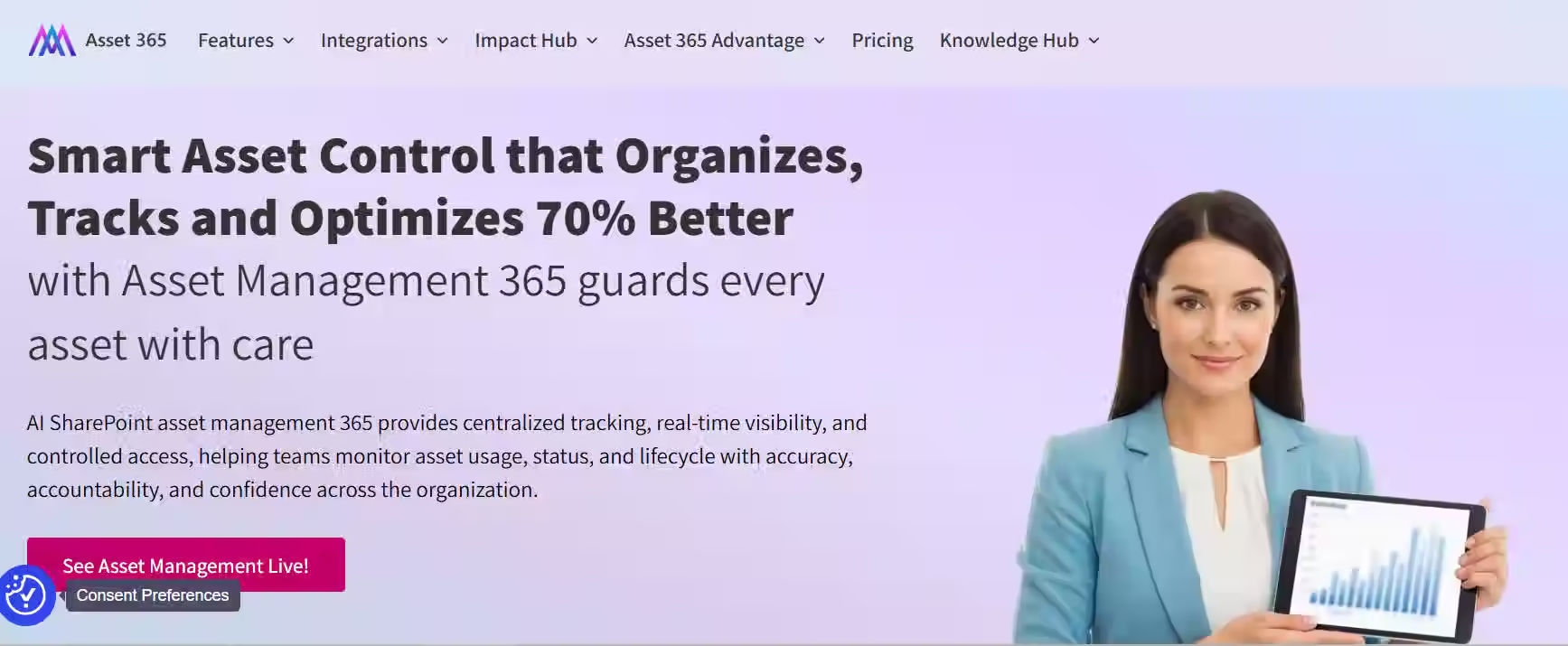
Asset Management 365 is a cloud-based enterprise asset management solution natively built for the Microsoft 365 environment. It helps organizations manage both physical and digital assets throughout their entire lifecycle, from purchase and assignment to maintenance and retirement, all within familiar tools like Microsoft Teams, SharePoint, and Outlook.
The platform brings asset visibility and control into the flow of daily work, making it easier for teams to stay productive and informed.
Key Features of Asset Management 365
Centralized Asset Tracking
- Store all asset data (location, owner, cost, category, status) in one place
- Quickly search and retrieve asset information without scattered spreadsheets
Full Lifecycle Management
- Track assets from procurement → deployment → maintenance → disposal
- Maintain accurate histories of usage, repairs, and movement
Seamless Microsoft 365 Integration
- Works with Teams, SharePoint, Outlook, and Power Platform
- Collaborate on asset requests and updates inside tools employees already use
Custom Workflows & Automation
- Automate approval processes, maintenance reminders, and asset requests
- Reduce manual steps and increase team efficiency
Reporting & Dashboards
- Generate real-time reports on asset conditions, maintenance schedules, and utilization
- Use dashboards to monitor trends and make data-driven decisions
Role-Based Access & Security
- Leverages Microsoft 365 security and compliance standards
- Configure user roles to control who can view or edit specific asset information
Mobility & Remote Access
- Access asset details on the go from any device with internet access
- Supports field teams and remote employees with up-to-date data
Custom Fields & Configurations
- Add industry-specific or business-specific fields to capture important asset details
- Tailor the solution to match organizational needs without coding
Maintenance Management Support
- Schedule preventative maintenance tasks
- Track service histories and upcoming maintenance dates
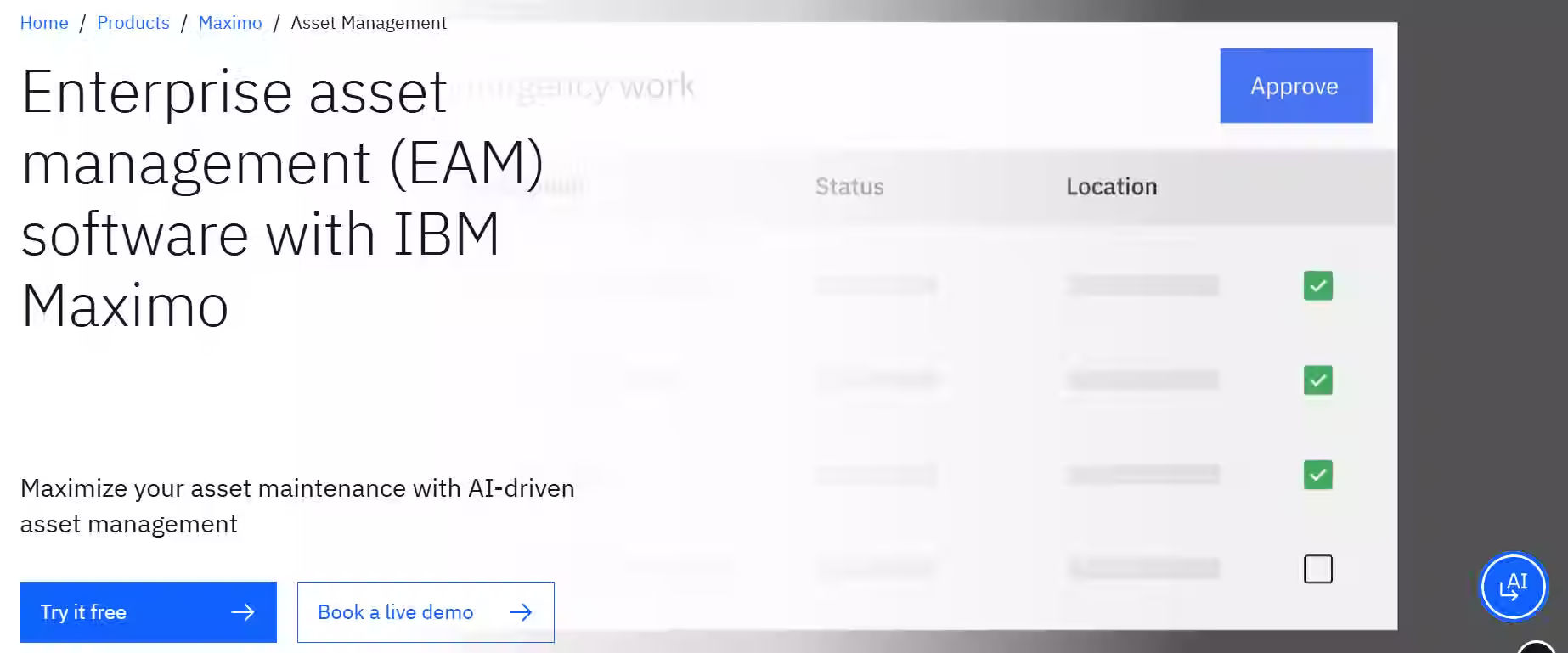
IBM Maximo is a leading enterprise asset management (EAM) platform designed for large organizations with complex physical environments. It helps teams manage assets, maintenance, and operations across industries like manufacturing, utilities, transportation, and oil & gas, all from a unified system.
Key Features
- Comprehensive asset lifecycle management
- Advanced predictive maintenance using AI and analytics
- Real-time condition monitoring with IoT integrations
- Work order and maintenance planning
- Mobile access for field teams
- Strong security, compliance, and scalability
SAP Enterprise Asset Management (SAP EAM)
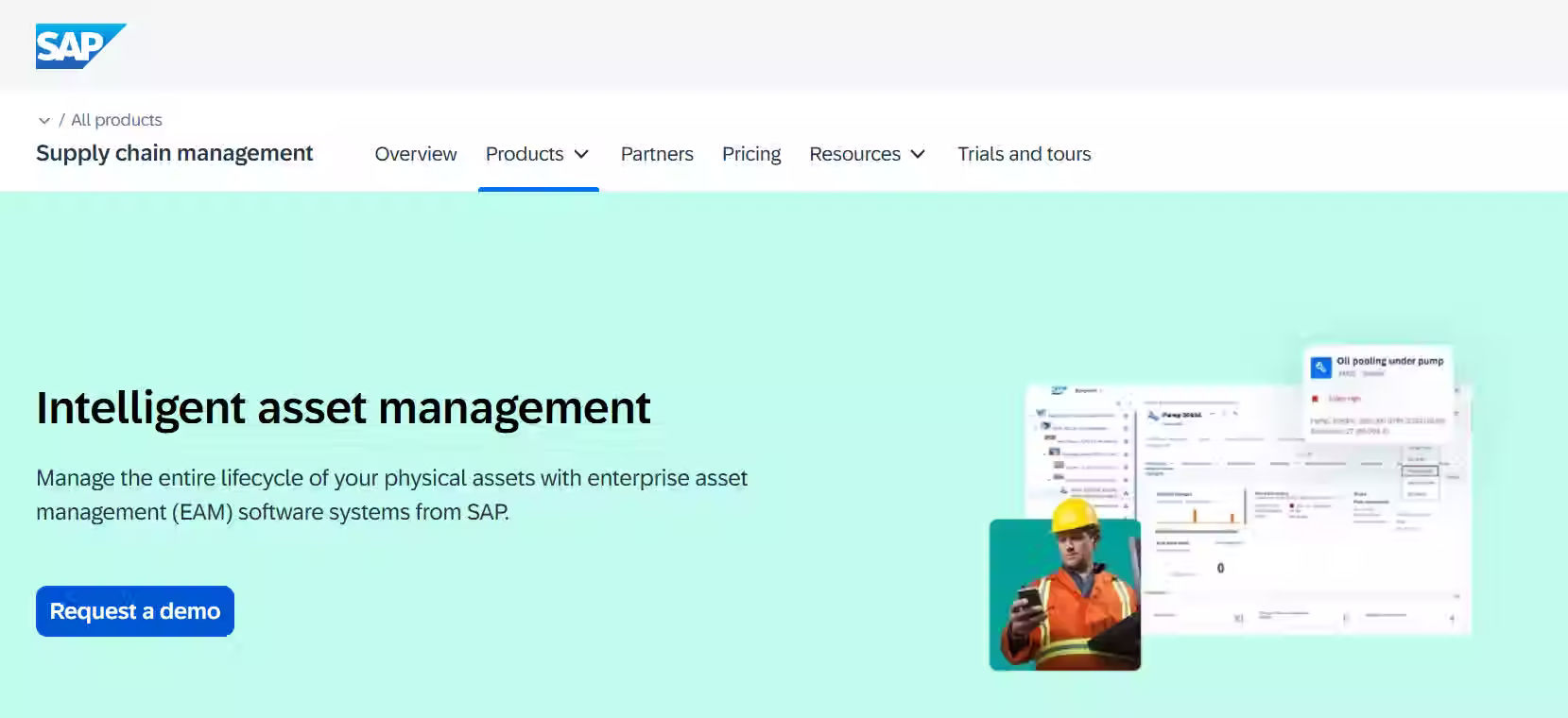
SAP EAM is an enterprise‑grade asset management solution tightly integrated with the SAP ecosystem. It helps organizations manage asset performance, maintenance planning, and compliance while connecting deeply with finance, procurement, and operations.
Key Features
- End‑to‑end asset lifecycle support
- Strong integration with SAP ERP
- Work order and maintenance planning
- Analytics and reporting
- Compliance and risk management
Oracle EAM is a scalable asset management solution part of Oracle’s cloud suite. It provides real‑time tracking, maintenance scheduling, and performance analytics for large, distributed enterprises.
Key Features
- Cloud‑native or hybrid deployment
- Predictive and preventive maintenance
- Integration with Oracle ERP and SCM
- Real‑time dashboards and KPIs
- Global asset visibility
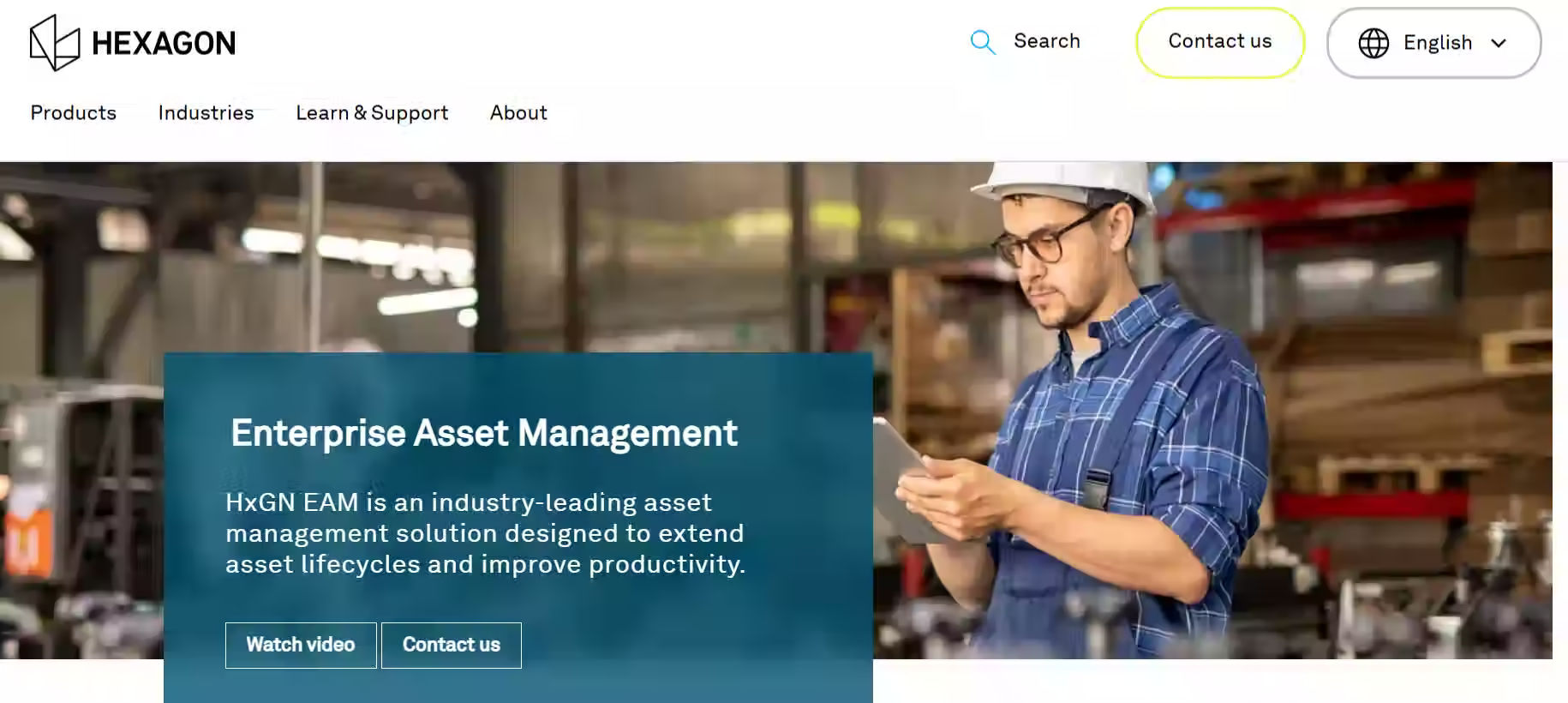
Infor EAM (also known as HxGN EAM) is a flexible and configurable platform that supports asset tracking, maintenance optimization, and mobile asset workflows for mid‑to‑large organizations.
Key Features
- Smart maintenance planning
- Mobile field support
- IoT and sensor integrations
- Dashboards and reporting
- Scalable for distributed teams
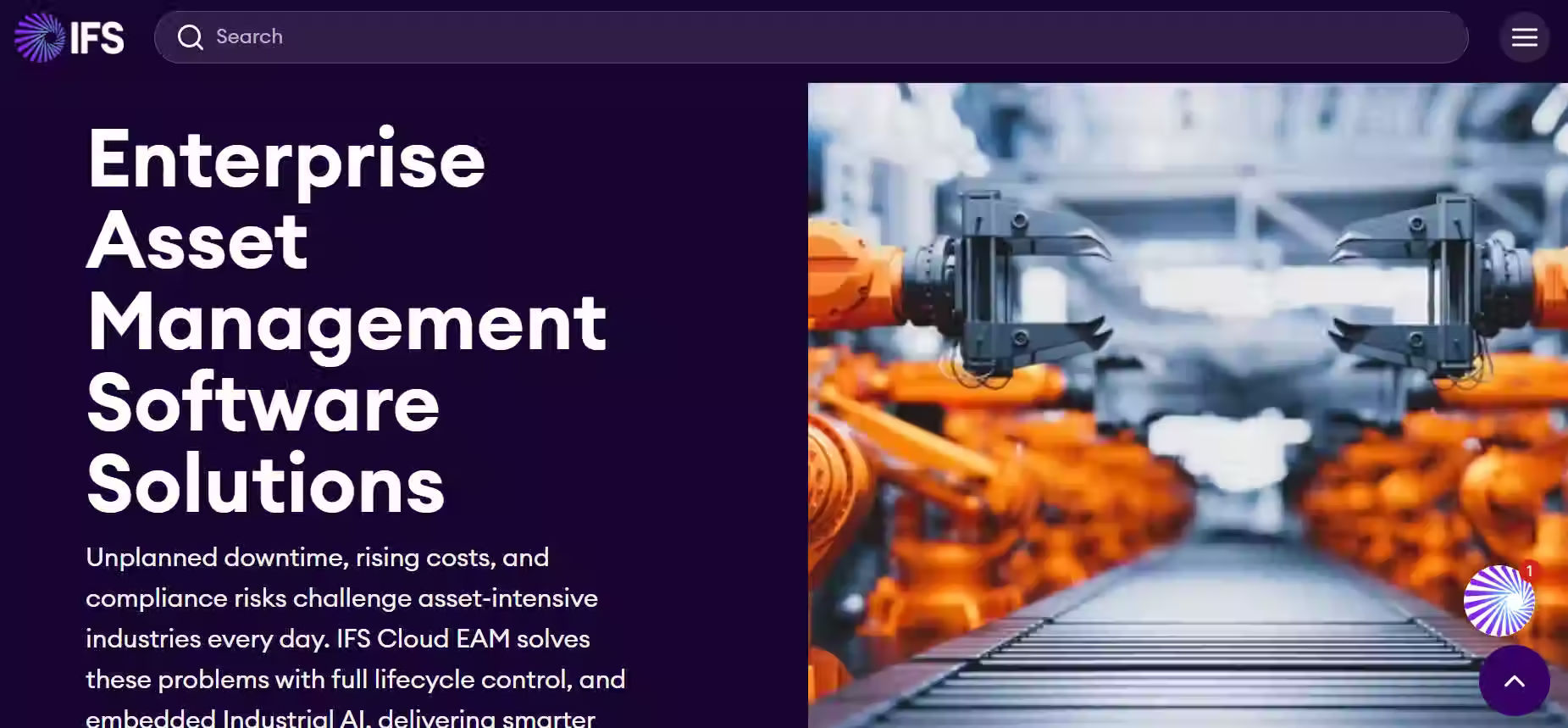
IFS Cloud EAM combines asset management with real‑time analytics, mobility, and automation. It supports maintenance, reliability, and operational efficiency across industries like energy, manufacturing, and aviation.
Key Features
- Cloud‑native architecture
- Predictive insights and analytics
- Work order and lifecycle management
- Mobile access for field teams
- Flexible industry support
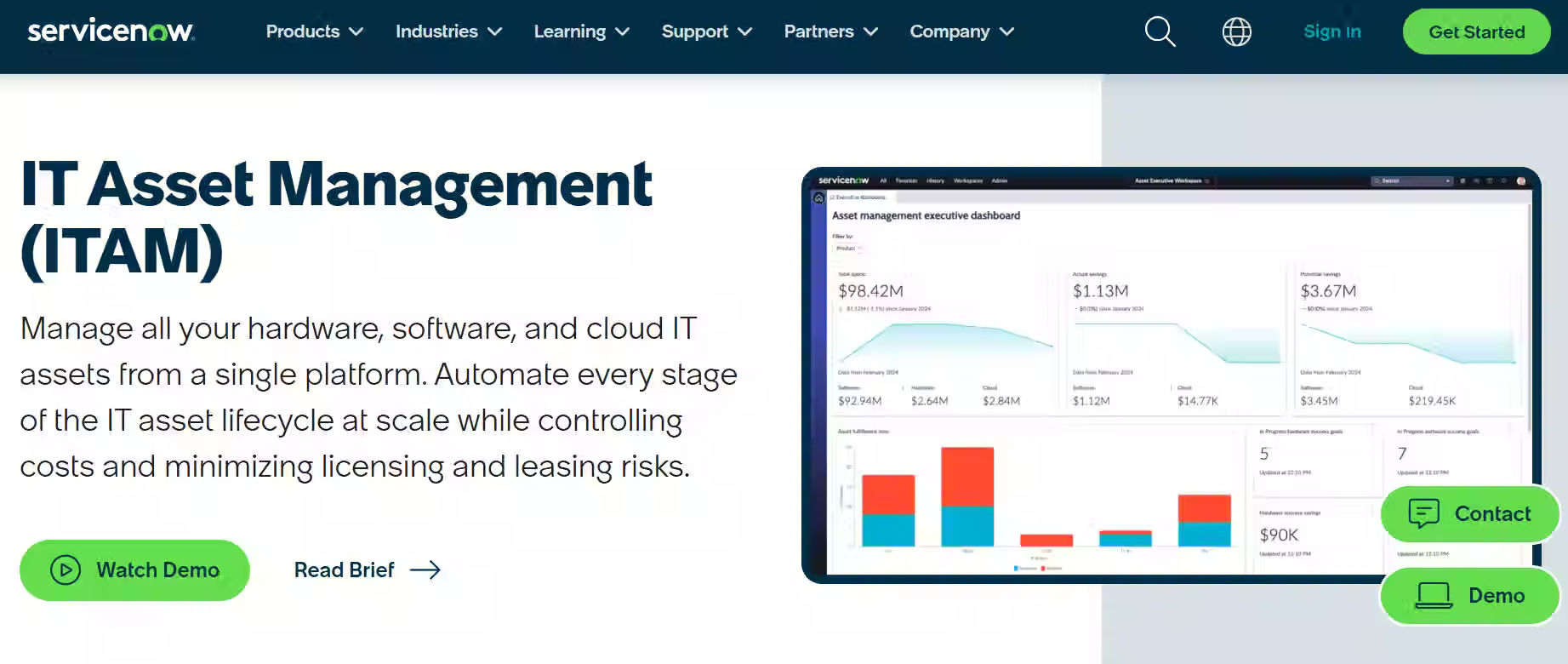
ServiceNow EAM / ITAM extends ServiceNow’s platform to manage both physical and IT assets. It connects service management, asset tracking, and workflows in one unified system.
Key Features
- Unified asset and service workflows
- IT and enterprise asset tracking
- Automated approvals and alerts
- Real‑time dashboards
- Strong integration with ITSM
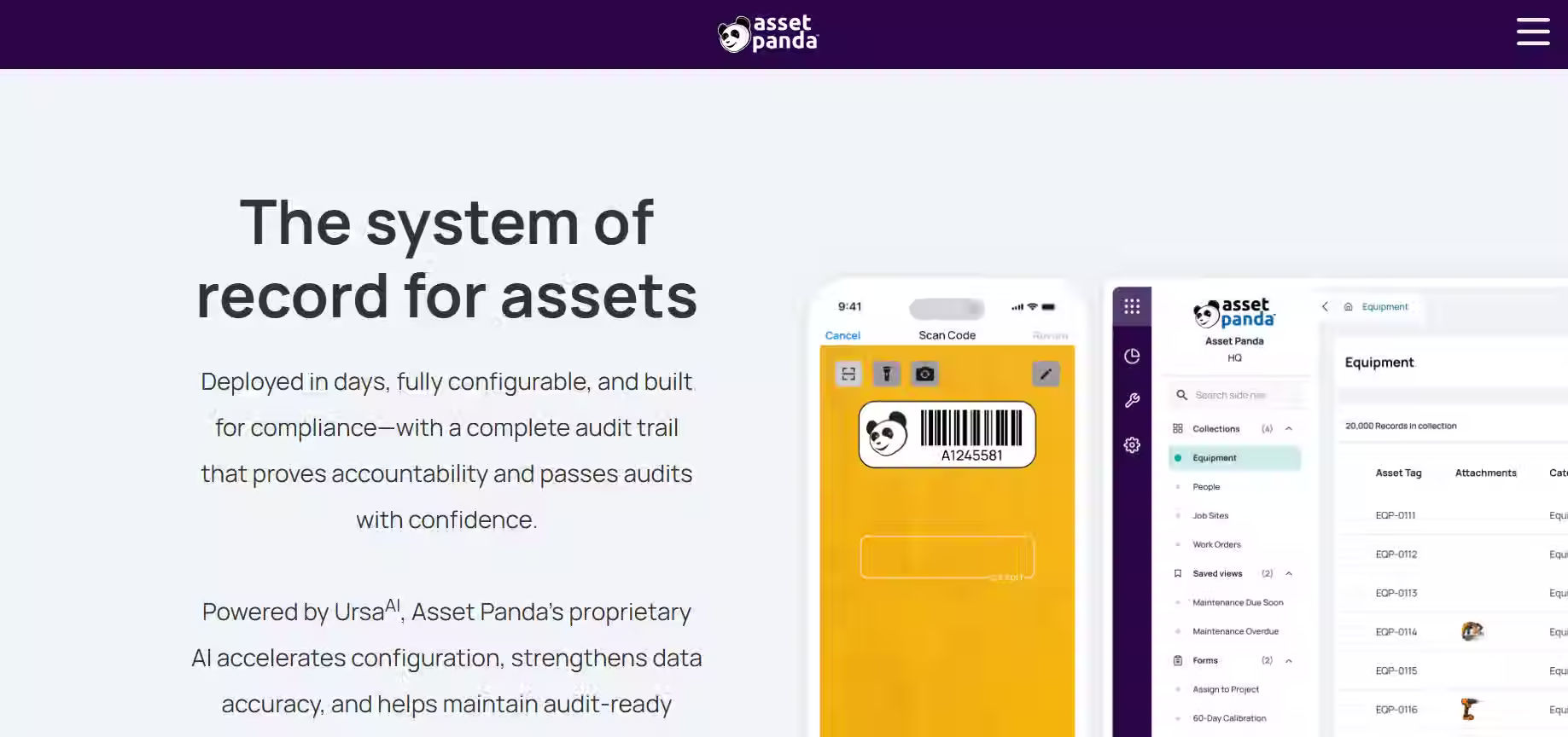
Asset Panda is an easy‑to‑use, customizable asset management platform focused on flexibility and mobile tracking, making it a good choice for teams that need simple deployment and quick adoption.
Key Features
- Centralized cloud asset repository
- Custom fields and workflows
- Mobile barcode scanning
- Alerts and reminders
- Simple reporting
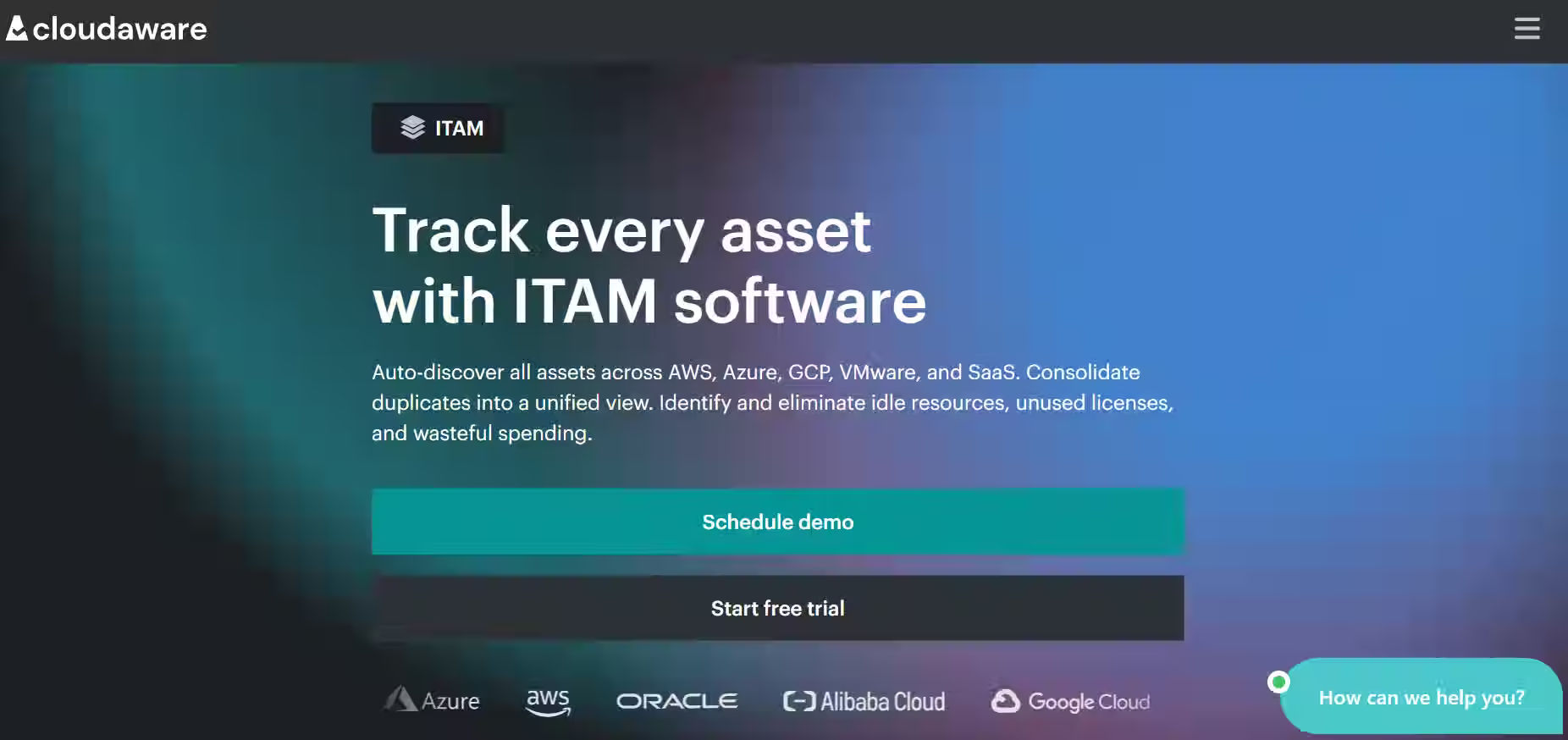
Cloudaware is a hybrid EAM and IT asset management platform with strong configuration management database (CMDB) support. It offers visibility across cloud, on‑premise, and hybrid infrastructure.
Key Features
- Unified CMDB and asset inventory
- IT and enterprise asset visibility
- Workflow automation
- Reporting and dashboards
- Integration with IT tools
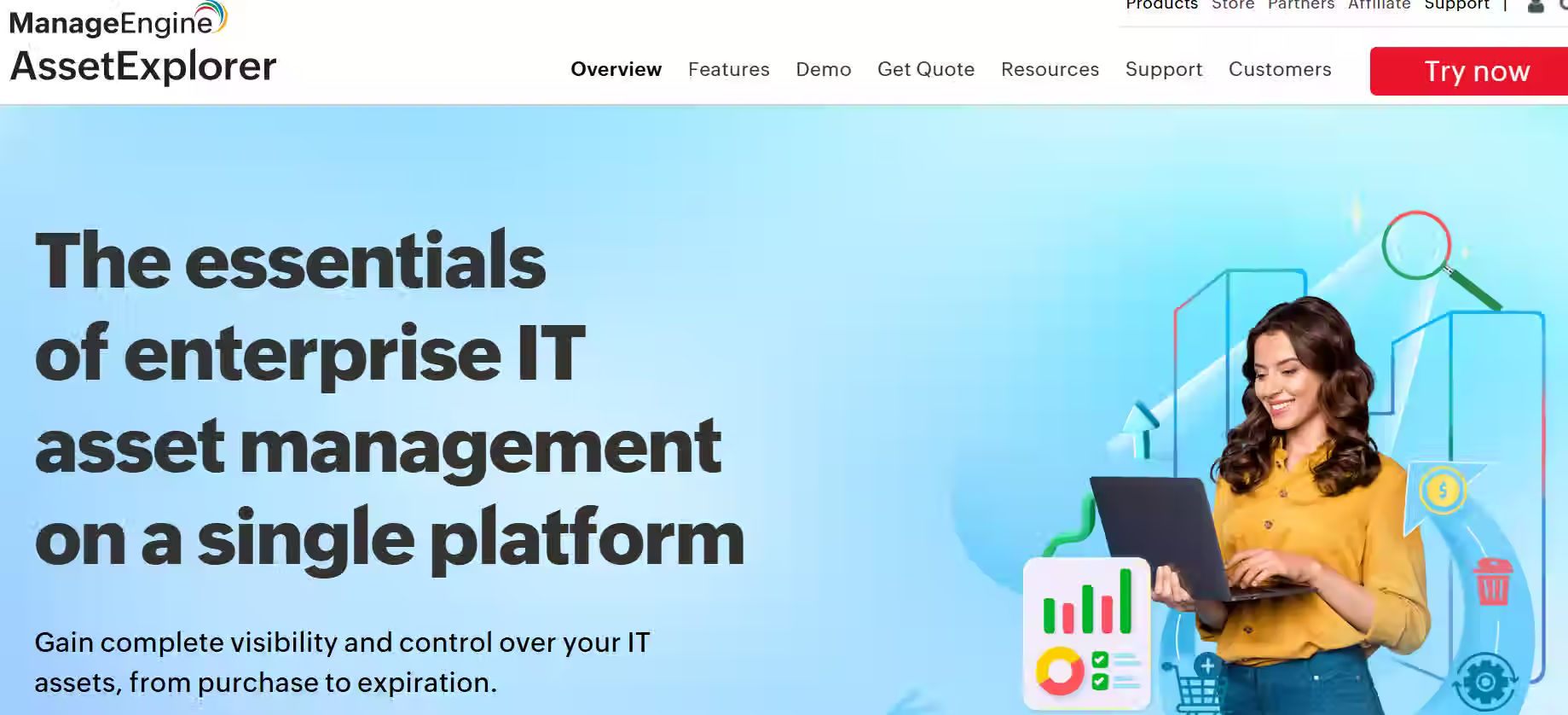
ManageEngine Asset Management provides IT and physical asset tracking with inventory control, compliance features, and reporting. It works well for organizations seeking combined asset and IT management.
Key Features
- IT and physical asset tracking
- Software license compliance
- Inventory management
- Alerts and asset audit logs
- Out‑of‑the‑box reports
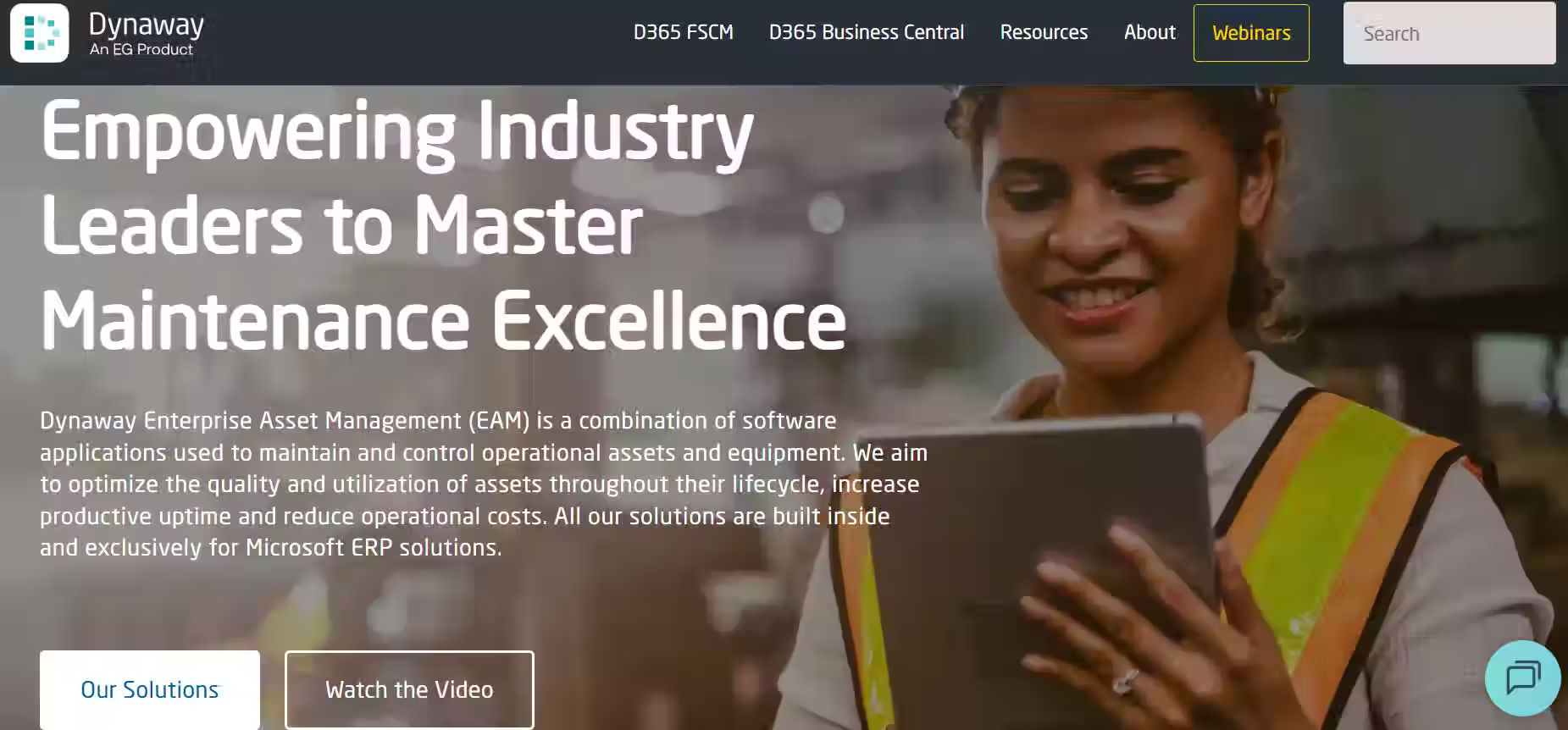
Dynaway EAM is built to extend Microsoft Dynamics 365 Business Central with asset and maintenance management. It offers work order planning, preventive maintenance, and lifecycle tracking within the Microsoft ecosystem.
Key Features
- Microsoft Dynamics 365 integration
- Preventive maintenance scheduling
- Asset‑based work order management
- Cost tracking and lifecycle insights
- Role‑based security
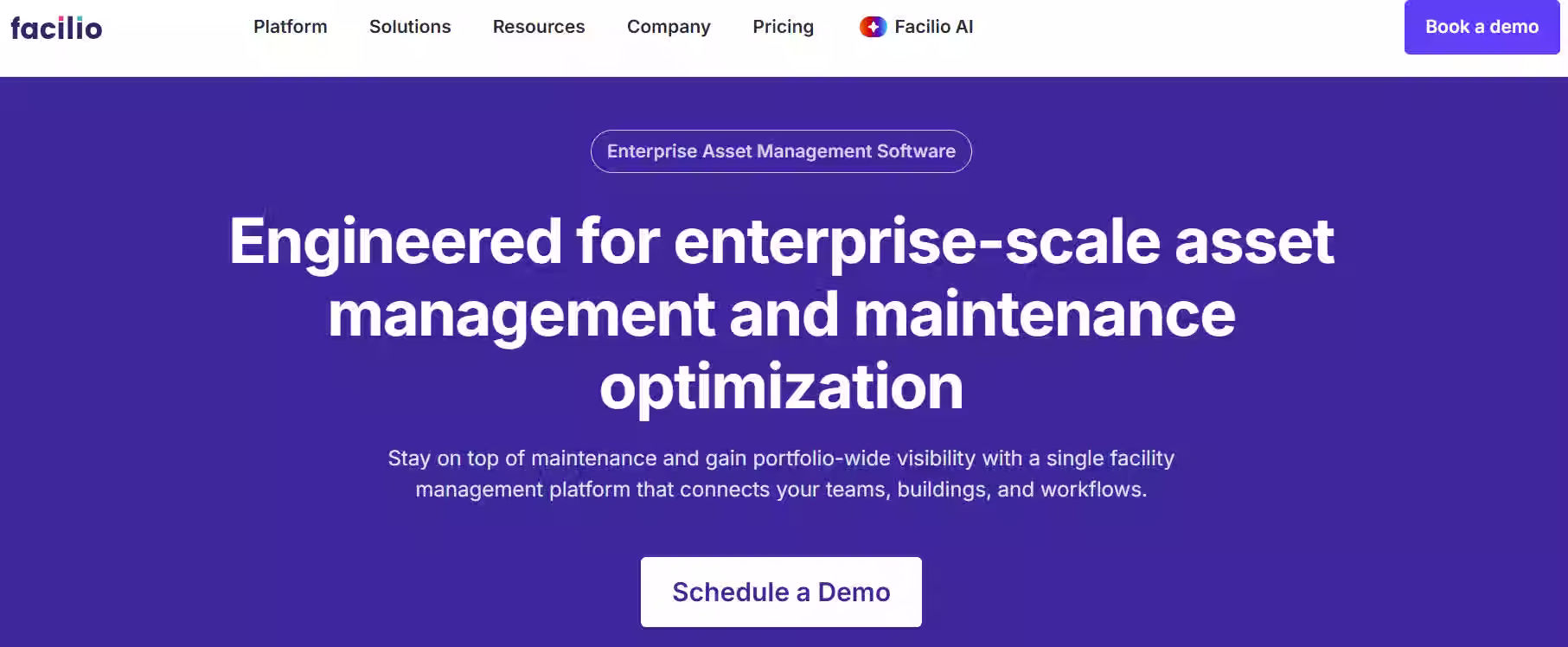
Facilio is a cloud‑native EAM platform focused on real‑time operational insights and Internet of Things (IoT) connectivity. It is often used in building operations, facilities management, and large enterprise environments.
Key Features
- Real‑time IoT data and analytics
- Centralized asset performance tracking
- Preventive and predictive maintenance
- Facilities and building management support
- Mobile access
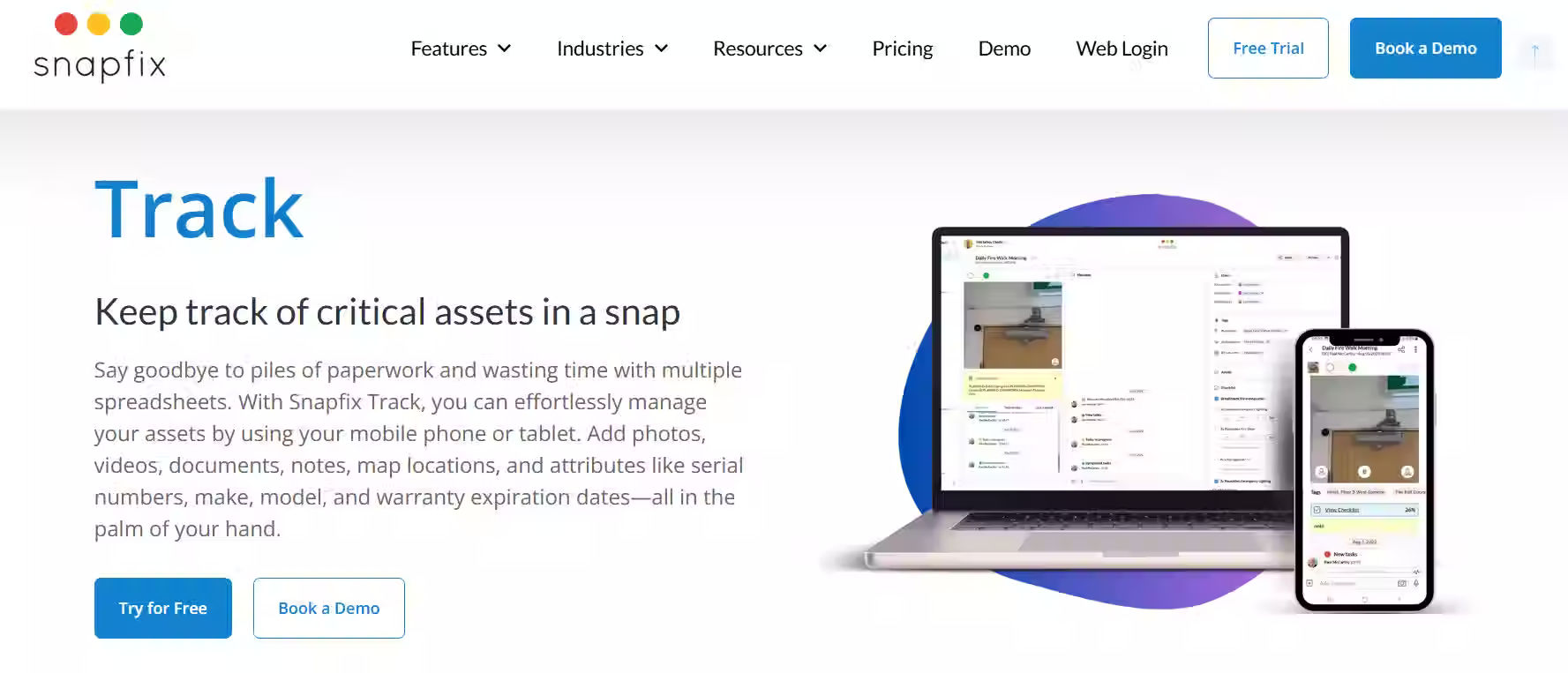
Snapfix is a mobile‑first asset and task management tool designed for fast field reporting and issue resolution. It is ideal for teams that need to track maintenance tasks and close work orders quickly.
Key Features
- Mobile‑centric task tracking
- Picture and comment logging
- Quick issue reporting
- Simple workflows
- Field team coordination
How to Choose Enterprise Asset Management Software
Selecting the right Enterprise Asset Management solution is a critical decision for any organization. Whether you are managing physical assets, machinery, or IT equipment, having the right system in place ensures efficiency, cost savings, and smooth operations.
- Understand Your Business Needs: Assess the types of assets you manage, their life cycles, and your specific requirements (e.g., maintenance, tracking, industry-specific needs).
- Scalability and Flexibility: Ensure the software can grow with your business, handling increased assets, users, and future needs. Look for customizable features to match your workflows.
- Integration Capabilities: Choose software that integrates seamlessly with other business systems like ERP or HRMS to avoid data silos and improve efficiency.
- User-Friendliness: The software should have an intuitive interface, easy navigation, and be simple for your team to adopt without a steep learning curve.
- Cost and ROI: Evaluate the total cost of ownership, including licensing, implementation, and training. Ensure the software will deliver long-term cost savings and operational improvements.
Best Practices & Common Challenges
Implementing Enterprise Asset Management (EAM) successfully requires strategy, preparation, and ongoing attention. Here are some best practices and challenges to keep in mind:
Best Practices
- Centralize Asset Data: Keep all asset information in one system to avoid errors and duplicates.
- Plan the Full Lifecycle: Track assets from purchase to retirement to improve efficiency and ROI.
- Automate Workflows: Use automated alerts, maintenance schedules, and approvals to reduce manual work.
- Integrate with Other Systems: Connect EAM with ERP, finance, and supply chain tools for seamless operations.
- Train Teams: Make sure staff know how to use the system effectively to get accurate and timely data.
Common Challenges
- Data Accuracy: Poor-quality or missing asset data can undermine the system’s value.
- User Adoption: Employees may resist change if workflows are unfamiliar or complex.
- Integration Issues: Linking EAM with existing IT, ERP, or IoT systems can be tricky.
- Maintenance Planning: Predicting asset failures or scheduling preventive maintenance requires reliable analytics.
- Cost & Resource Constraints: Initial implementation and ongoing management can be expensive and resource-intensive.
By following best practices and anticipating challenges, organizations can maximize the benefits of their EAM investment, reducing downtime and improving operational efficiency.
Future Outlook: What’s Next for EAM?
Enterprise Asset Management is evolving rapidly, driven by digital innovation and smarter analytics. Here’s what to expect in the coming years:
- AI & Predictive Maintenance: Systems will increasingly predict failures before they occur, reducing downtime and maintenance costs.
- IoT & Real-Time Monitoring: Connected sensors and devices will provide live data on asset health and performance.
- Cloud & Hybrid Solutions: Cloud-native and hybrid deployments will make EAM more flexible, scalable, and accessible for distributed teams.
- Integration with Digital Twins: Virtual replicas of assets will help simulate scenarios, optimize maintenance, and improve decision-making.
- Sustainability & Compliance Tracking: Future EAM will help organizations meet environmental, safety, and regulatory goals while tracking energy and resource usage.
The future of EAM is about smarter, data-driven, and connected asset management, turning traditional maintenance into a strategic advantage for businesses.
Conclusion
The right Enterprise Asset Management software goes beyond tracking assets, it optimizes performance, reduces downtime, and boosts ROI. Solutions like Asset Management 365, IBM Maximo, and SAP EAM help organizations manage the full asset lifecycle, automate maintenance, and gain real-time insights. Choosing the right EAM ensures smarter operations, better decision-making, and efficient use of resources, turning asset management into a strategic advantage.
Join Our Creative Community
Frequently Asked Questions
What is Enterprise Asset Management (EAM) software?
EAM software helps businesses track, maintain, and optimize physical and IT assets throughout their lifecycle, improving efficiency and reducing downtime.
Why is EAM software important for enterprises in 2026?
Modern enterprises use EAM to automate maintenance, monitor assets in real-time, predict failures, and integrate asset data with ERP and finance systems for smarter decision-making.
What are the top Enterprise Asset Management software in 2026?
Leading EAM solutions include Asset Management 365, IBM Maximo, SAP EAM, Oracle EAM, Infor EAM, IFS Cloud EAM, ServiceNow EAM, Asset Panda, Cloudaware, ManageEngine Asset Management, Dynaway EAM, Facilio, and Snapfix.
How do I choose the best EAM software for my business?
Consider factors like asset type, industry, cloud or on-premise needs, predictive maintenance features, mobile access, and integration with ERP or IT systems.
What are the benefits of using EAM software?
EAM software improves asset uptime, reduces maintenance costs, centralizes asset data, provides actionable insights, and ensures compliance and operational efficiency.
Can EAM software predict asset failures?
Yes, many modern EAM tools use AI and predictive analytics to forecast failures, schedule preventive maintenance, and extend asset lifecycles.
Is Asset Management 365 suitable for Microsoft 365 users?
Absolutely. Asset Management 365 integrates seamlessly with Microsoft Teams, SharePoint, and Outlook, providing centralized asset management within familiar tools.
Do EAM solutions support mobile and remote teams?
Most modern EAM platforms, including Asset Management 365, IBM Maximo, and Infor EAM, offer mobile access, enabling field teams to update and track assets in real-time.
What industries benefit the most from EAM software?
Industries with complex asset networks, such as manufacturing, utilities, transportation, facilities management, IT services, and oil & gas, gain the most from EAM solutions.
What’s the future of Enterprise Asset Management?
The future includes AI-driven predictive maintenance, IoT integration, cloud-first and hybrid deployments, real-time monitoring, digital twins, and sustainability tracking to make asset management smarter and more proactive.


_JiluXJRGNl.svg)























