

Onboarding software connects with the tools you already use, like Microsoft 365 and Teams. Most tools also offer pre-boarding and AI features to cut delays and improve retention.
✨
Key Takeaways
- Good onboarding software can raise new-hire retention by 82% and productivity by 70%, according to Brandon Hall Group.
- Look for tools that combine automation, Microsoft 365 integration, and role-based workflows.
- Employee Onboarding 365 leads this list for Microsoft 365 and Teams users, with pre-boarding, e-signatures, and AI reminders built in.
- AI-powered onboarding tools predict delays and personalize the experience for each new hire.
- The right software turns onboarding from a paperwork task into a retention strategy.
The best employee onboarding software does not only save the time of the HR; but it also makes employees feel welcomed, informed, and prepared to do their best work on the first day. It simplifies the paperwork, automates repetitive work, and provides compliance without introducing barriers. These tools can be used to provide consistency, enhance cross-departmental collaboration, and provide a seamless onboarding process to a remote workforce regardless of the scale of your business.
According to a study conducted by the Brandon Hall Group, organizations that have an effective onboarding process enhance the retention rate of new hires by 82 percent and productivity by 70 percent. That is not business success; that is HR success.
What is Employee Onboarding Software?
Employee onboarding software is more than a digital checklist. It guides a new hire’s entire journey, from the offer letter to their first productive day.
It helps HR teams by:
- Removing manual paperwork
- Simplifying communication
- Creating a personal, engaging start for every employee
The best tools blend smart automation with a human touch, so the process feels welcoming, not robotic.
What Makes Onboarding Software Effective?
Effective onboarding software does more than organize new-hire tasksit creates a smooth, structured, and engaging experience from day one. The right platform automates workflows, centralizes documents, improves communication, and helps HR teams ensure every onboarding step is completed accurately and on time.
- Ease of Use
The platform should be simple for HR, managers, and new hires alike. A clean interface means less confusion and fewer errors, so people focus on the job, not the tool. - Automation
Automation handles the repetitive work, like welcome emails and form tracking. This frees up HR time and keeps every hire’s process consistent. - Integration
The software should connect with tools you already use, like Microsoft 365 and Teams. This avoids double data entry and keeps every team on the same page. - Custom Workflows
Look for tools that let you build different checklists and training paths by role, department, or location. Relevant content keeps new hires engaged. - Document Handling
Built-in e-signatures and secure cloud storage make signing and storing documents easy. This also keeps you audit-ready. - Pre-Boarding Features
Pre-boarding welcomes new hires before day one with welcome packs and culture resources. It lowers first-day anxiety and speeds up retention. - AI Capabilities
AI predicts delays, personalizes the journey, and sends smart reminders. This makes onboarding faster and more engaging for everyone involved. - Reporting & Analytics
Detailed reports let HR track progress and engagement. This data helps HR prove the ROI of onboarding to leadership. - Mobile Accessibility
A mobile-friendly platform lets new hires complete tasks and reach HR from anywhere. This matters most for remote and hybrid teams.
Curious how this looks in practice?
See how Employee Onboarding 365 handles pre-boarding and automation.
Why Onboarding Matters More Than Ever
Onboarding is often a new hire’s first real impression of your company. In today’s job market, those first few days can shape years of the relationship.
- Good onboarding helps employees feel accepted and ready, and they reach team goals faster.
- Poor onboarding leads to disengagement, confusion, and early resignations.
A structured, engaging onboarding process is no longer optional. It’s a growth strategy.
Benefits of Employee Onboarding Software
Employee onboarding software helps organizations create a consistent and organized onboarding experience. It reduces manual HR work, keeps important information in one place, improves communication, and helps new employees complete essential tasks smoothly from their first day.
- Saves Time
Automation handles welcome emails, checklists, and document collection. HR gets more time for personal connection with new hires. - Ensures Accuracy
Centralized document storage cuts down on lost forms and errors. This keeps the process aligned with legal and company policy. - Speeds Up Productivity
New hires get instant access to tools and training. Faster access means they contribute to the business sooner. - Boosts Experience
Welcome videos and custom checklists create a strong first impression. This builds loyalty and lowers early turnover. - Tracks Progress
Real-time dashboards show HR exactly where each hire stands. Delays get flagged and fixed before they cause problems. - Enhances Interdepartmental Cooperation
Onboarding touches HR, IT, and managers alike. A shared platform keeps every department aligned and avoids delays. - Supports Remote and Hybrid Teams
Digital onboarding removes geography as a barrier. Secure portals handle every task, so remote hires get the same experience as in-office ones. - Improves Consistency Across Hires
Standardized onboarding means every hire gets the same key information and training. This strengthens your company culture from day one. - Saves Time
Automation handles welcome emails, checklists, and document collection. HR gets more time for personal connection with new hires. - Ensures Accuracy
Centralized document storage cuts down on lost forms and errors. This keeps the process aligned with legal and company policy. - Speeds Up Productivity
New hires get instant access to tools and training. Faster access means they contribute to the business sooner. - Boosts Experience
Welcome videos and custom checklists create a strong first impression. This builds loyalty and lowers early turnover. - Tracks Progress
Real-time dashboards show HR exactly where each hire stands. Delays get flagged and fixed before they cause problems. - Enhances Interdepartmental Cooperation
Onboarding touches HR, IT, and managers alike. A shared platform keeps every department aligned and avoids delays. - Supports Remote and Hybrid Teams
Digital onboarding removes geography as a barrier. Secure portals handle every task, so remote hires get the same experience as in-office ones. - Improves Consistency Across Hires
Standardized onboarding means every hire gets the same key information and training. This strengthens your company culture from day one.
Still managing onboarding through spreadsheets and email?
See what a connected, automated process looks like.
Features of Employee Onboarding software
The right employee onboarding software should simplify the onboarding process while giving HR teams better control and visibility. Look for features such as automated workflows, digital document management, task tracking, employee self-service, integrations, and real-time progress tracking to create a smooth and efficient onboarding experience.
- Microsoft 365 & Teams integration — The software should connect directly with the Microsoft tools your team already uses, so everyone works from one shared workspace without switching apps.
- Automated task management — Look for automatic welcome emails, checklists, and IT alerts, so no step gets missed and HR spends less time on manual follow-ups.
- Pre-boarding tools — Digital welcome kits and training materials should be ready before day one, so new hires feel prepared and excited to start.
- Role-based workflows — The platform should let you tailor tasks and training by department, role, or location, so every new hire gets content that’s actually relevant to them.
- AI-powered reminders — Smart AI features should predict delays and nudge the right people automatically, so onboarding stays on schedule without constant manual chasing.
- E-signatures & secure document storage — Choose a tool with cloud-based e-signatures and secure storage, so paperwork is easy to sign, find, and keep audit-ready.
- Real-time progress tracking — Dashboards should show where every new hire stands, so HR can catch and fix delays before they become bigger problems.
- Mobile-friendly design — The platform should work well on any device, so remote and hybrid employees can complete tasks from anywhere.
- Cross-department collaboration — HR, IT, and managers should be able to work from the same platform, so responsibilities stay clear and nothing falls through the cracks.
- Scalable, audit-ready compliance — The software should hold up whether you’re hiring 10 people or 1,000, keeping every step documented for future audits.
Top 10 Best Employee Onboarding Software for HR
Choosing the right employee onboarding software can help HR teams simplify new-hire processes, automate repetitive tasks, and create a consistent onboarding experience. Below, we explore 10 leading employee onboarding solutions and their key features to help you find the right fit for your organization
1. Employee Onboarding 365
Microsoft 365 and Teams users are perfect
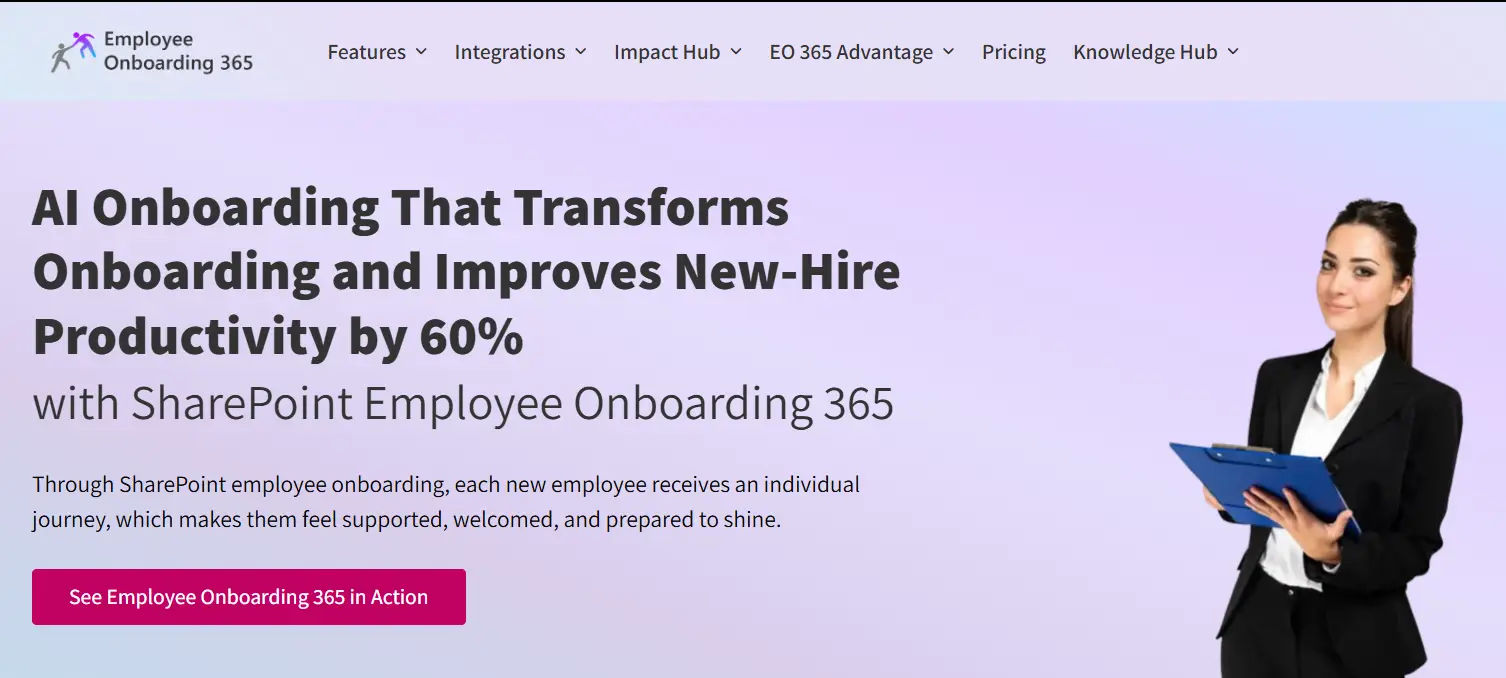
Employee Onboarding 365 is a Microsoft 365-native onboarding platform built for HR teams that already live inside Outlook, Teams, and SharePoint. It brings pre-boarding, task automation, e-signatures, and AI-powered reminders into one connected workspace, so new hires get a smooth start without HR juggling separate tools.
Features: Microsoft integration, task automation, e-signatures, pre-boarding, progress tracking, role-based workflows, AI reminders.
Best fit: Mid-to-large companies already on Microsoft 365.
- Works directly inside your existing Microsoft tools, so there’s no extra training.
- Automates HR, IT, and manager tasks to prevent missed steps.
- Real-time dashboards catch delays early.
- Pre-boarding gets new hires ready before day one.
- Department-specific workflows plus AI notifications keep every stakeholder on schedule.
- Documents live in secure cloud storage, ready for any audit.
Customer testimonial: “Hosted on SharePoint, which means all our data stays safely in our tenant. The platform offers extensive onboarding features, and it’s simple to set up and manage.”
2. BambooHR
Easy, people-oriented HR system.
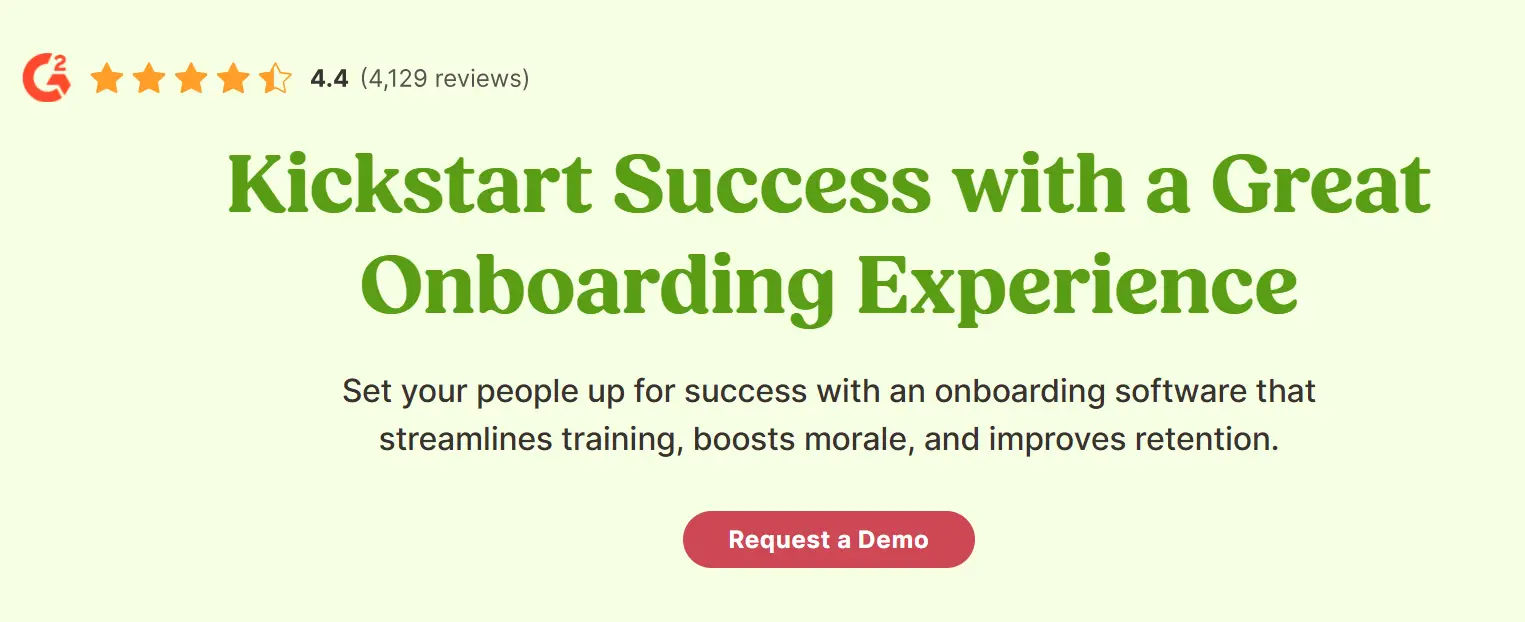
BambooHR is a people-first HR system built around ease of use. It pairs custom onboarding checklists with a self-service portal, so new hires can complete much of their own paperwork while HR stays focused on the personal side of welcoming them.
Features: Custom checklists, self-service portal, payroll integration, e-signatures, performance tracking.
- Friendly interface that both HR and new hires find easy to use.
- Self-service portal lets new hires handle much of onboarding themselves.
- Payroll and benefits connect directly with the onboarding flow.
- Works equally well for remote and in-office teams.
3. Rippling
One-stop HR, IT and payroll solution.
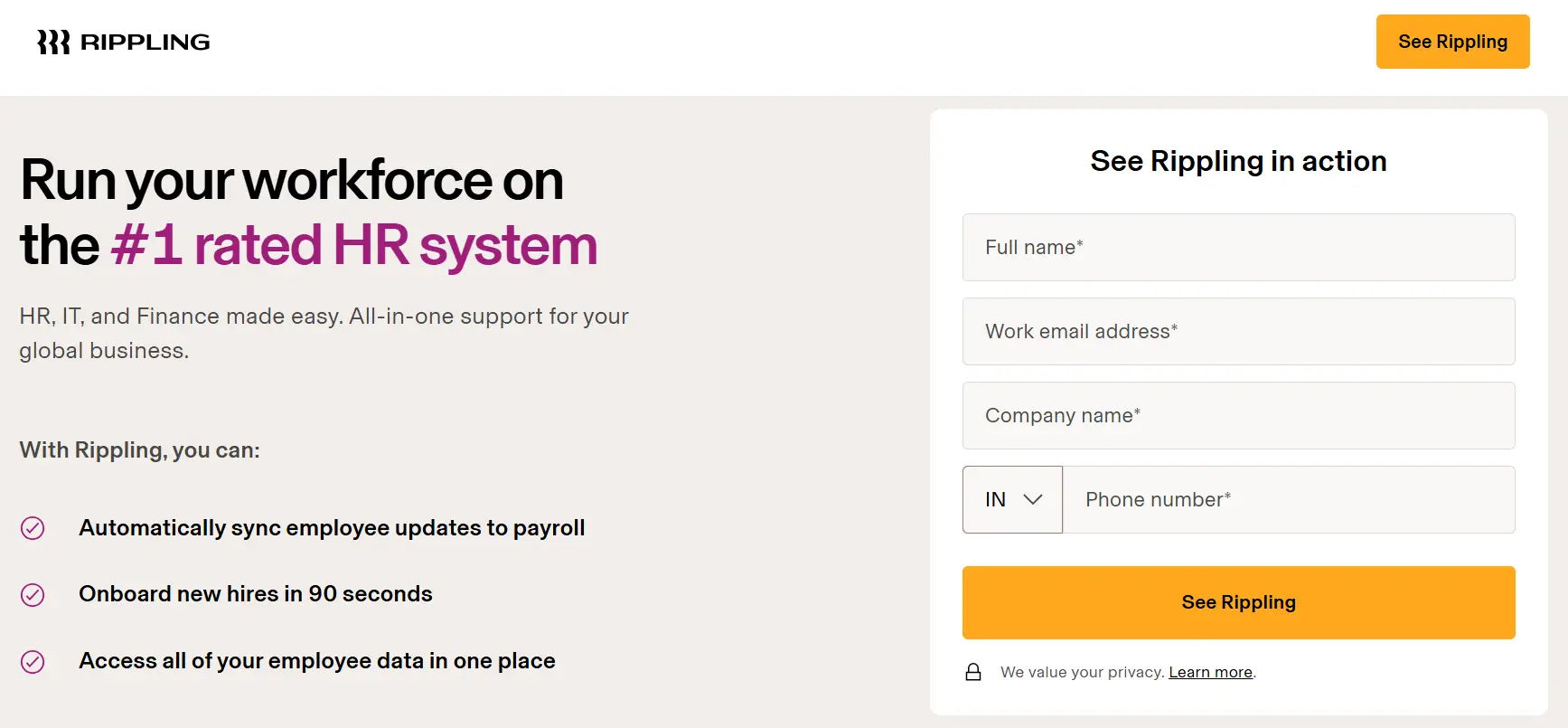
Rippling combines HR, IT, and payroll in a single platform. It’s built for companies that need to move fast, handling everything from device provisioning to global compliance so growing and distributed teams can onboard without friction.
Highlights: Device setup, global hiring, compliance management, benefits, workflow automation.
- Handles everything from offer letters to laptop delivery to account access.
- Manages payroll and compliance across 100+ countries.
- Keeps HR, IT, and finance data in sync in real time.
- Centralized dashboard for HR, IT, and managers to track progress together.
4. Gusto
Onboarding software built into payroll software.
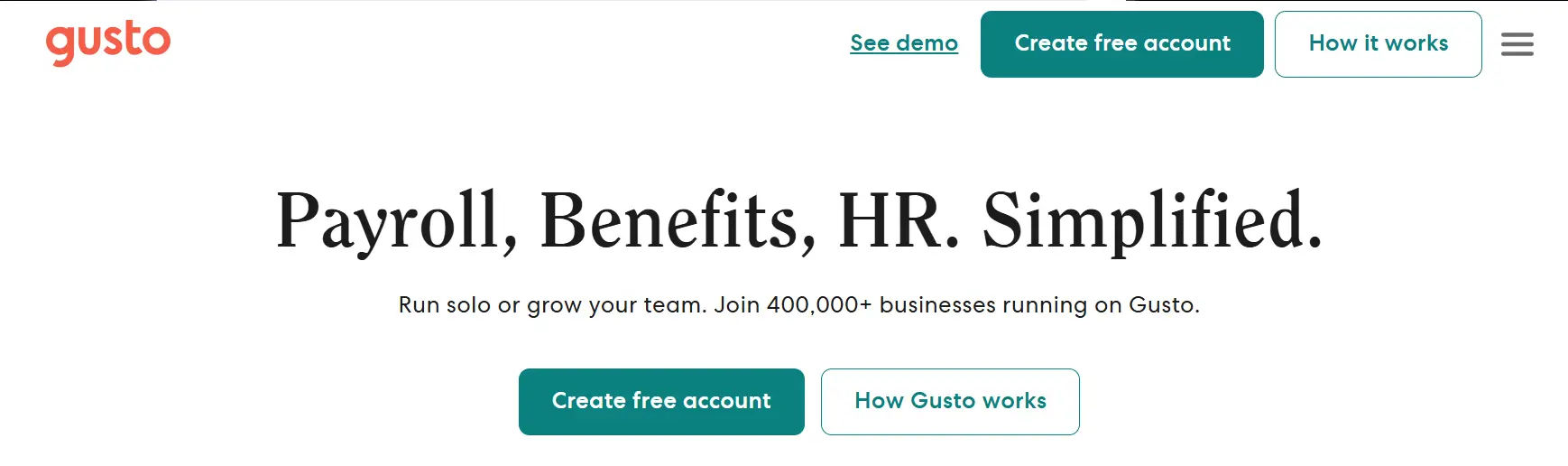
Gusto folds onboarding directly into its payroll platform. It’s built for small businesses and startups that want new hires to handle direct deposit, tax forms, and benefits enrollment as part of one simple, paperless flow.
Features: Benefits setup, compliance support, payroll sync, offer letters.
- Combines payroll, benefits, and onboarding into one platform.
- E-signed offer letters make hiring fast and paperless.
- New hires set up direct deposit and tax forms during onboarding.
- Automated reminders and compliance alerts keep things on track.
5. WorkBright
Speedy and flexible mobile-first onboarding platform.
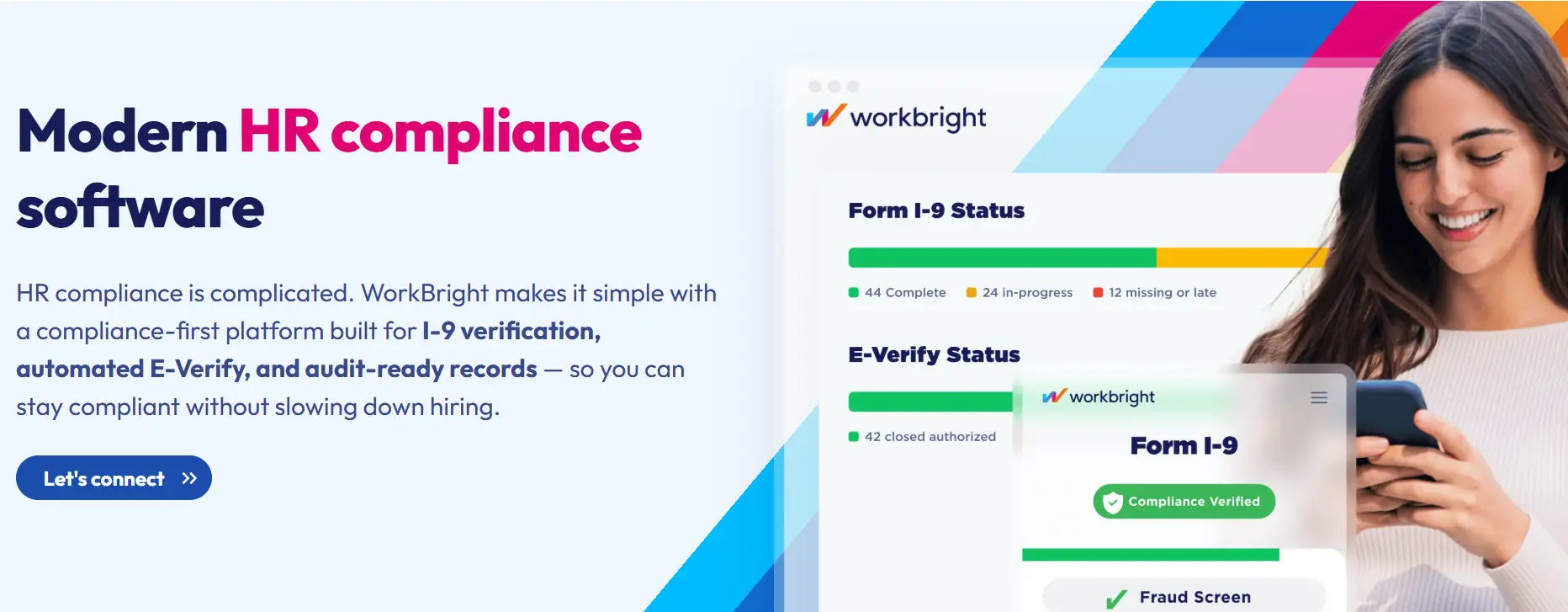
WorkBright is a mobile-first onboarding platform built for teams that hire fast and hire often. New employees can complete forms, upload IDs, and sign documents entirely from a phone, which makes it a strong fit for hospitality, construction, and event staffing.
Highlights: Mobile document uploads, e-signatures, compliance tracking, remote verification.
- New hires fill out forms and sign documents from a phone, no office visit needed.
- Fast to deploy for hospitality, construction, and event staffing.
- Built-in compliance tools keep document checks quick and safe.
- Good fit for companies that need to hire fast during peak seasons.
6. Talmundo
Onboarding is based on engagement to create culture and connection.
Talmundo turns onboarding into an engagement-driven experience. Using video, quizzes, and branded content, it helps global and culture-focused companies introduce new hires to their values and story from day one, not just their paperwork.
Features: Custom onboarding experiences, multimedia content, live feedback tracking.
- Uses videos, quizzes, and branded content to bring company culture to life.
- Personalizes the experience by role, location, and background.
- Sentiment tracking shows HR what’s working and what isn’t.
- A strong fit for companies focused on retention through culture.
7. ClearCompany
Hiring and the recruitment process were merged into one platform.
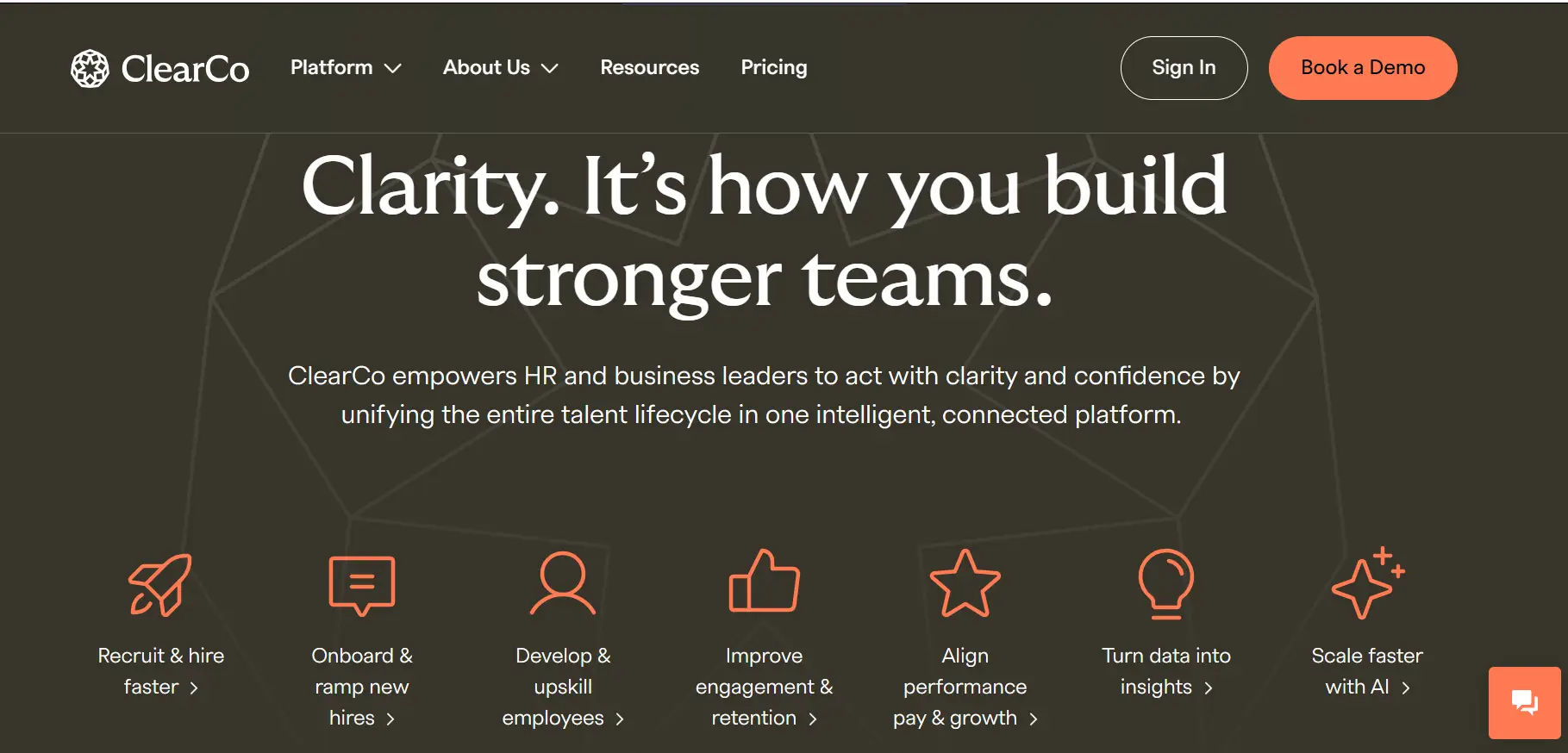
ClearCompany connects recruiting and onboarding into a single platform. It carries candidate data straight from the applicant tracking system into onboarding, which suits high-growth businesses with heavy, ongoing hiring needs.
Features: ATS integration, performance goal tracking, automated workflows.
- Links candidate data from your applicant tracking system straight into onboarding.
- HR can set clear, measurable first-day goals for new hires.
- Automation handles routine tasks, so HR can focus on relationships.
- Useful for companies with high-volume hiring needs.
8. Namely
Human resource management system aimed at mid-sized companies.

Namely is a human resource management system built for mid-sized companies. It lets HR teams build role-based onboarding workflows and collect e-signatures, while giving employees self-service tools to keep their own data accurate.
Features: Onboarding customization, employee self-service, compliance tracking.
- Lets HR build role-based workflows and collect e-signatures easily.
- Self-service updates keep employee data accurate.
- A solid fit for mid-sized companies needing an easy, compliant HR platform.
9. Click Boarding
Onboarding platform based on compliance-first and designed in highly regulated industries.
Click Boarding is a compliance-first onboarding platform built for organizations where a missed step carries real risk. It automates forms and workflows while logging every step in real time, which makes audits far easier in healthcare, finance, and government settings.
Highlights: Automated forms, secure workflows, audit tracking.
- Keeps legal and compliance documents on time and accurate.
- Flexible workflows adapt to different departments and compliance needs.
- Every step is logged in real time, building a full audit trail.
- Ideal for healthcare, finance, and government employers.
10. EddyHR
Complete HR solution with powerful onboarding capabilities to SMBs.
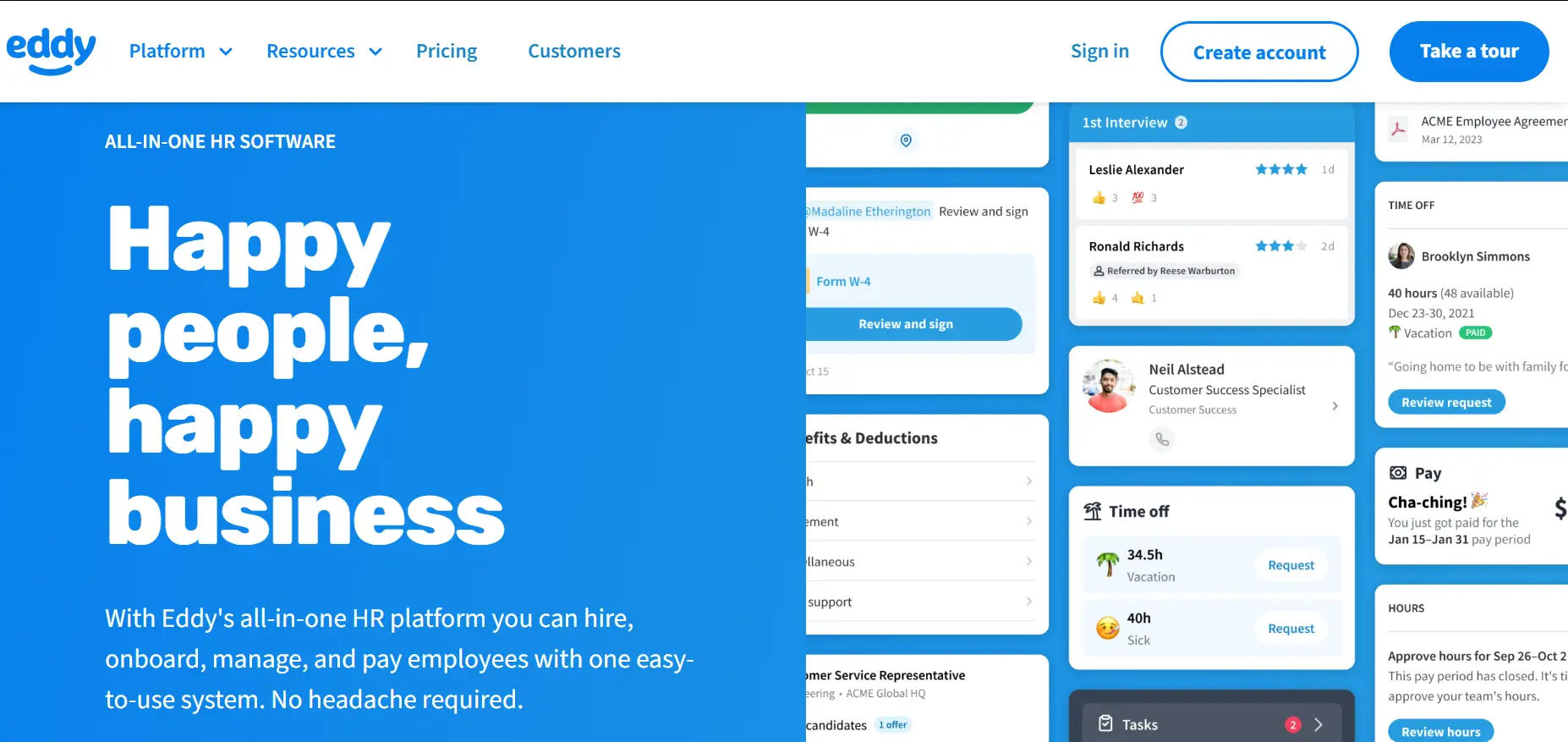
EddyHR is an all-in-one HR suite built for small and midsize businesses. It keeps onboarding simple with customizable new-hire packets and e-signatures, giving budget-conscious teams a low-cost way to stay compliant without added complexity.
Highlights: E-signatures, new hire packets, task automation.
- Simplifies onboarding with customizable new-hire packets.
- Built for small businesses that want simple, low-cost compliance.
- Keeps paperwork and task management in one place.
Why AI-Powered Onboarding is the Future
Traditional onboarding tools track tasks and send reminders. They react to problems after they happen.
AI-powered onboarding works differently. It’s proactive:
- Predicts delays — flags pending approvals or missing training before they become blockers.
- Personalizes the journey — a sales hire gets CRM training, an engineer gets technical setup, each path fits the role.
- Automates reminders — nudges managers, IT, and new hires automatically, so nothing slips.
- Delivers data-driven insights — shows HR which steps drive the best retention and engagement.
McKinsey reports that companies using AI in HR can improve efficiency by 30–50%. That means faster onboarding, fewer errors, and more engaged employees from day one.
The best AI-powered onboarding software isn’t just about automation. It’s about building a smarter, more human experience that scales as your company grows.
Conclusion
The way new hires see your business can be completely transformed by choosing the best employee onboarding software. Creating a smooth, welcoming experience that establishes rapport and trust right away is more important than simply automating forms or checklists.
With the right tools in place, HR teams spend less time on manual tasks and more time on what matters: people. Ready to reinvent onboarding? Schedule a demo now to see how the best employee onboarding software can make every first day count.
Not sure which onboarding tool actually fits your team size?
Want to see how Employee Onboarding 365 fits your Microsoft 365 setup?
Frequently Asked Questions
What is the best employee onboarding software for Microsoft 365 users?
Employee Onboarding 365 is built specifically for Microsoft 365 and Teams, so it fits directly into tools your team already uses.
How does onboarding software improve retention?
It removes friction from a new hire’s first weeks through automation, pre-boarding, and personalized workflows, which helps employees feel prepared and engaged early on.
Is onboarding software useful for remote teams?
Yes. Cloud-based tools let remote and hybrid employees complete forms, training, and communication from anywhere
What should I look for in AI-powered onboarding software?
Look for delay prediction, personalized workflows, automated reminders, and analytics that show what’s driving retention.


_JiluXJRGNl.svg)























