

Expense Analysis Explained: Important Metrics to Measure in Dashboard

- Expense analysis is the practice of reviewing business spending to understand where money is going, reduce unnecessary expenses, and improve overall financial control.
- It involves organising expenses into categories such as operating costs, payroll, travel, or inventory so you can identify areas where spending can be reduced.
- Measuring important business metrics, including profit margins, employee efficiency, and the return on marketing investments, helps you understand whether your expenses are delivering value.
- Using expense management software automates data collection and reporting, reduces manual work, minimises errors, and provides up-to-date insights for faster financial decisions.
Managing business expenses can be difficult when spending is not properly tracked. Uncontrolled costs reduce profits, make budgeting harder, and increase the risk of mistakes in tax and compliance reporting.
Expense analysis is the process of reviewing to understand where expense is being spent. It helps identify unnecessary costs, improve budget planning, support tax compliance, and ensure company funds are used wisely.
By regularly analysing expenses, businesses gain a clear picture of their spending patterns. This makes it easier to control costs, improve cash flow, plan future budgets, and make better financial decisions that support long-term growth.
What Is Expense Analysis?
Expense analysis is the process of reviewing your business expenses to understand where your money is being spent and whether those costs are helping your business grow. It gives you a clear picture of your spending habits, helping you identify unnecessary expenses, manage budgets, and make better financial decisions.
Benefits of Expense Analysis
- Reduce unnecessary costs: Find areas where your business is overspending and cut avoidable expenses.
- Increase profitability: Review spending alongside business performance to improve profit margins and focus on high-value activities.
- Make informed decisions: Use spending insights to create accurate budgets, plan investments, and allocate resources more effectively.
- Track expenses automatically: Automate expense collection and reporting to save time, reduce manual errors, and access real-time financial data.
Although they are closely related, expense reporting and expense analysis are not the same. Expense reporting records and organises business expenses, while expense analysis uses that information to evaluate spending patterns.
A study by GBTA found that the average cost of processing an expense report for a single-night hotel stay is $58, and it takes approximately 20 minutes to complete.
Key Components of Expense Analysis
A good expense analysis starts with organised financial data and turns it into meaningful insights. By collecting accurate information, grouping expenses correctly, and reviewing spending trends, businesses can understand where money is being spent.
- Collect complete expense data: Gather expense information from all business sources, including employee reimbursements, corporate cards, invoices, subscriptions, travel expenses, and vendor payments. Accurate data is the foundation of reliable analysis.
- Organise expenses into clear categories: Group expenses into consistent categories such as travel, software, office supplies, marketing, payroll, or utilities. Proper categorisation makes it easier to compare spending across teams, projects, and reporting periods.
- Identify spending patterns: Review expense records regularly to spot recurring costs, seasonal spending, and unusual increases. Recognising these patterns helps businesses understand where their money is going.
- Analyse spending trends over time: Compare expenses across weeks, months, or years to identify long-term trends. This helps distinguish temporary increases from ongoing cost issues that require attention.
- Evaluate business value: Compare expenses with business outcomes to determine whether spending is delivering the expected return. This helps prioritise investments and eliminate costs that provide little value.
What Are the Risks of Skipping Regular Expense Analysis?
Ignoring regular expense analysis can lead to financial problems that affect both daily operations and long-term business growth. Without a clear understanding of spending, it becomes harder to control costs, plan budgets, and make informed decisions.
- Poor cash flow management: When business expenses are not reviewed regularly, unnecessary spending can go unnoticed. Over time, this reduces available cash, creates budget gaps, and makes it harder to cover day-to-day operating costs.
- Higher operating costs: Without analysing expenses, duplicate purchases, unused subscriptions, and inefficient spending habits can continue unchecked. These unnecessary costs gradually reduce overall profitability.
- Compliance challenges: Missing receipts, incorrect expense records, or poor documentation can lead to mistakes in tax filings and financial reporting. This increases the risk of audits, penalties, and regulatory issues.
- Limited financial visibility: Without a clear understanding of where money is being spent, it becomes difficult to create accurate budgets, forecast future expenses, or make informed business and investment decisions.
- Missed cost-saving opportunities: Regular expense analysis helps identify areas where costs can be reduced or spending can be optimized. Without it, businesses may continue paying for inefficient processes, overpriced vendors, or services.
Regular expense analysis gives businesses the visibility needed to control spending, improve financial planning, and make smarter decisions that support sustainable growth.
Tip: Track your top five expense categories every month. Focusing on the areas where your business spends the most often reveals the biggest opportunities to reduce costs.
Types of Expenses to Analyse & Audit
| Expense Type | What It Is | Why It Matters | Examples |
| Operating Expenses (OPEX) | Day-to-day costs required to keep the business running. | Helps identify routine expenses that can be controlled or optimized. | Rent, utilities, software subscriptions, travel, office supplies |
| Fixed Expenses | Costs that remain the same regardless of business activity. | Makes budgeting and financial forecasting more predictable. | Office rent, employee salaries, insurance premiums |
| Variable Expenses | Costs that change based on production, sales, or business activity. | Helps manage spending during periods of business growth or slowdown. | Shipping costs, sales commissions, contractor fees, raw materials |
| Direct Expenses | Costs directly related to producing a product or delivering a service. | Shows the true cost of generating revenue and affects profit margins. | Raw materials, manufacturing labour, project-specific software |
| Indirect Expenses | Costs that support business operations but are not linked to a specific product or service. | Helps allocate overhead costs and improve operational efficiency. | IT support, office supplies, HR expenses, utilities |
Why Expense Analysis Matters for Your Business?
Expense analysis is more than a way to reduce costs. It helps businesses understand how money is being spent and whether those expenses contribute to growth. Over time, this leads to stronger profitability, healthier cash flow, and greater confidence in financial planning.
Financial Benefits
Regular expense analysis helps businesses identify unnecessary spending before it affects profitability. By reviewing expense data, finance teams can eliminate duplicate purchases, negotiate better supplier contracts, optimise recurring costs, and ensure budgets are being followed. Even small improvements across multiple expense categories can result in significant annual savings.
Supports data-driven decision-making
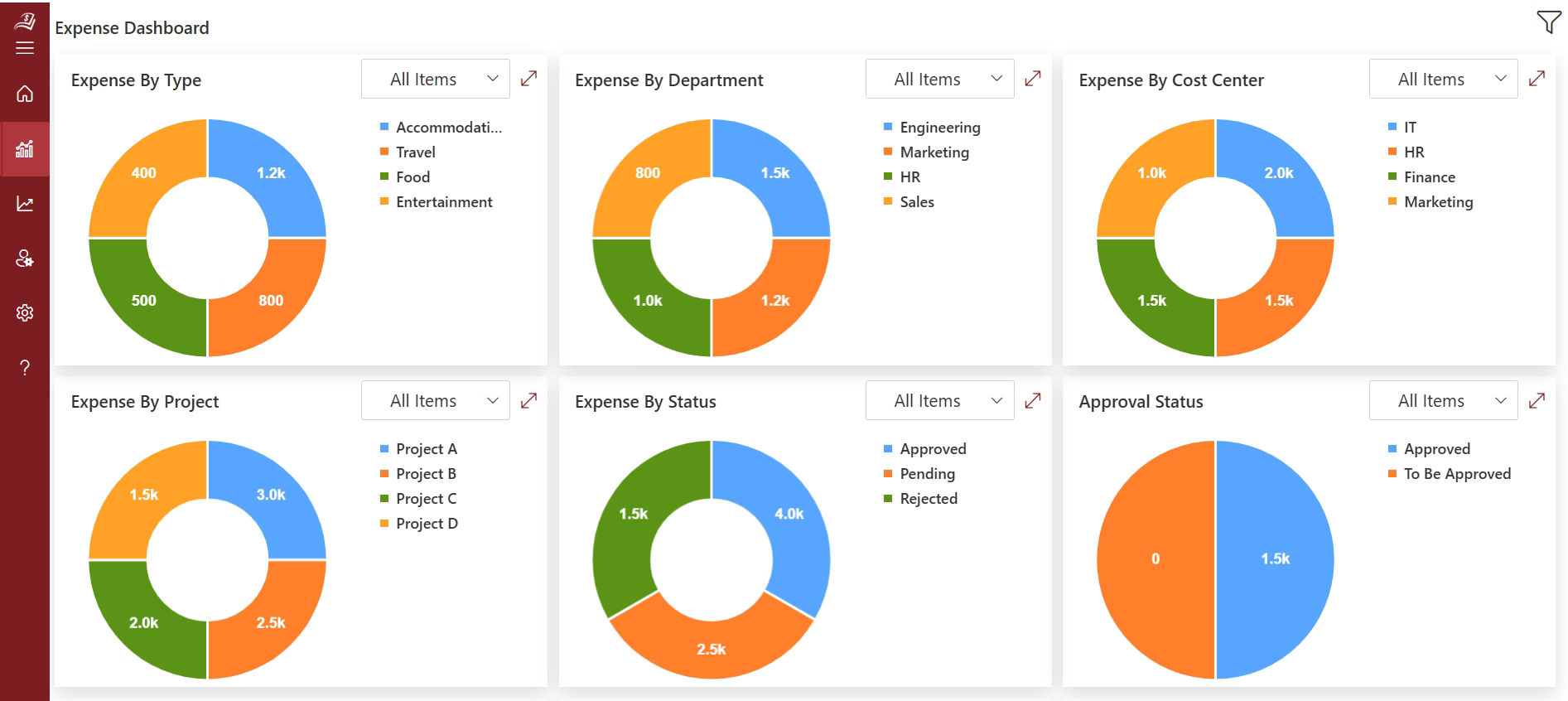
Accurate expense data gives business leaders a clear understanding of where company funds are being spent. Instead of making decisions based on assumptions, they can use real financial insights to set budgets, prioritise investments, allocate resources, and plan future growth with greater confidence.
Improves operational efficiency
Regular expense analysis helps uncover duplicate purchases, unnecessary subscriptions, inefficient workflows, and underutilised resources. Identifying these issues allows businesses to simplify processes, eliminate waste, and ensure every expense contributes to business objectives.
Strengthens competitive advantage
Businesses that effectively manage expenses have more financial flexibility to invest in product development, technology, employee training, or customer experience. Lower operating costs also make it easier to remain competitive during market changes without sacrificing profitability. This allows businesses to respond faster to new opportunities while maintaining healthy profit margins.
Reduces financial and compliance risks
Reviewing expenses on a regular basis makes it easier to identify unusual transactions, duplicate payments, policy violations, or missing documentation. Early detection helps prevent financial losses, supports accurate tax reporting, and reduces the risk of audits. It also helps businesses maintain accurate financial records and stay compliant with internal policies.
Encourages accountability across departments
When departments have clear visibility into their budgets and spending, managers become more responsible for controlling costs. Regular reporting promotes financial discipline, improves collaboration with finance teams, and ensures business resources are used effectively. Greater accountability also encourages teams to make more informed purchasing decisions.
Time-Consuming Corporate Card Reconciliation
Tracking the right financial metrics helps you understand how efficiently your business is spending money and whether those expenses are contributing to growth. By monitoring these indicators regularly, you can identify cost-saving opportunities, improve budgeting, and make more informed financial decisions.
- Operating Expense Ratio (OER): Measures operating expenses as a percentage of revenue, helping you understand how efficiently your business manages its day-to-day costs.
- Expense-to-Revenue Ratio: Compares total business expenses with total revenue to evaluate whether spending remains sustainable as the business grows.
- Gross Profit Margin: Shows how much revenue remains after covering direct costs, making it easier to assess product or service profitability.
- Cost Per Employee: Calculates the average business expense associated with each employee, helping organisations evaluate workforce-related spending and improve resource planning.
- Vendor Spend: Tracks how much is spent with individual suppliers, making it easier to identify opportunities for contract negotiations, vendor consolidation, or cost reductions.
- Budget Variance: Compares actual expenses with planned budgets to identify overspending, underspending, and areas that require financial adjustments.
- Expense Growth Rate: Measures how business expenses change over time, helping finance teams identify rising costs, seasonal spending patterns, and long-term expense trends.
How to Perform Expense Analysis: A Step-by-Step Process?
Conducting an expense analysis doesn’t have to be complicated. By following a structured process, businesses can gain a clear understanding of their spending.
Step 1: Build a Complete Expense Record
The first step is to create a single view of all business spending. Combine expense information from bank accounts, corporate cards, employee reimbursements, invoices, and supplier payments. Having complete and accurate data ensures that no significant expenses are overlooked during the analysis.
Step 2: Group Similar Expenses Together
Next, organise every transaction into logical expense categories. Grouping similar costs such as payroll, marketing, travel, office operations, technology, or utilities makes spending easier to review and compare. A well-structured categorisation system also improves reporting accuracy and simplifies future financial reviews.
Step 3: Evaluate Spending Behaviour
Once expenses are organised, examine how your business spends over time. Identify recurring payments, high-cost categories, seasonal fluctuations, and unexpected increases in spending. This step helps distinguish normal business expenses from costs that may require closer attention or corrective action.
Step 4: Measure Financial Performance
Review expense data alongside budgets, revenue, and business objectives to determine whether spending is producing the desired outcomes. Comparing current performance with previous periods helps identify areas where costs are increasing faster.
Step 5: Turn Insights into Improvements
The final step is to use your findings to strengthen financial performance. Prioritise opportunities that deliver the greatest business value, whether that means reducing avoidable expenses, improving approval processes or investing in automation. Reviewing progress regularly ensures that expense analysis becomes an ongoing practice rather than a one-time exercise.
The Best Expense Policies Are Built on Data, Not Assumptions
Expense 365 brings every business expense into a single dashboard, giving your finance team the insights they need to refine policies, control spending, and stay audit-ready.
Best Practices for Expense Analysis
Following a consistent approach helps businesses improve financial visibility, identify spending trends, and make more informed budgeting and cost management decisions.
- Don’t analyse expenses in isolation: Compare expenses with revenue, budgets, and business outcomes to understand whether spending is creating value.
- Focus on recurring costs first: Small monthly subscriptions, software licenses, and vendor contracts often account for significant annual spending and are frequently overlooked.
- Review exceptions, not just averages: Large one-time purchases, duplicate reimbursements, and unusual spending patterns often reveal issues that standard reports fail to highlight.
- Measure spending trends over time: A single month’s data rarely tells the full story. Comparing expenses across months or quarters helps identify gradual increases before they become major cost problems.
- Separate controllable and non-controllable expenses: Focus cost-reduction efforts on discretionary spending rather than essential operating expenses that directly support business operations.
- Use department-level analysis: Breaking down expenses by department, project, or cost centre makes it easier to identify overspending and improve accountability.
- Turn insights into policy improvements: Expense analysis should lead to updated approval workflows, spending limits, and reimbursement policies, not just reports that sit unused.
- Leverage real-time dashboards: Interactive dashboards provide up-to-date expense insights, enabling finance teams to monitor spending, evaluate policies, and make informed decisions more efficiently.
Expense 365: Smarter Way to Analyse Expenses
Understanding business spending shouldn’t require hours of manual reporting or complex spreadsheets. Expense 365 simplifies expense analysis by automatically capturing, organizing, and visualizing expense data in one centralized platform. Finance teams gain real-time visibility into business spending, making it easier to identify trends, monitor budgets, and improve financial decision-making.
Because Expense 365 is built for Microsoft 365, your expense data stays within your existing Microsoft environment while integrating seamlessly with SharePoint, Microsoft Teams, Outlook, and Power BI. This gives your organization a secure, centralized platform for managing expenses without introducing additional systems or manual data consolidation.
Whether you’re looking to improve budgeting, strengthen expense policies, or gain better financial visibility, Expense 365 provides the insights and reporting tools needed to make faster, data-driven decisions while maintaining complete control over business spending.
Conclusion
Effective expense analysis helps businesses control costs, improve budgeting, and make smarter financial decisions. By turning expense data into meaningful insights, finance teams can identify spending trends, strengthen policies, and maintain better financial control.
With Expense 365, you can automate expense tracking, monitor spending through real-time dashboards, and gain the visibility needed to make confident, data-driven decisions—all within Microsoft 365.
Frequently Asked Questions
Can expense analysis help identify unnecessary business spending?
Yes. Expense analysis helps identify duplicate expenses, unused subscriptions, policy violations, and recurring costs that may be increasing your operating expenses. With regular analysis, businesses can uncover cost-saving opportunities and improve budget control.
Do I need expense management software to perform expense analysis?
While spreadsheets can handle basic analysis, they become difficult to manage as expense volumes grow. Expense management software automates data collection, categorization, reporting, and dashboard creation, providing more accurate and real-time financial insights.
How does Expense 365 help finance teams analyze expenses?
Expense 365 automatically captures and categorizes expenses, then displays spending trends through interactive dashboards and reports. Finance teams can analyze expenses by department, employee, project, category, or cost center without manually consolidating data.
Can Expense 365 help improve our expense policies?
Yes, By providing complete visibility into spending patterns, approval workflows, and policy exceptions, Expense 365 helps finance teams identify areas where expense policies can be updated to improve compliance and control business spending.
What insights can I get from the Expense 365 dashboard?
It provides real-time insights into expense categories, department-wise spending, reimbursement status, budget utilization, policy violations, vendor expenses, and overall spending trends. These insights help finance teams make faster, data-driven decisions and maintain better financial control.


_JiluXJRGNl.svg)























