


From the very beginning, managing tasks and having a systematic team are recognized barriers to businesses. The situation being characterized by missed timelines, misplaced documents, and disorganized routines could make the whole operation slower and result in giving stress to both managers and workers. In business today, relying on manual methods or separate tools no longer work. A company must have a dependable SharePoint Task Management tool if it wants to be among the fast and efficient ones.
Managing tasks does not have to be hard. Missed deadlines, lost files, and scattered tools slow teams down. A SharePoint Task Management tool keeps everything in one place, helping teams stay organized, clear, and focused.
With built-in Microsoft 365 integration, SharePoint reduces manual work and improves collaboration. Teams spend less time managing tasks and more time on meaningful, high-value work.
The SharePoint Task Management tool is believed to be one of the best Microsoft task management solutions as it merges simplicity, strength, and integration with Microsoft 365. Along with it, companies can mechanize their everyday tasks, monitor their changeover continuously, and make sure that every worker is well informed at the same time. The implementation of a strong task management system can lead to lower rates of error, more time saved, increased productivity and consequently, the team could concentrate on preparing the organization for the future instead of doing the repetitive tasks.
What Is SharePoint Task Management?
SharePoint task management is an organization, assignment, and tracking system within Microsoft SharePoint that is designed to manage tasks in an efficient manner. In contrast to task software, SharePoint is integrated with the Microsoft 365 ecosystem which permits your team to access the tasks right from Outlook, Teams, or OneDrive. The software gives the opportunity for the managers to:
- Delegate jobs to personnel
- Establish timelines and assign ranks to tasks
- Observe work advancement instantly
- Create reports and provide insights
New generation task management software is designed to facilitate the entire process. SharePoint is a highlight due to its full task management system, gathering your entire workflow in one spot. With the help of AI, it can even recommend the most appropriate team member for a task according to their skills and workload.
As per Microsoft’s research, more than 78% of companies that use SharePoint for collaboration see it as a factor that enhances task visibility and team efficiency. Such a figure clearly indicates the trend that more organizations are opting for integrated solutions rather than sticking to the separate applications.
Why a Modern Task Management System is Essential for Businesses
By 2026, businesses will not be able to afford slow or manual task tracking. The use of traditional methods such as spreadsheets, emails, or paper-based checklists is fraught with errors and inefficiency. The employees would, in fact, lose a lot of time looking for information or double-checking deadlines, causing a decrease in productivity and an increase in stress.
The modern task management system reacts to these issues by giving visibility of every task in real-time. Managers can easily check who is responsible for which task, keep track of deadlines, and reassign tasks promptly if necessary. Teams get the advantage of Clear instructions, reminders, and alerts that help prevent the occurrence of missed deadlines.
Imagine the relief of never worrying about lost tasks or forgotten assignments. Using SharePoint task management allows employees to focus on doing their best work, while managers can concentrate on strategy rather than constant follow-ups.
Research shows that companies using advanced task management software experience up to a 30% increase in team productivity . With skilled professionals in high demand, a slow workflow can result in losing top talent to competitors.
Key Features of SharePoint Task Management Tool
The SharePoint Task Management solution features an extensive variety of options that aim at making collaboration and productivity better to the maximum:
1. Task Assignment and Tracking:
Tasks can be assigned to particular workers, priorities be set, and completion statuses be tracked in real-time.
2. Integration with Microsoft 365:
Seamlessly integrates with Teams, Outlook, and OneDrive to deliver a single workflow.
3. Automation:
Automates periodic tasks, sends alerts, and performs updates on task status without the need for manual intervention.
4. Reporting & Analytics:
Reveals team performance, task completion rates, and bottlenecks thus allowing data-driven decisions.
5. Collaboration Tools:
The team can comment, share documents, and communicate within tasks which leads to improved cooperation.
According to a marketing team from IT that used the SharePoint task management system, the number of missed deadlines was reduced by 40% and the speed of project completion increased by 35%. With the help of these features, the tool assures that the teams are organized, effective, and engaged in high-value work instead of repetitive tasks.
SharePoint vs Other Task Management Software
Many companies consider tools like Task Management 365, Trello, Asana, or Monday.com for task management. While these tools are effective, SharePoint offers several advantages:
Feature | SharePoint | Other Tools |
Microsoft 365 Integration | Full Integration | Limited |
Data Security | Enterprise-grade | Varies |
Custom Workflows | Fully Customizable | Limited |
AI-driven Insights | Available | Rare |
Choosing the best Microsoft task management tool like SharePoint ensures smooth adoption, strong integration, and secure data handling, which other standalone task management software may lack.
Benefits of SharePoint Task Management Tool
1. Hire Smart:
With a proper filing system for all the templates, you can easily assign and check to ensure that the team is working at its capacity. This will eliminate the chance of a project delay or malfunction.
2. Team Communication Improvement:
Communication and sharing of files via a centralized system leads to the cooperation of the staff members and promotion of clarity in the team.
3. Decisions Based on Data:
The availability of insights and analytics makes it possible to get informed and therefore more intelligent decisions.
4. Time and Cost Savings:
The implementation of automated workflows means less manual effort and hence reduction of hours saved through performing repetitive tasks.
5. Improved Candidate and Employee Experience:
Employees go through easily manageable processes and hence experience very little stress and utmost productivity.
How to Implement SharePoint Task Management Tool
1. Set Up Tasks:
In the beginning, make sure that you get a good grip of the projects and decompose them into small, doable tasks. The right people should be assigned to do the tasks with the help of sufficient time, and priority should be given to the task to let the workers know the first thing to do. Careful organization helps track tasks and keeps everyone responsible
2. Integrate Apps:
A perfect combination of SharePoint with Microsoft Teams, Outlook, and OneDrive will result in a very smooth workflow. Integrating these tools allows your staff to access their tasks, send files and communicate without moving from platform to platform, and keeping everything sorted in one location.
3. Customize Workflows:
No two teams are alike – therefore, the configuration of your task pipelines should follow the process of your team. Incorporate the automatic approval, notification, and recurring task setup to cut down the manual labor. Custom workflows will be easier for teams to use and follow the set standards.
4. Train Team Members:
The most amazing tool is useless unless your personnel are capable of operating it. Give easy, clear instruction along with training sessions to make sure all are aware of the ways to set up tasks, monitor, and share in SharePoint. Properly trained users will be the first to pick up the tool and the most efficient ones to use it.
5. Monitor and Adjust:
SharePoint’s analytics and reporting functionalities allow you to see the tasks done, spot the delays, and quantify the performance of your team. Make it a habit to look at this information usually and change your workflows accordingly to get better efficiency and keep your team active.
If the above-mentioned steps are adhered to, your team will take full advantage of the SharePoint Task Management tool and will be able to stay organized, save time, and focus on the work that truly makes a difference.
Best 5 SharePoint Task Management Tools in 2026
In 2026, choosing the right task management software that works well with SharePoint can make a huge difference in team productivity. Here are the top 5 tools businesses are using to streamline workflows and get more done:
1. Task Management 365
Overview: Task Management 365 designed for Microsoft 365 users, completely integrated with SharePoint.
Key Features:
- Tasks can be assigned and followed up across different projects
- Set-up of reminders and approvals is automated
- Up-to-date reporting and dashboards
Benefits: Teams can time-saving, be well organized and have an easy and clear view of the project progress.
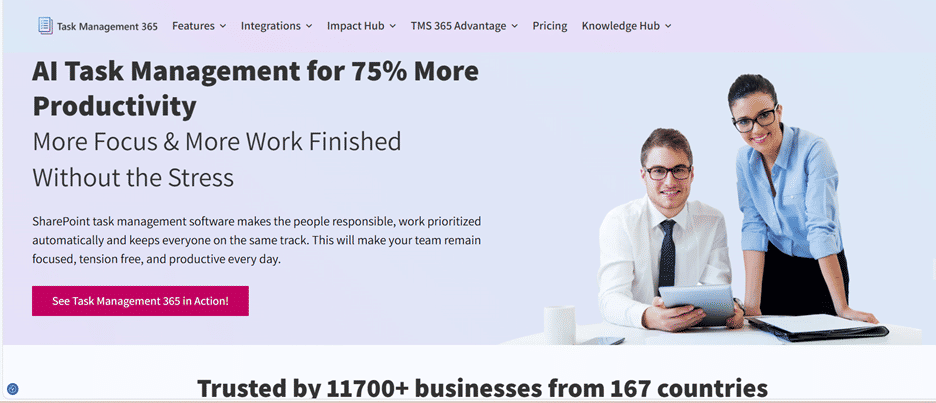
Why it is Wonderful: It is close integration with SharePoint will make it perfect for the companies that are already using Microsoft 365.
2. ClickUp
Overview: A flexible task management system that can be used by teams of any size.
Key Features:
- Customizable workflows and dashboards
- Prioritization and tracking of tasks
- Possibility to interact through comments and file sharing
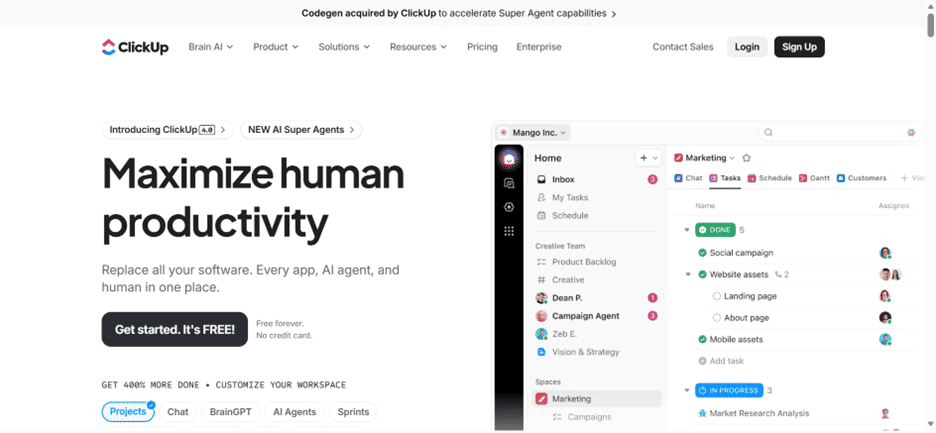
Benefits: Increases the output of the team and maintains the alignment of everyone with the goals.
Why it is Great: ClickUp’s integration with SharePoint enables the centralization of project data and at the same time allows the flexibility of different working styles.
3. Asana
Overview: A popular task management tool that makes planning and execution easier.
Key Features:
- Boards and timeline views for projects
- Automated task assignment and notification
- Integration with Microsoft Teams and SharePoint
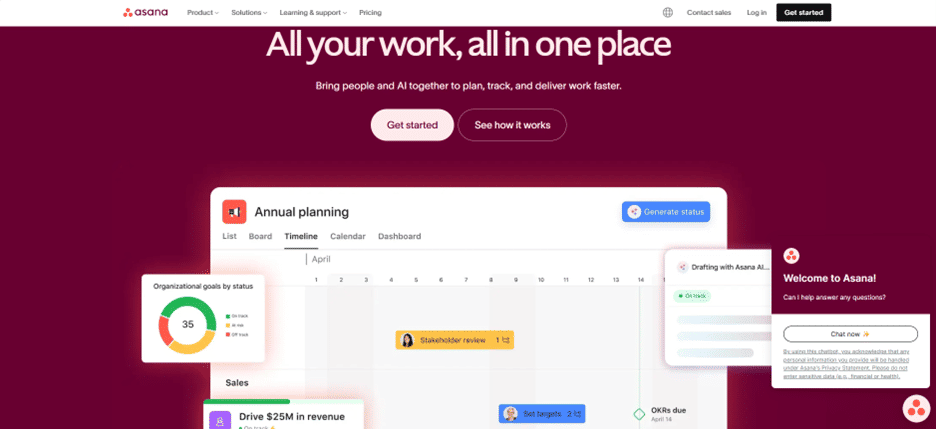
Benefits: Guaranteed deadlines and smooth communication within the team.
Why it is Great: The visual interface of Asana and the integration with SharePoint make it easier for teams to monitor tasks effectively.
4. Trello
Overview: A user-friendly task management tool based on boards, lists, and cards.
Key Features:
- Drag-and-drop task boards
- Checklists and progress tracking
- Power-Ups for SharePoint and other apps
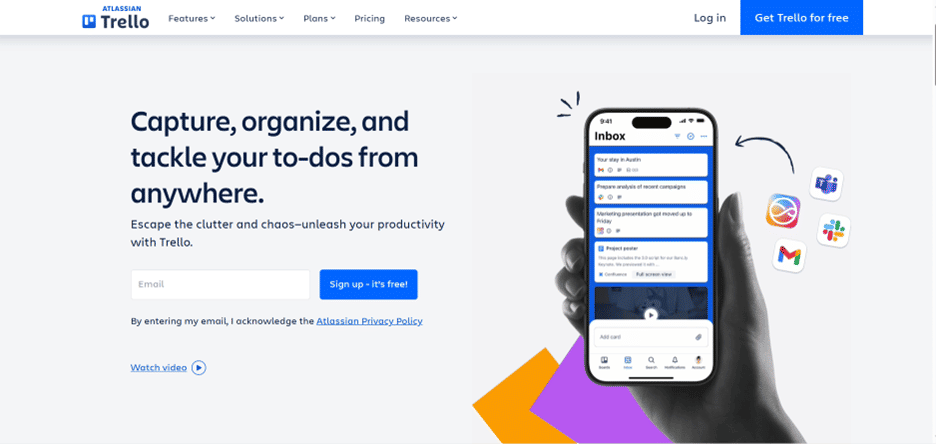
Benefits: Makes task management simple and highly visual for teams.
Why it is Great: Trello’s integration with SharePoint allows files and tasks to sync effortlessly, making collaboration easier.
5. Monday.com
Overview: A flexible platform for task and project management across departments.
Key Features:
- Custom workflows and task automations
- Real-time updates and dashboards
- SharePoint and Microsoft 365 integration
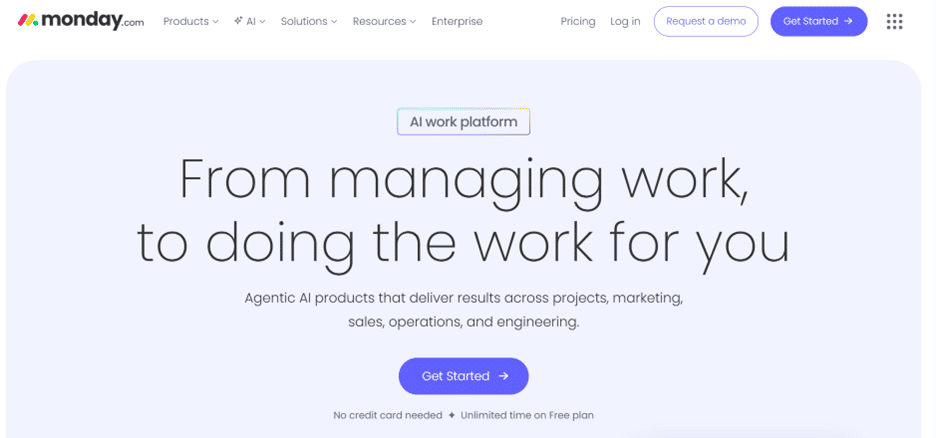
Benefits: Streamlines project management, saves time, and improves team efficiency.
Why it is Great: Monday.com’s combination of customization and SharePoint integration ensures teams stay productive and organized.
Using any of these SharePoint-compatible task management tools in 2026 helps businesses reduce manual work, stay organized, and focus on high-value tasks.
Comparison Table:
| Tool Name | Key Strengths / Use Case | Benefit for SharePoint Task Management System |
| Task Management 365 | Deep Microsoft 365 integration | Seamless integration, efficient project tracking |
| ClickUp | Flexible workflows and customization | Adaptable for different teams and work styles |
| Asana | Structured project planning and timelines | Keeps tasks organized and deadlines clear |
| Trello | Simple, visual task boards | Easy-to-use interface, quick adoption |
| Monday.com | Custom workflows and automations | Streamlines projects, improves team collaboration |
Real-Life Success Stories
Case 1: A medium-sized IT organization made the decision to automatize task assignments with the help of SharePoint.
Result: A decrease in time to the finishing point of 25%, and an increase in employee satisfaction.
Case 2: A marketing agency made the decision to combine SharePoint task management with Teams.
Result: Improved communication and project delivery in less time, which led to a 30% reduction in client complaints.
Case 3: A retail chain decided to use SharePoint for the management of daily operational tasks.
Result: A total of 90% of tasks were done on time, which increased operational efficiency dramatically.
These instances highlight the fact that a SharePoint task management tool leads to quantifiable advantages and enhances the morale of the team as well.
Conclusion
In 2026 most probably, if not certainly, relying on manual task management will be an outdated technique. The SharePoint Task Management tool brings in the pluses of faster, smarter and clearer processes, which are aligning with the companies need to be competitive while reducing the workload for employees. SharePoint integrates tasks, automates workflows, and drives insights based on data, guaranteeing that teams are well organized, productive, and, therefore, result-oriented.
Book a demo now to experience how the SharePoint Task Management tool can improve your team’s workflow, productivity, and overall impact.
Join Our Creative Community
Frequently Asked Questions
Can SharePoint replace other task management software?
Absolutely! SharePoint can fully replace standalone task management tools while offering deeper integration with Microsoft 365. This means your team can manage projects, track progress, and collaborate easily all in one platform.
Is SharePoint easy to learn for non-technical users?
Yes! SharePoint is designed with simplicity and usability in mind. Even team members with minimal technical experience can navigate tasks, update projects, and collaborate without frustration. Quick adoption means your team spends less time learning and more time getting work done.
Can SharePoint scale for large teams?
Definitely. SharePoint is built to handle teams of any size, from small startups to large enterprises. Its flexible workflows and powerful integrations ensure that even complex projects stay organized and on track as your team grows.
How secure is my data in SharePoint?
Your data is highly secure. Microsoft SharePoint uses enterprise-grade security and compliance standards, giving you peace of mind that sensitive project information and team data are protected.


_JiluXJRGNl.svg)























