

Online Performance Review: Process, Examples, and Best Tools

Online performance reviews replace manual methods with a structured digital system where goals, feedback, and evaluations are managed in one place, making the process faster and more consistent.
By following a simple process and using the right tools, organizations can improve feedback quality, reduce delays, and support continuous employee growth.
This is where online performance reviews make a real difference. By moving the entire review process to a structured digital system, organizations can simplify evaluations, improve feedback quality, and ensure consistency across teams.
In this blog, we’ll explore what online performance reviews are, how they work, and how organizations can implement them effectively to improve employee performance and overall productivity.
What is an Online Performance Review?
An online performance review is a modern approach to evaluating employee performance using digital tools instead of manual methods. Rather than relying on spreadsheets, emails, or scattered feedback, everything is managed within a structured system where goals, feedback, and progress are tracked in one place.
It allows managers and employees to collaborate more effectively by setting clear expectations, sharing continuous feedback, and reviewing performance with better context. Instead of being a one-time activity, the process becomes more ongoing and meaningful.
For organizations, this means fewer delays, better visibility, and a smoother review experience especially when managing remote or growing teams.
Benefits of Online Performance Reviews
Online performance reviews bring structure, clarity, and consistency to the way organizations evaluate employee performance. By replacing manual processes with a centralized system, businesses can make reviews more efficient, transparent, and meaningful for both managers and employees.
Here are the key benefits in detail:
Quicker Review Cycles
With automated workflows in place, tasks such as review scheduling, reminders, and approvals happen without constant follow-ups. This reduces delays and ensures that performance reviews are completed on time. As a result, feedback is delivered when it matters most, making it more relevant and actionable.
Greater Accuracy and Reliability
Manual processes often involve repetitive data entry, which increases the risk of errors. Online performance review systems store and manage all employee data in one place, ensuring that information is accurate, consistent, and easy to update. This leads to more reliable evaluations and better decision-making.
Improved Visibility and Transparency
One of the biggest advantages of online reviews is real-time visibility. Employees and managers can easily track goals, feedback, and progress without relying on scattered communication. This transparency helps build trust and ensures that everyone is aligned on expectations and performance outcomes.
Seamless Experience for Remote and Hybrid Teams
In today’s work environment, teams are often distributed across different locations. Online performance reviews make it easy to conduct evaluations regardless of where employees are based. Managers can provide feedback, review progress, and complete evaluations without any location barriers.
Consistent and Fair Evaluation Process
A structured digital system ensures that all employees are reviewed using the same criteria and workflows. This reduces bias and inconsistencies that can occur in manual processes. Standardization not only improves fairness but also helps organizations maintain compliance and clarity in their evaluation methods.
How to Conduct an Online Performance Review (Step-by-Step)
A well-defined online performance review process ensures that evaluations are not just completed, but actually add value to both employees and the organization. Instead of being a one-time activity, it should feel structured, transparent, and focused on growth.
Here’s a step-by-step approach to conducting an effective online performance review:
1. Set Clear Goals and Expectations
Start by defining what success looks like for each role. Goals should be specific, measurable, and aligned with team or business objectives.
When employees clearly understand what is expected of them, it becomes much easier to evaluate their performance fairly and accurately during the review process.
2. Collect Performance Data in One Place
Before starting the review, gather all relevant information such as goal progress, past feedback, and key achievements.
An online performance review system makes this easier by centralizing data, so managers don’t have to rely on scattered notes or memory. This leads to more informed and meaningful evaluations.
3. Encourage Employee Self-Assessment
Give employees the opportunity to reflect on their own performance. Self-assessments help them highlight accomplishments, share challenges, and express their perspective.
This step creates a more balanced review process and encourages employees to take ownership of their growth.
4. Provide Structured and Constructive Feedback
Managers should focus on giving clear, actionable feedback rather than general comments. Highlight strengths, identify areas of improvement, and provide examples wherever possible.
A structured approach ensures that feedback is useful, easy to understand, and focused on development rather than criticism.
5. Conduct a Meaningful Review Discussion
Once feedback is prepared, schedule a one-on-one discussion between the manager and employee. This conversation should be open, honest, and focused on growth.
Instead of just reviewing past performance, use this time to understand challenges, address concerns, and align on future expectations.
6. Set Future Goals and Development Plans
A performance review should not end with feedback. Use insights from the evaluation to define future goals and create a development plan.
This could include skill-building, training opportunities, or new responsibilities that help the employee grow within the organization.
7. Track Progress Continuously
The online performance review process should be ongoing, not limited to annual or quarterly cycles. Regular check-ins and progress tracking help ensure that employees stay aligned and continue improving over time.
Continuous tracking also makes future reviews easier, as all performance data is already documented and accessible.
Also Read:- 10 Best Online Employee Review Software for 2026
Online Performance Review Examples
Understanding how an online performance review works becomes much clearer when you look at real-world scenarios. Instead of relying only on theory, these examples show how different review methods are used to evaluate employee performance effectively within a structured system.
Goal-Based Performance Review
In this approach, employees are evaluated based on predefined goals and measurable outcomes. These goals are usually set at the beginning of a review cycle and aligned with team or organizational objectives.
Managers assess how effectively employees have achieved their targets, identify gaps, and provide feedback based on actual performance data. This method works well for tracking productivity and ensuring alignment with business priorities.
360-Degree Feedback Review
A 360-degree review collects feedback from multiple sources, including managers, peers, and sometimes cross-functional teams. This provides a more balanced and complete view of an employee’s performance.
By combining different perspectives, organizations can better understand strengths, collaboration skills, and areas that may not be visible in a traditional top-down review. This method is especially useful for leadership and team-based roles.
Self-Assessment Review
In a self-assessment review, employees evaluate their own performance by reflecting on their achievements, challenges, and areas for improvement.
This approach encourages employees to take ownership of their work and actively participate in the review process. It also helps managers understand the employee’s perspective, making the overall evaluation more meaningful and well-rounded.
Why These Examples Matter
Using different types of online performance reviews allows organizations to create a more flexible and comprehensive evaluation process. Instead of relying on a single method, combining these approaches leads to better insights, improved feedback quality, and more effective employee development.
Best Online Performance Review Software
Choosing the right online performance review software is essential for building a structured, efficient, and scalable performance management process. The right tool helps streamline evaluations, improve feedback quality, and align employee performance with business goals.
Here are some of the best online performance review tools to consider:
Performance 365
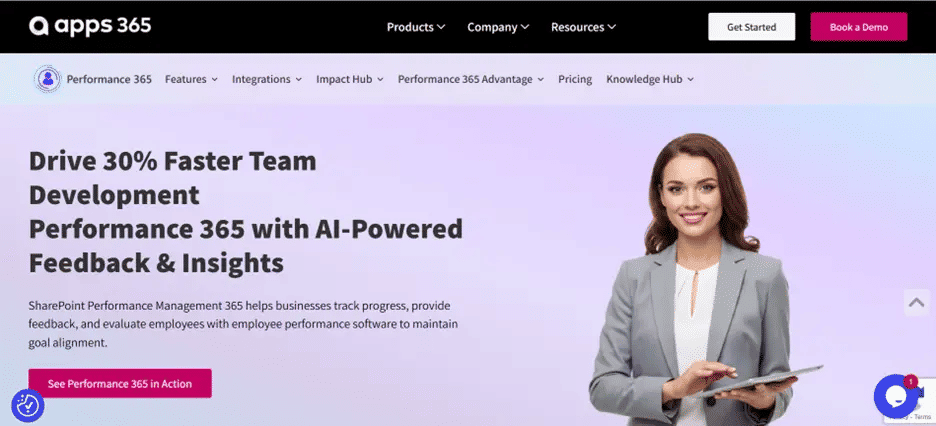
Performance 365 is designed to simplify the entire online performance review process by bringing goals, feedback, and evaluations into one centralized system. It helps organizations move away from manual tracking and create a more consistent and transparent review process.
Key Features:
- End-to-end performance review management
- Goal setting and real-time performance tracking
- Continuous feedback and structured review cycles
- Automated workflows, reminders, and approvals
- Centralized performance data and reporting
Why Choose Performance 365?
It offers a well-rounded solution that balances ease of use with structured workflows, making it suitable for organizations looking to improve both efficiency and consistency in performance reviews.
Lattice

Lattice focuses on continuous performance management and employee engagement, helping organizations move beyond traditional review cycles.
Key Features:
- Continuous feedback and one-on-one tracking
- Goal and OKR management
- Performance reviews with customizable cycles
- Employee engagement surveys and insights
- Analytics for performance trends
Why Choose Lattice?
It is ideal for organizations that want to build a strong feedback culture while tracking performance on an ongoing basis.
Leapsome
%20(1)_tgb9cZTgu.webp)
Leapsome combines performance reviews with learning and development, making it a strong choice for organizations focused on employee growth.
Key Features:
- Structured performance and appraisal cycles
- Learning and training integration
- Competency frameworks and skill tracking
- Continuous feedback and engagement tools
- Customizable review templates
Why Choose Leapsome?
It works well for companies that want to connect performance reviews with employee development and upskilling.
Zoho People
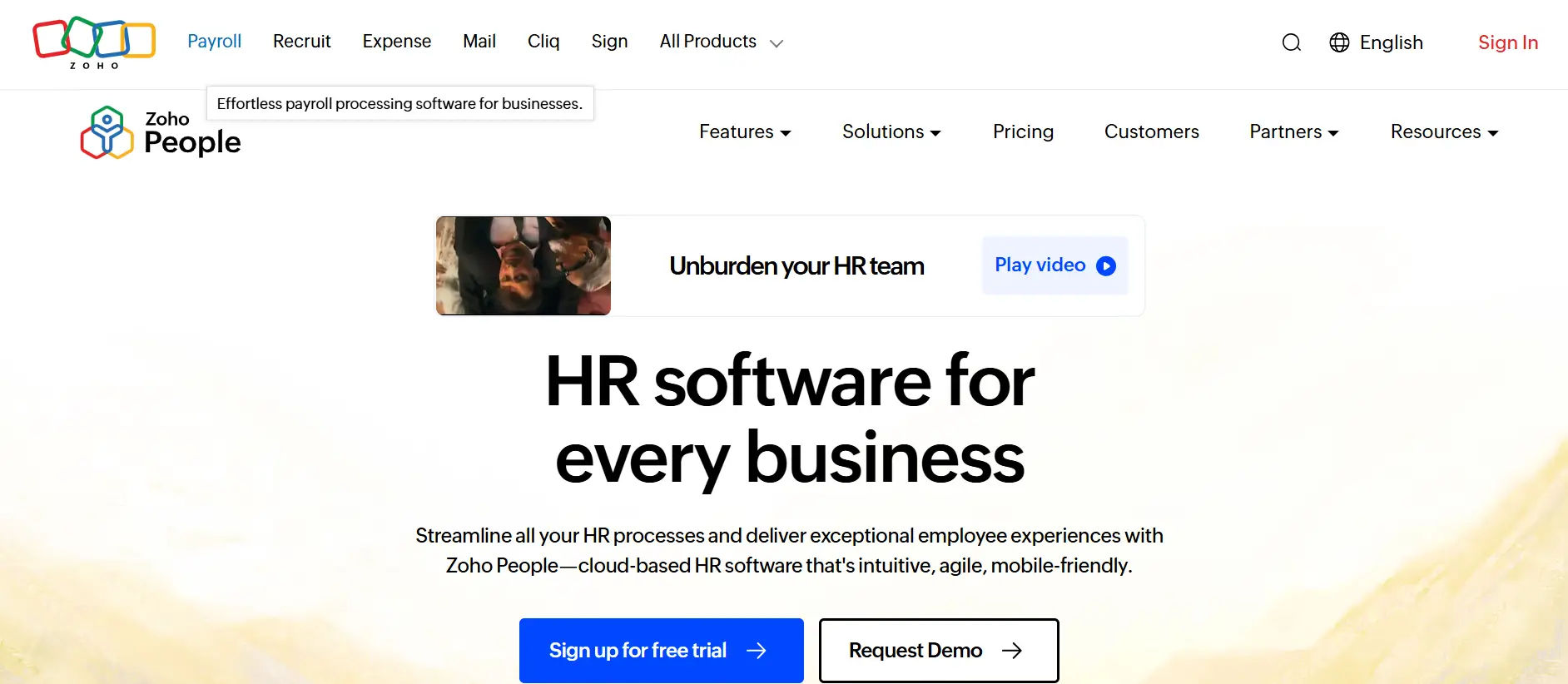
Zoho People offers a complete HR platform that includes performance management along with other HR functionalities, making it suitable for businesses looking for an all-in-one solution.
Key Features:
- Customizable performance appraisal workflows
- Goal setting and KPI tracking
- Employee database and document management
- Integration with payroll and HR modules
- Reporting and analytics tools
Why Choose Zoho People?
It is a good fit for organizations that want performance management integrated with broader HR operations.
Peoplebox
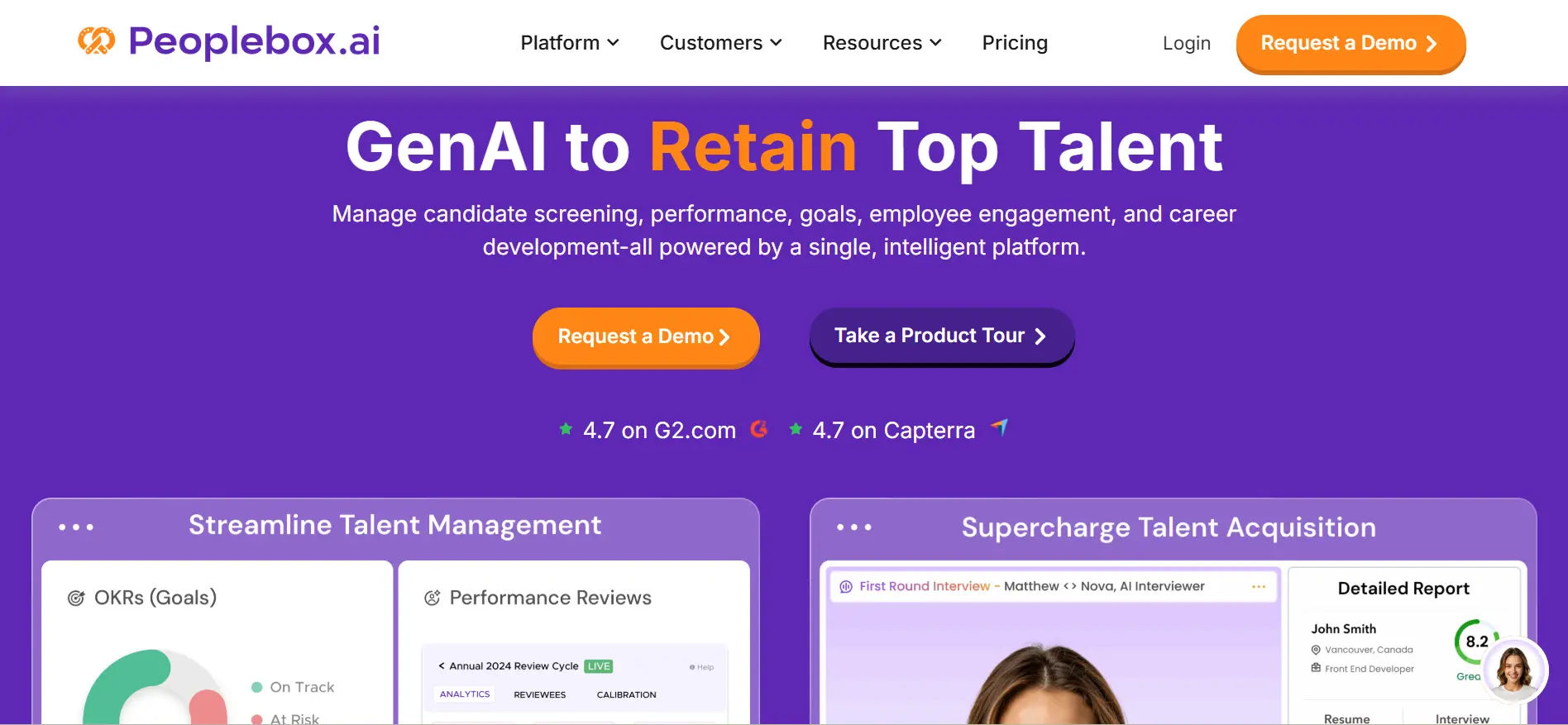
Peoplebox is designed for organizations that focus on aligning performance with business goals through OKRs and data-driven insights.
Key Features:
- OKR tracking and alignment
- Performance review and feedback workflows
- One-on-one meeting management
- Real-time dashboards and insights
- Integration with work tools like Slack and Teams
Why Choose Peoplebox?
It is best suited for teams that prioritize goal alignment, visibility, and data-driven decision-making.
Quick Comparison of Performance Review Tools
Tool | Best For | Key Strength |
Performance Management 365 | Structured performance reviews | Balanced and easy-to-manage system |
Lattice | Continuous feedback | Engagement and ongoing reviews |
Leapsome | Learning + performance | Growth and development focus |
Zoho People | All-in-one HR system | Integrated HR and performance |
Peoplebox | Goal-driven teams | OKR alignment and tracking |
Why This Process Works
When done right, an online performance review process creates a more transparent, consistent, and growth-focused environment. It shifts performance reviews from a routine task to a meaningful conversation that drives both employee development and business success.
Types of Performance Reviews
Organizations use different types of performance reviews depending on their goals, team structure, and feedback approach. Understanding these methods helps create a more balanced and effective online performance review process.
Here are the most commonly used types of performance reviews:
Review Type | Description |
Self Review | Employees evaluate their own performance by reflecting on achievements, challenges, and areas for improvement, encouraging ownership and self-awareness. |
Manager Review | Managers assess employee performance based on goals, productivity, and overall contribution, providing structured and actionable feedback. |
360-Degree Feedback | Feedback is collected from multiple stakeholders, including managers, peers, and sometimes cross-functional teams, offering a well-rounded performance view. |
Continuous Review | Performance is evaluated regularly through ongoing feedback and check-ins instead of relying only on periodic reviews, ensuring timely improvements. |
Why Using Multiple Review Types Matters
Relying on a single method may not provide a complete picture of employee performance. By combining different types of performance reviews, organizations can gain deeper insights, reduce bias, and create a more transparent and effective evaluation process.
How to Choose the Right Performance Review Software
Selecting the right performance review software is a crucial decision that directly impacts how effectively your organization manages employee evaluations. The ideal system should not only simplify the review process but also support long-term performance management and employee development.
Here are the key factors to consider when choosing an online performance review system:
Ease of Use for Employees and Managers
The software should be simple and intuitive for everyone using it. A complicated system can slow down adoption and create resistance among employees and managers. Look for a platform with a clean interface and minimal learning curve so that users can complete reviews, provide feedback, and track progress without confusion.
Automation of Repetitive Tasks
One of the main advantages of performance review software is reducing manual effort. The system should automate tasks such as review scheduling, reminders, approval workflows, and notifications. This ensures that reviews are completed on time without constant follow-ups, improving overall efficiency.
Flexibility and Customization
Every organization has its own performance review process. The software you choose should allow you to customize workflows, review cycles, rating systems, and feedback formats based on your specific requirements. This flexibility ensures that the system adapts to your process not the other way around.
Integration with Existing HR Systems
Performance reviews do not exist in isolation. They are closely connected to other HR functions such as employee data management, and learning systems. Choosing software that integrates seamlessly with your existing HR tools helps create a unified system and avoids data silos.
Real-Time Tracking and Reporting
Access to real-time performance data is essential for making informed decisions. The system should provide dashboards, reports, and insights that allow managers and HR teams to track progress, identify trends, and address issues proactively.
Conclusion
Online performance reviews have become essential for organizations that want a clear, consistent, and efficient way to evaluate employee performance. By moving away from manual methods and adopting a structured digital approach, businesses can improve feedback quality, reduce delays, and create a more transparent review process for both managers and employees.
When supported by the right tools and a well-defined process, online performance reviews go beyond routine evaluations and become a key driver of employee growth and productivity. Organizations that focus on continuous feedback, clear goals, and the right software will be better positioned to build stronger teams and achieve long-term success.
Ready to improve your performance review process? Book a demo today and get a 14-day free trial to see how a structured system can simplify evaluations and drive better results.
Join Our Creative Community
Frequently Asked Questions
What is online performance review software?
Online performance review software is a digital solution that helps organizations manage employee evaluations in a structured and efficient way. It allows teams to set goals, share feedback, and track performance within a centralized system, reducing the need for manual processes and scattered communication.
What are examples of performance reviews?
Performance reviews can take different forms depending on how organizations evaluate employees. Common examples include goal-based reviews that measure results, 360-degree feedback that gathers input from multiple stakeholders, and self-assessments where employees reflect on their own performance and progress.
How do online performance reviews improve efficiency?
Online performance reviews make the entire process faster and more organized by automating repetitive tasks such as scheduling, reminders, and approvals. They also centralize all performance data, making it easier to access information, reduce errors, and ensure that reviews are completed on time.
Why are online performance reviews better than traditional reviews?
Online performance reviews are more efficient and organized compared to traditional methods. They reduce manual work, provide real-time visibility into performance, and ensure that feedback is consistent and easily accessible for both employees and managers.
Can online performance reviews support remote teams?
Yes, online performance reviews are especially useful for remote and hybrid teams. They allow managers and employees to collaborate, share feedback, and track progress from anywhere, ensuring that performance management remains consistent regardless of location.
How often should online performance reviews be conducted?
The frequency of online performance reviews depends on the organization, but many companies are moving toward continuous or quarterly reviews instead of annual evaluations. Regular check-ins help provide timely feedback and support ongoing employee development.


_JiluXJRGNl.svg)























