

_mVFFaHUZhS.webp)
A new employee’s first week can quietly decide their future with your company. Yet in many organizations, onboarding still feels like a patchwork of emails, PDFs, spreadsheets, and last-minute follow-ups. The result is predictable – confusion, disengagement, and in some cases, early attrition. When new hires don’t feel guided or connected from day one, productivity slows down and culture takes a hit.
Online onboarding software simplifies and automates employee onboarding, replacing manual processes with structured digital workflows. It helps businesses improve efficiency, consistency, and new hire experience.
In 2026, the best tools focus on integration, automation, and personalization, helping companies boost retention and speed up productivity from day one.
This is where online onboarding software has come in handy. Businesses are no longer relying on manual processes to provide consistent onboarding experiences to their employees, but rather structured, automated, and intelligent systems are being used, regardless of whether the employee is remote, hybrid, or in-office.
What is Online Onboarding Software?
Onboarding software is an online tool that assists companies to organize, automate and streamline the procedure of recruiting and assimilating new workers. Rather than managing onboarding with isolated tools, it consolidates all of it, including document collection and training processes, communication, and compliance.
In its simplest form, online employee onboarding software will provide all new employees with a uniform and interactive experience. It automates tedious processes such as submitting forms, policy acknowledgments, and IT provisioning, and also takes employees through systematic onboarding processes.
The benefits are immediate and measurable. HR departments save time through manual work reduction. Managers can see the progress of onboarding. Employees are more assured since they are aware of what to do and when. The adherence is enhanced since the documentation is monitored and kept in an orderly manner. And, probably, most importantly, the experience as a whole becomes more human even within a digital setting.
Why Businesses Need Onboarding Software in 2026
The workplace has evolved significantly in the recent years. Remote and hybrid work models have become the norm and employees want to be provided with smooth digital experiences on the first day. Meanwhile, organizations are being pressured to enhance retention, productivity, and engagement, which begins with onboarding.
Modern online software for employee onboarding on the web deals with a number of challenges that are here to stay. It eradicates disjointed communication, shortens onboarding time, and makes sure that no important step is overlooked. It also facilitates customization, which enables companies to customize onboarding experiences according to roles, departments, or locations.
AI is another major driver. Most platforms today apply AI to suggest tasks, automate processes, and even customize learning journeys. This transforms the onboarding process into an active, evolving process.
The Society of Human Resource Management (SHRM) notes that organizations that have formal onboarding programs have a high retention rate of new hires and shorten the time to productivity. This supports a mere fact: onboarding is not an administrative process anymore, it is a strategic process.
Top 20 Online Onboarding Software Tools
1. Employee Onboarding 365
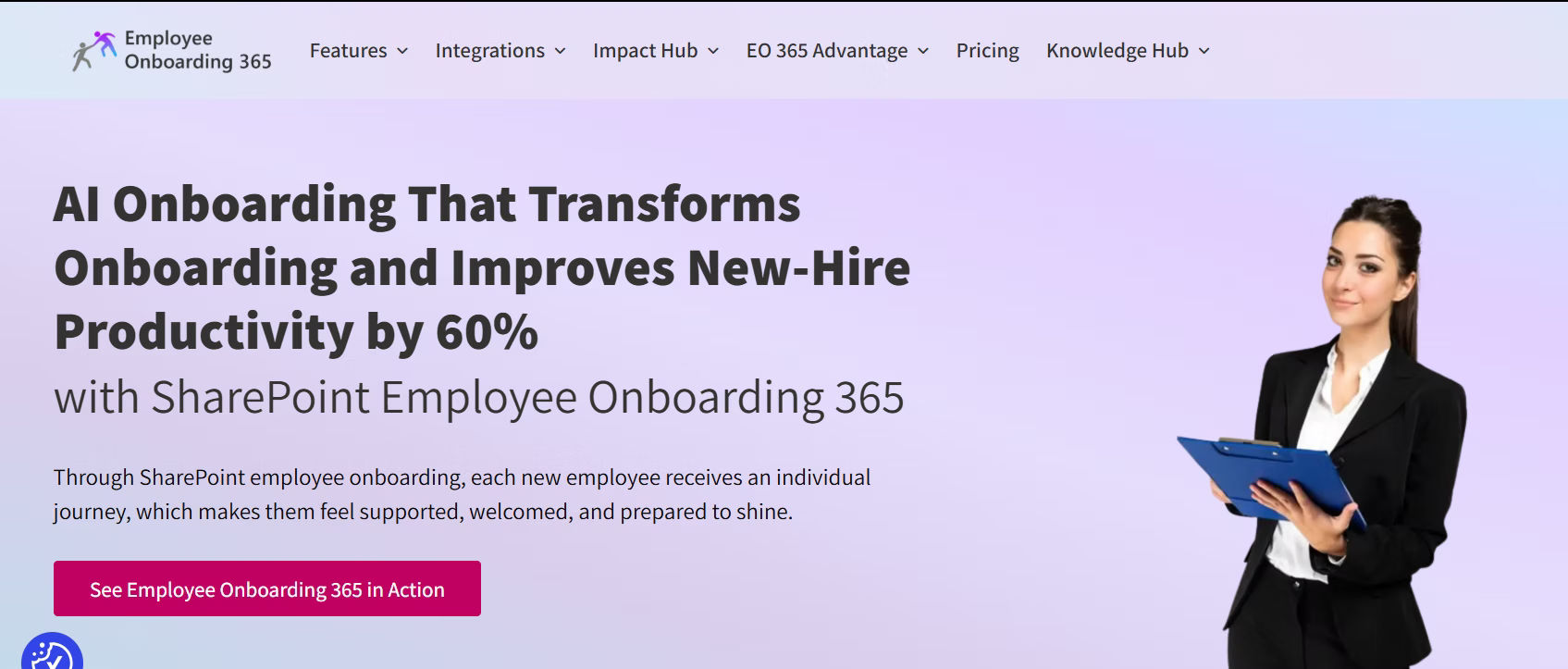
Employee Onboarding 365 is a new AI-based tool that is aimed at businesses that are already using Microsoft 365. It makes the process of onboarding a smooth digital experience through a thorough integration with such tools as Microsoft Teams, SharePoint, and Power Automate.
It is especially suitable to organizations that desire to consolidate onboarding in their current Microsoft ecosystem without having to use several disconnected systems. Its position is obvious: smart automation and the use of tools that employees are already familiar with.
Key Features:
- Native Microsoft 365 integration (Teams, SharePoint, Outlook)
- AI-driven onboarding workflows and task automation
- Custom onboarding journeys based on roles and departments
- Document management and compliance tracking
- Real-time progress dashboards and reporting
Pros:
- Seamless integration with Microsoft tools reduces learning curve
- Strong AI capabilities for automation and personalization
- Centralized onboarding experience without switching platforms
Cons:
- Best suited for Microsoft-centric environments
- May require initial setup for workflow customization
2. BambooHR
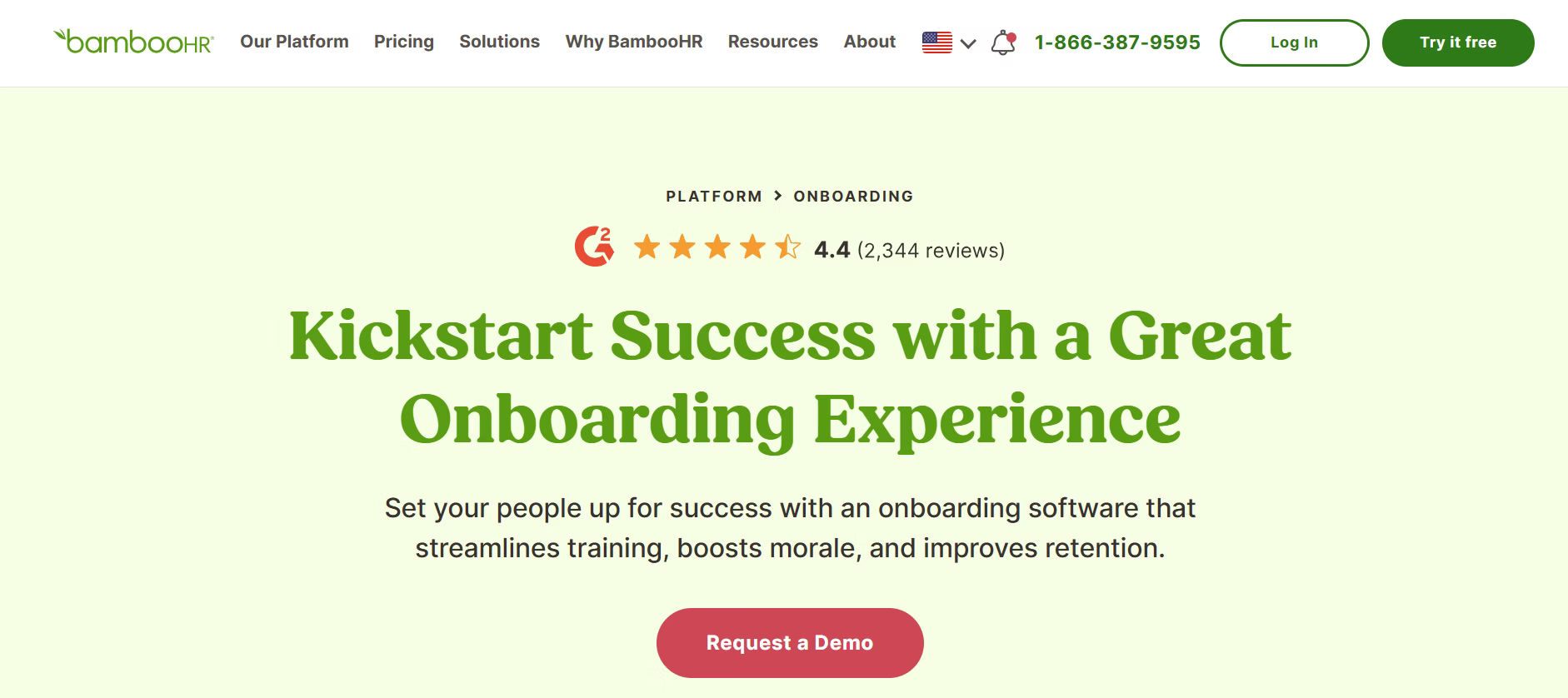
BambooHR is a popular HR platform that streamlines managing people for small to mid-sized businesses. Its onboarding feature allows companies to create a smooth, organized experience for new hires by centralizing tasks, documents and communication all in one place.
This makes it ideal for growing companies which prefer an easier to implement system without a heavy tech overlay. It makes no bones about what it is: an easy, stable onboarding platform that lets companies get up and running without having to jump through hoops or waste time on customization they don’t need.
Key Features:
- Preboarding workflows and task management
- Electronic signatures and document storage
- Employee self-service portal
- Custom onboarding checklists
- Basic reporting and onboarding progress tracking
Pros:
- Easy to use with a clean and intuitive interface
- Quick implementation with minimal training required
- Strong HRIS integration for managing employee data
Cons:
- Limited advanced automation compared to AI-powered tools
- Not ideal for large enterprises with complex onboarding needs
- Fewer customization options for specialized workflows
3. Workday
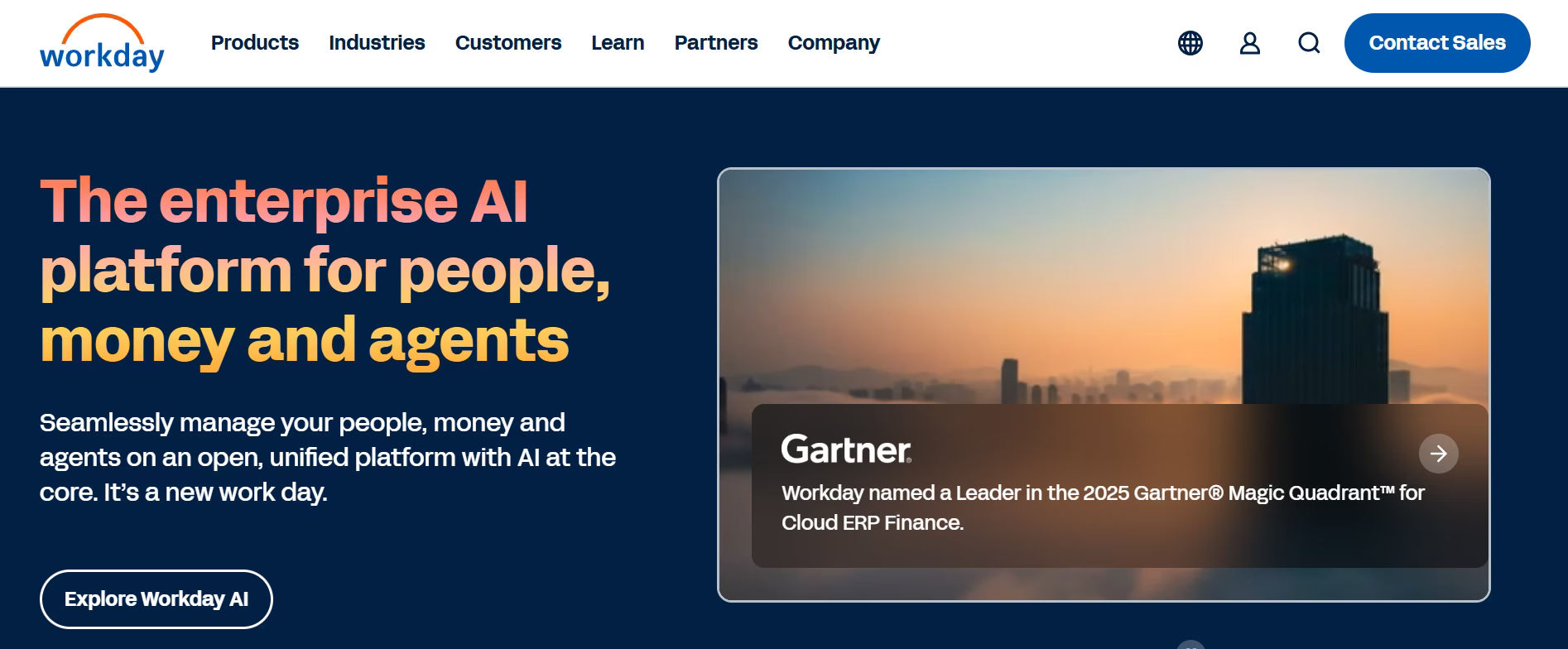
Workday is an enterprise-grade, human capital management suite that includes onboarding capabilities. It is designed for large companies needing deep functionality, scalability, and a unified system to manage the whole employee experience.
It suits especially enterprises that have multiple regional offices, as structured onboarding methods with rigorous compliance and reporting are required. Its positioning is undoubtedly strong: A robust, all-in-one HR platform built for complexity, scale and data-driven decision-making.
Key Features:
- End-to-end HR lifecycle management
- Advanced analytics and reporting
- Role-based onboarding workflows
- Global compliance and localization support
- Integration with the broader Workday ecosystem
Pros:
- Highly scalable for large and global enterprises
- Comprehensive HR ecosystem with deep functionality
- Strong analytics and reporting capabilities
Cons:
- Complex implementation and longer setup time
- Higher cost compared to many onboarding-focused tools
- Requires training for effective use
4. Rippling
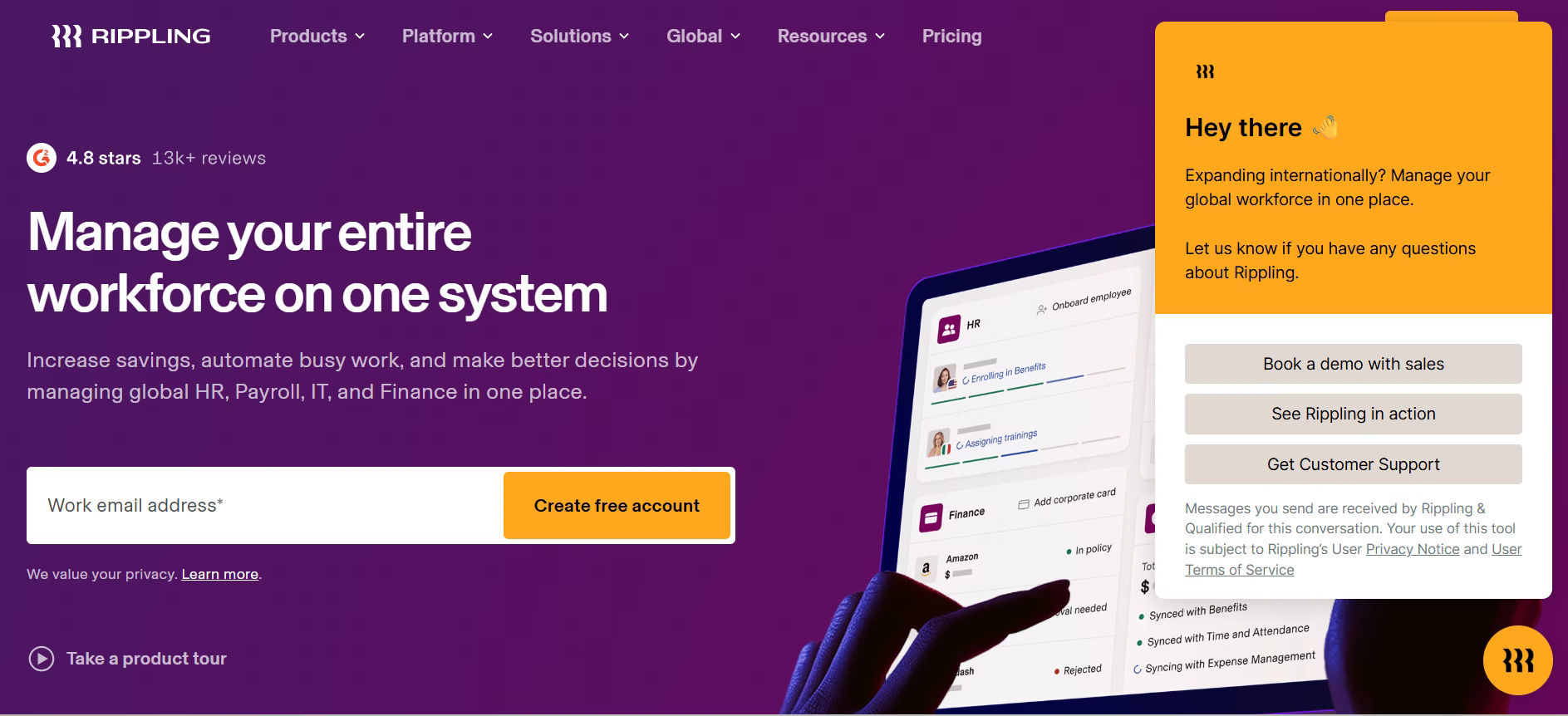
Rippling is an integrated workforce management platform that combines HR, IT and finance in one. Its onboarding features provide more than just traditional HR functions by automating employee configuration across devices, applications and internal systems.
This makes it especially useful for companies wanting to manage HR and IT onboarding in a single place. It knows exactly that it is: an all-in-one platform automating not just onboarding workflows, but the entire employee setup epic.
Key Features:
- Automated device and app provisioning
- Workflow automation for onboarding tasks
- Payroll and benefits integration
- Custom onboarding workflows
- Centralized employee data management
Pros:
- All-in-one platform covering HR, IT, and finance
- Strong automation across multiple systems
- Reduces manual setup effort for new hires
Cons:
- Can feel overwhelming for smaller teams
- Pricing may increase as features and modules are added
- Requires configuration to unlock full potential
5. Deel
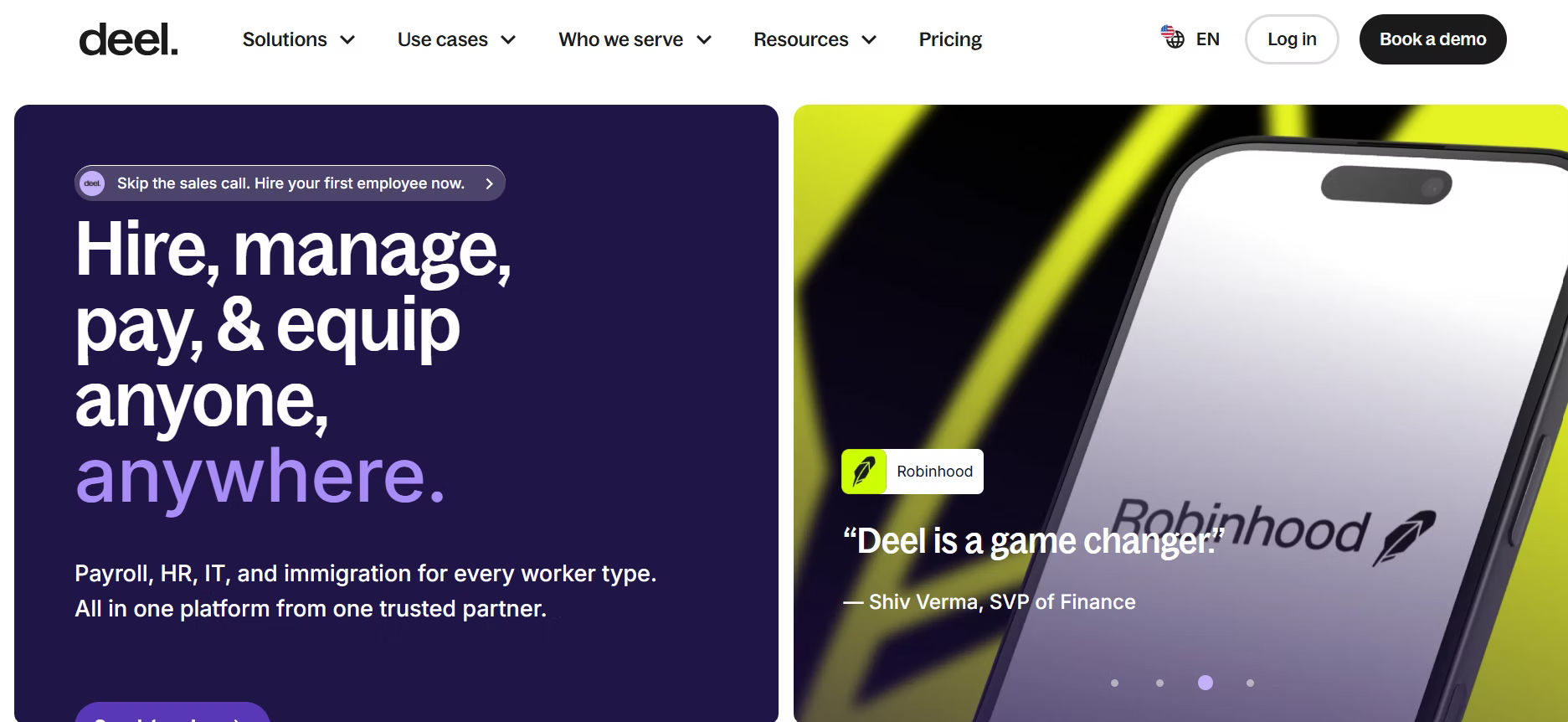
Deel — a powerhouse for global teams Deel is a giant as far as platforms go, particularly when businesses are hiring employees in multiple countries. It also simplifies the complexities of international onboarding—compliance, contracts, payments—in one place in order to scale globally.
Especially suitable for organizations entering new markets or managing distributed workforces. The positioning is clear: a GPDR+ compliant onboarding solution that enables international hiring and workforce management.
Key Features:
- Global hiring and compliance support
- Contract and document management
- Localized onboarding workflows
- Payment and payroll integration
Pros:
- Excellent for distributed and remote teams
- Strong compliance handling across multiple countries
Cons:
- Focused more on global hiring than deep onboarding experience
- Limited customization in workflows
6. SAP SuccessFactors
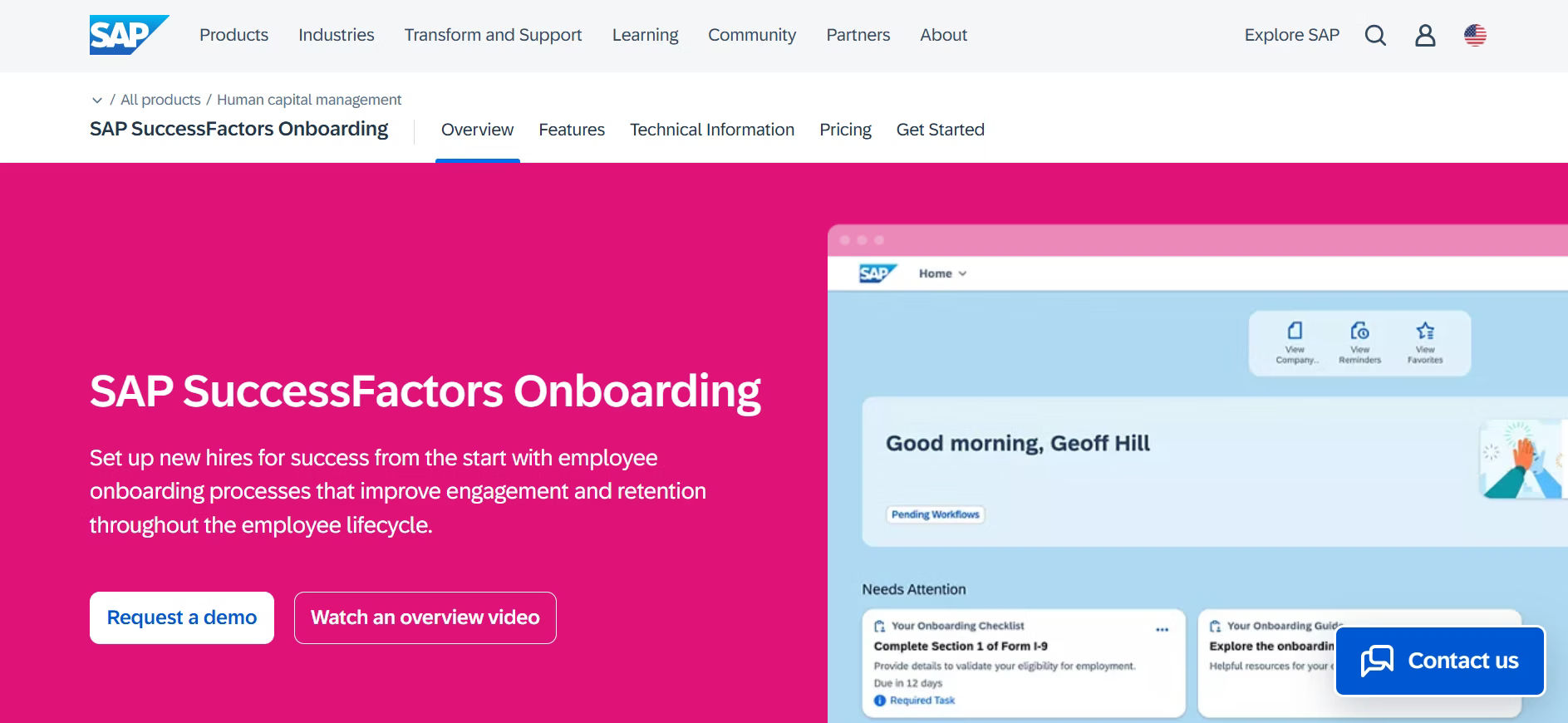
As part of its overall human experience management offering, SAP SuccessFactors offers enterprise-scale onboarding capabilities: This is useful for large corporations to develop structured onboarding journeys and maintain compliance and consistency of global operations.
It is quite useful for enterprises already using SAP systems seeking a highly integrated HR tool. Its positioning feels unambiguous — a strong, data-driven workflow onboarding solution designed to scale and handle enterprise-level complexity.
Key Features:
- Structured onboarding journeys
- Integration with SAP ecosystem
- Advanced reporting tools
- Compliance management
Pros:
- Robust enterprise-level features
- Strong data insights and analytics
Cons:
- Expensive and complex to implement
- Requires training for effective use
7. Zoho People
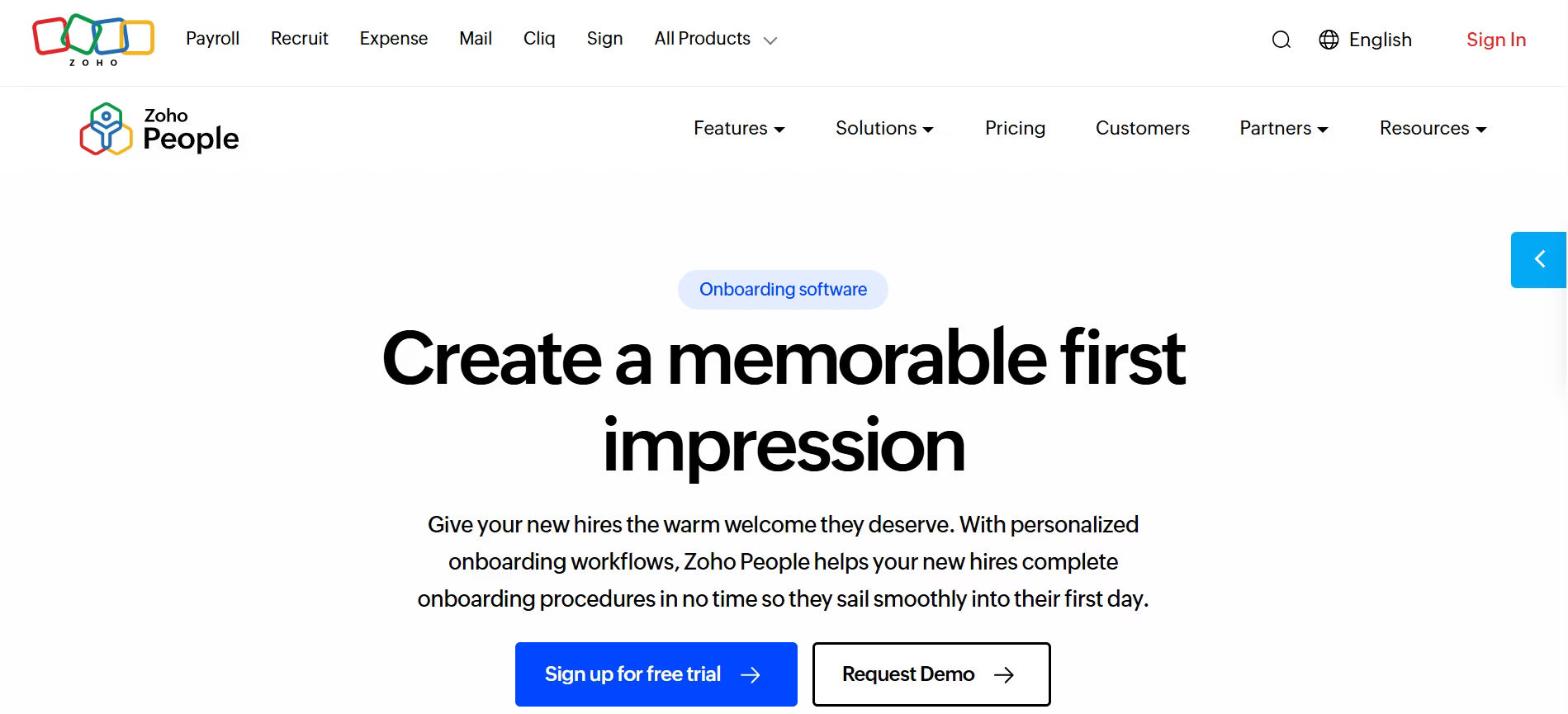
Zoho People is an affordable HR solution aimed at developing businesses that are looking to simplify the onboarding procedure without investing in complicated systems. The app provides a straightforward onboarding process, particularly well suited to companies already using Zoho applications.
For small to mid-sized business seeking an inexpensive and easy to manage solution, it is well suited. Its positioning is evident: a low-cost onboarding tool that integrates seamlessly into the Zoho ecosystem.
Key Features:
- Onboarding workflows
- Employee database management
- Time tracking integration
- Document management
Pros:
- Affordable pricing for growing businesses
- Easy integration with Zoho apps
Cons:
- Limited advanced features compared to larger platforms
- User interface can feel basic at times
8. Gusto
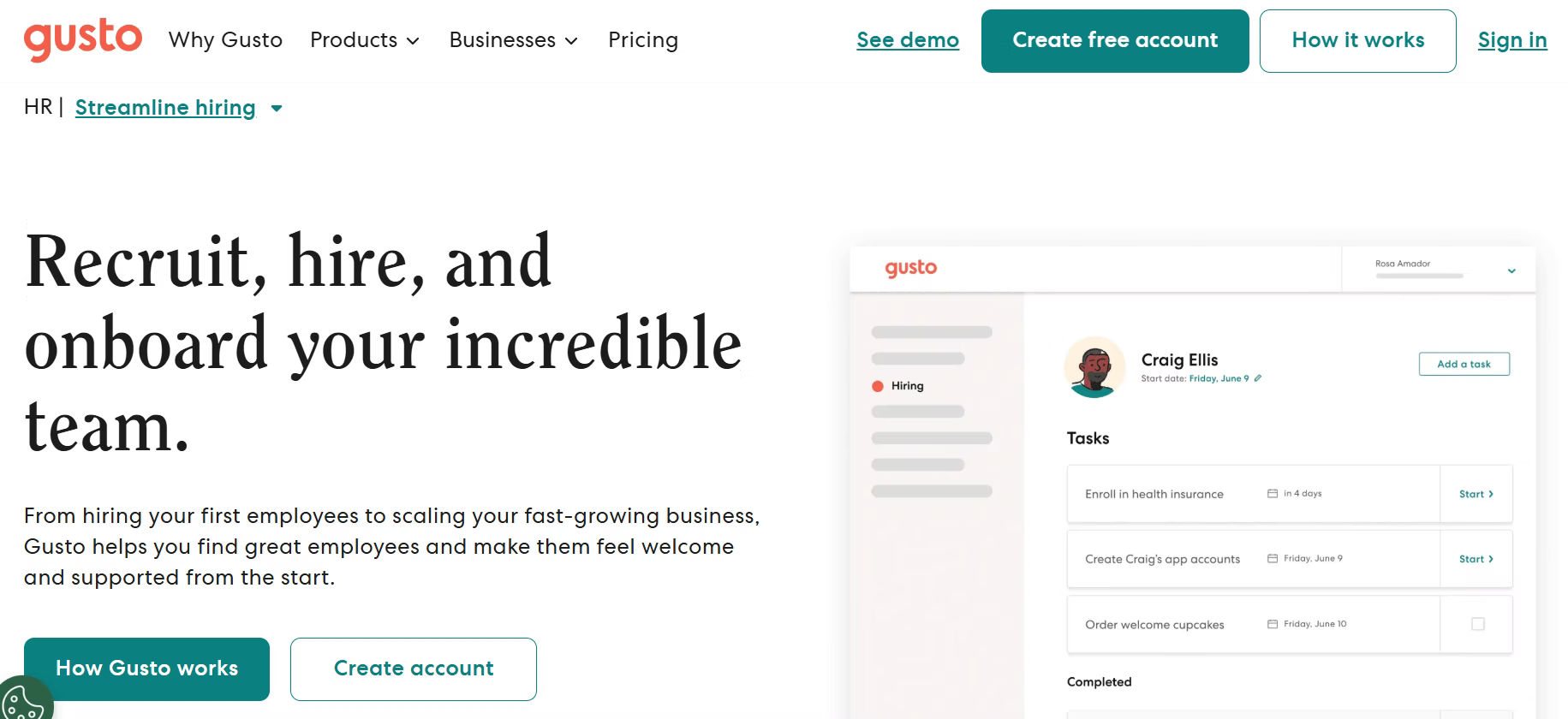
Gusto — a payroll-focused HR platform that uses onboarding as its backbone, is a practical solution for small businesses. It simplifies the employee setup process by consolidating onboarding tasks as part of payroll, benefits and compliance processes.
This is especially the case for startups and smaller teams that prefer to avoid unnecessary complexity in their onboarding process. Its pitch is simple: a straightforward, all-in-one human resources and payroll service with inbuilt onboarding capabilities.
Key Features:
- Digital onboarding forms
- Payroll integration
- Benefits administration
- Employee self-service portal
Pros:
- Simple and intuitive interface
- Great fit for small teams and startups
Cons:
- Limited scalability for growing organizations
- Basic onboarding customization options
9. ADP Workforce Now
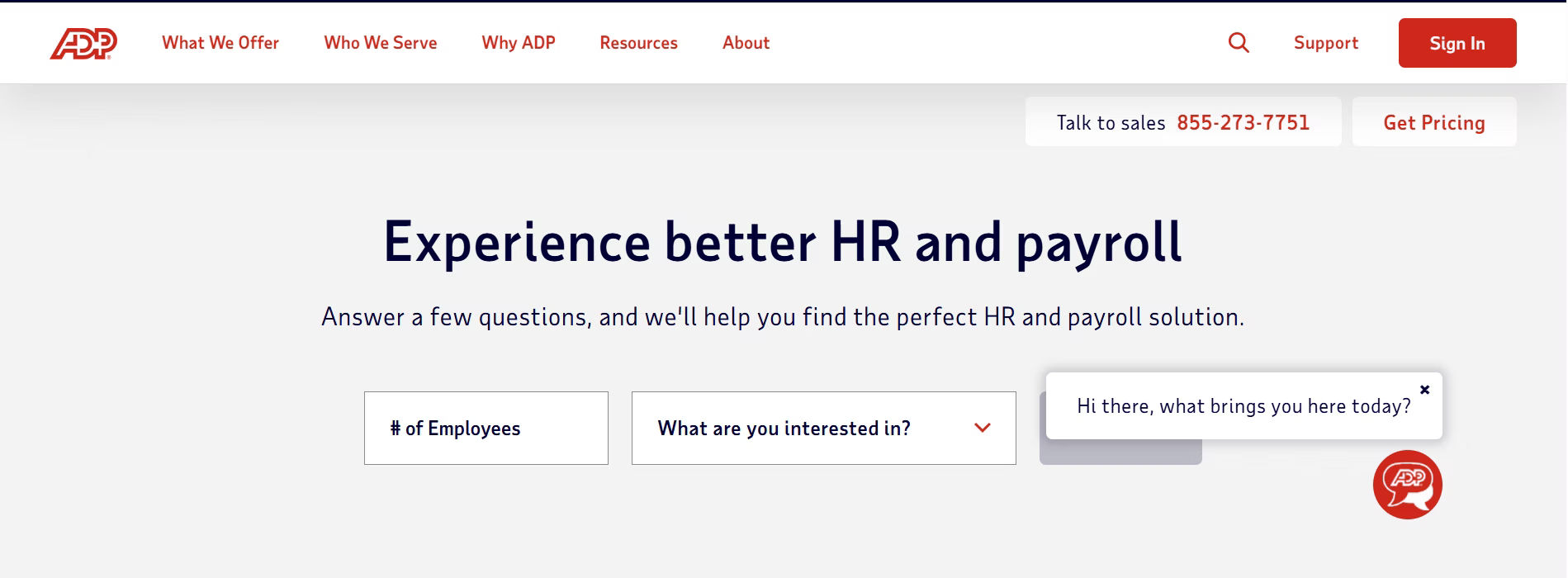
ADP Workforce Now; a HR solution that brings extensive onboarding power to mid-to-large companies. This keeps businesses organized as the management of employees at the onboarding stage is compliant with payroll and record-keeping practices.
It is also particularly good for companies that want a stable, unlimited solution supported by an established provider. It positions itself clearly, as a trusted onboarding system focused on compliance among other HR and payroll services.
Key Features:
- Automated onboarding workflows
- Compliance tracking and documentation
- Payroll and HR integration
- Reporting and analytics tools
Pros:
- Trusted brand with strong global presence
- Robust compliance and regulatory support
Cons:
- Interface can feel outdated compared to modern tools
- Implementation and setup may take time
10. Greenhouse Onboarding
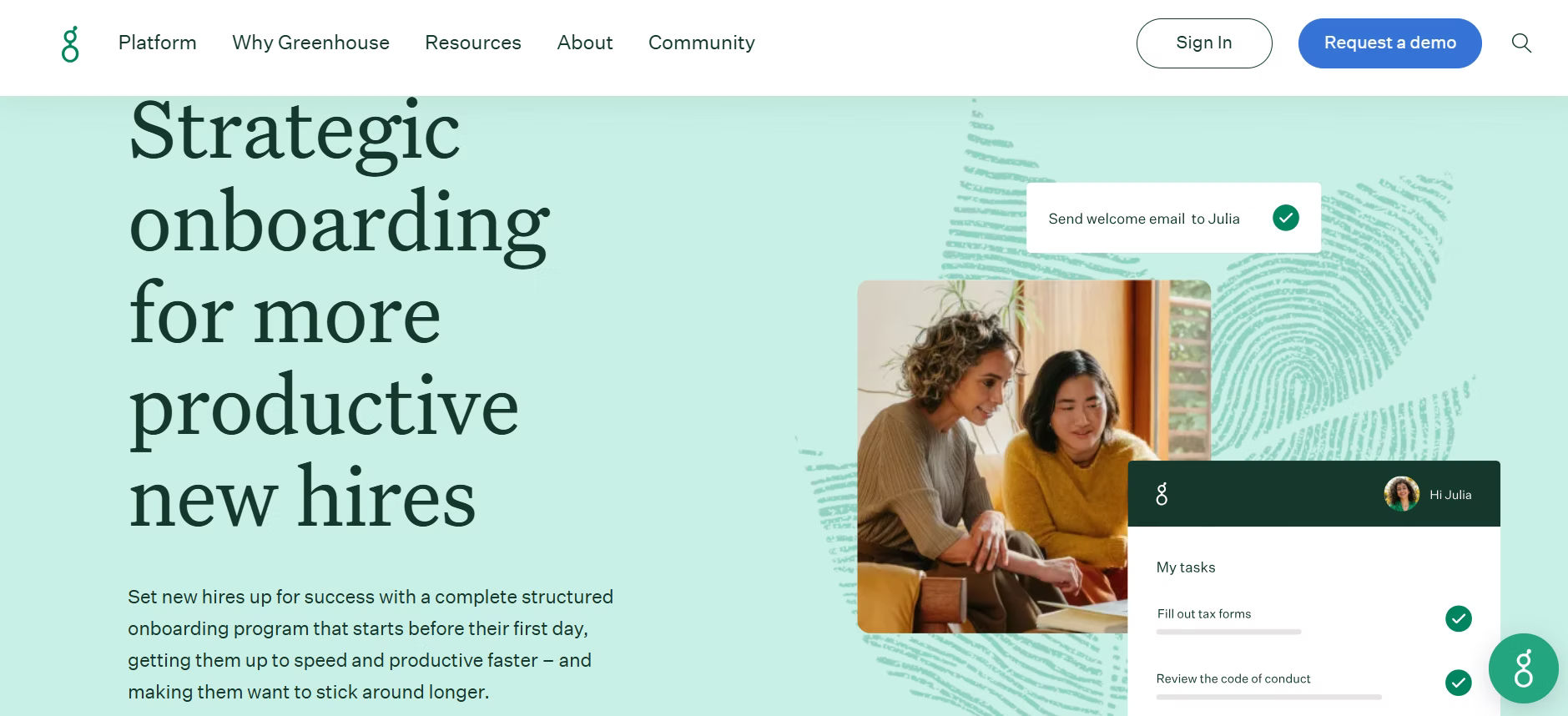
Greenhouse Onboarding builds on the power of its applicant tracking system to allow a smooth flow from hiring to employee onboarding. It supports organizations as candidates transition to become employees with consistency and structure.
It’s particularly well-sized for companies that already use Greenhouse as their ATS and want to expand that experience into onboarding. It positions itself clearly: ATS-driven onboarding that cares about continuity and process.
Key Features:
- Candidate-to-employee transition workflows
- Custom onboarding plans
- Task tracking and progress management
- Integration with HR tools
Pros:
- Strong integration with Greenhouse ATS
- Structured and organized onboarding workflows
Cons:
- Limited standalone onboarding capabilities
- Requires the Greenhouse ecosystem for full value
11. Lever
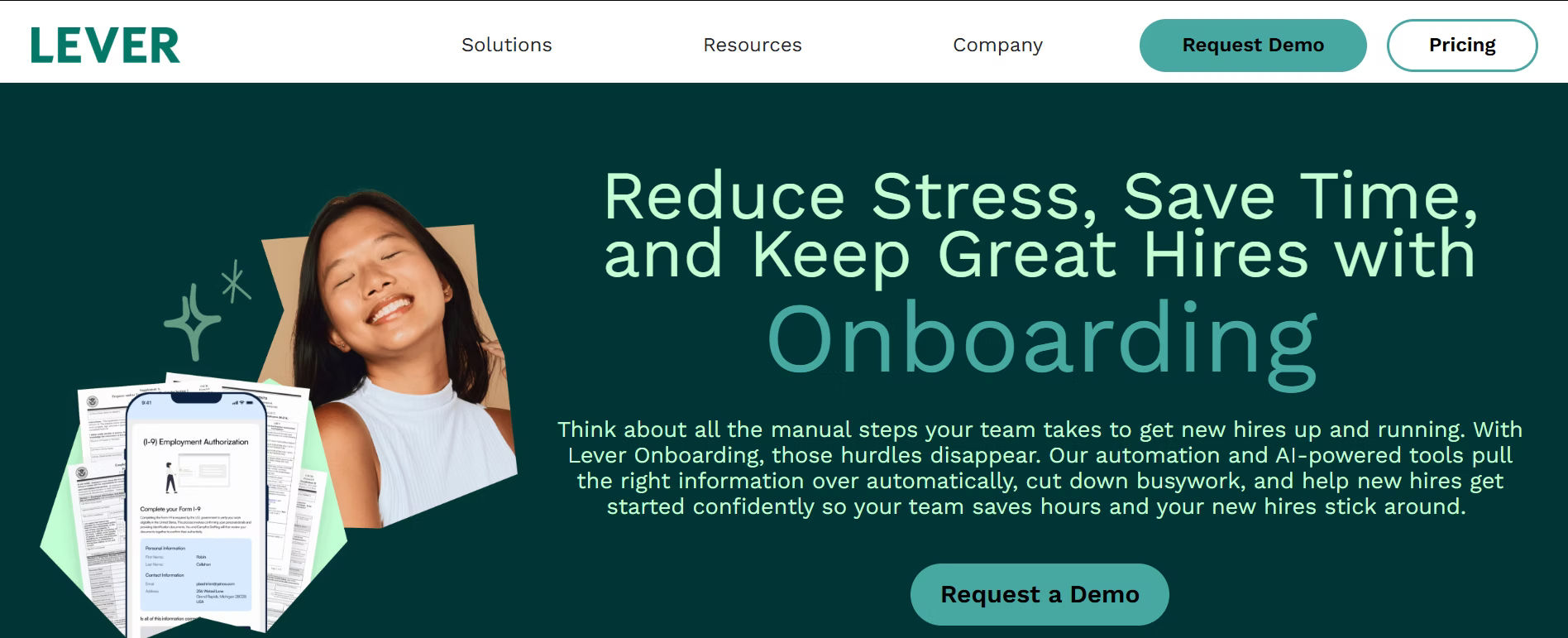
Lever is the recruitment and onboarding platform that integrates recruiting software with onboarding software, designed to create a seamless flow from candidate to employee. It enables organizations to ensure consistent onboarding for candidates while keeping track of all on-boarding activities in one place.
This makes it especially great for companies looking to consolidate hiring and onboarding tasks into one platform. It positions itself as such: an ATS-centric solution rooted in easy hiring-to-onboarding workflows but with a team collaboration emphasis.
Key Features:
- Workflow automation for hiring and onboarding
- Candidate management system
- Onboarding tracking and task management
- Integration capabilities with HR tools
Pros:
- Smooth transition from hiring to onboarding
- Easy collaboration between teams
Cons:
- Limited onboarding depth compared to dedicated tools
- More focused on ATS than full onboarding experience
12. Freshteam
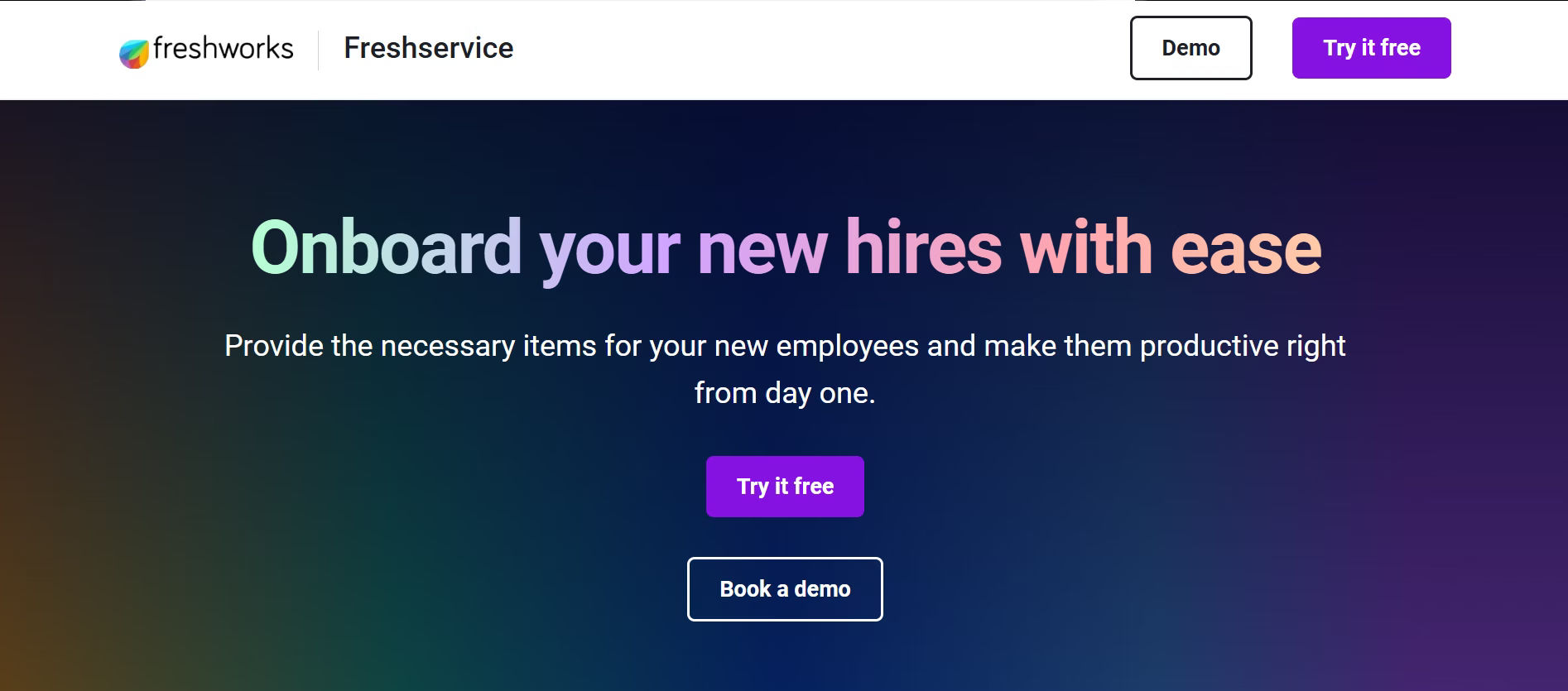
Freshteam is HR software for growing businesses that require a simple and smooth onboarding experience. It assists HR teams in handling hiring, onboarding and employee information without complicating their processes.
It’s especially good for startups and small and midsize businesses that require an accessible platform. It’s positioning is unambiguous: low-touch onboarding reconciled with the need for HR capability at the right price.
Key Features:
- Task management for onboarding activities
- Document collection and storage
- Employee onboarding portal
- Integration with Freshworks tools
Pros:
- Easy to use with minimal learning curve
- Affordable for growing teams
Cons:
- Limited features for large enterprises
- Basic reporting and analytics capabilities
13. ClearCompany
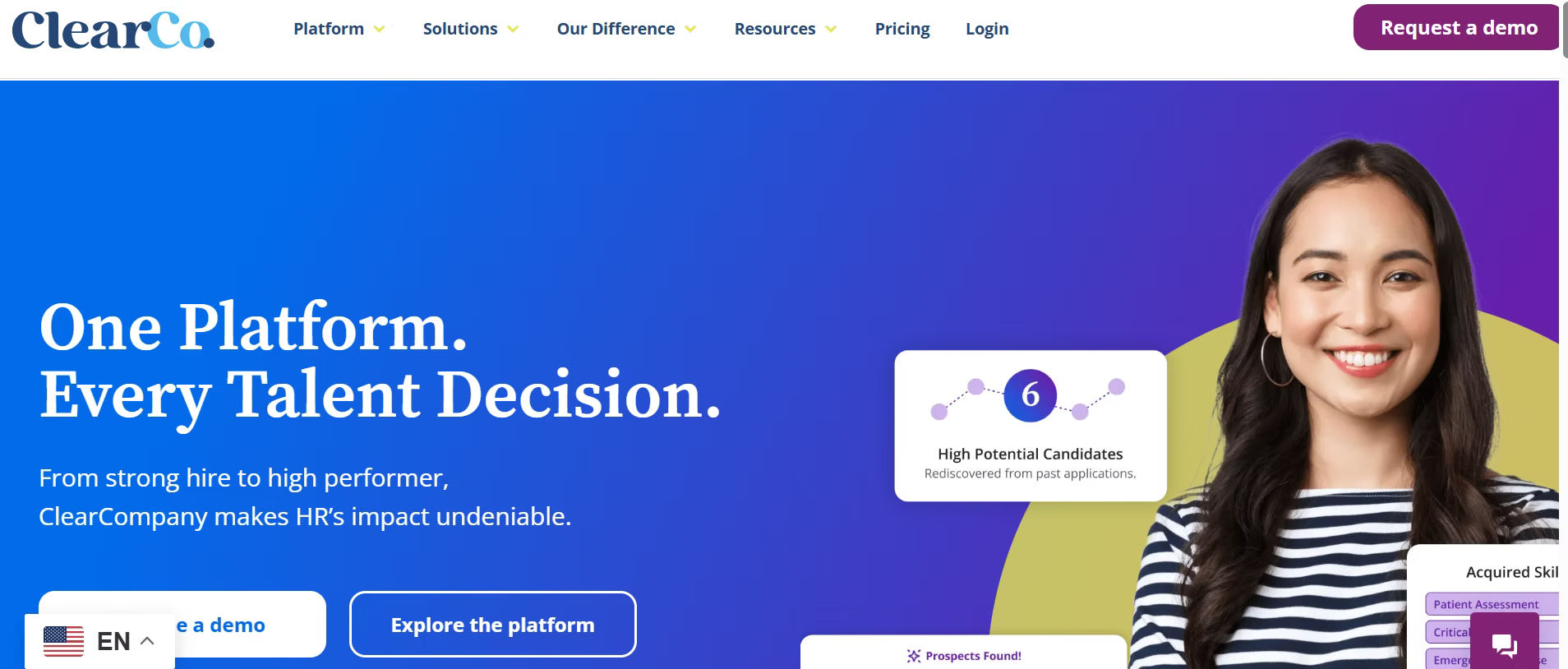
ClearCompany is a talent management software with onboarding as one of its core features, helping businesses build structured and engaging onboarding processes. It ties onboarding to the broader talent processes of hiring, performance and employee engagement.
This makes it especially valuable for organizations wanting to tie onboarding into their long-term talent management approach. Its positioning is straightforward: an adaptable onboarding solution built within a complete talent lifecycle product.
Key Features:
- Onboarding checklists and task management
- Workflow automation for onboarding processes
- Employee engagement tools
- Reporting dashboards and insights
Pros:
- Strong integration with talent management functions
- Customizable workflows to fit business needs
Cons:
- User interface could be improved
- Setup may require time and configuration
14. Paycor
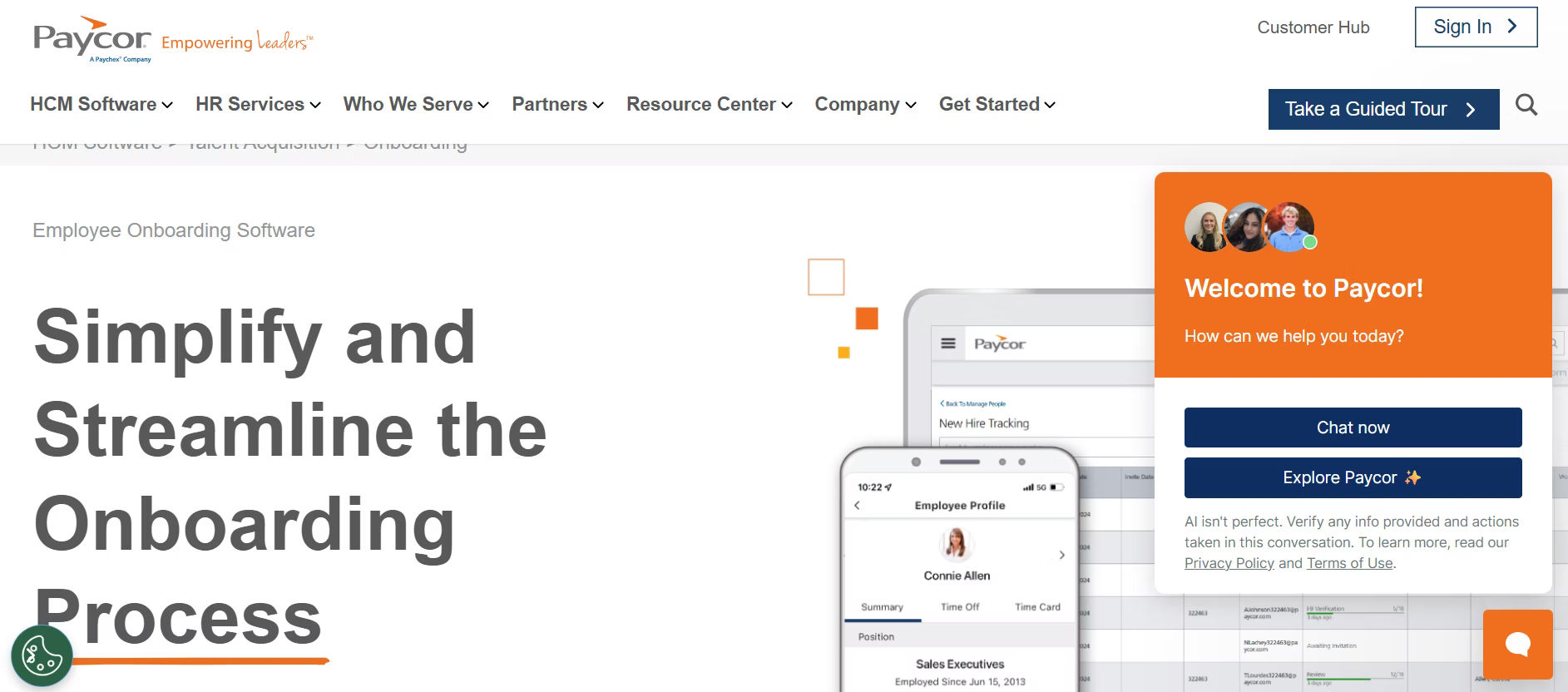
Paycor is an HR and payroll platform that also offers onboarding in its broader workforce management solution. It allows companies to automate the process of setting up employees, serving as a golden line for accuracy and employee compliance.
It is especially focused on companies that want to integrate onboarding with payroll and HR operations in a single solution. Its aim is obvious — an onboarding tool that centres around payroll and operational efficiencies.
Key Features:
- Digital onboarding forms
- Compliance tracking and documentation
- Payroll integration
- Reporting and analytics tools
Pros:
- Strong payroll integration
- Reliable and consistent performance
Cons:
- Limited customization options
- User interface is not very modern
15. Talmundo
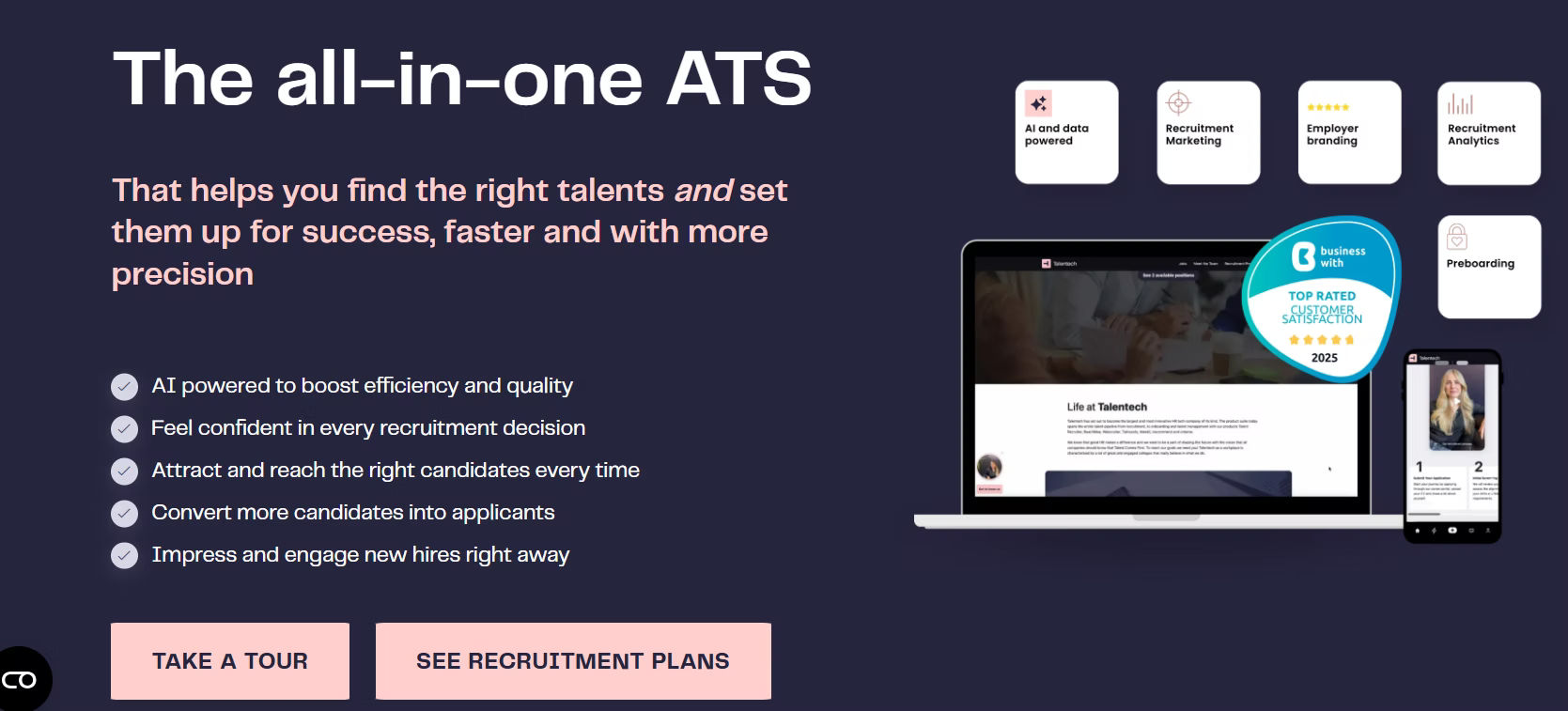
Talmundo is designed specifically for onboarding, creating engaging employee journeys one by one. Just like Dinah, it helps the organizations graduate from just performing basic onboarding tasks to offering a personalized and interactive onboarding process.
ADP is best for companies with high employee experience who want personalized onboarding journeys. Its positioning is strong, though: an experience-first onboarding solution designed to accelerate engagement and early satisfaction in new employees.
Key Features:
- Preboarding workflows to engage new hires early
- Employee engagement tools
- Custom onboarding journeys
- Analytics dashboard for tracking progress
Pros:
- Strong focus on onboarding experience and engagement
- Good level of customization for different roles and teams
Cons:
- Niche tool focused mainly on onboarding
- Limited integration with broader HR systems
According to Deloitte, organizations that prioritize employee experience through digital tools see higher engagement and performance outcomes, making onboarding software a critical investment in HR technology.
16. Click Boarding
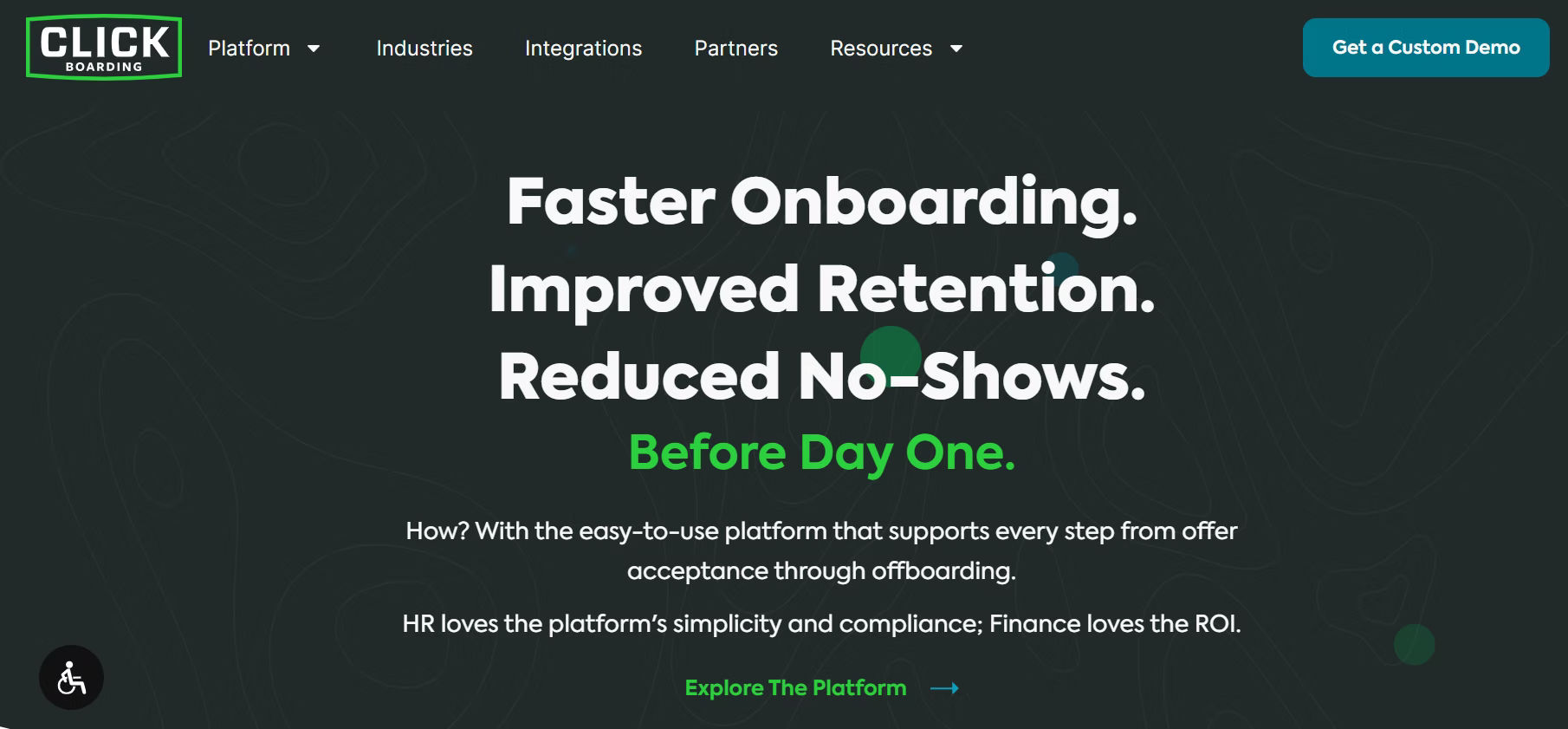
Click Boarding is an onboarding-specific platform used to streamline onboarding processes and ensure compliance and consistency. Key Benefits: Allows organizations to automate operations, reducing manual work through the streamlining of tasks, documenting processes and employee communication.
This focused onboarding solution is particularly well-suited to companies that place a high priority on compliance, with no need for the full HR suite. Its positioning is straightforward — a compliance-based onboarding tool made for efficiency and process automation.
Key Features:
- Workflow automation for onboarding tasks
- Compliance tracking and documentation
- Employee self-service portals
- Integration support with HR systems
Pros:
- Strong compliance and regulatory features
- Focused solution dedicated to onboarding
Cons:
- Limited features beyond onboarding
- User interface could be improved
17. Enboarder
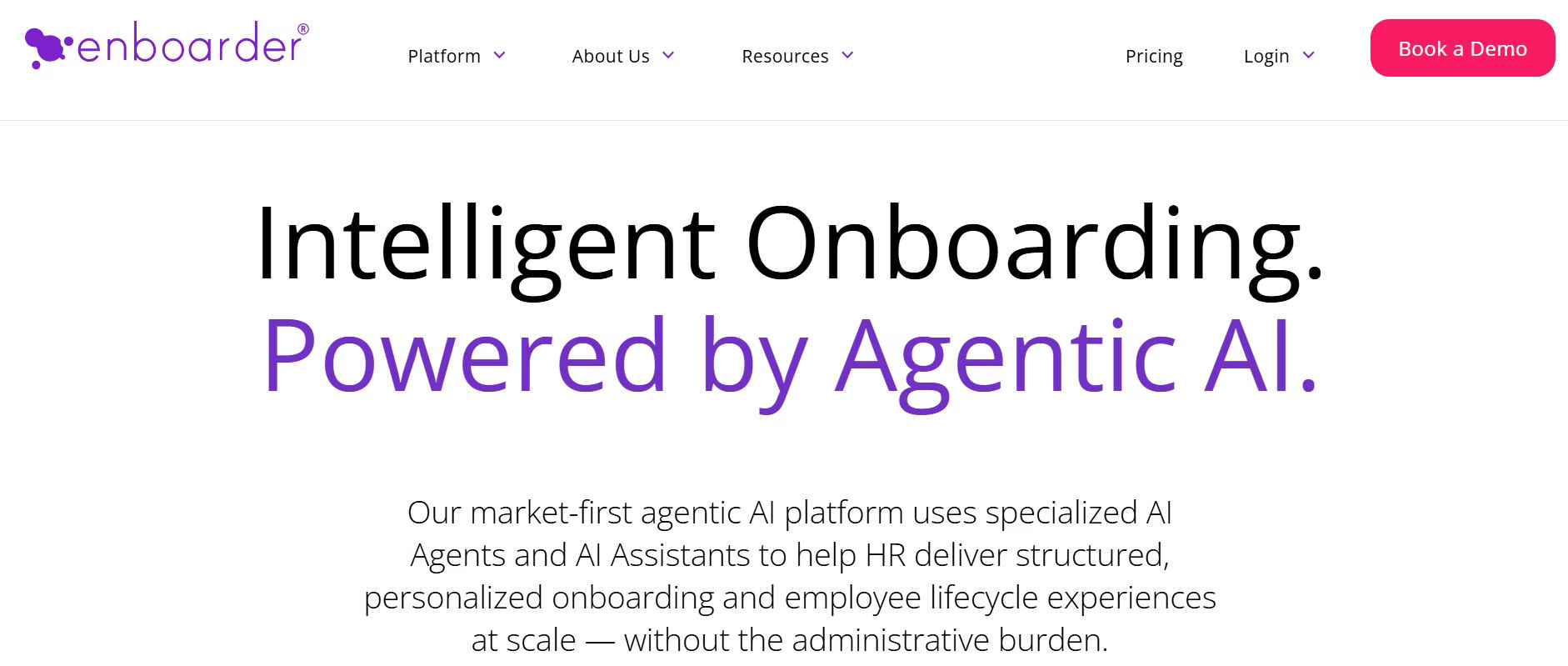
Enboarder is an employee onboarding platform that focuses on driving the employee experience and engagement from application to hire. The emphasis is on meaningful connections and structured journeys to build a sense of belonging from day one.
This is especially vital if your onboarding approach looks to culture and employee engagement. Its positioning is straightforward: an onboarding solution that happens on the experience-first tracks to increase engagement and retention.
Key Features:
- Journey-based onboarding experiences
- Communication and engagement tools
- Workflow automation
- Analytics and reporting insights
Pros:
- Highly engaging and experience-driven onboarding
- Ideal for culture-focused organizations
Cons:
- Expensive compared to many alternatives
- Requires setup and configuration effort
18. UKG Pro (Ultimate Kronos Group)
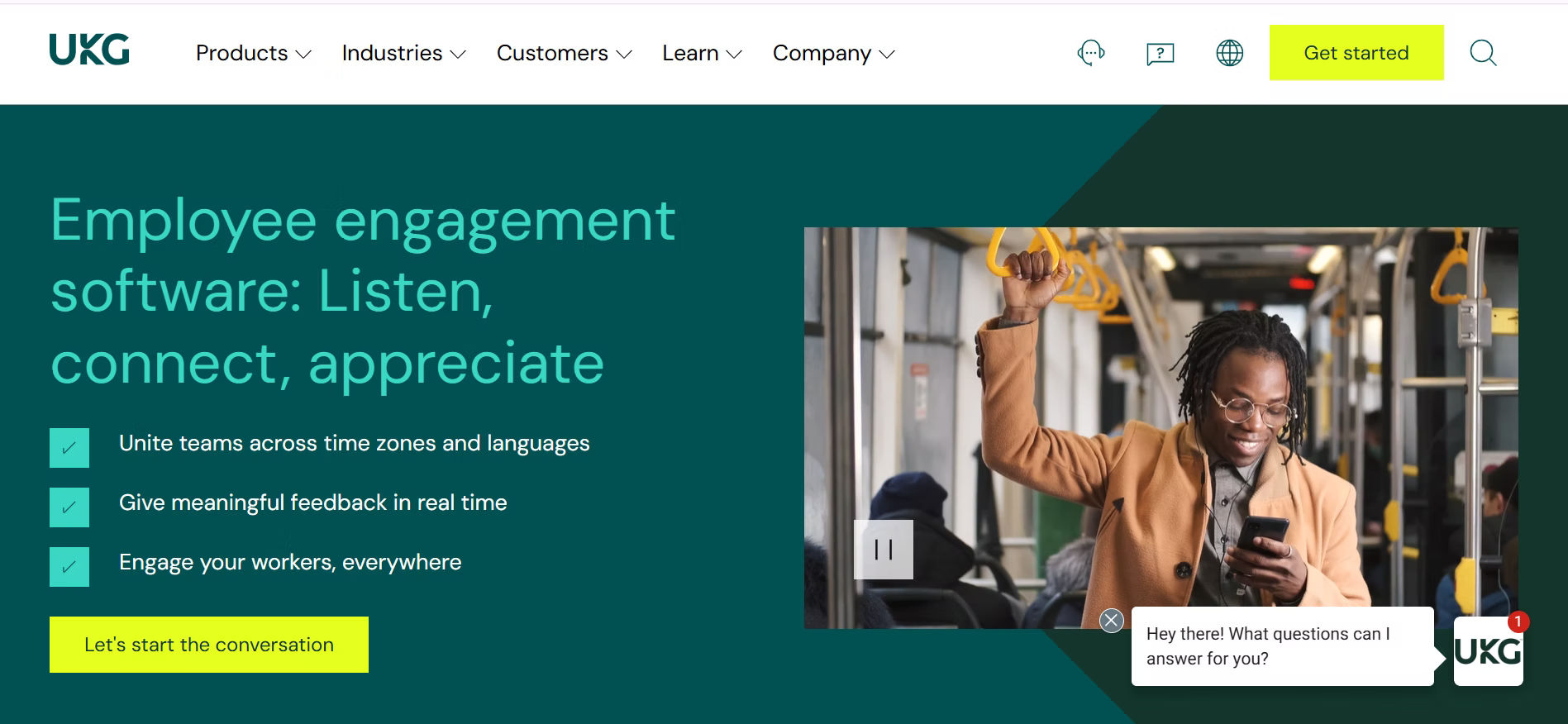
UKG Pro is a comprehensive human capital management platform that includes onboarding as part of its broader workforce management and HR suite. It helps organizations deliver structured onboarding experiences while connecting them with payroll, time tracking, and employee data.
It is particularly well-suited for mid-to-large organizations that need a unified system for HR and workforce management. Its positioning is clear: a reliable, enterprise-ready onboarding solution that focuses on operational efficiency and workforce visibility.
Key Features:
- Digital onboarding workflows
- Employee data and workforce management integration
- Payroll and time tracking integration
- Reporting and analytics tools
Pros:
- Strong workforce and HR integration
- Scalable for mid-to-large organizations
Cons:
- Interface may feel less modern compared to newer tools
- Implementation can take time and resources
- Limited AI-driven personalization features
19. Oracle HCM Cloud
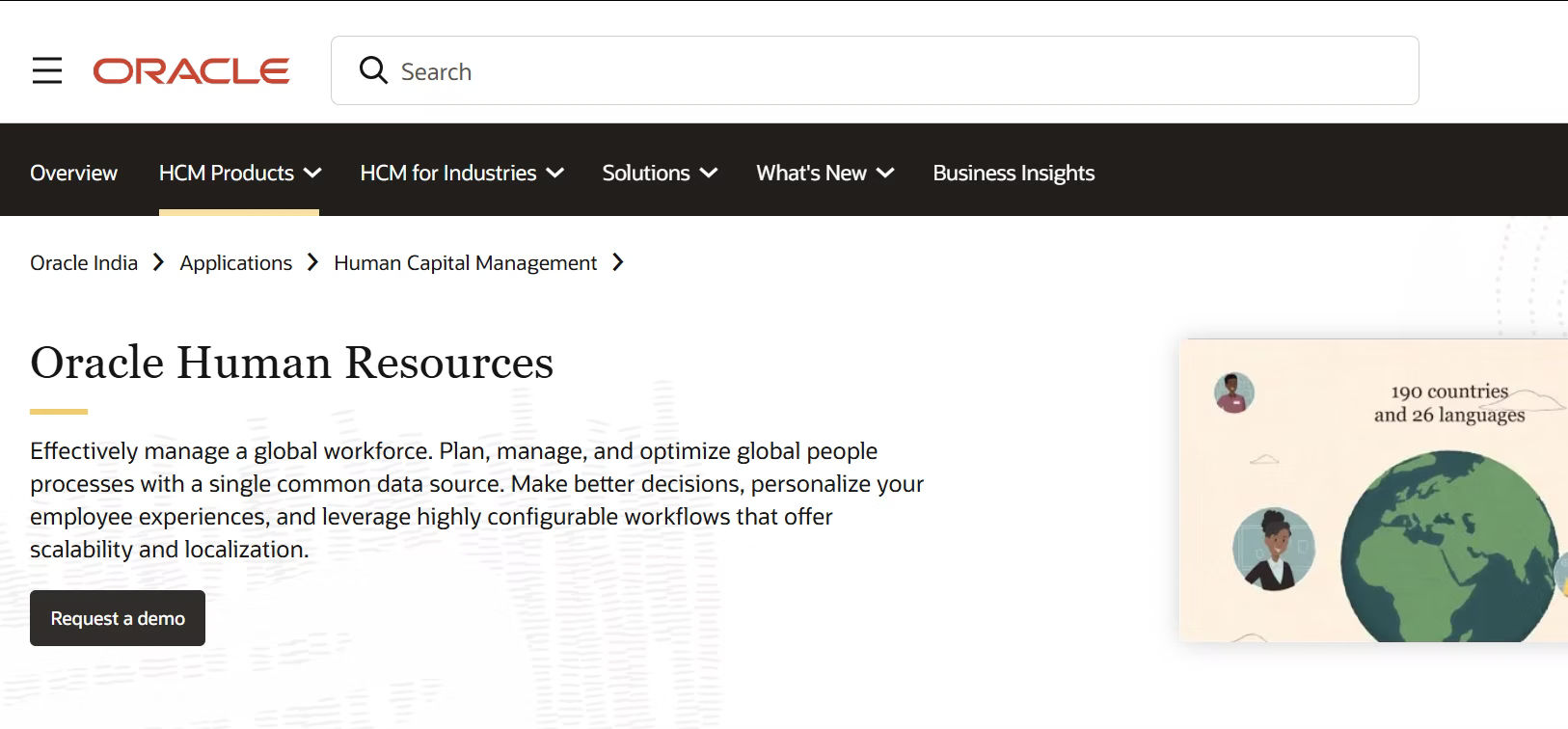
Oracle HCM Cloud provides enterprise-grade onboarding solutions as part of its full human capital management suite. It enables organizations to deliver consistent onboarding experiences across global teams while leveraging data and AI-driven insights.
It is particularly well-suited for large enterprises that require advanced functionality, global compliance, and deep integration with existing Oracle systems. Its positioning is clear: a powerful, enterprise-focused onboarding platform built for scale and data-driven decision-making.
Key Features:
- Global onboarding workflows
- AI-driven insights and recommendations
- Integration with Oracle tools
- Compliance tracking and management
Pros:
- Strong enterprise-grade capabilities
- Advanced analytics and reporting features
Cons:
- High cost of implementation and maintenance
- Complex setup requiring time and expertise
20. Kallidus
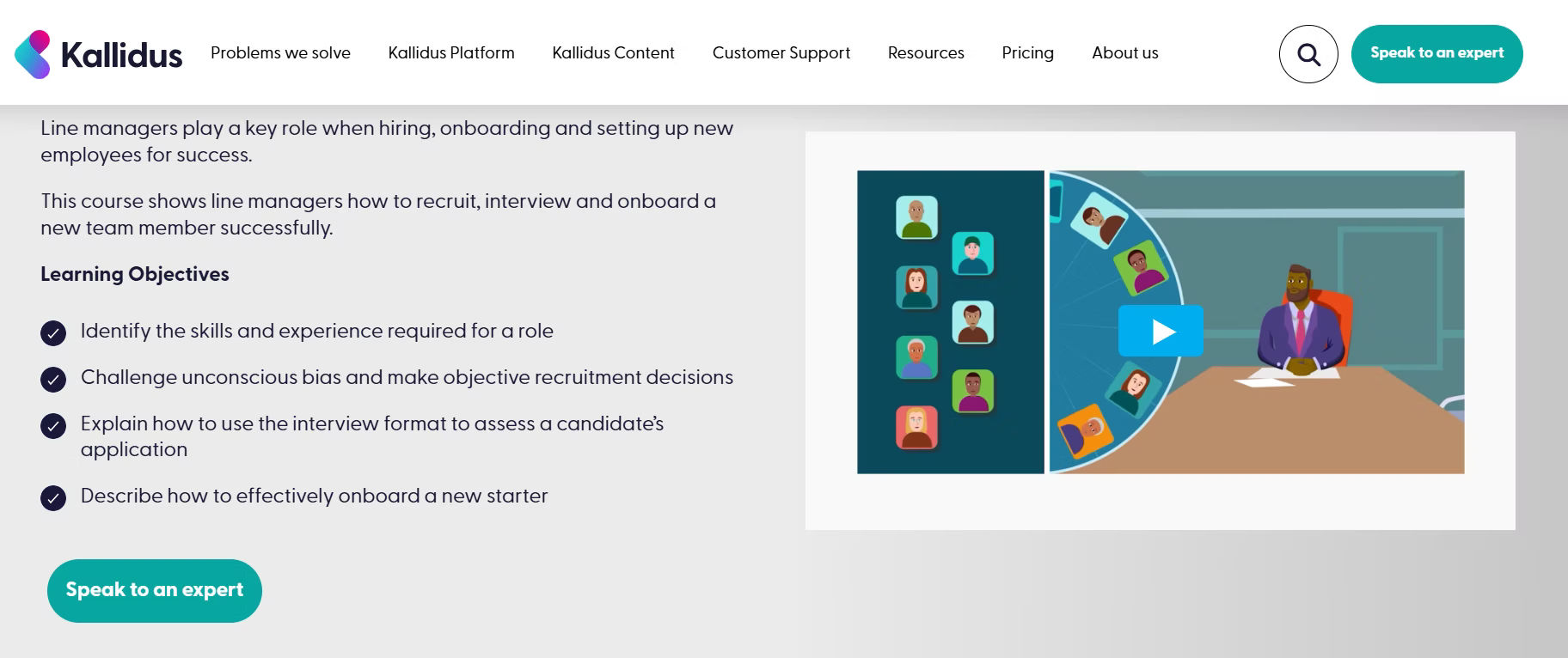
Kallidus is a platform that combines onboarding with learning and development, helping organizations train and engage employees from the start. It focuses on delivering structured onboarding alongside continuous learning experiences.
It is particularly well-suited for companies that want to integrate training into their onboarding process. Its positioning is clear: a flexible onboarding solution with a strong focus on learning and employee development.
Key Features:
- Learning-based onboarding programs
- Workflow automation
- Content and training management
- Reporting and analytics
Pros:
- Strong integration of onboarding with training
- Flexible platform for different business needs
Cons:
- Limited core HR features compared to full HR suites
- Requires setup and configuration time
How to Choose the Right Onboarding Software
Choosing the right online onboarding software is less about picking the most popular tool and more about finding the right fit for your organization. Start with scalability. A solution that works for 50 employees should still perform well when you reach 500 or 5,000.
Integration is also very important. Most of the tools claim to be automated, but unless they are fully integrated into your current systems, they will cause you more work than good. This is where such services as Employee Onboarding 365 shine, particularly when the company is already on Microsoft tools.
AI is emerging as a significant point of difference. Find software that does not only automate but also improves decision-making and customization. Usability matters too. In case your HR team or employees are struggling to navigate the system, adoption will be poor.
Pricing should align with value, not just features. Some tools appear affordable initially but become expensive as you scale or add integrations.
The most prevalent weakness of most onboarding software packages is the absence of profound integration with the ecosystem and actual AI-based personalization. Lots of platforms continue to be highly manual and workflow-based. It is here that newer, AI-powered solutions are transforming the game.
Conclusion
Onboarding is no longer an HR activity but a business-critical activity that directly influences retention, productivity, and employee experience. With the emergence of online onboarding software, it is now possible to provide consistent, engaging, and efficient onboarding experiences at scale.
Most tools have good features, but the actual distinction is the level of integration, automation, and adaptation. In 2026, businesses are seeking solutions that integrate AI, workflow smoothness, and ecosystem familiarity.
In case your organization is already on Microsoft 365, such solutions as Employee Onboarding 365 have a clear benefit in that they introduce onboarding to tools that your team already has access to, with the added benefit of AI-driven automation and personalization.
Join Our Creative Community
Frequently Asked Questions
What is online onboarding software?
It’s a digital platform that automates and streamlines the entire new employee or customer integration process, handling paperwork, training modules, and access provisioning through intuitive web or mobile portals for seamless efficiency.
What are the must-have features?
Essential features include customizable automated workflows, secure e-signatures, real-time progress tracking, mobile-responsive access, and seamless integrations with HRIS and payroll systems to boost productivity.
What are the main benefits for businesses?
It significantly reduces onboarding time by up to 50%, minimizes administrative errors, enhances new hire satisfaction and retention rates, supports fully remote teams, and cuts paperwork costs through smart analytics and reminders.
How much does it typically cost?
Pricing generally ranges from $4–$25 per active user per month for standard plans, with free trials available, scaling to custom enterprise tiers at $50+ for advanced compliance and global features.
Is it customizable for different industries and teams?
Absolutely, top solutions offer fully branded portals, multi-language support, industry-specific templates (like healthcare compliance or sales onboarding), and flexible checklists to match unique company cultures and scales.


_JiluXJRGNl.svg)























