

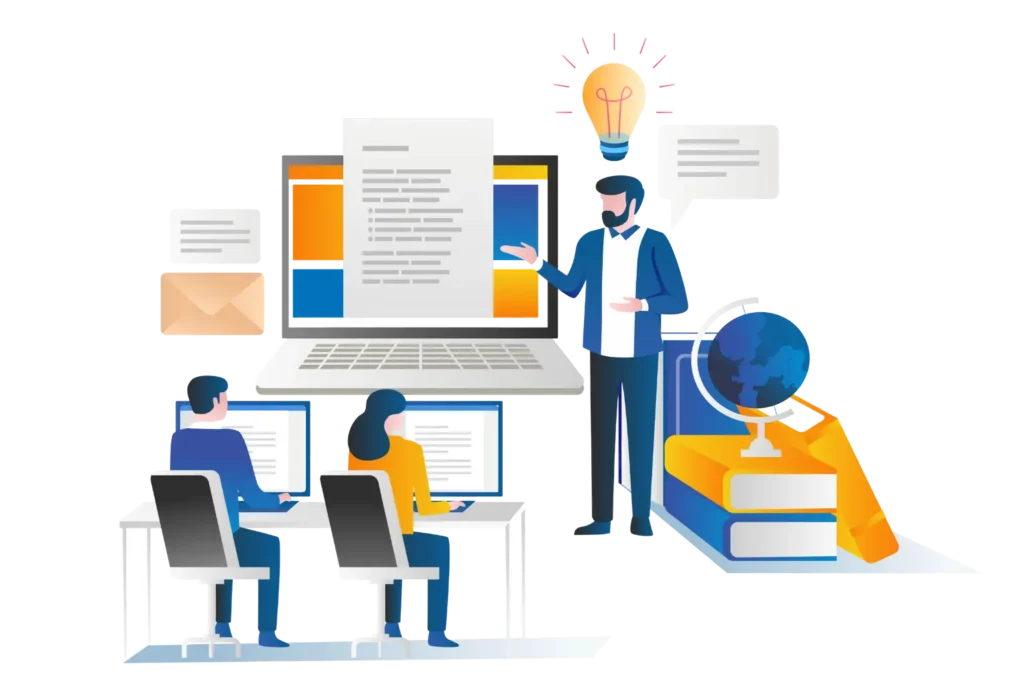
Corporate Learning Management System: Key Features to Know

Choosing to invest in employee learning and development is one of the best investments any organization can make. Studies show 94% of employees are more likely to stay at an organization that invests in their development. Today, Corporate Learning Management Systems (LMS) are a key business enabler for organizations wanting to provide, efficient, scalable, and engaging learning programs. Whether you are operating a small business, or managing a large-scale organization, understanding the elements of an LMS can help define, and identify the right solution for you, and foster not only employee success but organizational growth.
✨
Quick Read
Summary generated by AI, reviewed for accuracy.
A Corporate Learning Management System (LMS) helps organizations manage, deliver, and track employee training. It centralizes all learning activities, from onboarding to skill development, making training more efficient and accessible. Employees can learn at their own pace, anytime, and anywhere, which is perfect for remote and hybrid work.
Investing in the right LMS improves productivity, ensures compliance, and boosts employee engagement. Key features like customizable learning paths, real-time tracking, and social learning tools help companies create a culture of continuous learning and drive business success.
A good LMS benefits organizations, not only in providing and delivering training content, but also helps learning become more accessible, personalized, and measurable. It assists employees to identify a course suitable for them, at their pace, while able to monitor their progression, and access to learning resources 24/7. For organizations, a good LMS means a more engaged, and skilled workforce, improved retention rates and its impact on overall performance outcomes. This is why it becomes important to choose a LMS that helps create a culture of continuous learning for both employees and organizations.
What is a Corporate Learning Management System?
A Corporate Learning Management System (LMS) is a digital solution that facilitates the management, delivery, and tracking of employee training. By consolidating all learning activities from onboarding, compliance, and corporate courses to skill-building programs an LMS makes it easy for organizations to place all of their employees on the fastest route to learning and upskilling. LMS solutions provide employees the ability to access learning in the mode of their choice, at any time, and in any place as needed, which lends itself well to hybrid and remote work environments.
Thanks to the LMS both employers and employees can have the assurance that employees have the right skill and knowledge at their fingertips. In addition, tracking of the progress of the employees, peer-to-peer feedback, and curated learning pathways along with number of customization options, can positively impact the employee and organization to facilitate grow, stay competitive, and for the employee to grow in their position.
Why Corporate LMS Matters for Business Success
A carefully chosen corporate learning management system, or LMS, does more than simply deliver training; it helps improve productivity and regulatory compliance, and fosters a culture of continuous learning. Organizations that adopt LMS systems will typically see higher employee engagement, improved retention of skills, and movement in performance. When training is streamlined and administrative burden is reduced, organizations gain valuable information from cleaning data analytics, to make better choices for investment in talent development.
A corporation can use their LMS to customize training for their employees’ learning needs, whether that is upskilling, performance management, or staying up to date with industry standards. The adaptability of an LMS provides a resource for learning that is more applicable and meaningful to the employee, and gentlemanly aligned with your organization overall. Organizations can integrate learning in their everyday work, to create a more informed, adaptable, and anticipatory workforce to face the evolving future.
Key Features to Look for in a Corporate LMS
Selecting the appropriate corporate Learning Management System (LMS) can feel overwhelming, but these must-have parameters will clarify your use case so you can get the most value from your investment and achieve your organization’s learning needs:
1. User-Friendly Interface and Accessibility
Having a clean, intuitive interface is key to getting your workforce to adopt any LMS broadly and in a timely manner, as it should not impede your employees from browsing courses, tracking progress, or accessing learning materials. The LMS should be accessible on a variety of devices, such as desktops, tablets, and mobile phones, to support differing work environments while enabling learning to happen anytime, anywhere.
2. Ability to Customize Learning Paths and Content
Training content provided in a one-size-fits-all format, likely, will not address the specific needs of every employee or role within the organization. The LMS should allow administrators to customize a learning path for employees connected to their own job role, corresponding skill level, or career intention while providing engaging content that enhances retention of the learning material. The option to customize content allows for updates to the training in real time with intended compliance to company goals or industry changes.
3 Compliance Management & Certification Tracking
For industries with specific regulations such as healthcare, finance, or manufacturing, compliance features are essential. An LMS can easily streamline compliance by automating mandatory training and certification tracking, sending predetermined reminders to employees and managers when training or certifications need to be renewed, and providing reports that are ready for audits. This decreases the potential for non-compliance, decreases administration, and minimizes risks of fines or legal actions against the organization.
4 Integration with HR and Communication Tools
A corporate LMS should be able to integrate seamlessly with your current HR Management Systems (HRMS) and communication tools, such as Microsoft Teams, Slack or email applications. Ability to integrate will provide even more ways to collaborate and support employee engagement because user data will synchronize, automated enrollment will be based on job duties or department and learning measured against employee records will be marked easier. This integration promotes a single experience, employees can stay focused and move seamlessly between their day to day work and learning in the LMS without having to switch platforms.
5. Mobile Learning Capabilities
Today’s workforce is more remote, hybrid, or always on the go than ever before. A mobile-optimized LMS allows learners to begin and continue courses and training resources via smartphone or tablet, promoting learning that is flexible and occurs anytime and anywhere. This flexibility encourages participation among learners who may not have access to a desktop computer regularly, such as field personnel or sales teams.
6. Reporting and Analytics Dashboard
Actionable data-driven analysis and robust reporting help assess the success of your training initiatives. The LMS should feature a dashboard or data that is up-to-the-minute, including learner progress, course completion rates, assessment performance, and skill growth trends. All of these indicators and insights allow managers and learning and development teams to address any gaps in knowledge, identify high performers, and customize future training initiatives to meet particular needs.
7. Social Learning & Collaboration Tools
Learning is often more enjoyable and effective when learners can interact with peers. A range of future content and collaboration tools that help to share knowledge through peer discussion forums, chat rooms, peer call reviews, or group assignments promote collaboration. Social learning tools create a sense of community and social presence, enhancing engagement with the learning process. The tools allow employees to learn from each other’s experiences and from their own expertise while gaining new skills more quickly.
8. Automated Reminders & tracking of progress
Keeping learners on pace is not always easy, especially given busy schedules. Automated reminders can help ensure that employees have completed the required courses because students receive reminders about upcoming due dates, incomplete modules, and expired certifications. Progress tracking provides the learners with visibility into their own progress and encourages them to take action and meet their learning objectives without continuous administrative intervention.
9. Strong Security & Data privacy
Corporate LMS platforms to be a repository of sensitive employee data, training history, and sometimes other secret business data. Your LMS is also expected meet industry-leading security standards like GDPR when appropriate. Moreover, the LMS should employ similar security technologies like encryption, secure user delimitation protocols, role-based access controls, and routine security audits to combat against unauthorized user entry and hacking attacks. The trust cultivating role of strong security and data privacy are especially important in onboarding new users to convince them that their information will be treated with respect and their organization can demonstrate compliance.
Also Read:- Corporate Skilling Software Explained: Features, Benefits and Best Practices
How the Right LMS Enhances Employee Engagement & Productivity
When employees participate in training initiatives that are relevant, engaging, and facilitated by an easy-to-use platform, they become more motivated and stay longer. A corporate LMS that provides personalized learning opportunities and continuous feedback will help your employees on a career growth path that aligns with company objectives and builds skills that will contribute to their performance and career growth. This type of engagement leads to greater job satisfaction and greater productivity overall.
Key ways the right LMS will help drive engagement and productivity:
- Personalized Learning Paths.
Tailored training designed to address strengths, weaknesses, and career aspirations is individualized, making it more engaging and motivating employees to participate in the change process. Personalized learning paths ensure that employees follow a career growth path that lines up with the development of job-related skills needed for future positions. - Continuous Feedback.
Real-time feedback capabilities help employees monitor their progress to become better. Continuous feedback capabilities help employees monitor measurable improvement on a timely basis while keeping them motivated. Feedback fosters a growth mindset by creating an environment that normalizes constructive dialogue and continuous self-improvement. - Anytime, Anywhere Access.
Mobile and cloud-based LMS platforms facilitate learning when employees want to learn, which reduces distractions and does not disrupt their project work schedule. The combination of mobile and cloud offers flexibility in support of varying work styles and work locations, since learning and development need to occur regardless of whether employees are working in the office or remotely. - Interactive Content.
Learning is no longer a task driven process. It has become an experience when organizations offer videos, quizzes, simulations, and social-type learning. By using today’s technology, organizations are able to create dynamic learning environments that enhance knowledge retention and application of the material learned. - Alignment for Clear Purpose:
Staff are more interested in learning when learning objectives align directly with business objectives. When individuals recognize the value of training in their work, they are likely to have more commitment and focus. This increased visibility of purpose provides each individual with their role in the bigger picture. - Recognition and Rewards: Some LMS software integrates gamification and recognition programs to recognize specific milestones and achievements to help the staff feel proud and reinforced of the behaviours exhibited. Continuous recognition also fosters a culture of respect and lead to future initiatives in and outside the workplace.
- Progress and Performance Tracking: Both managers and staff are able to monitor learning progress and performance criteria. Regular reviews of performance metrics can help identify areas for improvement and support. It also enables a more data-driven coaching and development focus.
- Collaboration Opportunities: Social aspects of an LMS software encourages peer-to-peer learning and collaboration, allowing a sense of community and collaborative success. This type of collaboration breaks down barriers and cross-pollinates innovation.
When an organization implements an LMS in addition to the role the LMS plays, they create a committed, talented group of staff who are prepared to meet the business with the ability to sustain future growth.
Common Challenges and How Modern LMS Solve The
Many organizations struggle with issues such as low training adoption, fragmented learning experiences, and poor tracking. Newer corporate learning management systems (LMS) can address all of these problems, providing frictionless experiences, mobile access, and sophisticated analytics to engage learners and keep managers and Learning & Development (L&D) informed. Modern LMS with integrations allow you to leverage more broadly in your digital ecosystem, decreasing the negative impact of multiple tools, and maximizing the ROI of your total tech stack. Here are key learning challenges and LMS solutions you can expect:
- Low Training Adoption: When training feels irrelevant to someone’s daily role, or training takes time away from a regular day to day, learning will take lower priority. New LMS leverage personalized learning paths, engaging, interactive content, and gamification to more effectively engage employees and to positively influence regular training submission.
- Fractured Learning Experiences: Unrelated tools and content creates chaos. LMS programs combine all training reference materials, courses, and messaging into one tool and ensure that employees have consistent experiences throughout their learning journey.
- Poor Mobile Accessibility: Employees who work remotely, or on the fluids, can challenge their ability to train. LMS that operate on mobile friendly platforms allows for training anywhere at any time, even on the go.
- Poor Tracking: If you cannot see the training that is happening, or not happening, neither can your managers. LMS with dashboards can immediately inform users on progress, experience, completion or any other data they might need to proactively engage.
- Measuring ROI Difficulties: Determining the effect of training can be a challenge. Advanced reporting and analytics capabilities of LMS platforms can link the training impact to business performance and demonstrate value, thereby increasing the justification of investment in learning initiatives.
- Integration Issues: Many organizations use several HR and productivity software. An LMS platform that integrates seamlessly with business tools streamlines data and reports, simplifies workflows, and enhances the overall experience for the learning user.
- Content Maintenance & Updates: Maintaining training content is difficult and labor intensive to keep up-to-date. A modern LMS will allow for the ease of content development and distribution across the organization.
- Change Resistance: Employees and their supervisors will resist learning systems. However, user-friendly interfaces, clear rosters of communication, and continued support can ease the transition and improve buy-in from all employees.
By addressing these common pain points, organizations can build effective engagement training programs with the modern capabilities of LMS platforms, delivering measurable results for business objectives.
Benefits of Corporate LMS
Corporate LMS Advantages Due to a variety of advantages that extend beyond merely training, utilizing a Corporate Learning Management System (LMS) is considerably valuable. These benefits make an LMS vital for any contemporary organization.
1. Consolidated Learning Source
A corporate LMS is a centralized source of training materials and resources for employees and – resource for administrators to manage. A central source reduces confusion and creates a context for similar learning experiences across the entire organization, preventing disparate approaches to employee development.
2. Scalability and Flexibility
Whether your organization has 50 employees or 5,000 employees, an LMS will scale according to your training needs. A Corporate LMS will also allow numerous different learning options, such as videos and quizzes or interactive modules – to accommodate many workforce learning styles and schedules.
3. Increased Compliance and Risk Management
LMS platforms can automate tracking and remind companies about compliance training. Having an LMS will reduce the risk of noncompliance producing costly fines and potential lawsuits due to missing compliance training or not being trained in the most up-to-date information. Additionally, using a platform creates an accurate source for audit trails and accountability.
Improved Employee Performance and Engagement
By providing personalized, relevant, and engaging content, a corporate LMS helps employees build skills that directly impact their job performance. Interactive features and gamification keep learners motivated and committed to continuous development, driving a culture of learning within the organization.
- Data-Driven Decision Making
Robust analytics and reporting tools offer insights into training effectiveness, employee progress, and skill gaps. This data empowers leaders to make informed decisions about talent development, succession planning, and resource allocation, ensuring that training investments yield measurable business results.
- Cost and Time Efficiency
By delivering training online, a corporate LMS cuts down on travel expenses, instructor fees, and time away from work. Training can be completed anytime, anywhere, allowing employees to learn at their own pace without disrupting daily operations, which increases overall organizational productivity.
- Supports Remote and Hybrid Workforces
With mobile compatibility and cloud-based access, LMS platforms are ideal for distributed teams. Employees can engage with training content regardless of location, ensuring equitable learning opportunities across your entire workforce and supporting flexible work models.
Tips for Choosing Your Corporate LMS
- Assess Your Business Needs: Start by clearly defining your organization’s size, industry, and unique training requirements. Understand what skills and knowledge you want to develop, and identify any compliance or certification needs to find an LMS tailored to your goals.
- Demo Multiple Platforms: Do not settle on the first LMS you find. Schedule demos and trials with several providers to evaluate usability, features, and compatibility with your team’s workflow. Engage key stakeholders during demos to get diverse feedback and ensure the platform fits your corporate culture.
- Check Support and Scalability: Choose an LMS vendor known for excellent customer support and training. The platform should easily scale with your business growth, accommodating increasing users, courses, and new learning formats without losing performance or functionality.
- Prioritize User Experience: Select an LMS that offers a clean, intuitive interface accessible on all devices. A great user experience reduces barriers to learning and increases adoption, especially for employees with varying levels of tech savviness. Mobile-friendly platforms are a must in today’s flexible work environment.
- Focus on Analytics: Look for LMS solutions that provide in-depth analytics and customizable reports. These insights allow you to track learner progress, course effectiveness, skill gaps, and ROI. Use this data to refine training content, support underperforming employees, and align learning initiatives with business objectives.
- Evaluate Integration Capabilities: Ensure the LMS integrates smoothly with your existing HR, payroll, CRM, and communication tools such as Microsoft Teams or Slack. Integration prevents data silos, streamlines workflows, and enhances the overall employee experience by providing a seamless learning ecosystem.
- Consider Compliance Features: For regulated industries, robust compliance management features are critical. Automated alerts, certification tracking, and audit-ready reports help you maintain compliance easily and avoid costly penalties.
- Review Customization Options: An LMS that allows customization of branding, course content, learning paths, and user roles can better reflect your company’s culture and address diverse employee needs. Personalized learning increases engagement and retention.
- Plan for Continuous Improvement: Choose a vendor committed to innovation, regularly updating their platform with new features and improvements based on user feedback. Your LMS should evolve with emerging learning trends and technologies.
- Budget Wisely: Factor in all costs including licensing, implementation, training, and support. Look for transparent pricing models and assess the total cost of ownership to ensure you get the best value without compromising on quality.
Conclusion
A Learning Management System is more than just a training platform it is a strategic enabler of employee growth, compliance, and organizational success. When you choose the right LMS, you create an environment where learning is continuous, engagement is higher, and outcomes are measurable.
By focusing on the essential features that align with your goals, you can implement a solution that not only meets your training objectives but also empowers your workforce to perform at their best. Strengthen your learning culture, drive performance, and stay ahead in a fast-evolving business world.
Book a Demo today to see how LMS 365 can transform the way your teams learn, grow, and achieve results.
Join Our Creative Community
Frequently Asked Questions
What is a corporate learning management system?
A corporate learning management system (LMS) is a software platform designed to deliver, track, and manage employee training and development programs within an organization. It centralizes learning resources, automates administrative tasks, and provides tools for creating customized courses, tracking progress, and assessing performance. Corporate LMS solutions help companies improve workforce skills, ensure compliance, and foster continuous learning.
Why is mobile accessibility important in a corporate LMS?
Mobile accessibility allows employees to access training materials anytime and anywhere using smartphones, tablets, or laptops. This flexibility is critical for today’s diverse and often remote or hybrid workforce. Mobile-friendly LMS platforms increase learner participation by accommodating different schedules and learning environments, reducing barriers to training completion and enhancing overall engagement and knowledge retention.
How can an LMS help with compliance tracking?
An LMS streamlines compliance management by automating the assignment, tracking, and reporting of mandatory training courses and certifications. It sends timely reminders for renewal deadlines and generates audit-ready reports to demonstrate compliance with industry regulations. This reduces the risk of penalties or legal issues due to missed or expired certifications, ensuring your organization remains up to date with regulatory requirements.
What features improve employee engagement in an LMS?
Key features that boost engagement include personalized learning paths tailored to individual roles, interactive content such as videos and quizzes, gamification elements like badges and leaderboards, continuous feedback mechanisms, and social learning tools that enable collaboration and peer interaction. When employees find the learning process relevant, enjoyable, and supported, they are more motivated to participate actively and apply their new skills.
How do I choose the best corporate LMS for my company?
Choosing the best LMS involves assessing your organization’s specific training needs, budget, and existing technology ecosystem. Consider factors such as ease of use, mobile accessibility, customization options, integration capabilities with HR and communication tools, compliance management features, and quality of customer support. Demo multiple platforms, gather feedback from end-users, and prioritize scalability to ensure the LMS grows with your organization.
Table of Contents
Blog Categories
Power Productivity—Start Today
All Your Work, One Smart Platform
Your Team's New Favorite Workspace
Organize, Collaborate, and Thrive—For Free


_JiluXJRGNl.svg)



















