

Performance 365 vs Teamflect: Which One Is Right for Your Microsoft 365 Organization?

Most Microsoft 365 organizations evaluating performance management software eventually land on two names: Performance 365 and Teamflect. Both integrate with Microsoft tools. Both handle reviews, feedback, and goal tracking. And at first glance, both seem to cover the same ground.
The difference shows up when you look at how your organization actually measures performance.
If your HR team runs structured appraisal cycles, tracks KPIs and KRAs, and needs reporting that holds up in leadership reviews, the two platforms are not interchangeable. This guide breaks down the key differences so you can make the right call without second-guessing it later.
- Performance 365 is built for organizations that need structured performance management with KPI tracking, KRA management, competency assessments, and formal appraisal workflows.
- Teamflect focuses on employee engagement, recognition, and continuous feedback, making it a strong choice for Teams-first organizations.
- Organizations with complex review processes and leadership reporting requirements will typically find Performance 365 more suitable for their needs.
- The right platform depends on your priorities: engagement and feedback with Teamflect, or data-driven performance management with Performance 365.
What Is Performance 365?
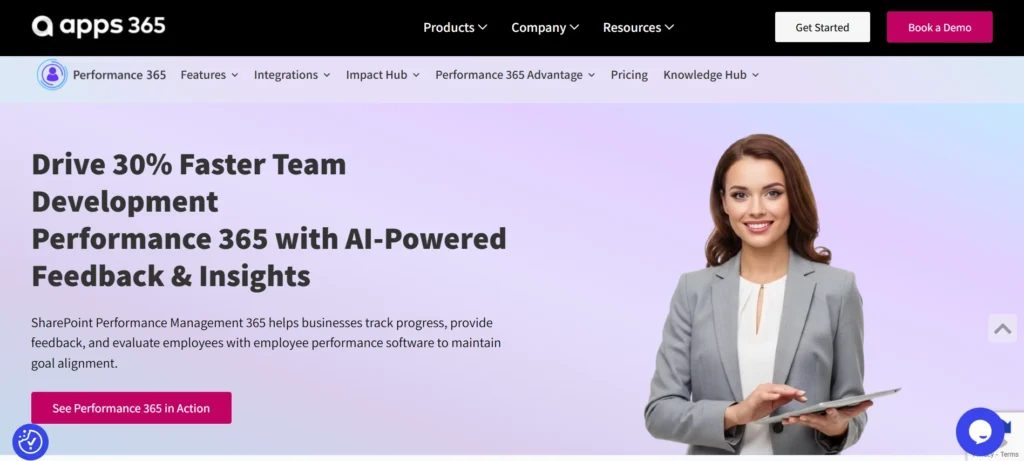
Performance 365 is a Microsoft 365-based platform built for organizations that need a structured, process-driven approach to managing employee performance. It covers goal setting, KPI tracking, KRA management, competency assessments, appraisal workflows, 360-degree feedback, and development planning.
Performance 365 leans toward structure and control. HR teams can configure review templates, approval chains, rating scales, and appraisal cycles to match how their organization already operates.
Because it sits within the broader Microsoft 365 environment rather than just Teams, it connects with the reporting, collaboration, and workflow tools that many HR and leadership teams already use day to day
What Is Teamflect?
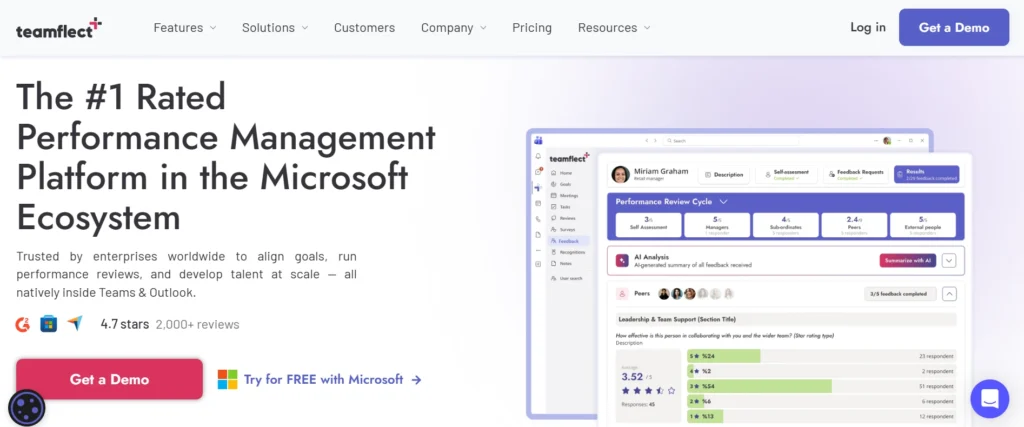
Teamflect is a performance and employee engagement platform built to work natively inside Microsoft Teams. It brings together performance reviews, goal tracking, employee recognition, feedback, one-on-one meeting tools, surveys, and development planning under one roof.
The core idea is convenience. Managers and employees handle performance-related tasks without switching to a separate application. Everything happens inside Teams, which reduces friction and encourages regular use.
Teamflect is a strong fit for organizations that prioritize continuous feedback, day-to-day employee engagement, and OKR-based goal management. It works particularly well where the culture values recognition and where people managers are expected to check in frequently with their teams.
Side-by-Side Feature Overview
| Feature | Performance 365 | Teamflect |
| Best For | Structured performance management | Employee engagement and feedback |
| Microsoft Teams Integration | Yes | Yes |
| KPI Tracking | Yes | Limited |
| KRA Management | Yes | Limited |
| Goal and OKR Management | Yes | Yes |
| Competency Assessments | Yes | Yes |
| Performance Reviews | Yes | Yes |
| 360-Degree Feedback | Yes | Yes |
| Custom Appraisal Workflows | Yes | Limited |
| Employee Recognition | Yes | Yes |
| Advanced Reporting | Yes | Limited |
| Broad Microsoft 365 Integration | Yes | Teams-focused |
Feature-by-Feature Breakdown
1. Goal Management
Goal setting is a core part of both platforms, but the two tools approach it differently.
Teamflect is built around OKRs Objectives and Key Results. The framework is well integrated, easy to use inside Teams, and allows managers and employees to align individual goals with team or company-level objectives. For organizations that have adopted OKRs as their primary goal methodology, Teamflect makes the process feel natural and low-effort.
Performance 365 also supports OKRs, but it goes further. HR teams can manage goals alongside KPIs, KRAs, and weighted performance scorecards. This matters for organizations where goal-setting is tied to formal appraisal outcomes, compensation decisions, or department-level business targets.
If your organization uses a single, clean OKR framework and wants employees to work within it daily, Teamflect handles it well. If your organization uses a combination of goal types, or if goal progress feeds directly into annual review scores, Performance 365 gives you more flexibility.
2. KPI and KRA Tracking
This is one of the clearest points of difference between the two platforms.
Many organizations particularly mid-sized and enterprise businesses continue to evaluate employees using KPIs and KRAs. These metrics connect individual performance to measurable business outcomes and are often built into formal appraisal processes, department scorecards, and quarterly business reviews.
Performance 365 provides dedicated tools for managing both KPIs and KRAs. Employees and managers can set targets, track progress over time, and link individual metrics to broader organizational goals. This data then feeds into appraisal cycles and performance reports, giving HR teams and leadership a clear, quantitative view of how each employee is performing against defined expectations.
Teamflect offers limited support in this area. It is not built around KPI management, and organizations that rely on this type of structured measurement will likely find the platform insufficient for their needs.
3. Performance Reviews
Both platforms support performance reviews, but the level of control and configurability is different.
Teamflect provides a review experience that is straightforward and easy to complete inside Teams. Managers and employees can run check-ins, mid-year reviews, and annual reviews without leaving their usual workspace. The process is designed to feel light and accessible, which works well for organizations that want to reduce the administrative burden around reviews.
Performance 365 gives HR teams more control over how reviews are structured and run. Teams can configure review templates to match different roles or departments, set up multi-step approval workflows, define rating scales, and schedule appraisal cycles across the organization. For companies with a formal HR process where reviews feed into compensation decisions, promotion discussions, or performance improvement plans this level of configurability matters.
Organizations with simple review needs and a focus on keeping the process human and ongoing may prefer Teamflect. Organizations with structured, multi-step appraisal processes will likely find Performance 365 a closer fit.
4. 360-Degree Feedback
Continuous, multi-source feedback is an important part of employee development in both platforms.
Both Performance 365 and Teamflect allow feedback to be gathered from multiple directions managers, peers, direct reports, and in some cases, external stakeholders. This type of feedback gives employees a fuller picture of how their work and behavior are perceived across the organization, beyond what a single manager observes.
Both platforms handle this well. The feedback process is integrated into broader performance workflows in both tools, and HR teams can use the data to inform development conversations, coaching sessions, and review outcomes.
5. Competency Assessments
Performance is not only about what an employee achieves it is also about how they achieve it. Competency frameworks allow organizations to assess behaviors, skills, and leadership qualities alongside output and results.
Performance 365 includes competency-based evaluations as a core part of its appraisal process. HR teams can define competency frameworks relevant to specific roles or levels, and managers can assess employees against those frameworks during review cycles. This is particularly valuable for organizations focused on leadership development, succession planning, or structured career progression.
Teamflect includes some competency-related features, but it is not built around competency frameworks in the same way. Organizations where competency assessments are a formal part of the review process will find Performance 365 a more complete solution.
6. Employee Recognition and Engagement
This is where Teamflect has a genuine and meaningful advantage.
Teamflect is designed with employee engagement at its center. The platform makes it easy for managers and peers to recognize good work, send feedback, celebrate milestones, and keep employees feeling seen and appreciated. Recognition tools are built directly into the Teams experience, which means they are used as part of everyday work rather than as a separate activity.
For organizations where culture, morale, and day-to-day engagement are a priority or where people managers are expected to actively recognize their teams on a regular basis Teamflect’s approach to this is noticeably stronger.
Performance 365 supports employee development and feedback, and it does include recognition features, but its primary design focus is on structured performance management rather than engagement. Organizations where recognition is a central cultural value may find Teamflect better suited to that need.
7. Reporting and Analytics
When performance data needs to be presented to leadership, used in compensation discussions, or analyzed across departments, the quality of reporting becomes a critical factor.
Performance 365 provides visibility across a range of performance metrics, including KPI achievement, goal progress, appraisal completion rates, competency ratings, review outcomes, and performance trends over time. HR teams can pull this data together to build a clear picture of how individuals, teams, and departments are performing against defined targets.
Because Performance 365 sits within the broader Microsoft 365 environment, organizations can also connect performance data with other Microsoft reporting tools, extending the analysis beyond the platform itself.
Teamflect offers reporting features, but they are more limited in scope. Organizations that need detailed, leadership-ready performance reports will find the data and export options in Performance 365 more useful.
8. Microsoft 365 Integration
Both platforms are built for Microsoft environments, but they integrate differently.
Teamflect is deeply integrated with Microsoft Teams specifically. The experience is designed so that all performance-related activity happens inside Teams reviews, feedback, goals, recognition, and one-on-ones. For organizations where Teams is the primary workspace and everything runs through it, this is a genuine strength.
Performance 365 integrates with the broader Microsoft 365 suite. This includes Teams, but it also connects with other Microsoft tools that HR teams and managers use for reporting, collaboration, and workflow management. For organizations using the full Microsoft 365 environment not just Teams, this wider integration can make performance data more accessible and more useful across the business.
Winner: Depends on your setup. Teams-first organizations benefit more from Teamflect’s native experience. Organizations using the full Microsoft 365 suite will get more value from Performance 365’s wider integration.
Who Should Choose Performance 365?
Performance 365 is the stronger choice for organizations that:
- Measure employee performance using KPIs and KRAs tied to business outcomes
- Run formal appraisal cycles with multiple review stages, approval steps, or calibration processes
- Conduct competency-based assessments as part of their review framework
- Need detailed performance reports that can be shared with leadership or used in compensation discussions
- Operate across multiple departments with different role-specific review templates
It is particularly well suited for mid-sized to large organizations, HR teams managing complex performance programs, and companies where structured, data-driven performance evaluation is a business requirement rather than a preference
Who Should Choose Teamflect?
Teamflect is the stronger choice for organizations that:
- Place employee engagement, recognition, and continuous feedback at the center of their people strategy
- Use OKRs as the primary goal framework and want employees working within that system daily
- Want a lightweight, Teams-native performance experience with minimal administrative overhead
- Prefer frequent, informal check-ins over formal review cycles
- Are building or reinforcing a recognition-driven workplace culture
It works well for smaller organizations, Teams-first cultures, and businesses where keeping people engaged and motivated is the primary people management priority.
Why Some Organizations Move Away from Teamflect
Organizations that start with Teamflect sometimes look for alternatives as their performance management needs become more complex. Common reasons include:
The need for KPI-driven evaluations. As organizations grow and performance expectations become more specific, the absence of dedicated KPI and KRA management becomes a limitation. Informal goal tracking is no longer enough when performance data needs to feed into compensation or strategic planning.
More complex review processes. A simple review flow works in the early stages. But as HR teams introduce calibration sessions, multi-level approvals, role-specific templates, or performance improvement workflows, a more configurable platform becomes necessary.
Reporting expectations from leadership. When senior leaders begin asking for performance dashboards, trend analysis, or department-level comparisons, basic reporting tools fall short. The ability to surface meaningful data quickly becomes a deciding factor.
Competency frameworks. Organizations investing in leadership development or structured career progression often need to assess how employees work, not just what they achieve. This requires competency assessment tools that go beyond standard review templates.
Performance 365 is designed to address these needs while keeping everything within the Microsoft 365 environment your organization already uses.
Pros and Cons at a Glance
Performance 365
Strengths:
- Dedicated KPI and KRA management built into the review process
- Competency-based assessments for development and succession planning
- Detailed reporting suitable for leadership and HR analysis
- Broad Microsoft 365 integration beyond Teams
- Supports formal, structured performance cycles
Things to consider:
- Better suited for organizations with established performance frameworks already in place. Teams that want a quick, lightweight setup may find the configurability more than they need at the start.
Teamflect
Strengths:
- Native Microsoft Teams experience with minimal switching between tools
- Strong employee recognition and engagement features
- Continuous feedback tools that feel natural in everyday work
- OKR and goal management that works well for Teams-first organizations
- Easy to set up and adopt across the organization
Things to consider:
- Not built for KPI-driven performance management
- Limited options for organizations with complex or multi-step appraisal processes
- Reporting capabilities may not meet the needs of HR teams presenting data to leadership
Conclusion
Performance 365 and Teamflect are both capable platforms for Microsoft 365 organizations, but they serve genuinely different purposes.
Teamflect is the right choice if your priority is keeping employees engaged, recognized, and connected through regular feedback inside Microsoft Teams. It is easy to adopt, culture-friendly, and well suited to organizations where the day-to-day relationship between managers and employees matters most.
Performance 365 is the right choice if your HR team manages formal review cycles, tracks performance through KPIs and KRAs, assesses competencies, and needs reporting that can stand up to scrutiny in leadership conversations. It gives organizations the structure, flexibility, and data they need to run performance management as a serious business process.
The right platform is the one that matches how your organization already defines and measures success, not the one that asks you to change your process to fit the tool.
Join Our Creative Community
Frequently Asked Questions
What is the main difference between Performance 365 and Teamflect?
Performance 365 is built for structured performance management. It focuses on KPI tracking, KRA management, competency assessments, configurable appraisal workflows, and detailed reporting. Teamflect is built for employee engagement, recognition, OKR management, and continuous feedback inside Microsoft Teams. Both handle performance reviews and goal tracking, but their core priorities are different.
Is Teamflect a good platform for performance management?
Yes, within a specific context. Teamflect covers performance reviews, goal tracking, feedback, and recognition effectively. It works well for organizations that want a lightweight, Teams-based approach focused on engagement and continuous feedback. It is less suited to organizations with formal, KPI-driven review processes.
Which platform is better for KPI and KRA management?
Performance 365. It has dedicated tools for tracking KPIs and KRAs as part of formal appraisal processes, linking individual metrics to business outcomes. Teamflect does not fully support this type of structured measurement.
Which platform works better for Microsoft 365 organizations?
Both are designed for Microsoft environments. Teamflect is the stronger choice for Teams-first organizations. Performance 365 is the stronger choice for organizations using the full Microsoft 365 suite and needing broader integration across tools and reporting systems.
Is Performance 365 a good alternative to Teamflect?
Yes, particularly for organizations that have outgrown Teamflect’s capabilities or need KPI tracking, competency assessments, custom appraisal workflows, and advanced performance reporting from the start.


_JiluXJRGNl.svg)























