

14 Leapsome Alternatives That Actually Work in 2026

You picked Leapsome. You set it all up performance reviews, goals, surveys. Then three months in, you realize half your team doesn’t log in. The setup took longer than expected. And the price just went up when you added one more module.
Sound familiar?
If you’re comparing Leapsome alternatives, this guide makes the process easier. It breaks down 14 popular tools based on what actually matters pricing, ease of use, performance reviews, OKRs, employee engagement, and integrations. Instead of long feature lists, you get a clear understanding of which platform fits different team sizes, workflows, and business goals.
You’ll also learn where each tool works best and where it may fall short. Whether you need a simple review system, stronger goal tracking, a Microsoft 365-friendly platform, or AI-powered feedback tools, this guide helps you save time and avoid choosing software your team may never fully use.
Leapsome is a solid platform. But “solid” doesn’t always mean “right for your team.” Maybe you need something lighter. Maybe you need deeper OKR tracking. Maybe you need a tool that actually fits how your people work every day not the other way around.
This guide breaks down 14 Leapsome alternatives that are worth your time in 2026. Each one is reviewed honestly what it does well, who it’s best for, and where it falls short. No hype, just clear answers.
What Is Leapsome and Why Are People Looking for Alternatives?
Leapsome is a people enablement platform. It brings together performance reviews, OKRs, employee feedback, learning paths, and engagement surveys all in one place. Over 1,500 companies use it, including Spotify and monday.com.
So why are people looking for other options?
A few common reasons:
Cost adds up fast. Leapsome uses a modular pricing model. The base plan looks affordable, but once you add engagement surveys, learning tools, or compensation modules, the bill grows quickly.
Manual OKR updates. Leapsome does not have an API for updating goals automatically. Every OKR update has to be done by hand. For fast-moving teams, that slows things down.
Learning curve. The platform has a lot of features. That’s great — until your team needs three weeks of training just to run a simple review cycle.
Navigation issues. Finding specific reviews or data often means digging through menus that aren’t always easy to follow.
If any of these sound like your situation, you’re in the right place.
How We Picked These Alternatives
Every tool on this list was selected based on five key areas:
- Features: Does it cover the basics reviews, feedback, goals, and engagement?
- Ease of use: Can your team actually use it without a long onboarding process?
- Integrations: Does it connect with tools like Slack, Microsoft Teams, or your existing HRIS?
- Pricing: Is it transparent and fair for your team size?
- User reviews: What are real users saying on G2, Capterra, and similar sites?
Now let’s get into the list.
14 Best Leapsome Alternatives in 2026
1. Performance Management 365
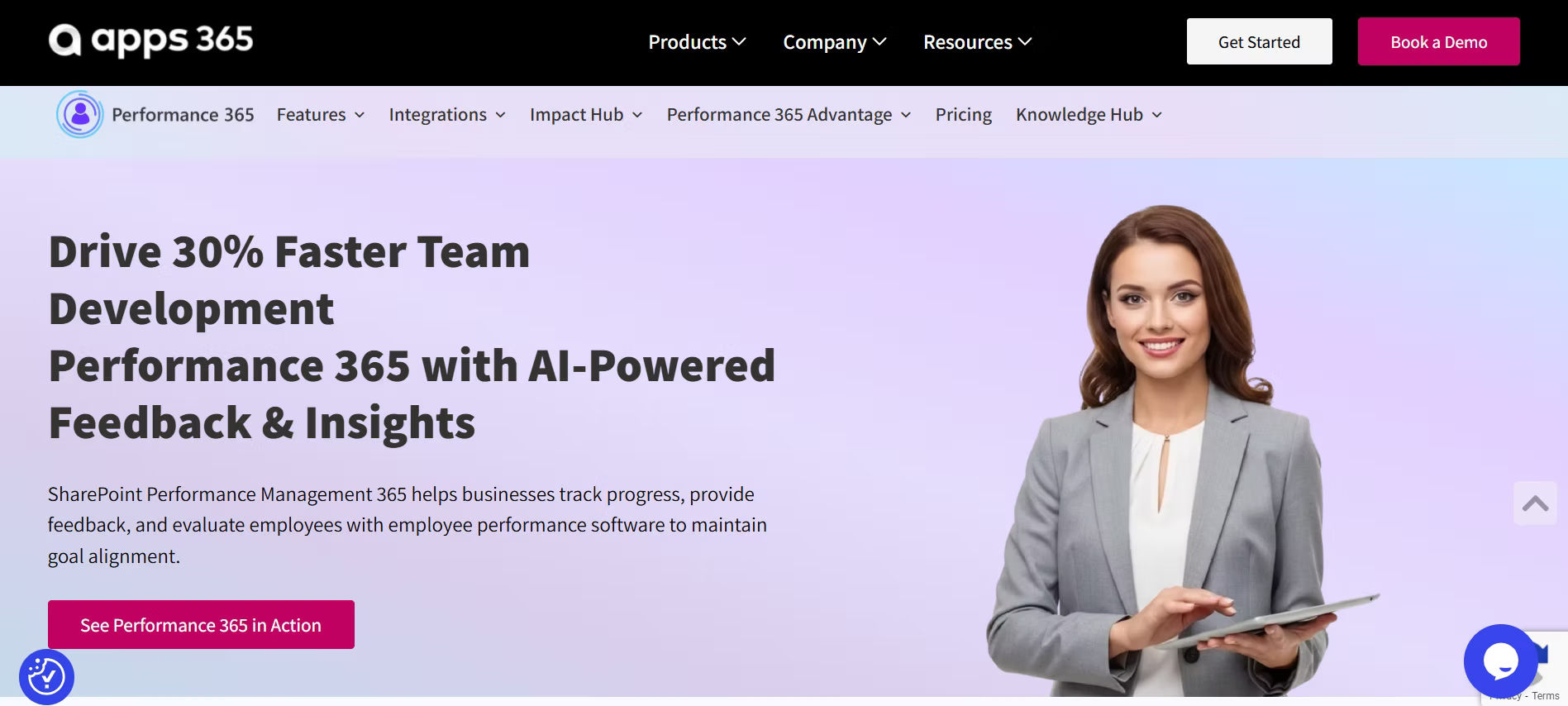
If your company already runs on Microsoft 365 and SharePoint, Performance Management 365 by Apps 365 is worth a close look. It’s built to live inside the tools your team already uses every day no new login, no extra platform, no context switching.
What makes it stand out: Performance Management 365 covers the full performance cycle in one place. You get KPI tracking, self-reviews, 360-degree feedback, performance improvement plans (PIPs), skill alignment, and praise and recognition features — all inside Microsoft 365 and SharePoint. The automated reminders keep review cycles on track without HR having to chase anyone down manually. The skill alignment feature is especially useful: it lets managers connect employee skills directly to company goals, so development conversations are tied to real business needs rather than vague competency frameworks.
The platform is AI-assisted, which helps both managers and employees write better reviews and set clearer goals. It also integrates with the rest of the Apps 365 HR suite including HRMS, Employee Onboarding 365, and LMS 365 so you can build a connected HR workflow without stitching together multiple vendors.
Who it’s best for: Companies of any size that are deeply invested in the Microsoft 365 ecosystem and want performance management to feel like a natural part of their workday not a separate system employees avoid using. Also a strong fit for HR teams that want to manage PIPs, recognition, and goal tracking in one place.
Limitations: If your organization doesn’t use Microsoft 365 or SharePoint, this tool isn’t designed for your environment. Teams looking for standalone mobile-first tools or non-Microsoft integrations may need to look elsewhere.
Pricing: Contact Apps 365 for pricing details. A free trial is available.
Best Leapsome feature it replaces: Performance reviews + KPI tracking + 360-degree feedback + PIPs + skill alignment Microsoft-native.
💼 Ready to Improve Performance Inside Microsoft 365?
2. Small Improvements
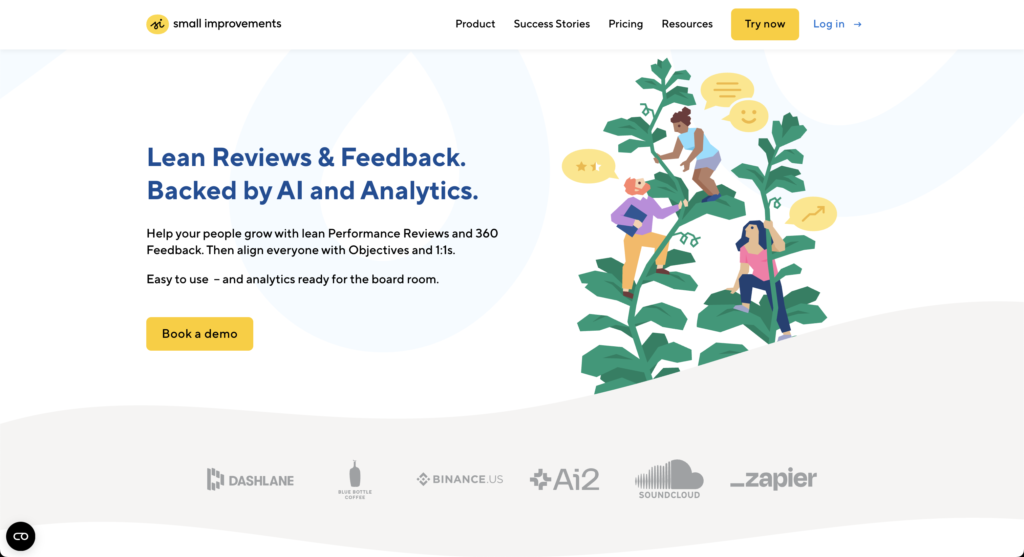
Small Improvements is built for growing teams that want performance reviews, 360 feedback, 1-on-1s, objectives, pulse surveys, and praise without the complexity of a full HR suite.
What makes it stand out: The platform is simple to roll out but still flexible enough to match your own review cycles, feedback forms, terminology, and manager workflows. HR teams can run structured reviews and 360s while keeping performance conversations connected to ongoing 1-on-1s, objectives, and employee recognition.
Who it’s best for: Small and mid-sized companies that want lightweight, dedicated performance management software instead of a broad all-in-one HR platform.
Limitations: Small Improvements is not a full HRIS, learning platform, or compensation tool. If you want every HR process in one system, you may need a broader suite.
Pricing: Starts at $3/user/month. A 30-day free trial is available.
Best Leapsome feature it replaces: Performance reviews + 360-degree feedback + 1-on-1 meetings + objectives + pulse surveys.
3. 15Five
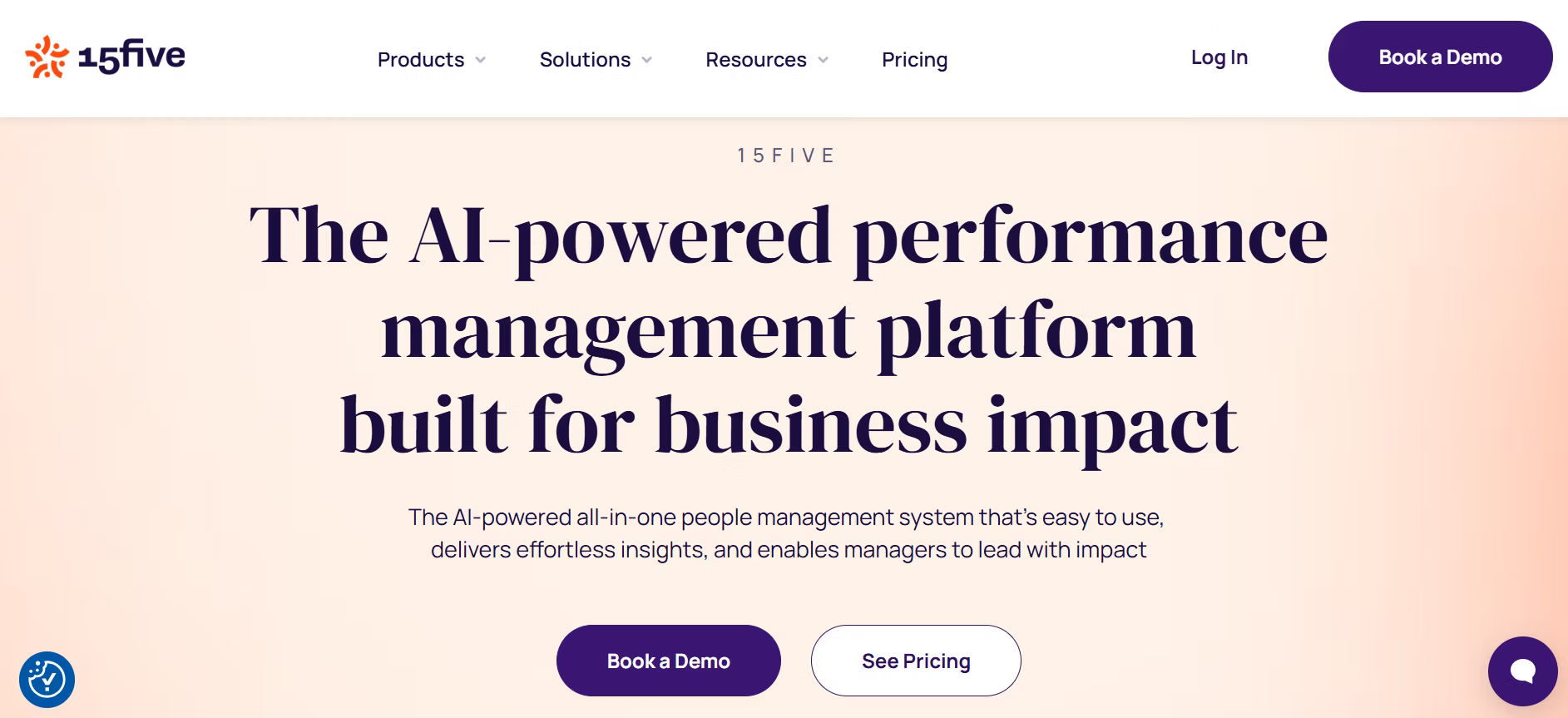
15Five is built around one simple idea: check in with your team every week. It started as a lightweight feedback tool and has grown into a full performance management platform with OKRs, reviews, and manager coaching tools.
What makes it stand out: The weekly check-in format keeps feedback consistent without making it feel like a big deal. Employees spend just a few minutes answering a short set of questions. Managers get real-time visibility into how their team is feeling and what they’re working on.
Who it’s best for: Companies that want to build a culture of regular, honest communication — especially remote or hybrid teams.
Limitations: The analytics dashboard is not as deep as some competitors. If you need detailed reporting or complex review workflows, you may hit its limits quickly.
Pricing: Starts at $4/user/month for the Engage plan. The full Perform plan starts higher.
Best Leapsome feature it replaces: Continuous feedback + engagement surveys + lightweight performance reviews.
4. Culture Amp
.avif)
Culture Amp is focused on employee engagement, performance, and development. It’s known for its research-backed survey tools and strong benchmarking data. Companies can compare their engagement scores against industry benchmarks to understand where they stand.
What makes it stand out: The survey design is science-based. Culture Amp has a team of organizational psychologists who helped build the question banks. The insights you get from their surveys are more meaningful than what you’d get from a basic feedback form.
Who it’s best for: HR teams that take employee engagement seriously and want data they can actually act on. Works well for mid-sized to enterprise companies.
Limitations: Custom pricing makes it harder to evaluate without a sales call. The performance review features, while solid, are not as advanced as dedicated review platforms. Setup and onboarding take time.
Pricing: Custom. Generally considered mid-to-high range.
Best Leapsome feature it replaces: Engagement surveys + people analytics + performance reviews.
5. Betterworks
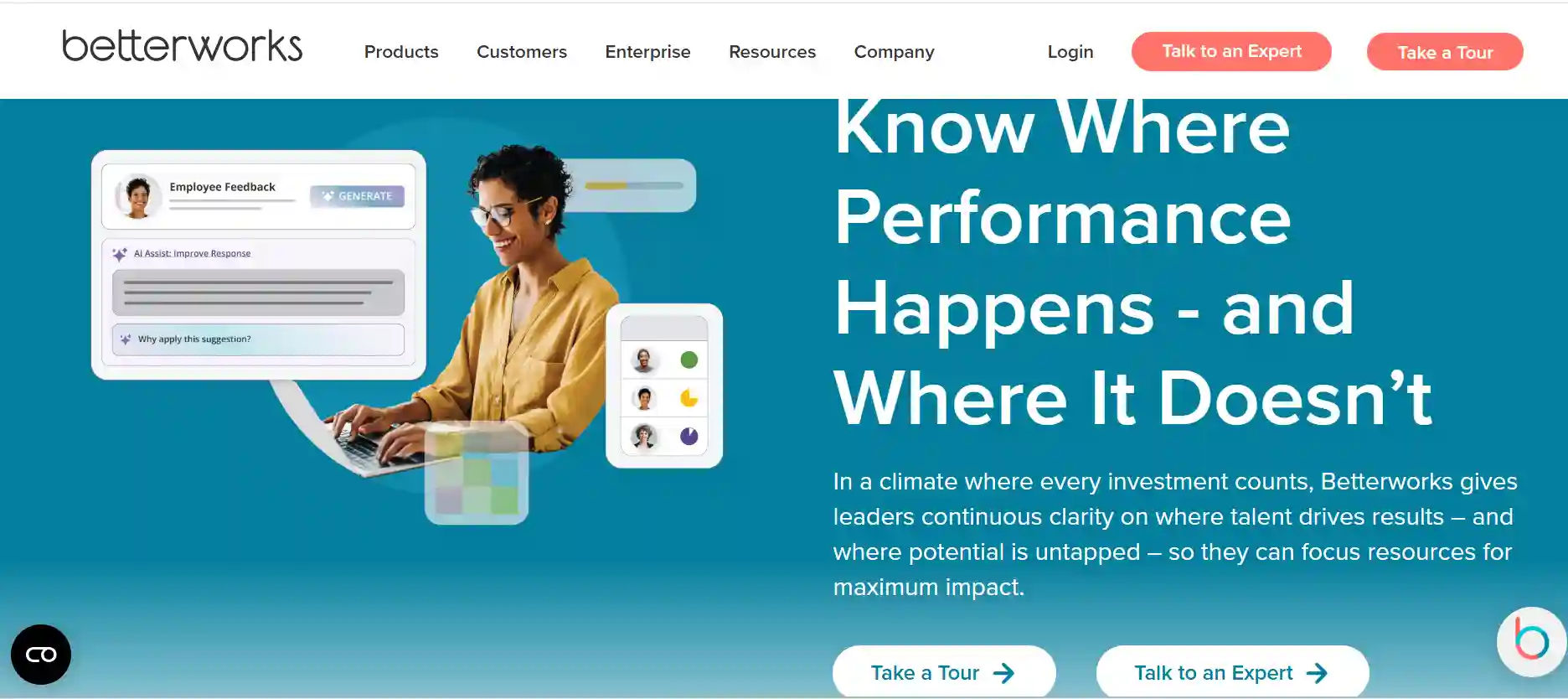
Betterworks is built for large organizations that need to connect individual goals to company-wide strategy. Its OKR framework is more structured and detailed than most competitors, making it a strong choice for enterprises that are serious about goal alignment.
What makes it stand out: Betterworks makes it easy to see how everyone’s goals roll up to the top-level company objectives. It also has strong compliance and security features, which matter a lot for large regulated industries like finance and healthcare.
Who it’s best for: Enterprise HR teams and leadership at companies with 500+ employees that need a structured goal management process.
Limitations: The platform is more rigid than Leapsome. Smaller, more agile teams may find it too complex. Pricing is enterprise-level. The interface is functional but not the most modern-looking.
Pricing: Custom pricing only.
Best Leapsome feature it replaces: OKRs + performance alignment + enterprise-grade reporting.
6. Workleap
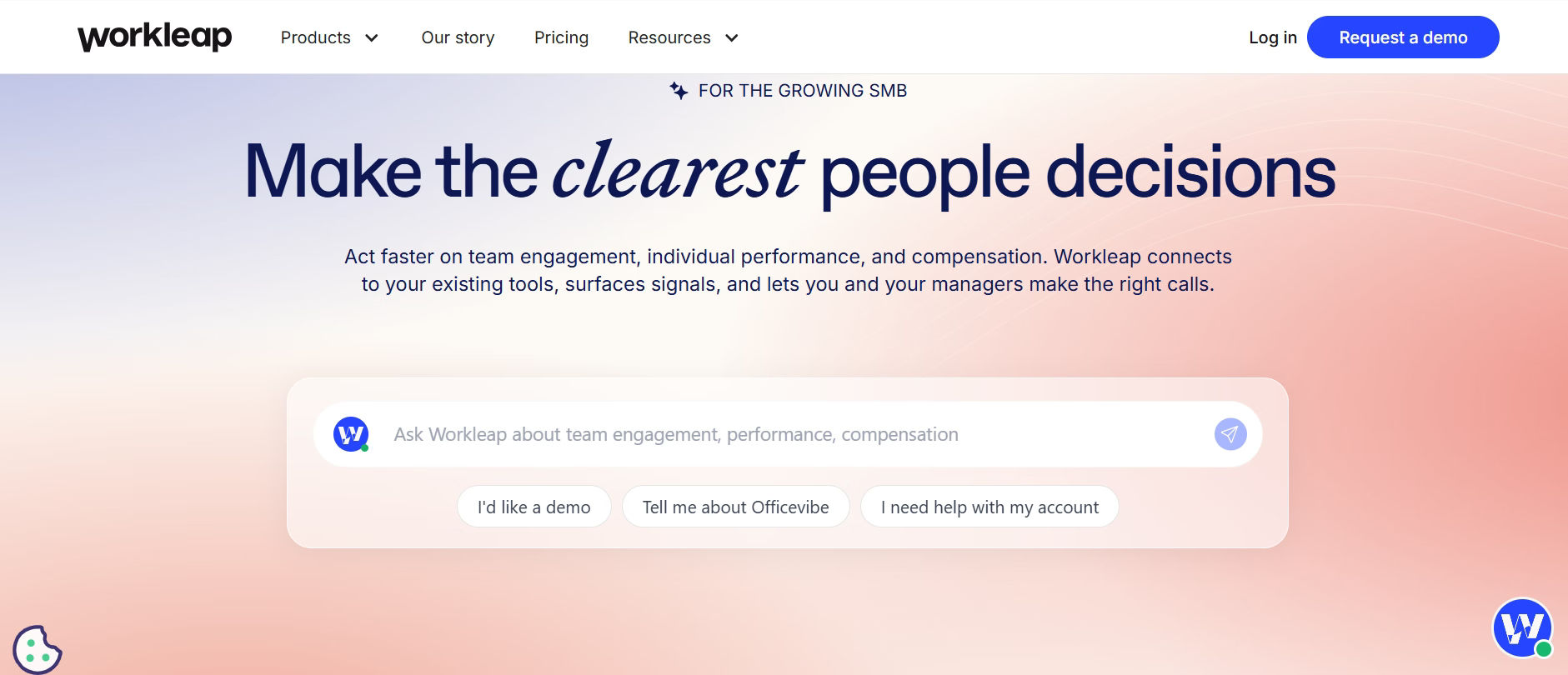
Workleap rebranded from Officevibe and now includes a broader set of HR tools alongside its well-known engagement survey product. It uses AI to surface insights and help managers take action on what their teams are telling them.
What makes it stand out: The AI-powered manager recommendations are practical and easy to follow. Instead of just showing a low engagement score, Workleap suggests specific actions a manager can take to improve it. The onboarding experience is faster than most comparable tools.
Who it’s best for: Companies where managers play a big role in employee experience and need clear guidance on how to improve team engagement.
Limitations: The performance review module is less customizable than Leapsome’s. Some users report that the OKR tools feel secondary to the engagement features. Advanced analytics require higher-tier plans.
Pricing: Starts at $5/user/month.
Best Leapsome feature it replaces: Engagement surveys + manager coaching + people analytics.
7. PerformYard
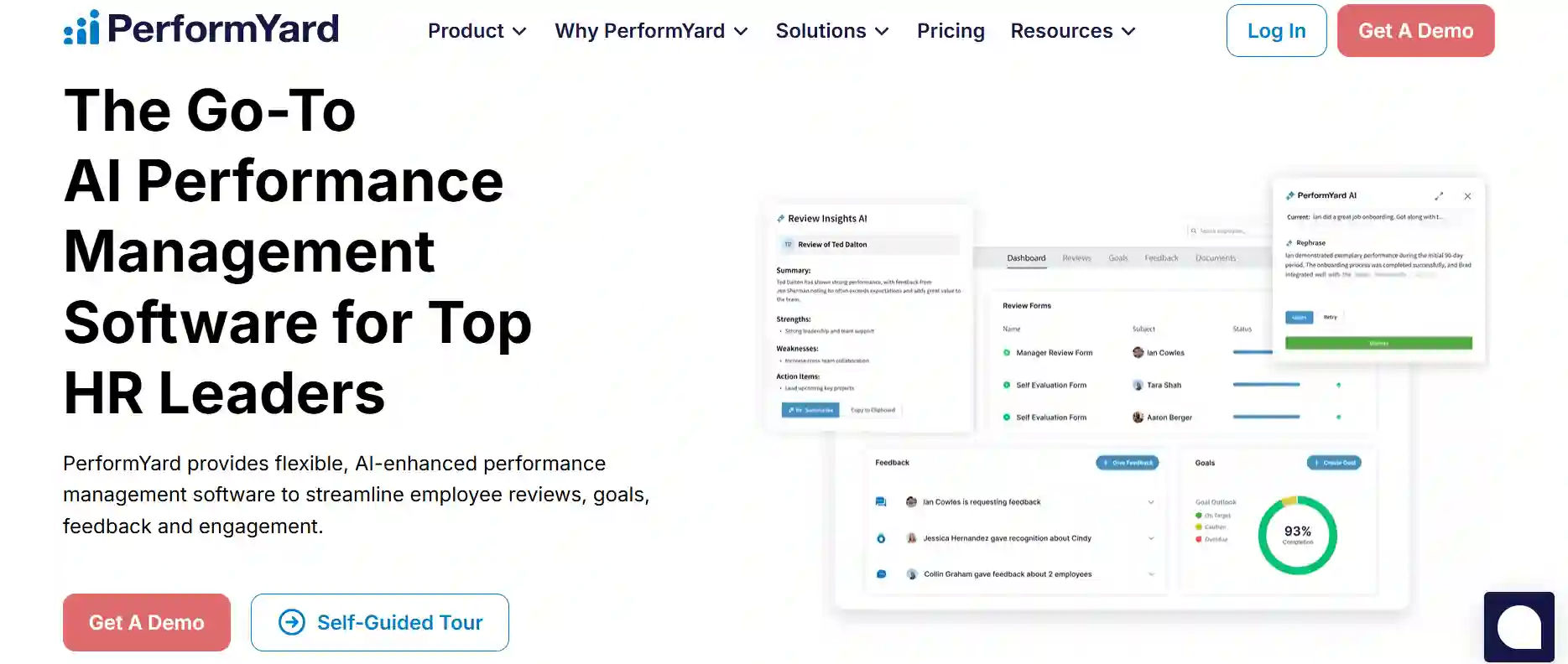
PerformYard is a performance review platform that lets you build review cycles exactly the way you want them. It’s flexible enough to support any review format — annual reviews, quarterly check-ins, project-based reviews, or peer reviews.
What makes it stand out: The level of customization is impressive. You can build review templates, set scoring rubrics, and design workflows without needing IT help. PerformYard also gives employees clear visibility into their own performance data, which helps build trust.
Who it’s best for: HR teams that have a specific review process in mind and don’t want to be forced into a template. Works well across company sizes.
Limitations: The engagement survey features are basic. If you need strong OKR tracking or learning tools, you’ll need to pair it with another platform.
Pricing: Starts at $5/user/month.
Best Leapsome feature it replaces: Customizable performance reviews + 360-degree feedback.
8. HiBob

HiBob (often called “Bob”) is a modern HRIS platform that also includes performance management, engagement surveys, and compensation tools. It’s designed to feel less like a legacy HR system and more like a modern SaaS tool that employees actually enjoy using.
What makes it stand out: The user experience is clean and intuitive. Employees can see their own data, track their goals, and give feedback without feeling like they’re navigating a complicated system. The HRIS features are genuinely strong, making it a good single platform if you want to reduce the number of tools you’re running.
Who it’s best for: Growing companies (roughly 50–1,000 employees) that want to combine HR operations and performance management in one place.
Limitations: Advanced analytics and customization require higher-tier plans. Some users say the performance module is not as deep as dedicated tools like PerformYard or Betterworks.
Pricing: Custom pricing. Generally competitive for mid-market companies.
Best Leapsome feature it replaces: HR operations + performance reviews + engagement surveys.
9. Engagedly

Engagedly brings a unique approach to performance management by adding gamification elements points, badges, and leaderboards alongside traditional features like reviews, OKRs, and learning paths.
What makes it stand out: The gamification features genuinely increase adoption. Employees are more likely to engage with a platform when it feels rewarding to use. Engagedly also connects learning and performance more tightly than most tools, so skill development is built into the review process.
Who it’s best for: Companies with younger workforces or organizations that struggle with low platform adoption and want to make performance management more engaging.
Limitations: The gamification elements can feel out of place in more formal corporate environments. Some users report that the interface feels dated in certain areas. Customer support response times can vary.
Pricing: Starts at $5/user/month.
Best Leapsome feature it replaces: Learning paths + performance reviews + employee engagement.
10. BambooHR
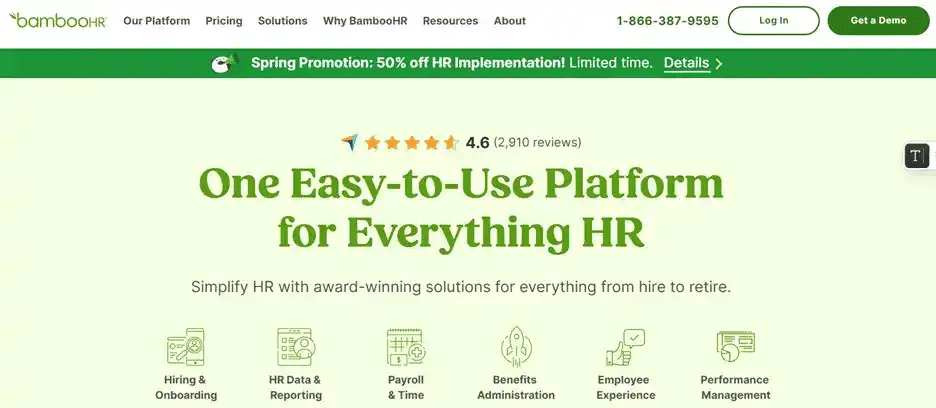
BambooHR is one of the most popular HR platforms for small and mid-sized businesses. It covers everything from hiring and onboarding to time-off tracking, payroll, and performance management.
What makes it stand out: BambooHR is easy to set up and simple to use. For small HR teams that wear many hats, having all these tools in one place is a huge time-saver. The reporting features are solid, and the customer support is consistently praised.
Who it’s best for: Small businesses (under 500 employees) that need a reliable all-in-one HR platform without a steep learning curve.
Limitations: The performance management module is not as advanced as dedicated tools. There’s no OKR framework built in. If your primary need is performance reviews and goal tracking, BambooHR may feel limited.
Pricing: Custom pricing. Generally affordable for small teams.
Best Leapsome feature it replaces: HR operations + basic performance reviews + onboarding.
11. Taito.ai
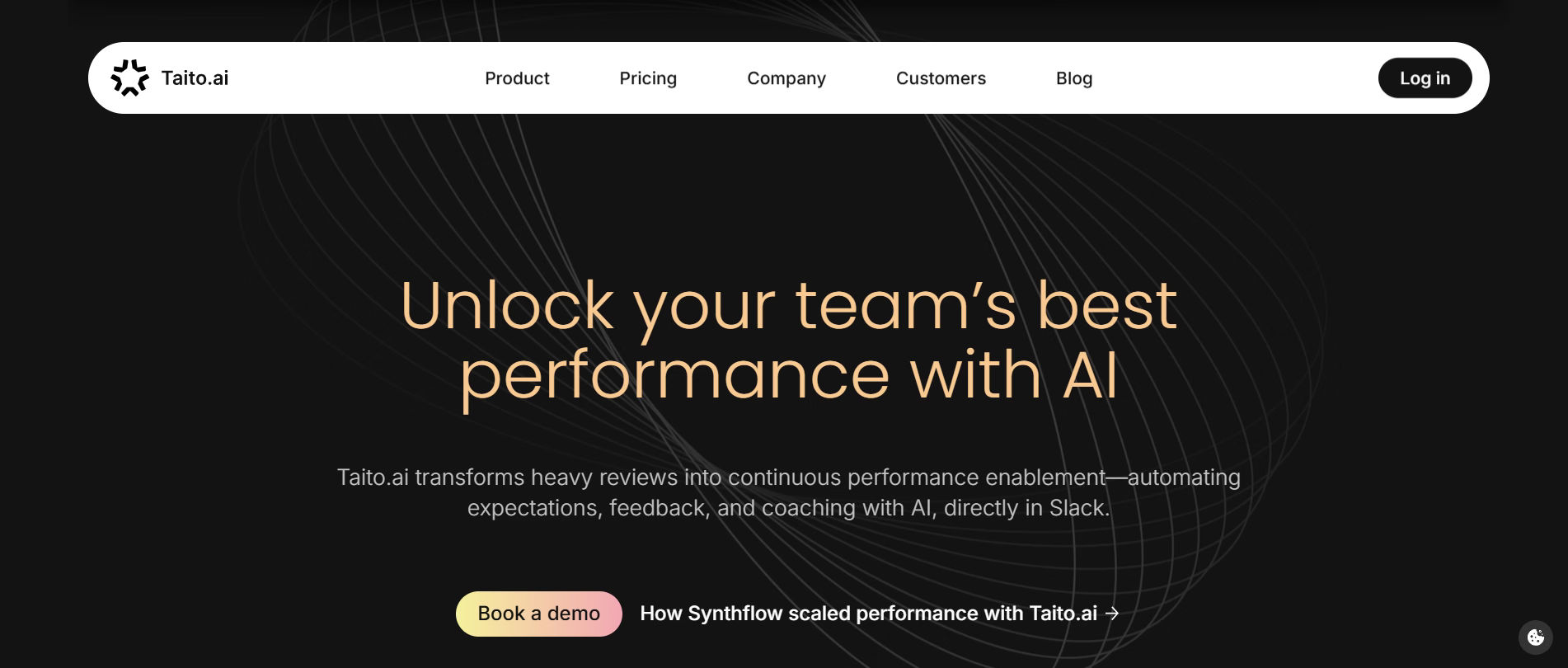
Taito.ai is a newer entrant built for teams that want AI at the center of their performance management process. It automates feedback collection, generates coaching prompts for managers, and works natively inside Slack.
What makes it stand out: The automation is genuinely useful. Taito.ai doesn’t just surface data — it helps managers and employees know what to do with it. The setup time is measured in days, not weeks, which is a real advantage over heavier platforms.
Who it’s best for: Tech-forward teams that are already living in Slack and want a performance tool that meets them there. Also great for startups that want smart automation without a complex setup.
Limitations: As a newer platform, the analytics and enterprise reporting features are still maturing. The integration ecosystem is smaller than established tools. May not suit organizations that need a full HRIS alongside performance tools.
Pricing: Mid-range and scalable. Contact for exact pricing.
Best Leapsome feature it replaces: AI-assisted feedback + manager coaching + continuous performance tracking.
12. Small Improvements
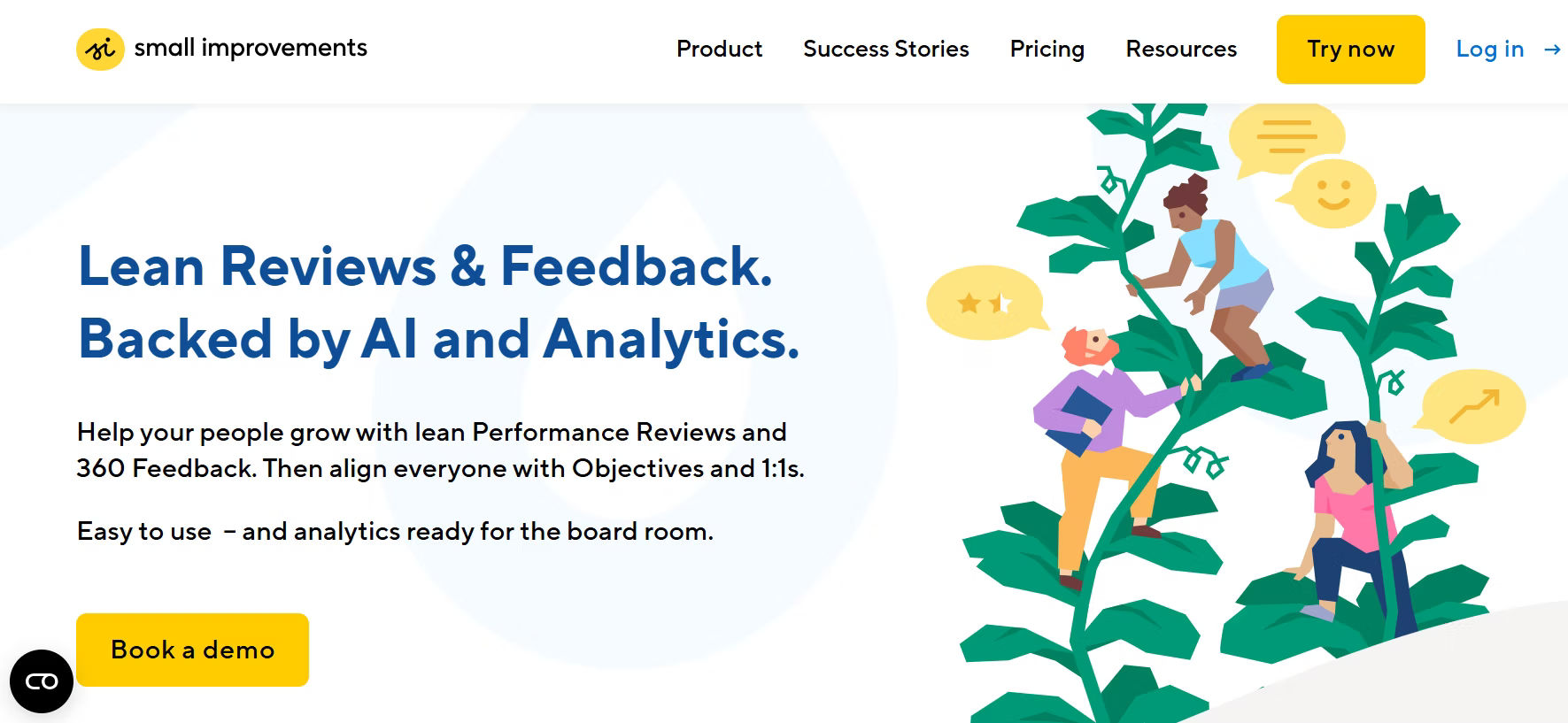
Small Improvements is exactly what it sounds like a no-frills performance management platform that focuses on doing the basics really well. It covers performance reviews, 360-degree feedback, 1-on-1 meetings, and OKRs.
What makes it stand out: The simplicity is its strength. New users can get started in minutes. There’s no long implementation period and no overwhelming number of features to configure. It’s honest, clean, and gets the job done.
Who it’s best for: Small to mid-sized companies that don’t need a massive feature set and want a platform that’s easy for both HR teams and employees to use.
Limitations: The feature set is intentionally limited. If you need advanced analytics, gamification, learning paths, or complex workflows, this won’t be enough. It’s built for simplicity, not power.
Pricing: Starts at $3/user/month — one of the most affordable options on this list.
Best Leapsome feature it replaces: Performance reviews + 360-degree feedback + 1-on-1 meetings.
13. Peoplebox
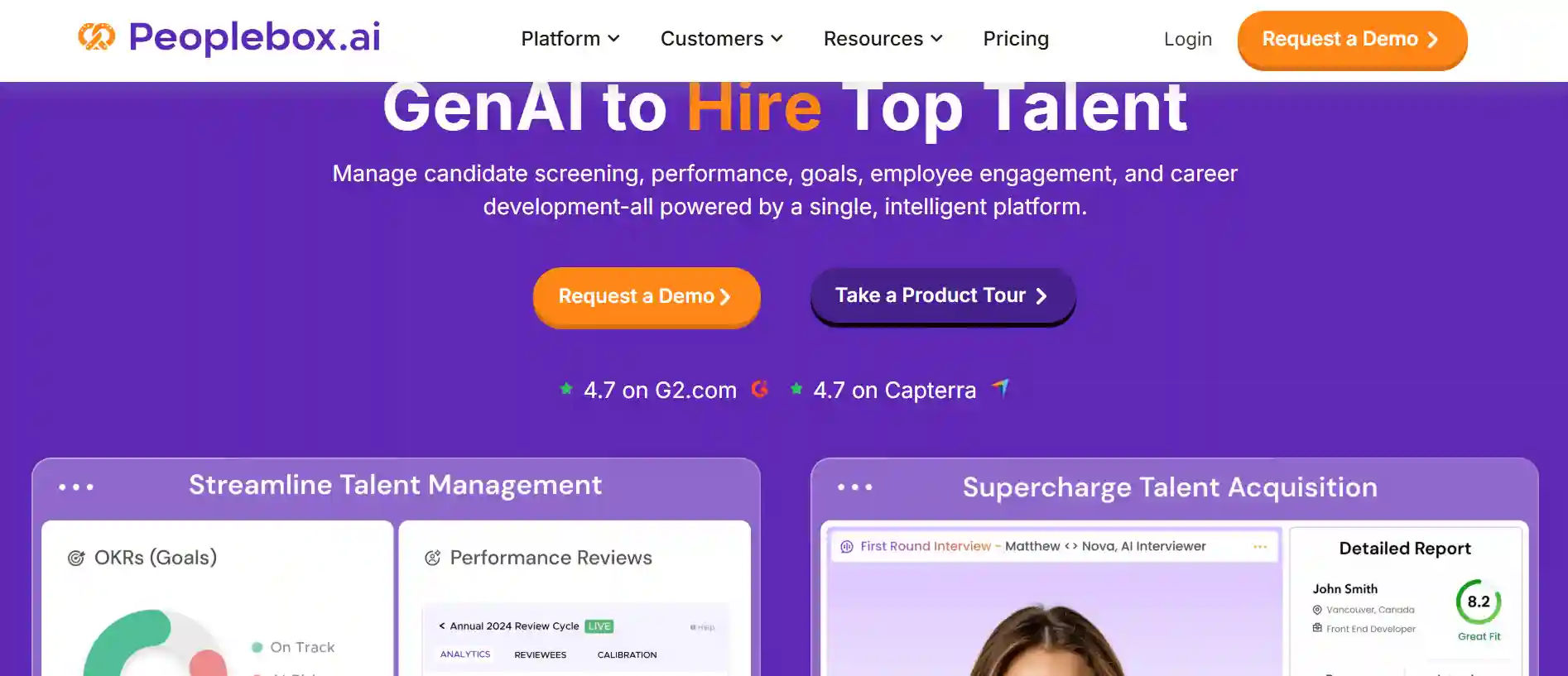
Peoplebox is designed for fast-growing startups and scale-ups that need to get a performance management process off the ground quickly. It has AI-driven OKR recommendations, performance reviews, and integrates well with tools like Slack, Jira, and Salesforce.
What makes it stand out: The AI-assisted OKR recommendations help teams that are new to goal-setting frameworks. The Slack integration means employees get reminders and can update their goals without leaving the tools they already use.
Who it’s best for: Startups and growing tech companies that are building their people management process for the first time.
Limitations: Not designed for enterprise scale. Companies with complex org structures or strict compliance requirements may find it limiting. The reporting features need improvement according to some user reviews.
Pricing: Starts at around $7/user/month.
Best Leapsome feature it replaces: OKRs + performance reviews + Slack-native workflows.
14. Teamflect
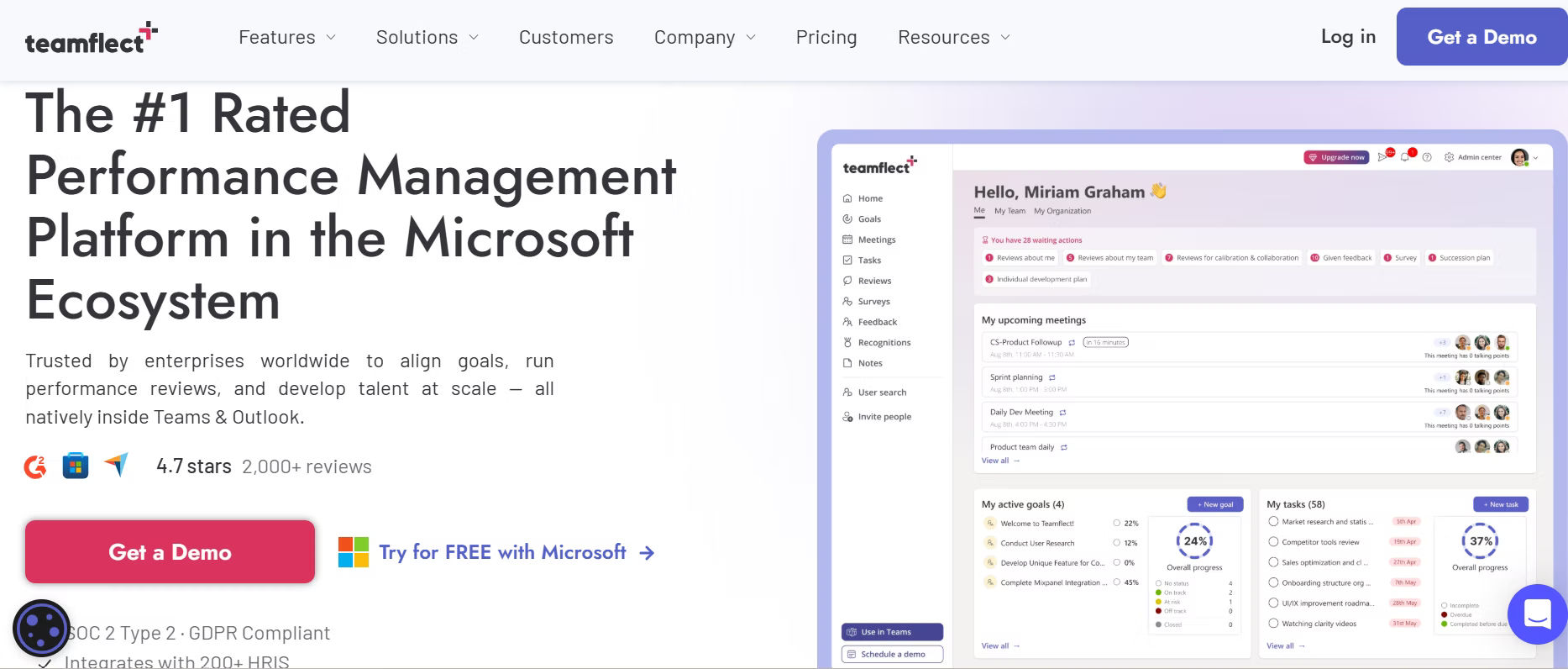
Teamflect is built entirely inside Microsoft Teams. If your company runs on Microsoft 365, this tool lets your team run performance reviews, set goals, share feedback, and track development without leaving Teams.
What makes it stand out: The zero-context-switching experience is its biggest advantage. Employees don’t have to log into a separate platform — everything happens inside the tool they’re already using. Setup is fast, and adoption tends to be high because the barrier to entry is so low.
Who it’s best for: Companies that are heavily invested in the Microsoft 365 ecosystem and want to make performance management as frictionless as possible.
Limitations: If your team doesn’t use Microsoft Teams, this tool isn’t for you. The feature set outside of Teams is limited. Advanced reporting and customization options are more basic than standalone platforms.
Pricing: Starts at $5/user/month. Free version available.
Best Leapsome feature it replaces: Performance reviews + goals + feedback — all inside Microsoft Teams.
Quick Comparison: Leapsome vs. Top Alternatives
| Tool | Best For | Starting Price | Key Strength |
| Performance Management 365 | Microsoft 365 teams | Contact for pricing | Native SharePoint + full review cycle |
| Lattice | Full HR suite | $11/user/mo | Broad feature set |
| 15Five | Continuous feedback | $4/user/mo | Weekly check-ins |
| Culture Amp | Engagement analytics | Custom | Research-backed surveys |
| Betterworks | Enterprise OKRs | Custom | Deep goal alignment |
| Workleap | Manager coaching | $5/user/mo | AI-driven insights |
| PerformYard | Custom reviews | $5/user/mo | Flexible review design |
| HiBob | HRIS + performance | Custom | Modern, all-in-one |
| Engagedly | Gamified engagement | $5/user/mo | Learning + performance |
| BambooHR | Small business HR | Custom | Easy, all-in-one |
| Taito.ai | AI-native performance | Mid-range | Slack-native AI |
| Small Improvements | Simple reviews | $3/user/mo | Low cost, easy setup |
| Peoplebox | Startup scaling | ~$7/user/mo | AI OKR help |
| Teamflect | Microsoft Teams users | $5/user/mo | Zero context switching |
| Zensai | Microsoft 365 orgs | Custom | Learning + performance |
How to Choose the Right Leapsome Alternative
Before you pick a tool, answer these five questions:
- What’s your main pain point withLeapsome(or your current tool)?
Is it price? Complexity? Missing features? Low adoption? Your answer narrows the list significantly. - What size is your team?
Small teams (under 100) usually do better with simpler, more affordable tools like Small Improvements or 15Five. Enterprise teams need the depth ofBetterworks or Lattice. - What tools are you already using?
If your companyruns on Microsoft 365, Teamflect or Zensai make a lot of sense. If you live in Slack, look at Taito.ai or Peoplebox. Don’t pick a tool that fights against your existing workflow. - Do you need an HRIS or just performance management?
If you need both,HiBob or BambooHR are worth a look. If you just need performance reviews and feedback, dedicated tools like PerformYard or Culture Amp will likely serve you better.
- What’s your realistic budget?
Include implementation time and training costs, not just the per-user price. A $3/user tool that your team never uses is more expensive than a $10/user tool with 90% adoption.
Conclusion
Leapsome is a good tool, but it is not the right fit for every team. The best choice depends on how your team works, what tools you already use, and what problems you want to solve.
If you want something simple and budget-friendly, tools like Small Improvements or 15Five are a good start. For large teams that need strong goal alignment, Betterworks can work well. If your company runs on Microsoft 365, tools like Teamflect, Zensai, or Performance Management 365 can feel much easier to use because they fit into your daily workflow. And if you want smart automation, Taito.ai is worth exploring.
Before you decide, always try the tool with your real team and real process. A tool only works if people actually use it.
Join Our Creative Community
Frequently Asked Questions
What is the best free alternative to Leapsome?
Performance Management 365 has a free version available for Microsoft Teams users. Most other tools on this list offer free trials rather than free plans, but Small Improvements and 15Five have entry-level pricing that makes them accessible for small teams.
Is there a Leapsome alternative that's better for small businesses? Yes. BambooHR,
Small Improvements, and 15Five are all well-suited for small businesses. They’re easier to set up, more affordable, and don’t require a dedicated implementation team.
Which Leapsome alternative is best for OKRs?
Betterworks is the strongest choice for enterprise OKR management. Peoplebox and Mooncamp are also solid options for teams that want OKR-focused tools without the enterprise price tag.
Can I replace Leapsome with just one tool?
In most cases, yes. Platforms like Lattice, HiBob, and Culture Amp cover most of what Leapsome offers in a single subscription. That said, some teams prefer to combine a focused performance tool with a separate HRIS, which can give you more flexibility and sometimes lower overall cost.
How long does it take to switch from Leapsome to another platform?
It depends on the tool and your team size. Simpler tools like Small Improvements or Teamflect can be set up in days. More complex platforms like Lattice or Betterworks may take several weeks to configure properly. Always factor in data migration time if you have historical review data you want to keep.


_JiluXJRGNl.svg)























