
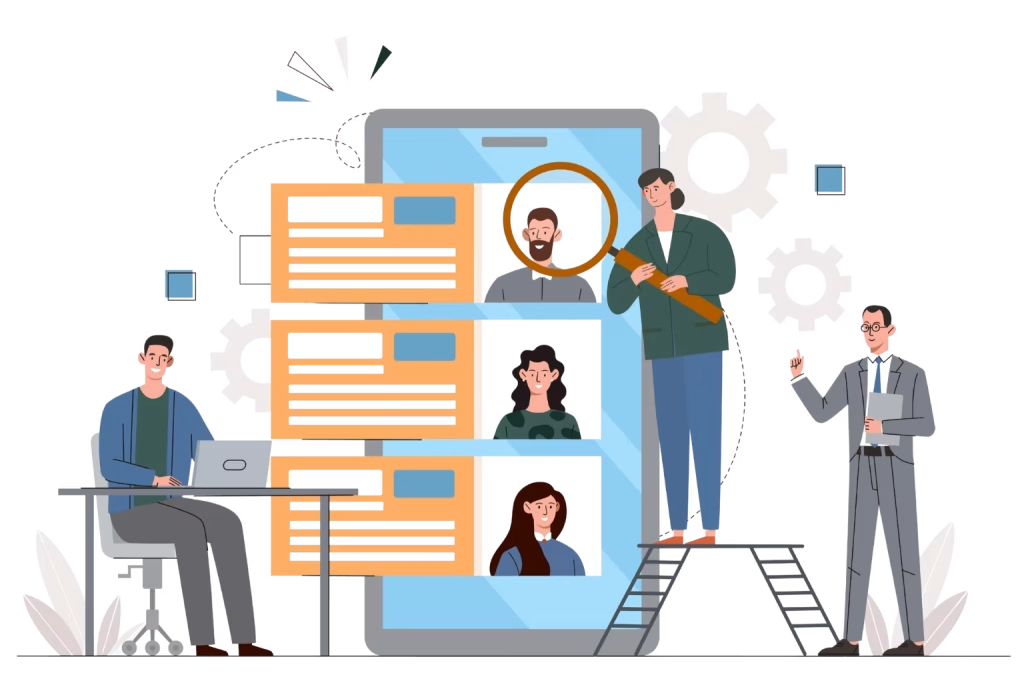
Recruit, Hire, and Onboard Your Incredible Team — The Smart Way
_mVFFaHUZhS.webp)
Building a great team is the single most important thing a business can do yet most companies are still using slow, outdated methods that cost them top talent every single day. If your recruitment, hiring, and onboarding process feels like a mess, you are not alone and there is a better way forward.
Hiring and onboarding software helps businesses streamline the entire talent journey—from job posting to employee integration—using automation, structured workflows, and centralized systems. It reduces hiring time, improves candidate experience, ensures compliance, and boosts retention through better onboarding.
Companies that adopt these platforms gain a clear competitive edge by hiring faster, making better decisions, and creating a more professional, engaging experience for both candidates and new hires.
Think about the last time you lost a great candidate. Maybe they took up another job in another place due to the slowness of your process. Perhaps a new employee resigned in the first 90 days due to a sense of being lost and unassisted. They are painful, expensive issues but they can be avoided 100 percent. The current hiring and onboarding software provides businesses with a fully integrated solution to recruit, choose, and introduce talent without any hassles or doubts.
The Hidden Cost of a Broken Hiring Process
Most people focus on salary and benefits when thinking about talent costs. But the real drain is the broken process underneath. A slow, confusing, or inconsistent hiring process does not only frustrate job seekers, it also costs your company a lot of money.
Here is what the research says:
- The SHRM estimates the average cost of hiring a new employee to be 4,700.
- Companies with a strong onboarding process improve new hire retention by 82% and productivity by over 70%.
- According to LinkedIn Talent Solutions, 83% of HR professionals say employer brand significantly impacts their ability to hire great talent.
- Glassdoor research shows that candidates who have a positive hiring experience are 38% more likely to accept a job offer.
These numbers tell a clear story. If your recruitment and employee onboarding system is scattered across spreadsheets, email threads, and paper forms, you are leaving money on the table and driving away the very people you want most.
What Is Hiring and Onboarding Software and Why Does It Matter?
Hiring and onboarding software is an online tool that assists companies with all the processes of recruiting a new employee. Everything is in one place between the time a job opening is posted and the time a new employee finishes his or her first week.
A solid platform will typically include:
- Applicant tracking to store and manage applicant profiles in a single dashboard.
- Automated job postings that go out to multiple boards simultaneously
- Interview scheduling software that eliminates the back and forth email mess.
- Digital offer letters that candidates can sign from any device
- Automated onboarding checklists so nothing gets missed on day one
- E-document collection for tax forms, policy agreements, and benefits enrollment
- Reporting dashboards to track time-to-hire, offer acceptance rates, and onboarding progress
Think of it as your command center for talent. Instead of juggling ten different tools and hoping nothing falls through the cracks, you have one smart system doing the heavy lifting for you.
Who Needs This Kind of System?
This is not just for Fortune 500 companies. Businesses of all sizes are discovering how employee recruitment tools and structured onboarding workflows give them an edge in a competitive job market.
This is not just for Fortune 500 companies. Businesses of all sizes are discovering how employee recruitment tools and structured onboarding workflows give them an edge in a competitive job market.
You likely need hiring and onboarding software if:
- Your HR team spends hours each week manually sending emails, updating spreadsheets, or chasing paperwork
- Applicants often become quiet during the application process or vanish on your job applications.
- New employees come in on the first day disoriented, not knowing what to do, or without equipment and access.
- Your company is expanding rapidly and the existing process is simply not able to keep pace.
- You are struggling to build a consistent, professional brand experience across every hire
If even two of those points hit close to home, keep reading. The solution is closer than you think.
How to Recruit Incredible Talent: Step-by-Step
Great recruiting begins long before a job posting is posted. It begins with a clear strategy, a strong brand narrative, and the appropriate tools to get to the right people.
Step 1 — Define the Role With Precision
Vague job descriptions attract the wrong candidates and waste everyone’s time. Create organized job templates using your talent acquisition platform with clear expectations, skills needed, pay scales, and career paths. Applicants who are aware of what they are applying to are much more likely to be a great fit – and to remain.
Step 2 — Post Everywhere in One Click
Modern employee recruitment tools connect to dozens of job boards Indeed, LinkedIn, Glassdoor, ZipRecruiter, and more from a single interface. You post once and your role is everywhere instead of having to log into five different websites. This dramatically expands your reach and reduces your time-to-hire.
Step 3 — Screen Smarter, Not Harder
With an applicant tracking system (ATS) built into your hiring platform, resumes are automatically organized, tagged, and ranked based on your criteria. You no longer drown in applications and instead begin to concentrate on the people who are a match. Certain sites go as far as to pre-screen questions that weed out unqualified candidates without a human being looking at them.
Step 4 — Move Fast on Great Candidates
Speed matters enormously in today’s job market. According to Indeed, 51% of job seekers have turned down an offer because of a slow hiring process. Automated interview scheduling, instant notification, and digital offer letters will ensure your team can go application to offer in days, not weeks.
The Art of Hiring: Making the Right Call Every Time
Hiring the wrong person is one of the most expensive mistakes a business can make. According to the U.S. Department of Labor, a bad employee costs the company at least 30 percent of the first year earnings of the bad employee. Good hiring and onboarding software will minimize that risk by adding some order and uniformity to your evaluation process.
Here is what a structured hiring process looks like with the right tools:
- Standardized interview scorecards to have all interviewers judge candidates using the same criteria.
- Group feedback systems in which hiring managers post notes and scores live.
- Automatic background check integrations that occur following a conditional offer.
- Legally binding and brand-consistent offer letter templates.
- E-signatures so that candidates take up offers immediately.
When your hiring workflow is consistent and data-driven, bias decreases and quality increases. You make decisions based on clear evidence — not gut feeling or whoever remembered to write down their notes.
Onboarding: The Make-or-Break Moment for Every New Hire
You got the offer accepted. Congratulations. The next stage is the one that is totally underestimated by most companies onboarding. It is the window in which a new employee will determine whether they have made the right decision. And to a lot of employees, that decision is made within the first two weeks.
According to Gallup, only 12% of employees strongly agree that their company does a great job of onboarding new workers. That means 88% of organizations are missing a massive opportunity to build loyalty, engagement, and productivity from day one.
A powerful employee onboarding solution changes that with:
- Pre-boarding platforms where new employees do their paperwork, watch welcome videos, and get to know their team before they even step through the door.
- Automated task checklists for IT, HR, and managers — so equipment is ready, accounts are set up, and no one is scrambling
- Personalized 30-60-90 day plans that give new hires a clear roadmap and reduce uncertainty
- Digital policy acknowledgments and compliance training tracked automatically
- Pulse surveys and check-in reminders that help managers stay connected and catch problems early
Your employee onboarding process should be well-organized and friendly, and when it is, new employees will feel appreciated, ready, and eager to work. The emotional experience during the initial weeks is a strong force of long-term retention.
5 Key Benefits of Using Hiring and Onboarding Software
Still on the fence? Here are five concrete reasons why businesses that invest in talent management platforms pull ahead of their competitors:
1. Faster Time-to-Hire
Automated job posting, instant notifications, and digital offer workflows can cut your average time-to-hire by 40-60%. That is to say that you get the best talent before your competitors even book a phone screen.
2. Lower Cost Per Hire
By having a single platform to recruit, evaluate, and onboard, you can remove several software subscriptions, save time on administration, and decrease the total cost of hiring. According to Deloitte (2023), companies using integrated HR technology reduce cost-per-hire by an average of 22%.
3. Better Candidate Experience
Trust is created by a professional, seamless application process. When applicants are taken through a transparent, well coordinated process, they feel honored – and that perception has a direct influence on your employer brand and acceptance rates.
4. Stronger Compliance and Reduced Risk
From I-9 verification to EEOC reporting, hiring compliance can be a legal minefield. Onboarding tools that are good automatically monitor completion, archive documents, and create compliance reports, which safeguard your business without creating an additional workload.
5. Higher Retention Rates
Employees who go through a structured onboarding program are 69% more likely to stay at the company for three years or more. That is a profound return on a relatively small investment in technology.
Real-World Impact: What Teams Are Saying
Companies in all industries, including fast-growing startups and well-established mid-size organizations, are changing their workforce by smarter recruitment and onboarding systems. The following is the pattern that recurs:
- After moving to an automated recruitment site, HR teams save 6-10 hours per week in manual recruitment activities.
- Hiring managers say candidate quality improves when they can review structured scorecards instead of unorganized email threads
- When new employees go through a well-organized pre-boarding experience, they feel more confident and ready to work on their first day.
- Leadership teams gain real-time visibility into hiring pipelines and onboarding progress without having to ask HR for updates
These outcomes are not accidental. They are the natural result of replacing chaos with a clear, well-designed system.
What to Look for When Choosing a Platform
Not every hiring and onboarding software is equal. Your team will require the best solution based on your company size, industry, and long-term growth objectives. However, the following are the essential features that you must not compromise on:
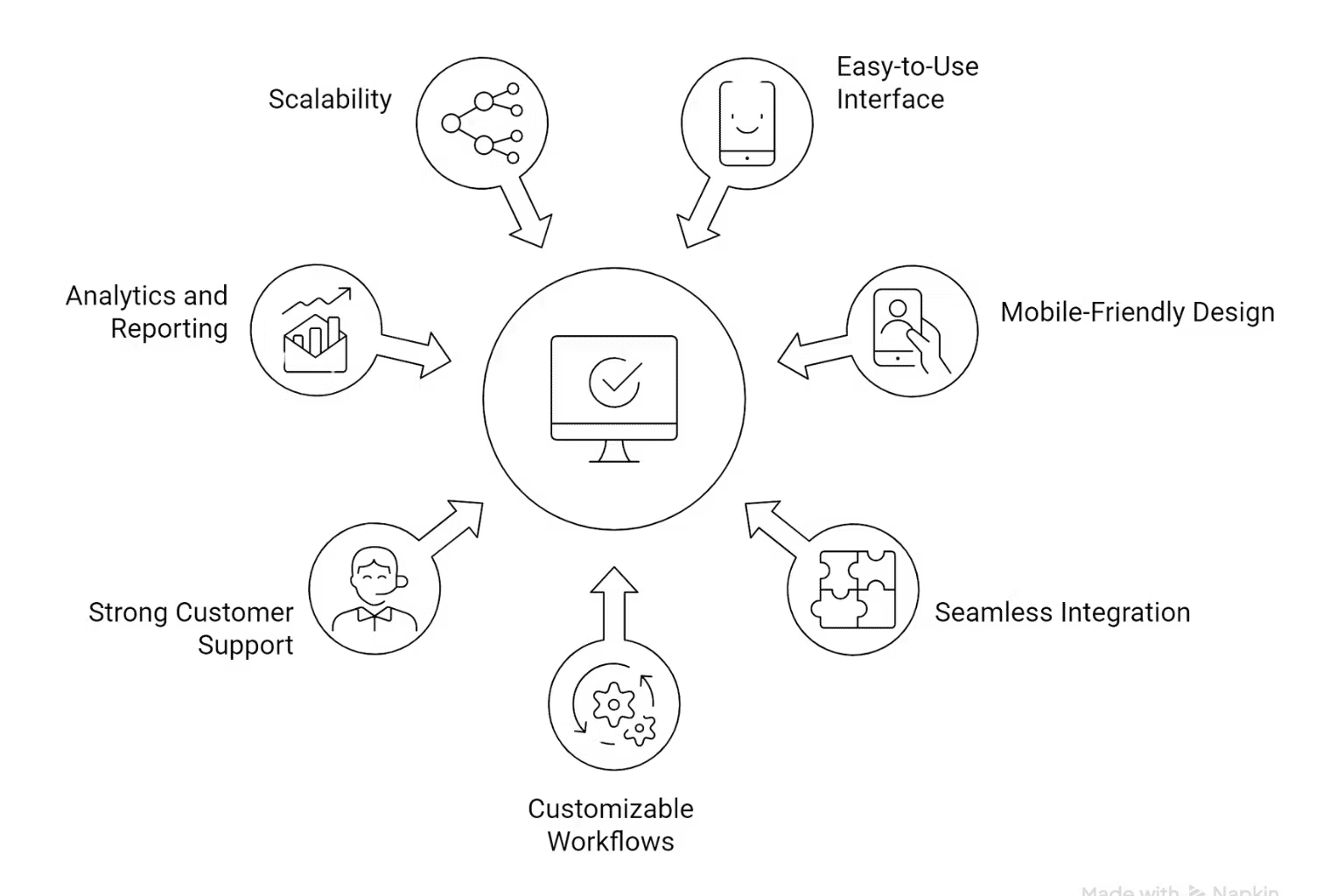
- Easy-to-use interface — if your team won’t use it consistently, it simply won’t work
- Mobile-friendly design — candidates and managers should be able to take action from any device, anytime
- Seamless integration with your existing HRIS, payroll, and communication tools for a unified experience
- Customizable workflows so the system adapts to your process — not the other way around
- Strong customer support and onboarding assistance to help your team adopt the platform quickly and confidently
- Analytics and reporting tools that give you clear, measurable insight into every stage of recruitment and onboarding
- Scalability — the platform should grow with your company, whether you hire 5 people a year or 500+
The right platform will eliminate friction in all processes – to your HR team, to your hiring managers and most importantly to your candidates and new hires. It must ensure that the whole process is smooth, efficient and indeed professional.
The Emotional Reality: What Your Candidates and New Hires Feel
Let’s pause on the data for a moment and talk about something that matters just as much: how people feel.
A job search is stressful. A candidate sends out dozens of applications, nervously checks their email, prepares for interviews, and holds their breath waiting for a response. When your company is organized, communicative, and warm throughout that process, it sends a powerful message: we respect you, and we are serious about this.
That same emotional intelligence carries into onboarding. When a new hire walks in on their first day and everything is ready their laptop is set up, their team greets them, their schedule is planned they feel welcomed. They feel safe. They commit.
On the flip side, a chaotic onboarding experience communicates disorganization and indifference. New hires begin to question whether they made the right choice. And according to Jobvite, 30% of new hires quit within the first 90 days. Much of that turnover is preventable with better structure, better tools, and more intentional care.
Conclusion
Great businesses are built by great people and that starts with a strong hiring and onboarding experience. With modern tools, you can create a scalable system that consistently attracts and retains top talent.
The real question isn’t whether you should invest in better processes it’s whether you can afford not to, especially when your next best hire is choosing between you and your competitors.
Join Our Creative Community
Frequently Asked Questions
What are the best hiring and onboarding software tools in 2026?
Leading tools offer seamless workflows from recruitment to new hire integration.
They prioritize automation, compliance, and scalability for various business sizes.
What essential features does hiring and onboarding software offer?
Core features include automated paperwork, task checklists, e-signatures, and analytics dashboards.
Advanced options add AI personalization and mobile access for new hires.
How much does hiring and onboarding software typically cost?
Pricing starts at $5-10 per user/month for basics, up to $20+ for premium features.
Most include free trials (14-30 days) with tiered plans by company size.
Which tools integrate best with payroll and HRIS systems?
Top solutions connect natively with systems like QuickBooks, Microsoft 365, and ADP.
This ensures smooth data flow without manual entry across HR tools.
How long does it take to implement hiring and onboarding software?
Setup typically takes 1-4 weeks, depending on customization and data migration.
Quick-start templates and support accelerate deployment for faster results.


_JiluXJRGNl.svg)























