
AI-Based LMS in 2026: Benefits, Examples, Features & Best Tools

AI-based LMS is rapidly becoming a key solution for organizations looking to modernize employee training and improve learning outcomes. Traditional learning management systems often fail to deliver personalized experiences, leading to low engagement and slower skill development.
An AI-Based LMS personalizes learning by using artificial intelligence to create customized training paths, recommend relevant content, and provide real-time insights. This leads to more engaging, efficient learning, helping employees develop skills that align with business goals.
Unlike traditional systems, an AI-Powered LMS adapts to each learner’s progress, ensuring continuous development. By automating administrative tasks and offering predictive analytics, it helps organizations improve learning outcomes and create a more skilled, engaged workforce.
An AI-based LMS uses artificial intelligence to automate processes, personalize learning paths, and provide data-driven insights. From onboarding to continuous upskilling, these platforms help businesses train smarter and more efficiently.
In this guide, you’ll learn what an AI-based LMS is, its key features, benefits, real-world examples, and the best tools available in 2026.
What Is an AI-Based LMS?
An AI-based LMS (Learning Management System) is a modern learning platform that uses artificial intelligence to deliver smarter, faster, and more personalized training experiences. Instead of offering the same content to every learner, it adapts in real time based on individual behavior, performance, and learning needs.
Unlike traditional LMS platforms, an AI-powered LMS analyzes user data, learning patterns, and progress to create customized learning paths, recommend relevant content, and automate key training processes. This results in better engagement, improved knowledge retention, and more effective employee development.
Key Difference Between AI-Based LMS and Traditional LMS
| Aspect | AI-Based LMS | Traditional LMS |
| Learning Experience | Personalized | Static |
| Automation | High | Limited |
| Analytics | Predictive | Basic |
| Engagement | High | Moderate |
Key Features of AI-Based LMS
AI-based LMS platforms go beyond traditional learning systems by combining automation, personalization, and data intelligence. These advanced features not only improve learning outcomes but also reduce administrative workload, making training more efficient and scalable.
- Personalized Learning Paths
One of the most powerful features of an AI-based LMS is its ability to create personalized learning journeys. By analyzing user performance, behavior, and learning pace, the system delivers content tailored to each individual helping employees learn faster and retain information more effectively.
- Smart Content Recommendations
AI continuously suggests relevant courses, modules, and resources based on user roles, previous activity, and skill requirements. This ensures learners always have access to the most useful content without manually searching for it.
- Predictive Analytics
With predictive analytics, AI can forecast learner performance and identify potential skill gaps before they impact productivity. This allows organizations to take proactive steps and improve training outcomes.
- Automated Assessments
AI simplifies evaluation by automatically generating quizzes, tests, and feedback. It not only saves time for trainers but also provides instant insights to learners, helping them track progress in real time.
- AI Chatbots & Virtual Assistants
Built-in AI chatbots provide instant support by answering learner queries, guiding course navigation, and resolving common issues. This improves user experience and reduces dependency on manual support.
- Adaptive Learning Algorithms
AI dynamically adjusts content difficulty and format based on learner progress. This ensures that users are neither overwhelmed nor under-challenged, creating a balanced and effective learning experience.
- Skill Gap Analysis
AI-based LMS platforms can analyze workforce data to identify missing skills across teams. Based on this analysis, they recommend targeted training programs to bridge those gaps efficiently.
- Learning Analytics Dashboard
Advanced dashboards provide real-time insights into learner progress, course effectiveness, and overall training performance. These data-driven insights help organizations make smarter decisions and optimize their learning strategies.
Benefits of AI-Based LMS for Businesses
Adopting an AI-based LMS is not just a technology upgrade it’s a strategic move that transforms how organizations train, engage, and develop their workforce. By combining automation with intelligent insights, businesses can achieve faster, smarter, and more impactful learning outcomes.
Improved Employee Performance
AI-driven personalization ensures that employees receive training tailored to their skills, roles, and learning pace. This leads to better understanding, higher productivity, and improved on-the-job performance.
Faster and Smarter Onboarding
AI-based LMS platforms streamline onboarding by delivering role-specific training from day one. New hires can quickly adapt to their responsibilities, reducing ramp-up time and improving overall efficiency.
Higher Learner Engagement
With interactive content, personalized recommendations, and adaptive learning paths, AI keeps learners actively engaged. This reduces drop-off rates and increases course completion.
Data-Driven Decision Making
AI-powered analytics provide deep insights into learner progress, skill gaps, and training effectiveness. Businesses can use this data to make informed decisions and continuously improve their learning strategies.
Reduced Training Costs
Automation of tasks like assessments, reporting, and content delivery significantly lowers administrative costs. At the same time, improved efficiency ensures a higher return on training investment.
Scalability for Growing Teams
AI-based LMS platforms easily scale as your organization grows. Whether you’re training 10 employees or 10,000, AI can handle increasing data, users, and content without compromising performance or learning quality.
Continuous Learning and Upskilling
AI enables ongoing learning by recommending new courses and skills based on industry trends and employee progress. This helps organizations build a culture of continuous improvement and stay competitive in a rapidly evolving market.
AI-Based LMS vs Traditional LMS
Choosing between an AI-based LMS and a traditional LMS can significantly impact how effectively your organization trains and develops its workforce. While traditional systems focus on delivering static content, AI-based LMS platforms bring intelligence, automation, and personalization into the learning experience.
Here’s a clear comparison to help you understand the difference:
| Feature | AI-Based LMS | Traditional LMS |
| Personalization | Advanced, tailored to each learner | Limited, same content for all users |
| Automation | High, reduces manual effort | Low, requires manual management |
| Insights | Predictive, data-driven recommendations | Historical, basic reporting |
| Scalability | Easily scales with business growth | Moderate scalability |
| ROI | Higher due to efficiency and engagement | Lower due to limited optimization |
Best AI-Based LMS Tools in 2026
Choosing the right AI-based LMS can make a significant difference in how effectively your organization trains, engages, and develops its workforce. While many platforms offer AI capabilities, the best solutions combine intelligent features with usability, scalability, and real business impact.
Here are some of the top AI-based LMS platforms to consider in 2026:
LMS 365
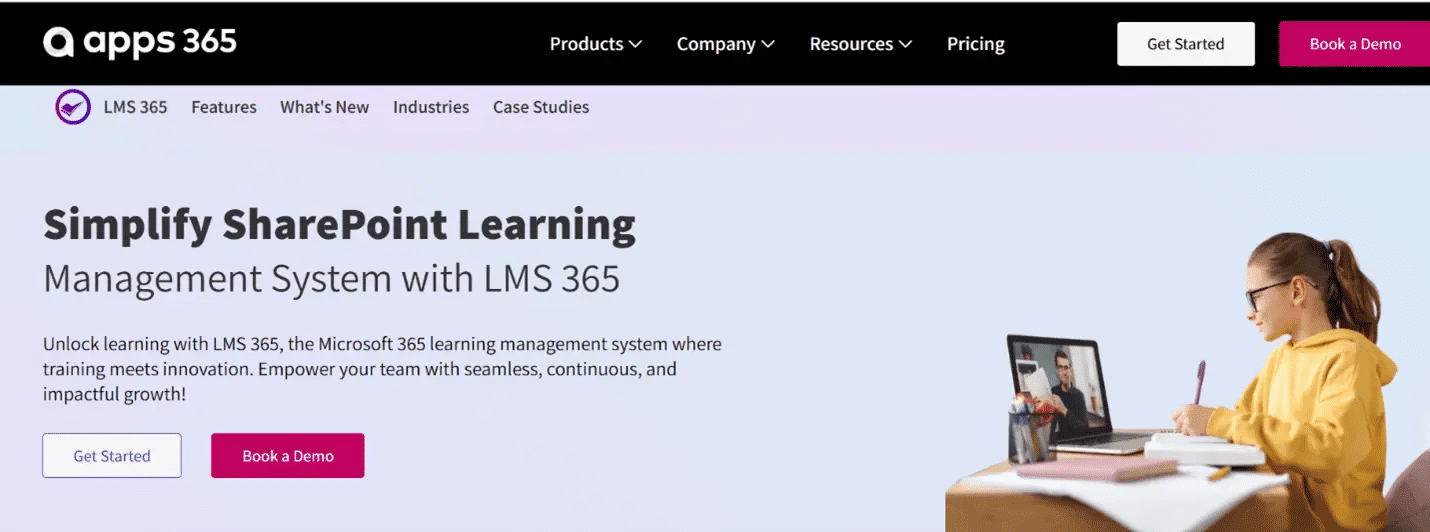
LMS 365 is a powerful, business-focused learning management system designed to integrate seamlessly with existing workflows while offering AI-powered enhancements. Instead of overwhelming users with complex AI systems, it focuses on practical, easy-to-use intelligent features that improve training efficiency.
Key Highlights:
- AI-driven content recommendations
- Automated learning workflows
- Data-driven insights and reporting
- Seamless integration with Microsoft 365 tools like Teams, SharePoint, and Outlook
Best For:
Organizations looking for a scalable, user-friendly LMS with practical AI capabilities and strong business integration.
LMS 365 is ideal for companies that want to adopt AI-enhanced learning without adding unnecessary complexity.
Cornerstone OnDemand
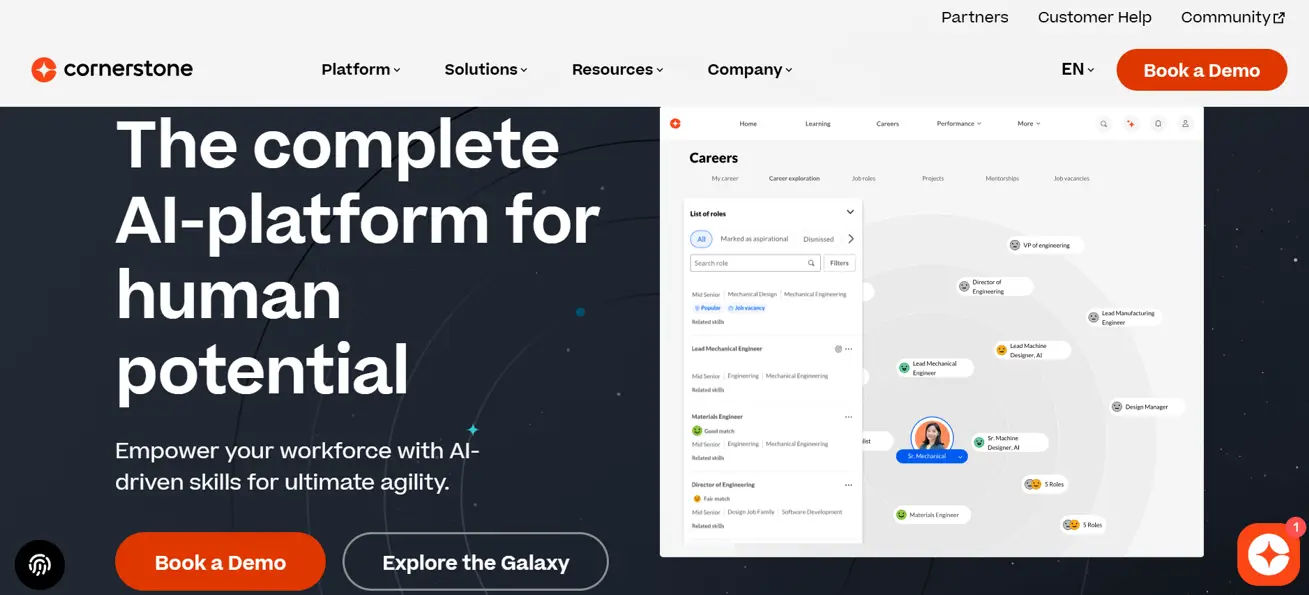
Cornerstone OnDemand is an enterprise learning management system that focuses on skill development, workforce training, and data-driven learning experiences. It incorporates AI-powered features to help organizations deliver personalized and goal-oriented training.
Key Highlights:
- AI-driven skill recommendations
- Personalized learning paths
- Advanced analytics and reporting
- Strong focus on workforce development
Best For:
Large organizations that want to focus on employee development, skill tracking, and long-term learning strategies.
Cornerstone OnDemand is a good choice for businesses looking to align learning with employee growth and performance goals.
TalentLMS
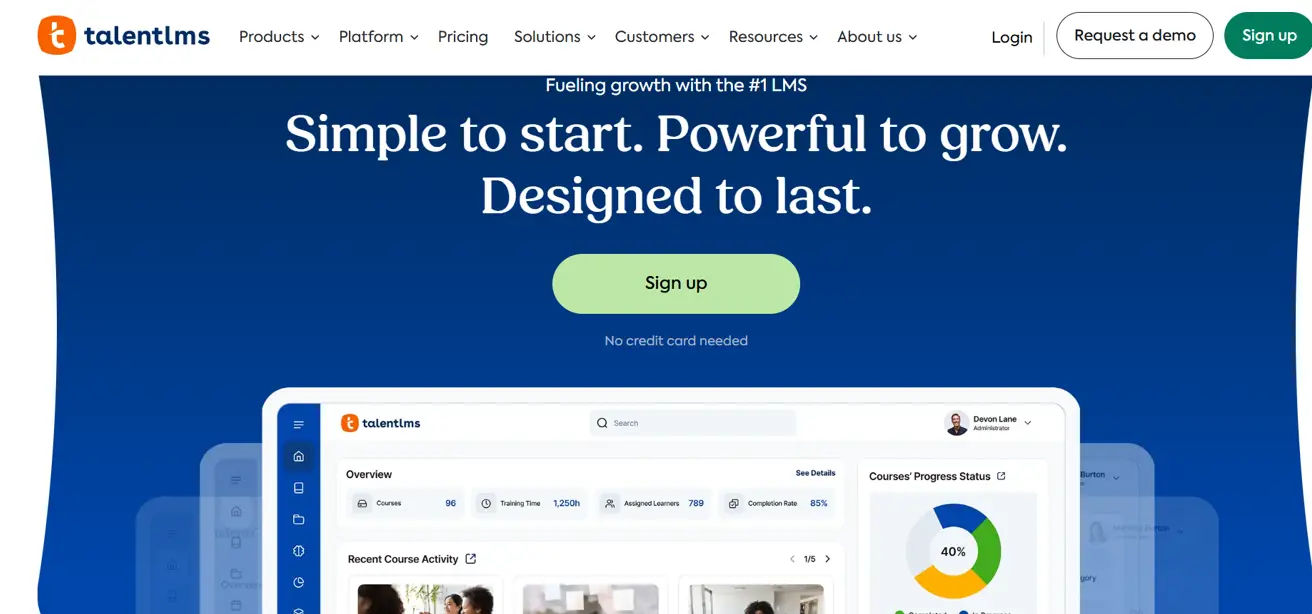
TalentLMS is a user-friendly and lightweight platform designed for quick deployment and ease of use. It incorporates smart automation and recommendation features to enhance learning without overwhelming users.
Key Highlights:
- Simple and intuitive interface
- Smart course recommendations
- Quick setup and deployment
- Built-in gamification features
Best For:
Small to mid-sized businesses looking for an easy-to-use LMS with essential AI-driven features.
TalentLMS is ideal for teams that prioritize simplicity, speed, and ease of adoption.
Docebo

Docebo is a powerful enterprise-grade LMS that leverages advanced AI capabilities to deliver highly personalized learning experiences. It focuses heavily on automation, scalability, and data-driven learning strategies.
Key Highlights:
- Advanced AI-powered content recommendations
- Automation of learning workflows
- Strong analytics and reporting tools
- Scalable for large enterprises
Best For:
Large organizations that require advanced AI functionality and scalable learning solutions.
Docebo is best suited for enterprises looking to implement a fully optimized, AI-driven learning ecosystem.
SAP Litmos
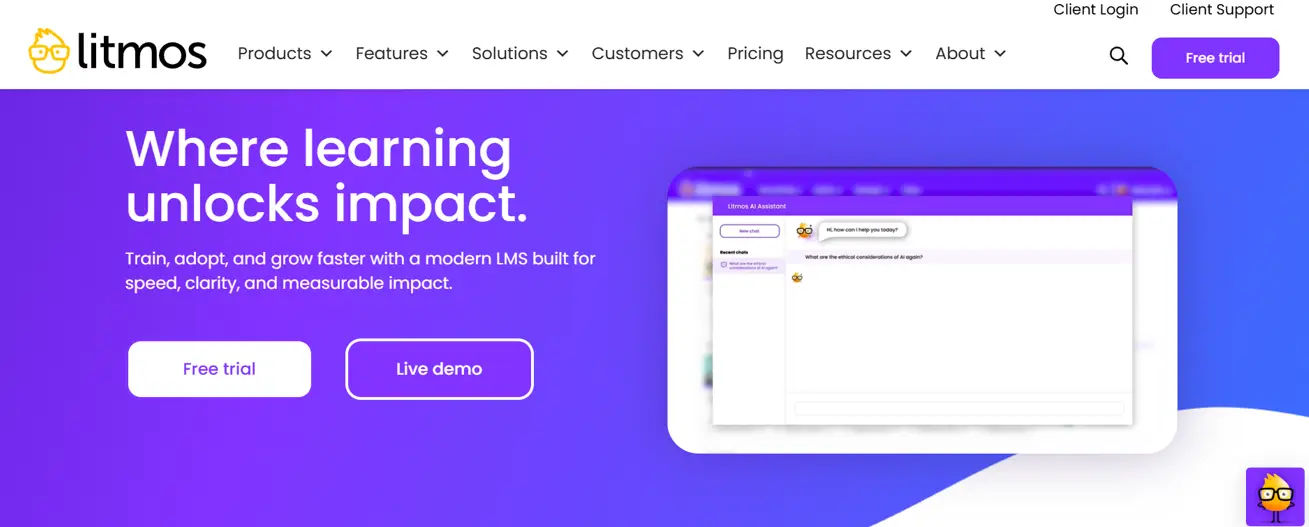
SAP Litmos is a robust LMS designed for corporate training and compliance management. It offers AI-powered analytics and strong reporting features to improve training outcomes.
Key Highlights:
- AI-driven analytics and reporting
- Strong compliance training capabilities
- Enterprise-level scalability
- Integration with business systems
Best For:
Enterprises focusing on compliance, corporate training, and structured learning programs.
SAP Litmos is a reliable choice for organizations that need structured and scalable training solutions.
Absorb LMS
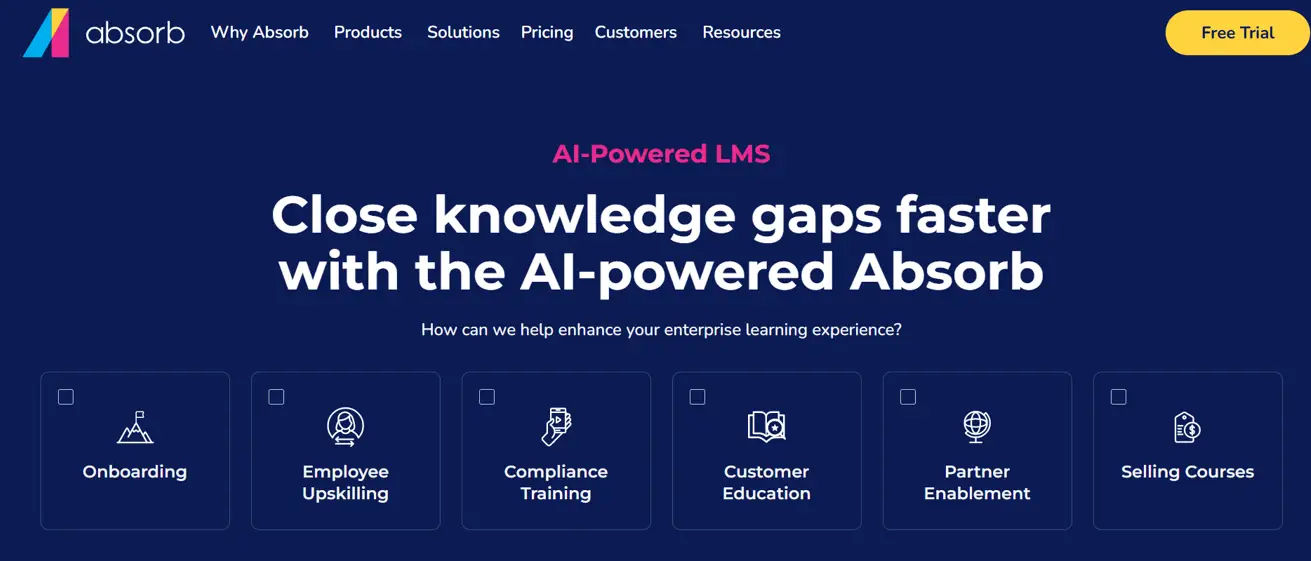
Absorb LMS is a modern, feature-rich platform that combines ease of use with intelligent content delivery. Its AI-driven capabilities focus on improving learner engagement and simplifying administration.
Key Highlights:
- Intelligent content recommendations
- Modern and user-friendly interface
- Strong reporting and analytics
- Scalable learning solutions
Best For:
Organizations looking for a balance between usability, modern design, and AI-driven learning features.
Absorb LMS is ideal for businesses that want a visually engaging and efficient LMS platform.
Real-World Examples of AI-Based LMS
AI-based LMS platforms are not just theoretical they are actively transforming how organizations train employees, improve performance, and scale learning. Here are some real-world use cases where AI-powered LMS solutions are making a measurable impact:
Automated Onboarding Programs
Many organizations use AI-based LMS platforms to streamline employee onboarding. Instead of assigning the same training to every new hire, AI creates personalized onboarding journeys based on role, experience, and department.
For example, new employees in sales, HR, or IT receive tailored training modules, reducing onboarding time and improving early productivity.
Personalized Employee Training
Companies are leveraging AI to deliver customized training programs that adapt to each employee’s learning pace and skill level.
For instance, if an employee struggles with a specific concept, the system automatically recommends additional resources or adjusts the difficulty level resulting in better learning outcomes and higher retention.
Compliance Training and Tracking
In industries like healthcare, finance, and manufacturing, compliance training is critical. AI-based LMS platforms automate reminders, track completion rates, and ensure employees stay up to date with regulations.
This reduces manual effort while minimizing the risk of non-compliance.
Sales Training Optimization
Sales teams use AI-powered LMS platforms to identify performance gaps and improve training effectiveness.
For example, AI analyzes sales performance data and recommends targeted training modules, helping sales representatives improve skills like negotiation, product knowledge, and customer engagement.
How LMS 365 Uses AI to Improve Learning
Not all learning management systems are fully AI-driven, but many modern platforms are evolving by integrating intelligent features that enhance learning efficiency and user experience.
LMS 365 is a strong example of an AI-enhanced LMS that combines the power of the Microsoft 365 ecosystem with smart automation and data-driven capabilities. Instead of relying on complex standalone AI systems, it focuses on practical, business-ready intelligence that improves training outcomes.
Key AI-Enhanced Capabilities in LMS 365
Intelligent Content Recommendations
LMS 365 can leverage user activity, course progress, and role-based data to suggest relevant learning content. When integrated with Microsoft tools, this helps deliver more personalized learning experiences.
Data-Driven Insights with Power BI
By integrating with Microsoft Power BI, LMS 365 enables organizations to analyze learner behavior, track performance, and identify skill gaps through advanced reporting and dashboards.
Automation Through Microsoft Ecosystem
Using tools like Power Automate, LMS 365 allows organizations to automate workflows such as course enrollment, notifications, and training reminders—reducing manual effort and improving efficiency.
Personalized Learning Experiences
Through role-based training paths and integration with Microsoft 365 tools, LMS 365 supports tailored learning journeys aligned with individual roles and business needs.
Integration with Microsoft 365 Tools
LMS 365 works seamlessly with Microsoft Teams, SharePoint, and Outlook, enabling learning directly within daily workflows. This improves accessibility and encourages continuous learning.
AI-Assisted Content Creation
With the help of AI integrations, LMS 365 can support the creation of learning content more efficiently. This includes generating course introductions, summaries, and even assessment questions based on the course material.
Instead of creating everything manually, trainers can use AI-powered tools within the Microsoft ecosystem to speed up content development while maintaining quality and consistency.
How to Choose the Right AI-Based LMS
Selecting the right AI-based LMS is not just about features it’s about choosing a platform that aligns with your business goals, workforce needs, and future growth. With so many options available, focusing on the right criteria can help you make a confident and informed decision.
Budget and Pricing
Start by evaluating your budget and the pricing structure of the LMS. Some platforms offer flexible plans, while others require a higher upfront investment. Ensure the cost matches the value and features your organization truly needs.
AI Capabilities
Not all AI-based LMS platforms offer the same level of intelligence. Some provide advanced automation and predictive analytics, while others focus on practical AI enhancements. Choose a solution that fits your requirements without adding unnecessary complexity.
Scalability
Your LMS should grow with your organization. Whether you are onboarding new employees or expanding globally, the platform must handle increasing users, content, and data efficiently.
Integration Options
A strong LMS should integrate seamlessly with your existing tools and workflows. Platforms that connect with systems like Microsoft 365, HR software, or communication tools can significantly improve productivity and user adoption.
Ease of Use
Even the most advanced LMS will fail if it’s difficult to use. A clean, intuitive interface ensures that both learners and administrators can navigate the platform with ease, reducing training time and increasing adoption.
Customization and Flexibility
Every organization has unique training requirements. Look for an LMS that allows you to customize learning paths, course structures, and user roles to match your business needs.
Analytics and Reporting Depth
Advanced analytics are essential for measuring success. A good AI-based LMS should provide detailed insights into learner progress, course effectiveness, and overall training performance to support data-driven decisions.
Security and Compliance
If your organization handles sensitive data or operates in regulated industries, ensure the LMS meets strong security standards and compliance requirements to protect user information.
Mobile Accessibility
Modern learners expect flexibility. A mobile-friendly LMS allows employees to access training anytime and anywhere, improving engagement and completion rates.
Vendor Support and Training
Reliable customer support plays a key role in successful implementation. Choose a provider that offers onboarding assistance, training resources, and responsive support when needed.
Future-Readiness
AI and learning technologies are constantly evolving. Select an LMS that regularly updates its features and stays aligned with emerging trends, ensuring long-term value for your organization.
Conclusion
AI-based LMS platforms are changing the way organizations train and develop their employees. By adding personalization, automation, and data insights, these systems help businesses move beyond traditional training and create better learning experiences.
From faster onboarding to improved employee performance, the value of AI in learning management is clear. However, choosing the right LMS depends on your business needs, ease of use, and how well it fits into your existing systems.
Platforms like LMS 365 offer a practical approach by combining familiar learning management features with intelligent capabilities and strong Microsoft 365 integration. This makes it easier for organizations to improve training without adding unnecessary complexity.
🚀 Want to See LMS 365 in Action?
Find out how LMS 365 can support your training needs and help your team learn more effectively.
👉 Book a demo and explore how it works for your organization.
Join Our Creative Community
Frequently Asked Questions
What is an AI-based LMS?
An AI-based LMS (Learning Management System) is a learning platform that uses artificial intelligence to improve how training is delivered and managed. It can analyze learner behavior, suggest relevant content, and adjust learning paths based on individual progress. This helps create a more personalized and effective learning experience compared to traditional systems.
What are the benefits of AI in LMS?
AI in LMS helps organizations improve training in several ways. It increases learner engagement by offering personalized content, reduces training time through automation, and provides useful insights into performance and skill gaps. Overall, it helps businesses make better decisions about their training programs.
Which is the best AI LMS in 2026?
The best AI LMS depends on your business needs. Some popular options include LMS 365, Docebo, TalentLMS, SAP Litmos, and Absorb LMS. Each platform offers different strengths, such as flexibility, ease of use, or advanced features. It’s important to choose one that fits your goals, budget, and existing systems.
How much does an AI LMS cost?
The cost of an AI LMS can vary widely. Some platforms offer free or low-cost plans, while others have pricing based on the number of users or advanced features. Businesses should consider not only the price but also the value the platform brings in terms of time saved, improved learning, and overall efficiency.
Is AI LMS suitable for small businesses?
Yes, AI LMS platforms can be a good fit for small businesses. Many solutions are scalable, which means you can start with basic features and expand as your business grows. This allows smaller teams to improve training without needing a large budget or complex setup.


_JiluXJRGNl.svg)























