
Education Contract Management Software | CLM 365
Education contract management helps educational institutions centralize contracts, track important obligations and renewal dates, maintain compliance, and improve coordination with staff, suppliers, and academic partners while reducing administrative workload.
What Is Education Contract Management?
Education contract management is the full process of creating, reviewing, approving, signing, storing, monitoring, and renewing legal agreements within a school, college, or university. It covers every type of agreement an institution touches from a one-year IT license to a five-year research partnership with a government agency.
According to the World Commerce and Contracting Association, in 40% of organizations it is a guessing game as to who is responsible for which contract.
In institutions where contracts span HR, procurement, academic affairs, IT, and finance often with no central ownership that accountability gap is a serious operational and legal risk
What Types of Contracts Do Educational Institutions Manage?
Before getting into how software helps, it is worth mapping the full landscape of contracts a typical institution handles. Most decision-makers underestimate the volume
Faculty and Staff Employment Agreements
Full-time, part-time, adjunct, and visiting faculty contracts often carry different renewal cycles, compensation terms, and compliance requirements depending on funding source and employment classification.
Vendor and Supplier Contracts
Technology providers, facilities management companies, textbook publishers, catering operators, transportation services. Each comes with pricing terms, service levels, renewal windows, and liability clauses that need monitoring.
Research Grants and Funding Agreements
Particularly complex in higher education, these come with strict reporting timelines, spending rules, intellectual property provisions, and compliance obligations from funding bodies.
Construction and Facilities Contracts
Campus expansions, building maintenance, equipment leases, and facilities management agreements involve significant financial exposure and multi-year timelines.
Partnership and MOU Agreements
Affiliations with corporate partners, other institutions, government bodies, and community organizations are governed by agreements that need periodic review and renewal.
Software and Licensing Agreements
With the expansion of ed-tech platforms, most institutions now manage dozens of software licenses with different renewal dates, usage terms, and data processing requirements.
Each of these carries its own risk profile, compliance requirements, and stakeholder map. Managing them without a dedicated system creates gaps that cost institutions money, time, and legal exposure.
How Education Contract Management Software Works
Contract management software for educational institutions is not simply a better filing system. At its best, it manages the full lifecycle of every agreement. Here is how that lifecycle works in practice.
1. Contract Request and Intake
The process begins when a department raises a contract request whether for a new vendor, a research partnership, or a staff agreement. The requester fills in key details (counterparty, contract type, scope, timelines) through a structured form.
2. Drafting with Approved Templates
Instead of drafting agreements from scratch, teams work from pre-approved templates with standardized language built in. This keeps institutional risk management consistent and removes the need for legal to review routine agreements line by line. Forrester Research states that CLM solutions can reduce contract drafting and review time by up to 80%
3. Collaborative Review
The contract is automatically analyzed by AI to identify key clauses, highlight potential risks, detect missing information, and surface important obligations. This helps teams review contracts faster, improve accuracy, and focus on high-risk areas.
4. Structured Approval Workflows
Once the contract is finalized, it routes through a predefined approval chain based on rules you set contract value, type, department, or risk level
5. Digital Signing
Contracts are executed electronically. Research shows that 95% of organizations are either using e-signatures, evaluating providers, or planning to adopt one. Digital signatures are legally binding, faster, and create a clear audit trail of who signed what and when.
6. Centralized Repository
All executed contracts and every version that preceded them are stored in a single, searchable repository. Any authorized team member can find an agreement in seconds using filters for counterparty, contract type, department, value, or date.
7. Obligation and Compliance Tracking
The system monitors key dates and obligations delivery milestones, reporting deadlines, payment terms, performance review windows and sends alerts to the responsible parties
8. Renewal Management
Automated alerts notify teams before contracts expire, giving them time to review, renew, renegotiate, or close agreements while avoiding missed or unwanted renewals.
9. Reporting and Analytics
Teams get visibility into the full contract portfolio total contract value by department, upcoming renewals, contracts approaching risk thresholds, vendor performance against agreed terms. This turns contracts from static documents into a source of institutional insight.

Challenges Faced in Contract Management for Educational Institutions
Managing contracts in schools, colleges, and universities can be challenging due to the large number of agreements, multiple stakeholders, and compliance requirements. Here are some of the most common contract management challenges educational institutions face
1. Fragmented Contract Ownership Across Departments
In most schools, colleges, and universities, contracts are managed by different departments. The IT team handles software agreements, HR manages employment contracts, procurement oversees vendor agreements, and research departments deal. When contracts are stored in separate systems, emails, or shared drives, it becomes difficult to gain a complete view of the institution’s contractual commitments.
2. Managing a Growing Volume of Contracts
Educational institutions often manage hundreds or even thousands of active contracts at the same time. These may include supplier agreements, technology licenses, research collaborations, consulting contracts, maintenance agreements, and faculty contracts. As contract volume increases, relying on spreadsheets and manual tracking methods becomes inefficient.
3. Complex Requirements in Higher Education Contracts
Contract management in higher education involves more than standard vendor agreements. Research grants often include strict reporting and compliance requirements. Industry partnerships may contain intellectual property clauses that require careful review.
4. Compliance and Audit Readiness Challenges
Educational institutions must comply with a variety of regulations, accreditation standards, procurement policies, and data protection requirements. Many contracts also contain obligations that need to be monitored throughout the agreement lifecycle. Without proper tracking and documentation, preparing for audits can become difficult.
5. Tracking Renewals, Obligations, and Key Deadlines
Many contracts include important renewal dates, reporting deadlines, payment schedules, and other key obligations. Tracking these dates manually can be time-consuming and prone to errors. As a result, institutions may miss critical deadlines or face unwanted contract renewals
Key Features of Enterprise Contract Management Software
Choosing the right enterprise contract management software can have a significant impact on efficiency, compliance, and visibility. Here are some key features to consider.
1. AI-Assisted Review
By 2027, 50% of organizations will support supplier contract negotiations using Artificial Intelligence (AI)-enabled contract risk analysis and editing tools, according to Gartner, Inc. Education contract management software now include AI tools that flag non-standard clauses, identify missing terms, and surface risk indicators during review. For legal teams in educational institutions, this means faster review without sacrificing thoroughness.
2. Integration with Existing Systems
CLM 365 integrates seamlessly with the Microsoft ecosystem, allowing educational institutions to manage contracts within the tools. With native integration to SharePoint, MS Teams, Outlook, Power BI, and Microsoft Copilot, users can collaborate more efficiently. This helps improve adoption, reduce administrative effort, and accelerate contract processes across the institution.
3. Enterprise-Grade Security and Compliance
CLM 365 is built on the Microsoft ecosystem and provides enterprise-grade security through role-based access controls, data encryption and audit trails. It also supports compliance requirements and offers GCC and GCC High support for institutions with advanced regulatory. This helps educational institutions manage contracts securely while maintaining visibility, control, and compliance across the contract lifecycle.
4. Centralized Contract Repository
A centralized contract repository allows institutions to store all contracts, amendments, supporting documents, and correspondence in a single location. Instead of searching through emails, shared drives, or filing cabinets, authorized users can quickly find contracts using keywords, contract types, vendors, departments, or dates. This improves accessibility, reduces document loss, and creates a single source of truth for all contract-related information.
5. Role-Based Access Controls
Educational institutions often involve multiple stakeholders in the contract process. Role-based access controls ensure that users can only view, edit, approve, or sign contracts relevant to their responsibilities. This improves security while maintaining collaboration across departments.
6. Automated Approval Workflow Engine
Manual approval processes can create delays and increase the risk of missed approvals. An automated workflow engine routes contracts to the appropriate stakeholders based on predefined rules. Automation helps accelerate contract approvals, improve accountability, and ensure contracts follow the correct review process.
7. Template and Clause Library
A good clause library allows institutions to create contracts using pre-approved language and standardized terms. This reduces drafting time, improves consistency across agreements, and minimizes legal risk. Departments can generate routine contracts more efficiently while ensuring compliance with institutional policies.
8. Electronic Signature Integration
95% of organizations are either using e-signature, evaluating, e-signature providers or planning to purchase a solution in the future. Built-in e-signature capabilities or integrations with leading providers such as Adobe Acrobat Sign and DocuSign help institutions execute contracts faster. Faculty members, vendors, partners, and stakeholders can sign agreements electronically from anywhere.
9. Automated Renewal Alerts
Many educational contracts contain renewal dates, notice periods, and expiration deadlines. Automated alerts notify stakeholders well before important dates arrive, giving them time to review terms or make renewal decisions. This helps prevent missed renewals, service disruptions, and unwanted automatic contract extensions.
10. Audit Trail and Reporting
Maintaining a complete history of contract activities is critical for governance and compliance. A comprehensive audit trail records every action, including edits, approvals, signatures, renewals, and amendments. Advanced reporting and dashboards provide valuable insights into contract status and overall portfolio performance.
Why Is Effective Contract Management Important for Educational Institutions?
Schools and colleges manage a wide range of contracts every day, including vendor agreements, technology contracts and employment contracts. By implementing a structured contract management process, schools and colleges can improve operational efficiency
1. Better Control Over Budgets
Educational institutions often operate with limited budgets and must carefully manage spending. Effective contract management helps schools and colleges monitor contract costs, avoid unnecessary expenses, and make better financial decisions. It also reduces the time and effort spent on manual contract administration.
2. Managing Multiple Vendor Agreements
Schools and colleges work with a wide range of vendors, including technology providers, transportation services, facility management companies, learning platforms, and educational suppliers. Keeping track of these agreements helps ensure services are delivered as expected and that vendor relationships remain strong.
3. Improved Visibility and Accountability
Having a centralized contract management process makes it easier to track contract status, obligations, renewals, and spending. This improves transparency and helps administrators make informed decisions while maintaining accountability across departments.
4. Staying Compliant with Policies
Educational institutions must comply with various internal policies, accreditation requirements, and regulatory standards. Contract management helps ensure important terms, deadlines, and compliance requirements are monitored and addressed on time.
5. Avoiding Missed Renewals and Deadlines
Missing a contract renewal date or key obligation can lead to service disruptions, unexpected costs, or compliance issues. Contract management systems provide automated reminders and alerts, helping institutions stay ahead of important dates and actions.
CLM 365: Education Contract Management Built on Microsoft 365
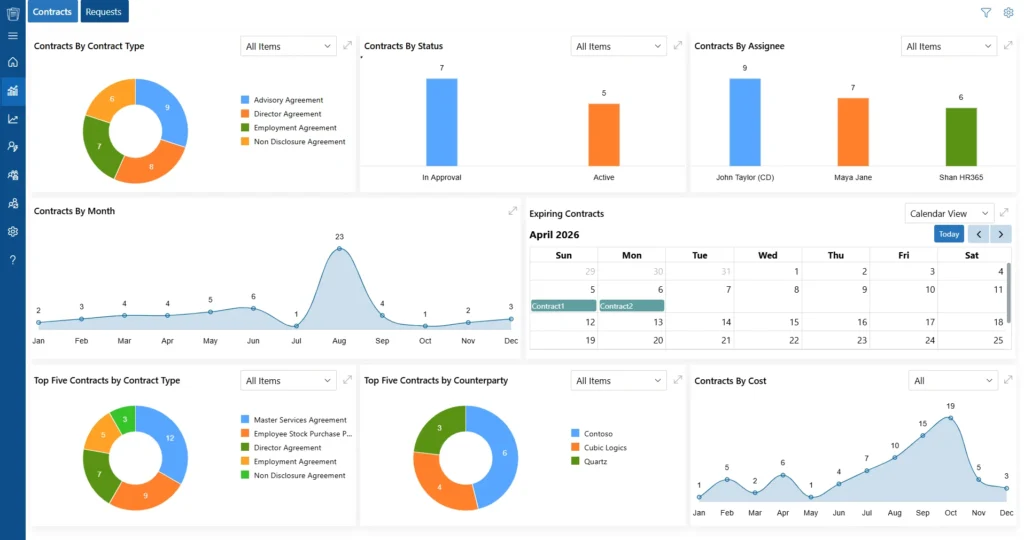
CLM 365 is contract management software built natively within the Microsoft ecosystem. It works directly inside SharePoint, MS Teams, Outlook, Microsoft Copilot, Power BI, and Power Automate which means staff do not need to learn a new system. They work inside the tools they already use every day. CLM 365 is appreciated by users on G2 for its ease of use and powerful contract management features.
For educational institutions that already run on Microsoft 365, this is a meaningful advantage. Contract requests can be raised from Teams. Approvals can be reviewed in Outlook. Contract records live in SharePoint. The entire process sits inside the environment your institution has already invested in.
What CLM 365 covers for educational institutions:
- Full contract lifecycle from intake and drafting through approval, signing, storage, and renewal
- Agentic AI helps review to flag non-standard clauses and identify risk during the review stage
- Structured approval workflows configurable by contract type, value, department, or risk level
- Built-in e-signature with legally compliant audit trails
- Automated renewal and obligation alerts
- Centralized repository with role-based access controls
- Custom reporting and dashboards for contract portfolio visibility
Compliance and security: CLM 365 is SOC 2 compliant, Microsoft Certified, and backed by Microsoft Solutions Partner status. It supports GCC and GCC High environments for institutions with elevated regulatory compliance requirements including those operating under federal data protection standards.
Keep Contracts Where Your Team Already Works
CLM 365 runs inside your Microsoft 365 environment, helping teams manage contracts without switching between tools.
Conclusion
Educational institutions manage more contracts, with more complexity, under more compliance pressure than most sectors. Yet the tools most institutions use to manage those contracts — shared drives, email threads, spreadsheet trackers were not designed for this. They create accountability gaps, compliance risks, and operational friction that grow with the institution.
If you are looking for a reliable, Microsoft-native system to manage contracts across your institution, start your 14-day free trial of CLM 365 and see the difference a structured contracting process makes.
Frequently Asked Questions
What types of contracts can it manage?
It can manage faculty and staff agreements, vendor contracts, research grants, student enrolment documents, software licenses, partnership agreements, NDAs, and facilities contracts. Contract types can also be customized to meet the institution’s requirements.
We keep missing contract deadlines and renewals and how can we prevent that?
CLM 365 helps prevent missed deadlines by sending automated alerts and reminders for upcoming renewals, expirations, and key contract milestones. This gives teams enough time to review, renew, renegotiate, or close agreements before important dates are missed.
Is there a way to track all contract activity from one dashboard?
Yes, CLM 365 provides a centralized dashboard that gives visibility into contract status, approvals, renewals, obligations, upcoming deadlines, and recent activities. This helps teams monitor the entire contract portfolio from a single location.
We want contract approvals to move faster and ow does the system help with this?
CLM 365 automates approval workflows by routing contracts to the right stakeholders based on predefined rules. This eliminates manual follow-ups, reduces bottlenecks, and helps contracts move through the approval process more efficiently.
How can a procurement team gain visibility into all active contracts?
CLM 365 provides a centralized repository where procurement teams can view, search, and track all active contracts. Advanced filters, dashboards, and reporting tools make it easy to monitor contract values in real time.






















