
Best Software for Subscription Management: : A Complete Guide
Looking for the best software for subscription management? In this guide, we’ll cover top tools that help you manage your entire subscription lifecycle from billing and renewals to upgrades and revenue tracking.


What Is Subscription Management Software?
Subscription management software helps businesses manage recurring billing, subscriptions, renewals, upgrades, and customer lifecycle in one place efficiently.
This includes:
- Charging customers on a set schedule (monthly, quarterly, annually)
- Sending invoices automatically
- Managing plan upgrades, downgrades, and cancellations
- Recovering failed payments
- Tracking revenue metrics like MRR (Monthly Recurring Revenue) and churn rate
Instead of doing all of this manually in spreadsheets or with a basic payment tool, subscription management software puts everything in one place and runs it automatically.
Take the next step toward better support operations.
Why Businesses Need Subscription Management Software
If you run a SaaS subscription business, a membership site, a media platform, or any other subscription-based business, here is what happens without a proper tool.
1. Billing becomes accurate
With a good system in place, you don’t have to worry about charging the wrong amount or missing a renewal. Every payment happens on time and correctly. This builds trust with your customers because they know your billing is reliable. It also saves your team time, as they don’t have to fix billing mistakes again.
2. Churn is reduced with better control
When a payment fails, the system can quickly retry or notify the customer. You don’t have to manually check every failed payment. This helps you recover more payments and keep more customers. Instead of losing users silently, you stay in control and reduce unnecessary churn.
3. Revenue becomes easy to track
You can clearly see how much money your business is making every month and year. Metrics like MRR, ARR, and churn are shown in simple dashboards. This helps you understand what is working and what needs improvement. With clear data, you can make better decisions and plan your next steps with confidence.
4. Scaling becomes smooth
As your business grows, managing subscriptions manually becomes difficult. But with the right software, everything is handled automatically. Whether you have 100 customers or 10,000, the process stays the same. This makes growth easier and removes the pressure on your team.
5. Compliance become simpler
If you are selling in different countries, tax rules can get confusing. A subscription management tool helps you handle taxes properly and keeps everything organized. This reduces the risk of errors and helps you avoid penalties, so you can expand your business without worry.
6. Customer experience becomes better
Customers get timely invoices, smooth payment options, and clear billing details. There are fewer errors and less confusion. When the payment experience is simple and reliable, customers feel more comfortable staying with your service for a longer time.
Key Features to Look for in Subscription Management Software
Not every tool is built the same. The right software for subscription management should help you automate tasks, reduce errors, and give you full control over your subscription business. Here are the features that matter most.
1. Subscription Management
A powerful software for subscription management gives you full control over your entire subscription lifecycle in one place. You can easily create flexible plans, upgrade or downgrade customers, pause subscriptions, and manage cancellations without confusion. This level of control helps you deliver a better experience while keeping your operations smooth and organized as you grow.
2. Automated Recurring Billing
A reliable software for subscription management automates your billing completely. Customers are charged on time, every time, without any manual effort. This improves payment consistency, reduces errors, and ensures a seamless billing experience. Your team saves time, and your revenue flow becomes more predictable and stable.
3. Multiple Billing Models
A flexible software for subscription management supports different pricing models such as flat-rate, usage-based, tiered, and per-user billing. This allows you to adapt your pricing as your business evolves, test new strategies, and offer plans that match your customer needs perfectly. It also helps you target different customer segments with the right pricing strategy, improving conversions and retention.
4. Revenue Reporting and Analytics
A smart software for subscription management provides clear, real-time insights into your business performance. You can easily track MRR, ARR, churn rate, and customer lifetime value. These insights help you make confident decisions, spot growth opportunities, and optimize your revenue strategy with clarity.
5. Quotation Management
An advanced software for subscription management simplifies your sales process with easy quotation management. You can quickly create accurate, professional quotes for customers, especially for custom or enterprise plans. This improves your sales efficiency and helps you close deals faster.
6. Audit Logs
A dependable software for subscription management keeps detailed audit logs of every action. From billing updates to plan changes, everything is tracked clearly. This ensures transparency, improves accountability, and helps you quickly identify and resolve any issues. It also supports compliance by maintaining a reliable record of all activities for future reference.
7. Custom Invoices
A professional software for subscription management allows you to generate fully customized invoices. You can include your branding, tax details, and clear pricing breakdowns. This enhances your brand image and ensures your customers have a clear and trustworthy billing experience.
8. Customer Self-Service Portal
A modern software for subscription management includes a self-service portal that empowers your customers. They can update payment details, switch plans, or manage subscriptions anytime. This improves customer satisfaction, reduces support workload, and creates a smooth user experience.
9. Integrations
A software for subscription management connects easily with your existing tools like CRM, accounting software, payment gateways, and support systems. These integrations streamline your workflows and keep all your data connected and up to date. It also reduces manual work and minimizes errors by automating data flow across systems.
10. Tax and Compliance Support
A strong software for subscription management simplifies tax handling across different regions. It automatically calculates taxes and ensures compliance with local regulations. This reduces risks, avoids costly errors, and allows you to expand your business with confidence.
Top 10 Software for Subscription Management (2026)
The right software for subscription management helps you automate billing, reduce errors, and scale your business with ease.
Product | Key Integrations | Free Trial |
Revenue 365 | SharePoint, MS Teams, Outlook, Power BI and Power Automate | ✅ |
Chargebee | Stripe, PayPal, Xero, HubSpot, Salesforce | ✅ |
Maxio | QuickBooks, HubSpot, Salesforce, Stripe | ✅ |
Recurly | PayPal, Stripe, QuickBooks, Xero and Avalara | ✅ |
Paddle | Stripe, Slack, Intercom, Baremetrics | ✅ |
Zoho Subscriptions | Zoho CRM, PayPal, Stripe, Zoho Books | ✅ |
DealHub.io | Salesforce, HubSpot, Microsoft Dynamics | Customized |
Zuora | Salesforce, HubSpot, SAP and Workday | Customized |
Togai | Stripe, Amazon S3, AWS, QuickBooks and Docusign | ✅ |
Younium | HubSpot, Salesforce, Xero and TaxJar | Customized |
1. Revenue 365
Best overall software for subscription management
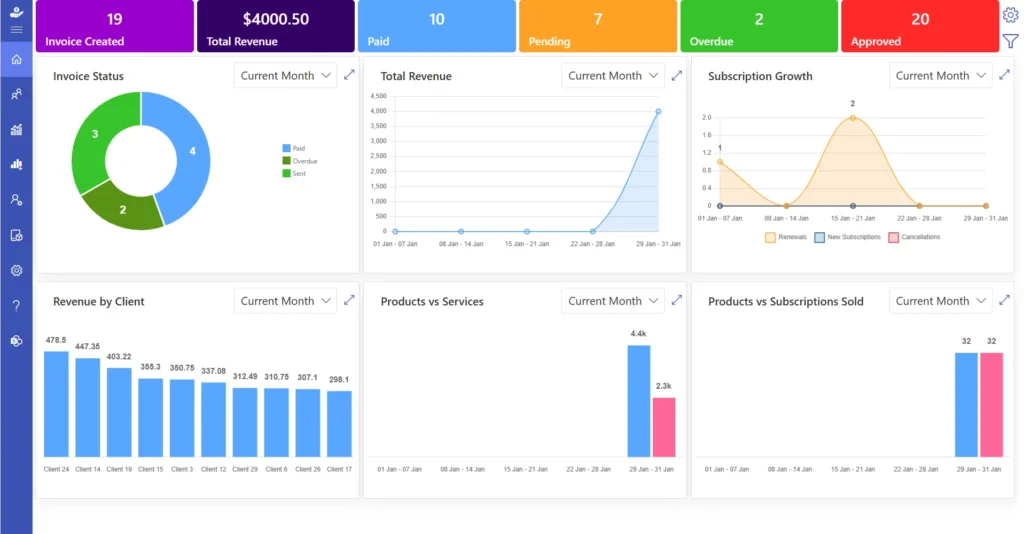
Revenue 365 is designed for businesses that rely heavily on recurring revenue. It manages the entire subscription journey from customer onboarding to renewals, plan changes, failed payment handling, and cancellations. It offers a dependable solution for subscription billing and revenue operations. Built within the Microsoft ecosystem, it focuses on high security and compliance standards. Its seamless integration with Microsoft 365 makes it a great fit for organizations already using Microsoft tools.
What Makes it Unique: It’s ability to deliver enterprise-grade security while remaining highly user-friendly and automation-driven. Non-technical teams can get started quickly without complex setup, while built-in automation handles subscription billing, renewals, and workflows as the business scales.
Key Features:
- Receive instant alerts for invoices, payments, and customer actions
- Customize tax configurations to align with your business needs
- Create custom fields for customers, users, and projects to manage data
- Generate invoice numbers with your own prefixes and suffixes
- Provide bundled plans along with flexible add-on options
- Handle all billing activities from one centralized platform
- Set up automated recurring billing with predefined schedules
- Quickly capture and store billing information without hassle
- Monitor payment status effortlessly once invoices are issued
- Gain access to in-depth financial reports to support smarter decisions
Best for: SaaS companies, membership platforms, and service businesses of all sizes
Revenue 365 is a strong first pick for any business that wants a clean, all-in-one platform without the enterprise complexity of tools like Zuora.
2. Chargebee
Best for fast-growing SaaS businesses
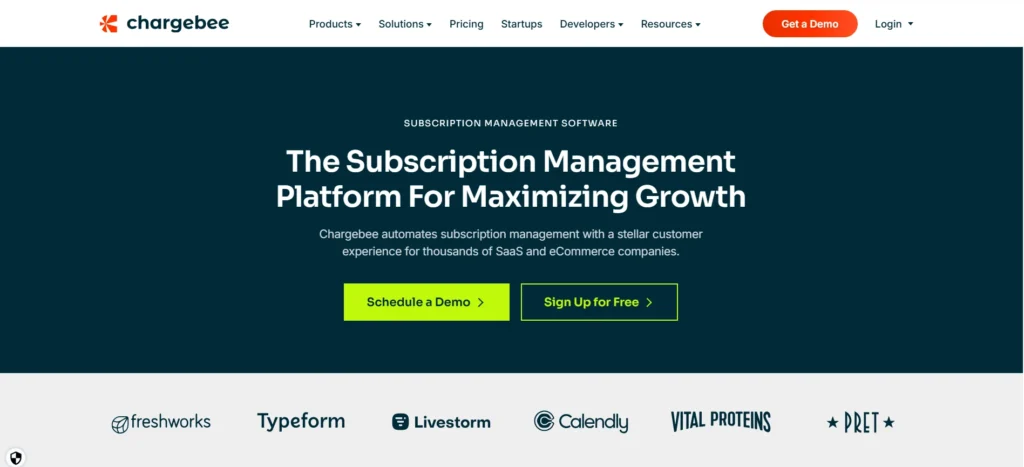
Chargebee is one of the most widely used subscription management software platforms on the market. It handles complex billing models well and comes with solid reporting and customer lifecycle tools. It works best for companies that are growing fast and need a platform that can keep up including handling multi-currency billing, revenue recognition, and detailed subscription analytics.
Key Features:
- Supports flat-rate, usage-based, tiered, and hybrid billing models
- Built-in revenue recognition that meets ASC 606 standards
- Automated dunning and payment retry logic
- Customer portal for self-service management
- Detailed subscription analytics and revenue forecasting
- A/B testing for pricing pages
Best for: Mid-size to large SaaS companies with complex billing needs. Chargebee is feature-rich and well-documented, but smaller teams may find it has more complexity than they actually need.
3. Maxio (formerly SaaSOptics + Chargify)
Best for B2B SaaS revenue and financial reporting
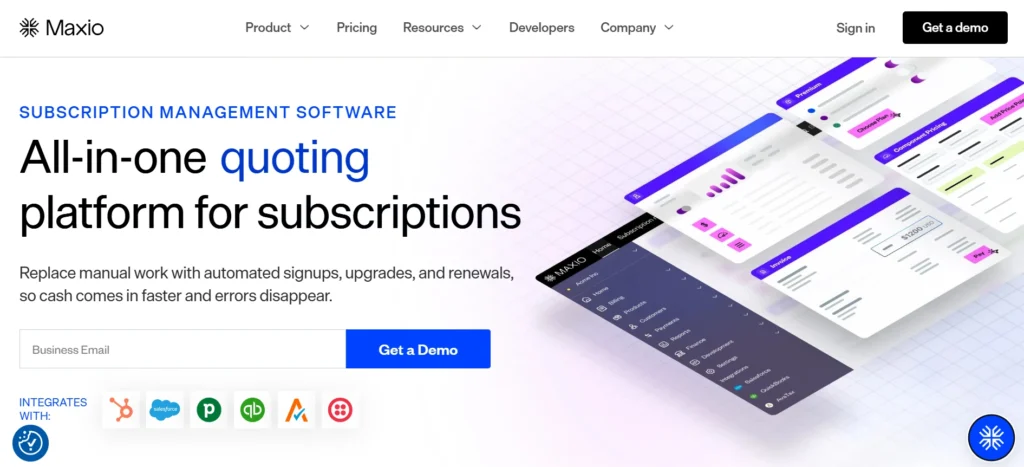
Maxio was formed when SaaSOptics (financial reporting) and Chargify (billing) merged, creating a platform with exceptional strength in financial operations. If your finance team needs to produce audit-ready revenue reports, manage complex B2B contracts, or track detailed subscription metrics for investors, Maxio is built for that. It also helps streamline compliance and forecasting, giving finance teams better control and visibility over revenue performance.
Key Features:
- Advanced SaaS metrics MRR, ARR, churn, LTV, expansion revenue
- Revenue recognition
- Contract and subscription lifecycle management
- Flexible billing: usage-based, milestone, tiered
- Automated accounts receivable and collections
- Detailed financial reporting and audit support
Best for: B2B SaaS companies that need deep financial reporting alongside billing. Maxio is a strong choice for finance-forward teams, but it comes at a price point and learning curve that puts it out of reach for early-stage startups.
4. Recurly
Best for reducing subscriber churn

Recurly is widely recognized for its strong focus on minimizing subscriber churn, especially by recovering failed payments. Its advanced dunning system automatically retries transactions, sends smart notifications, and helps retain customers. Beyond churn management, Recurly supports diverse subscription business models and provides a clean, intuitive dashboard for tracking performance. It’s a solid choice for businesses looking to improve revenue retention while managing subscriptions efficiently.
Key Features
- Intelligent dunning and failed payment recovery
- Supports multiple payment gateways
- Multi-currency and multi-language support
- Flexible subscription plans with add-ons and coupons
- Revenue and churn analytics
- Automated tax calculation via Avalara integration
Best for: Recurly’s payment recovery tools alone can pay for the platform. If churn is your biggest problem, it belongs on your shortlist
5. Paddle
Best for selling subscriptions globally

Paddle stands out from most subscription tools because it operates as a Merchant of Record. This means Paddle takes full responsibility for payments, tax handling, compliance, and regulatory requirements on your behalf. It manages multi-currency billing, applies the correct regional taxes, and ensures everything is processed according to local laws. This is especially valuable for software companies expanding into global markets, for setting up entities and managing cross-border compliance.
Key Features:
- Merchant of Record model Paddle handles tax and compliance
- Supports 200+ countries and multiple currencies
- Built-in checkout, subscription management, and billing
- Dunning and payment retry automation
- Revenue reporting and subscription analytics
- License management for software products
Best for: If global tax compliance is keeping you up at night, Paddle removes that problem completely. The trade-off is less control over the checkout experience.
6. Zoho Subscriptions
Best overall software for subscription management
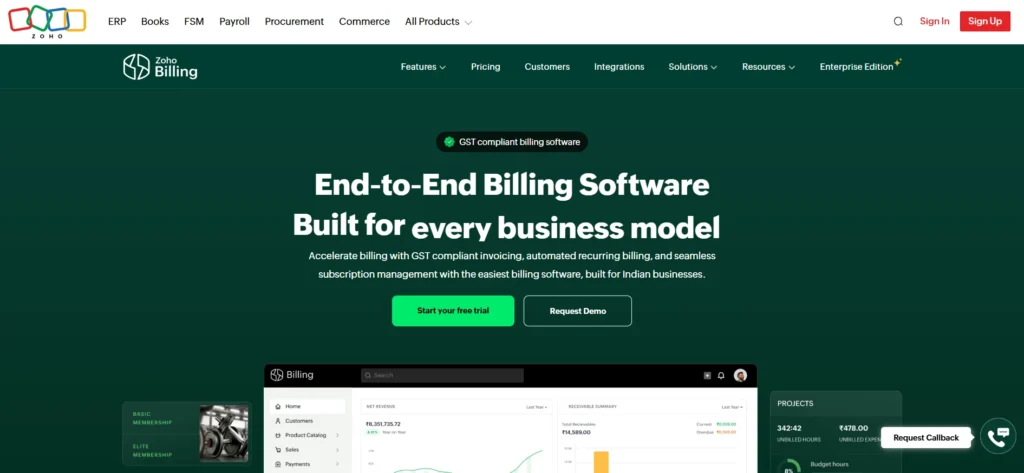
Zoho Subscriptions is part of the Zoho ecosystem a suite of business tools covering CRM, accounting, HR, and more. If you’re already using Zoho products, this is a natural addition. It covers the core subscription management features well and is priced accessibly for small businesses and early-stage startups. Its seamless integration with other Zoho apps helps streamline operations and keeps all your business data connected in one place.
Key Features:
- Automated recurring billing and invoicing
- Dunning management with automated email reminders
- Customer portal for plan and payment self-management
- Subscription metrics dashboard: MRR, churn, ARPU
- Multi-currency support
- Coupon and discount management
- Hosted payment pages
Best for: Zoho Subscriptions offers strong core functionality at an accessible entry point. However, businesses needing advanced reporting or enterprise-grade capabilities may eventually outgrow it.
7. DealHub.io
Best for sales-led subscription and contract management
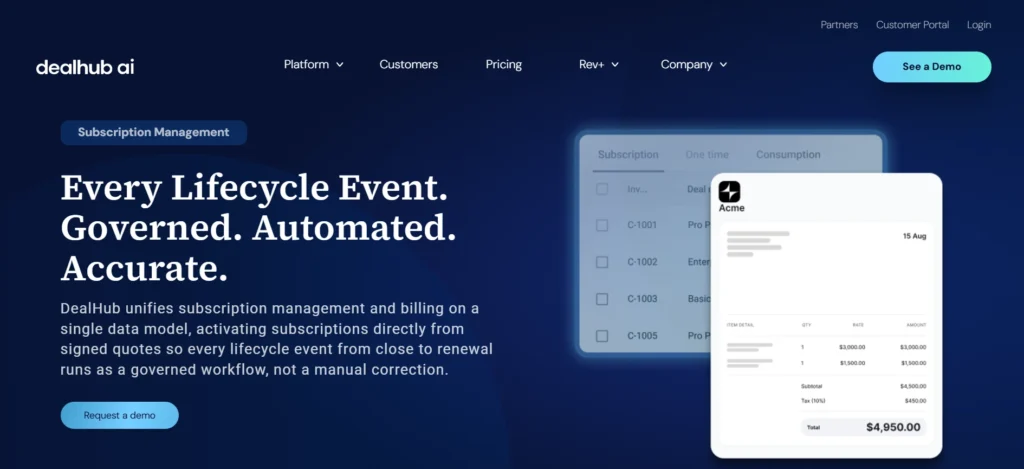
DealHub.io is not a traditional billing tool. It sits at the intersection of CPQ (Configure, Price, Quote), contract management, and subscription billing. It is designed for sales teams that manage complex deals before billing even begins. If your business involves long sales cycles, custom contracts, and annual B2B agreements, DealHub connects the sales and revenue operations process end to end. It also improves deal accuracy and speeds up quote-to-cash process time by bringing all sales workflows into a single unified platform.
Key Features:
- CPQ (Configure, Price, Quote) built for subscription products
- Digital contract creation and e-signature
- Subscription amendment management (upgrades, renewals, expansions)
- Revenue forecasting and deal analytics
- Guided selling playbooks for sales reps
- Subscription lifecycle tracking from quote to renewal
Best for: DealHub is the right pick when your subscription process starts with a sales conversation, not a self-serve checkout. It is not a fit for product-led or consumer subscription businesses.
8. Zuora
Best enterprise-grade subscription billing platform
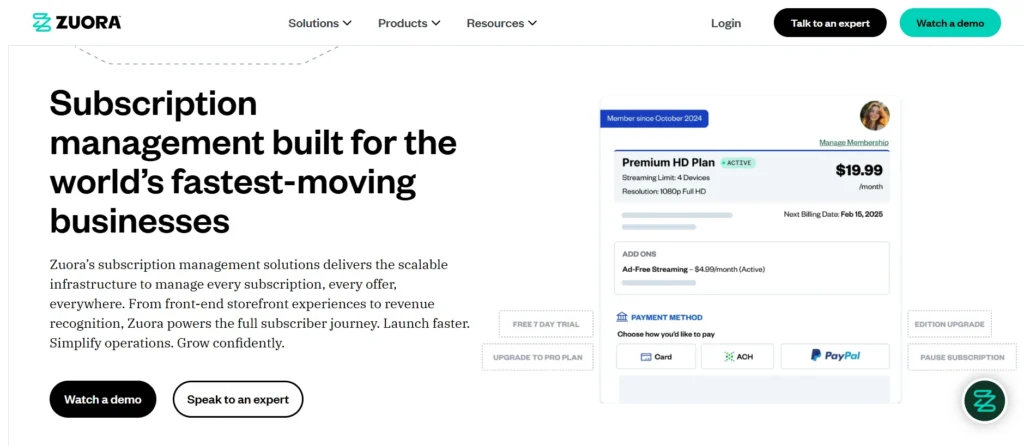
Zuora is the platform that helped define the subscription economy as a category. It is built for large enterprises with complex billing requirements think global operations, multi-entity structures, and strict revenue recognition standards. It is powerful, but it comes with significant cost, setup time, and the need for dedicated technical resources.
Key Features:
- Enterprise subscription and billing management
- Advanced revenue recognition (ASC 606 / IFRS 15)
- Multi-currency, multi-entity, and multi-language support
- Detailed analytics and revenue waterfall reporting
- Order management and contract amendments
- Subscription metrics at enterprise scale
Best for: Zuora is built for a specific use case: enterprise-scale, complex, global subscription billing. For everyone else, it is likely overkill.
9. Togai
Best for usage-based and metered billing
Togai is a newer player in the online subscription management software space, but it has quickly become a go-to for companies that need usage-based billing. If you charge customers based on how much they use API calls, data volume, active users, or any other metric Togai handles that well. It also provides real-time usage tracking and flexible pricing configurations, making it easier to bill accurately as your product scales.
Key Features:
- Real-time usage metering and data ingestion
- Flexible pricing models: usage-based, tiered, hybrid
- Billing automation based on custom usage rules
- Revenue reporting and usage analytics
- Rate cards and custom pricing per customer
- Sandbox environment for testing billing logic
Best for: Togai excels in areas where many traditional billing tools fall short. If your pricing is based on usage or consumption, it stands out as a powerful and highly capable solution available today.
10. Billsby
Best for simple, affordable subscription billing

Billsby is a straightforward tool for businesses that need recurring billing without complexity. It is easy to set up, does not require developer resources, and covers the core subscription billing workflow cleanly. It also offers flexible billing cycles, automated invoicing, and seamless payment integrations, making it a reliable choice for efficient subscription management.
Key Features:
- Automated recurring billing and invoicing
- Hosted checkout and payment pages
- Customer self-service account portal
- Plan and pricing management
- Basic dunning and failed payment retries
- Revenue and subscriber reporting
Best for: Billsby is a strong entry-level option for businesses starting with recurring billing. While it focuses on essential features rather than advanced capabilities, it delivers reliable performance and ease of use at a level that suits early-stage businesses well.
How to Choose the Right Software for Subscription Management
With so many options, here is a simple framework to narrow down your choice. With so many options available, here’s a simple framework to help you narrow down the right choice:
1. Based on Business Size
Small businesses and startups should focus on tools that are easy to set up and accessible from day one Zoho Subscriptions, Billsby, or Revenue 365 are great starting points.
Mid-size companies with growing subscriber bases need stronger reporting, integrations, and dunning capabilities Chargebee, Recurly, or Revenue 365 fit well here.
Large enterprises with complex, multi-region operations should evaluate Zuora or Maxio, keeping in mind the implementation effort involved.
2. Based on Budget
If budget is limited, start with tools that offer free plans Zoho Subscriptions (free for a limited number of customers) and Chargebee (free up to a billing threshold) are strong options. Revenue 365 and Recurly also provide trial access before commitment.
Avoid enterprise-heavy platforms like Zuora or DealHub.io in early stages, as they require higher investment and setup effort.
3. Based on Integration Needs
List the tools you already useCRM (Salesforce, HubSpot), accounting (QuickBooks, Xero), payment gateways (Stripe, PayPal), and support tools. Then check which subscription platform integrates seamlessly with them.
Choose Revenue 365 if you need an efficient and scalable solution that integrates smoothly with Microsoft 365 apps, helping you keep your operations connected and streamlined within a single ecosystem.
4. Based on Scalability
Think beyond your current size. A tool that works for 100 customers may not handle 10,000 efficiently. Chargebee, Revenue 365, and Recurly are built to scale. Billsby and Zoho Subscriptions are better suited for early stages but may require upgrading later.
5. Based on Ease of Use
If you don’t have a developer, prioritize tools with no-code setup, intuitive dashboards, and responsive support. Revenue 365, Zoho Subscriptions, and Billsby are highly accessible for non-technical teams, while Togai and Zuora may require more technical involvement.
6. Based on Security
Choose Revenue 365 if you are planning for long-term growth—it is built to scale with your business while offering enterprise-grade security. With standards like SOC 2 compliance and Microsoft-backed certifications, it ensures your data, billing, and operations remain secure and reliable as you grow.
Conclusion
The market for subscription management software in 2026 is strong, and there is a good tool for every type of business from early-stage startups to global enterprises. If you are unsure where to start, Revenue 365 is the safest bet for most businesses it covers the full subscription lifecycle, works without heavy technical setup, and offers a free trial so you can test it before committing.
Pick the tool that fits your current size, budget, and billing model and one that can grow with you.



Frequently Asked Questions
What is the best software for subscription management in 2026?
Revenue 365 is the top pick for most businesses in 2026. It covers automated billing, payment recovery, revenue reporting, and customer management in one platform without requiring a technical team to set it up.
What is subscription management software used for?
It is used to automate recurring billing, manage customer plans, recover failed payments, and track revenue metrics like MRR and churn all without manual work.
Is there free online subscription management software?
Yes. Zoho Subscriptions offers a free plan for up to 20 customers. Chargebee has a free plan up to $250k in cumulative billing. Revenue 365 and Recurly offer free trials so you can test before paying.
What is the difference between subscription management software and billing software?
Basic billing software handles invoices and payments. Subscription management software goes further it manages the full subscriber lifecycle, including plan changes, cancellations, dunning, customer portals, and revenue analytics.
Can small businesses use subscription management software?
Yes. Tools like Revenue 365, Zoho Subscriptions, and Billsby are built to be affordable and easy to use for small teams. You do not need a developer or a large budget to get started.






















